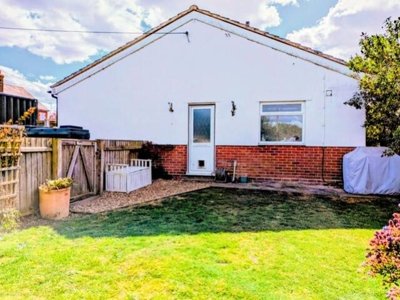
Browse 1 rental home to rent in Wrabness, Tendring from local letting agents.
£995/m
1
0
29
Source: home.co.uk
Source: home.co.uk
Semi-Detached Bungalow
1 listings
Avg £995
Source: home.co.uk
Source: home.co.uk
Wrabness has a tiny, low-turnover housing market, which is exactly what you would expect from a parish with 435 residents and 222 households. homedata.co.uk records show the last 12 months produced just 2 sales, with one detached home and one semi-detached home changing hands. That limited activity means there is not much spare stock, and any rental property that comes up is likely to attract attention from tenants who value rural surroundings and estuary access. In practical terms, the market behaves more like a small village than a typical commuter town.
Price trends have been moving up, with the overall market showing a 10% rise over 12 months, detached homes up 10% and semi-detached homes up 17%. The absence of recorded terraced or flat sales in the period underlines how detached and semi-detached homes shape the local market. No active new-build developments were verified within Wrabness itself, so most homes you will see are established properties rather than fresh schemes. That matters for renters, because older stock can offer charm and space, but it also deserves a closer look at condition, insulation and ongoing maintenance.
Detached property values averaged £525,000, while semi-detached homes averaged £350,000, which gives you a sense of the local housing backdrop. Even though those are sale figures rather than rental asks, they still help explain why Wrabness sits in the higher-value end of the rural Tendring market. A village with this level of owner-occupation and limited churn often has fewer rental options than larger settlements. If you spot a home that suits your needs, acting quickly and with paperwork ready can make all the difference.

Wrabness is a small rural parish with a strong sense of place, and the housing mix reflects that character. According to the 2021 Census data for Wrabness parish, 53.6% of homes are detached, 24.3% are semi-detached, 13.5% are terraced and 8.6% are flats. That means the village is dominated by larger homes rather than dense apartment blocks, which suits tenants looking for more space, gardens and a quieter residential setting. The age profile also matters, because 20.3% of homes are pre-1919 and 71.6% were built before 1980.
The parish population of 435 people across 222 households gives Wrabness a compact, close-knit feel. Many residents are drawn by the estuary landscape, Wrabness Nature Reserve and the surrounding countryside, which create a calm backdrop that is hard to find in more built-up parts of Essex. Historic features add to the village identity too, with a Conservation Area and several Listed Buildings, including Wrabness Hall and All Saints Church. For tenants who want heritage, landscape and a slower rhythm of life, the village feels distinctive from the first visit.
Wrabness also appeals because it is not just scenic, it is practical for people who are comfortable living in a smaller place. Local employment is limited, so the village tends to suit commuters, remote workers and households that split their time between home and nearby towns. That rural pattern often shapes the rental stock as well, with older houses, converted buildings and traditional homes playing a bigger role than in urban estates. If you are used to suburban convenience, this is a change of pace, but it is a rewarding one for the right tenant.
Wrabness is so small that education planning usually stretches beyond the parish boundary. The research supplied does not verify any individual local schools, so we would not guess at specific catchments or Ofsted ratings here. Families renting in the village usually look to nearby settlements in Tendring and the wider Manningtree and Harwich corridor for primary and secondary options. Before you commit to a tenancy, check admissions rules with Essex County Council and confirm school transport options as part of your wider move plan.
The village scale can actually be useful for families if they are happy to travel a little for schooling. With only 222 households in the parish, there is no large school cluster on the doorstep, which means education choices are often tied to bus routes, car access and after-school logistics. That makes a rental home near the right road link or rail station more valuable than one that simply looks good on paper. If school runs matter to you, shortlist properties with that daily pattern in mind rather than focusing only on the postcode.

Wrabness is rural, but it is not cut off. The village has a railway station, and the local rail link gives residents access towards Manningtree and Harwich International, with onward connections beyond Manningtree for longer journeys. That makes it a sensible base for people who do not want to rely on driving every day, even though the service pattern is much smaller than in a town or city. For a village of this size, rail access is one of the biggest everyday advantages.
Road travel is shaped by quiet lanes and the surrounding Tendring countryside, so journey times can feel slower than the map suggests. Many commuters will head inland to reach the A120 or A12, which opens up routes to Colchester and the wider Essex network. Bus services are typically thinner in small rural settlements, so a tenant who needs flexible transport should check timetables carefully before choosing a property. Cycling can work well for local trips, although the roads are more scenic than urban and that suits confident riders best.
Start by setting a realistic rental budget and getting a rental budget agreement in principle before you view anything. In a small village like Wrabness, availability can be limited, so knowing your ceiling early helps you act with confidence. You should also think about the kind of home that fits your routine, because detached houses, older cottages and smaller terraced properties each bring different costs and maintenance needs. A clear budget makes it easier to judge whether a home on the edge of the estuary is truly affordable or just attractive on first sight.
Next, compare the village location against your daily life rather than against a generic house-hunting checklist. If you commute, check the station, parking and road access to the A120 or A12, and if you work from home, think about broadband, heating and room layout. Viewings in Wrabness can be as much about setting as structure, because the outlook, access and flood exposure can all affect how a property feels to live in. A tenant who spends time on these details usually ends up happier once the tenancy starts.
Once you find a home that feels right, move quickly on the paperwork. Good letting agents will expect identification, references, proof of income and a clear move-in date, especially in a smaller market where competition can arrive fast. Read the tenancy agreement carefully, ask how maintenance is handled and confirm what is included in the rent before you commit. After that, make sure you understand the check-in inventory so you are protected when you move out.
Flood risk is one of the first things to check in Wrabness, especially for homes nearer the River Stour estuary, the coastline and the Wrabness Nature Reserve. Parts of the parish are exposed to tidal and river flooding, and there are also localised surface water issues in some spots. A landlord should be clear about any past flood history, but tenants should still ask direct questions and review the property carefully after heavy rain. If a home looks idyllic but sits in a vulnerable position, the wider setting may come with extra risk.
The geology matters too, because Wrabness sits on London Clay Formation, which is known for shrink-swell behaviour. That raises the chance of movement-related problems such as subsidence or heave, particularly where shallow foundations meet mature trees. Older homes in the village can also show signs of rising damp, timber decay, roof wear or outdated services, especially given that 71.6% of homes were built before 1980. A careful inspection is sensible even when a property looks charming from the outside.
Conservation Area rules and Listed Building status can also affect a rental in the historic core. Wrabness has several Listed Buildings, including historic properties around the village centre, and those homes may have traditional materials, older layouts and more sensitive repair requirements. That can be part of the appeal, but it also means you should check window condition, heating efficiency, insulation and any restrictions that affect alterations. If the property is listed, ask exactly what the landlord can and cannot change before you sign.

We do not have a verified live average rent figure for Wrabness in the supplied research, so we would not guess. What we can say is that homedata.co.uk records show the local sales market averaged £441,750 over the last 12 months, with detached homes at £525,000 and semi-detached homes at £350,000. That tells you the village sits in a relatively high-value rural market, which can influence asking rents when homes do come up. For a realistic rental figure, check current availability and compare the exact property type, size and condition.
Council tax bands in Wrabness depend on the individual property, not just the village name. The billing authority for the area is Tendring District Council, and homes can sit in different bands depending on size, age and value. Smaller flats or terraces usually fall lower than detached homes, but the only safe answer is the band listed for the specific address. Always check the EPC, advert or council tax search before you commit to a tenancy.
The research supplied does not verify specific schools in Wrabness, so we will not invent a school list here. Because the parish is small, families usually look to nearby schools in Tendring and along the Manningtree and Harwich corridor. Essex County Council admissions pages are the best place to confirm catchment areas, transport support and available places. If schooling is a priority, factor the daily journey into your property search as early as possible.
Wrabness is reasonably connected for a rural village because it has a railway station and rail links towards Manningtree and Harwich International. From Manningtree, you can make onward rail journeys to larger towns and London. Bus choice is likely to be more limited than in an urban area, so it pays to check timetables rather than assuming frequent service. For regular commuters, access to a station and good parking can be just as important as the house itself.
Yes, if you want a quiet estuary village with strong rural character and are comfortable with a smaller pool of local amenities. Wrabness has 435 residents, 222 households and a housing stock dominated by detached and semi-detached homes, so it feels spacious and low density. The village suits tenants who value walks, views and a slower pace more than they value town-centre convenience. If you need lots of shops, schools and nightlife within a short walk, this may feel too small.
Most assured shorthold tenancies follow the Tenant Fees Act rules, so your tenancy deposit is usually capped at five weeks' rent when the annual rent is below £50,000. You may also be asked for a holding deposit, and you should expect costs linked to referencing, moving, utilities and the check-in inventory. Landlords and agents in a small market like Wrabness may also want paperwork quickly, so having your references ready can save time. Ask for a full written breakdown before you pay anything.
Yes, flood risk is one of the most important local checks in Wrabness. Parts of the parish sit beside the River Stour estuary, and areas near the coast and nature reserve can be exposed to river, tidal and surface water flooding. A home may still be perfectly suitable, but you should ask the landlord about any history of flooding, damp repairs or insurance issues. If the property is close to lower-lying ground, spend a little longer checking the surroundings after rain.
Detached homes make up 53.6% of the parish housing stock, followed by semi-detached homes at 24.3%. Terraced homes account for 13.5% and flats for 8.6%, so the village is strongly weighted towards larger houses rather than apartment living. The age profile also skews older, with 20.3% of homes built before 1919 and 38.7% built between 1945 and 1980. That mix explains why many rentals here need a close look at condition, heating and maintenance history.
From 4.5%
Compare rental budget rates and find the best deal
From £499
Get help preparing the checks landlords ask for before you move
From £350
Check the energy performance of a home before you rent
From £350
Review the condition of a home before you commit
Work out the rent you can comfortably afford, then get a rental budget agreement in principle before you book viewings. That gives you a clearer target in a small market where suitable homes may not stay available for long.
Look closely at flood risk, station access, parking and how the property sits within the village. In Wrabness, the setting can matter as much as the rooms themselves, especially for commuters and anyone who loves the estuary edge.
Gather ID, proof of income, references and any guarantor details early. Agents often move fast in smaller rural markets, and a tidy application can put you ahead of other applicants.
Review the rent, deposit, notice period, maintenance responsibilities and inventory terms before signing. Ask about heating, insulation, broadband and any restrictions if the property sits in the Conservation Area or is listed.
Make sure you know the move-in date, meter readings, keys and check-in process. A clear handover helps you settle into Wrabness without avoidable stress.
Take photos, store copies of your agreement and note anything unusual at check-in. Good records make later deposit discussions much easier and protect you if repairs or disputes arise.
Renting costs in Wrabness are shaped less by city-style competition and more by the character of the home itself. Older houses, estuary-facing properties and homes in the Conservation Area may need more attention to heating efficiency, damp control and ongoing upkeep, so the monthly budget should include more than just the headline rent. Before you sign, ask what is covered by the landlord, what needs to be paid separately and whether the home has any known repair history. In a village with limited supply, it helps to decide in advance which extras are acceptable and which would push the home outside your comfort zone.
The upfront cost usually starts with a holding deposit, followed by your tenancy deposit and the first month or first rental period in advance. You should also allow for referencing, removals, utilities, internet and the cost of getting set up in a rural area where travel and fuel can add up quickly. If the home is older, ask about EPC rating, heating type and likely winter bills before you commit. A sensible budget leaves room for those local realities, not just the rent figure on the advert.
Properties to Rent In London

Properties to Rent In Plymouth

Properties to Rent In Liverpool

Properties to Rent In Glasgow

Properties to Rent In Sheffield

Properties to Rent In Edinburgh

Properties to Rent In Coventry

Properties to Rent In Bradford

Properties to Rent In Manchester

Properties to Rent In Birmingham

Properties to Rent In Bristol

Properties to Rent In Oxford

Properties to Rent In Leicester

Properties to Rent In Newcastle

Properties to Rent In Leeds

Properties to Rent In Southampton

Properties to Rent In Cardiff

Properties to Rent In Nottingham

Properties to Rent In Norwich

Properties to Rent In Brighton

Properties to Rent In Derby

Properties to Rent In Portsmouth

Properties to Rent In Northampton

Properties to Rent In Milton Keynes

Properties to Rent In Bournemouth

Properties to Rent In Bolton

Properties to Rent In Swansea

Properties to Rent In Swindon

Properties to Rent In Peterborough

Properties to Rent In Wolverhampton

Enter your details to see if this property is within your budget.
Loans, cards, car finance
Estimated property budget
Borrowing + deposit
You could borrow between
Typical borrowing
Monthly repayment
Est. at 4.5%
Loan-to-value
This is an estimate only. Your actual budget may vary depending on interest rates, credit history, and personal circumstances. For an accurate affordability assessment, speak to one of our free mortgage advisors.
This calculator provides estimates for illustrative purposes only and does not constitute financial advice. Your home may be repossessed if you do not keep up repayments on your mortgage. Estimates based on 4.5% interest rate, repayment mortgage. Actual rates depend on your circumstances.
Homemove is a trading name of HM Haus Group Ltd (Company No. 13873779, registered in England & Wales). Homemove Mortgages Ltd (Company No. 15947693) is an Appointed Representative of TMG Direct Limited, trading as TMG Mortgage Network, which is authorised and regulated by the Financial Conduct Authority (FRN 786245). Homemove Mortgages Ltd is entered on the FCA Register as an Appointed Representative (FRN 1022429). You can check registrations at NewRegister or by calling 0800 111 6768.

We use cookies to show you personalised content and improve your experience of our website. Find out more in our Privacy policy and Cookie policy.