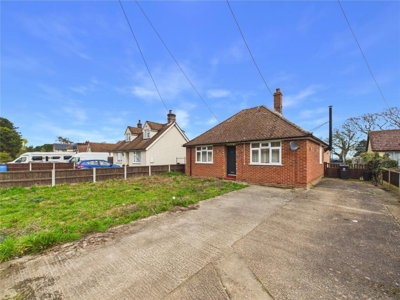
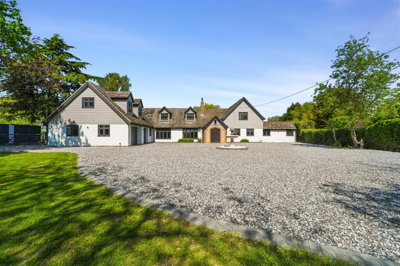
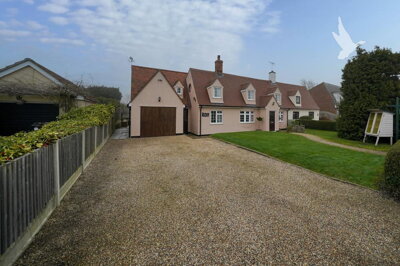
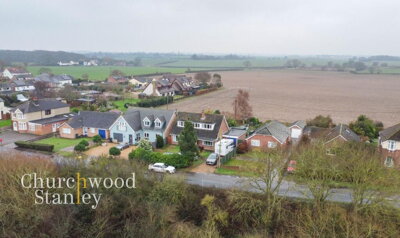
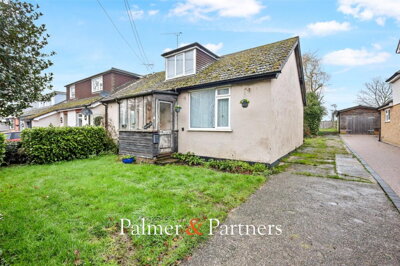
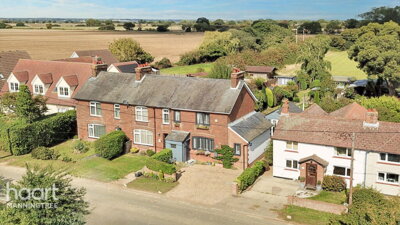
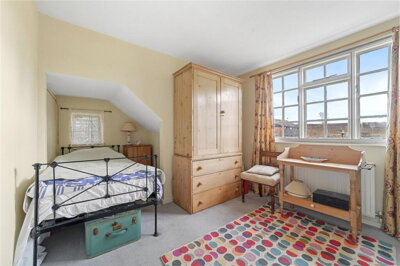
Browse 11 homes for sale in Wrabness, Tendring from local estate agents.
£750k
3
0
188
Source: home.co.uk
Source: home.co.uk
Detached
3 listings
Avg £679,998
Source: home.co.uk
Source: home.co.uk
homedata.co.uk records point to a very small and selective market in Wrabness, which means buyers should expect limited turnover and less choice than they would find in a larger town. Over the last 12 months, only 2 homes changed hands, one detached and one semi-detached, so every listing deserves close attention. The average sold price of £441,750 sits above what many first-time buyers will be targeting, although the semi-detached figure of £350,000 keeps some homes within a more accessible range. Price growth has also been positive, with the overall market up 10% year on year and semi-detached homes up 17%.
The parish housing mix is heavily weighted towards detached homes at 53.6%, with semi-detached properties at 24.3%, terraced homes at 13.5% and flats at 8.6%. That profile fits a rural village where family houses, cottages and larger individual plots are more common than apartment blocks or dense estates. No verified active new-build developments were found within Wrabness itself, so the market is mostly made up of existing homes rather than fresh schemes. Buyers who want a brand-new property often need to widen their search into surrounding Tendring settlements.

Wrabness parish is small, with a population of 435 across 222 households, and that size gives the village a close-knit feel that many buyers actively look for. The local landscape is one of the big draws, with the Stour estuary, Wrabness Nature Reserve and the surrounding countryside shaping everyday life. Residents who value walking, birdwatching and a quieter pace often find the setting hard to beat, especially when the river and open land are part of the view. The village also has a conservation area, which helps protect its historic character.
Housing age adds another layer of interest, because 20.3% of homes are pre-1919, 12.6% date from 1919-1945, 38.7% were built between 1945 and 1980, and 28.4% are post-1980. That means many homes have solid character and established plots, rather than the uniform feel of a modern estate. Listed buildings such as Wrabness Hall and All Saints Church add to the heritage feel around the historic core. For buyers who want a countryside base with genuine local identity, Wrabness offers a very distinct village environment.
Families moving to Wrabness usually look beyond the parish boundary for day-to-day schooling, since this is a small rural village rather than a large settlement with a broad school estate. The practical search area often includes Manningtree, Harwich and Colchester, where parents can compare primary, secondary and sixth-form options across a wider catchment. That makes transport and school run planning an important part of the buying decision, especially if both adults work outside the village. For many households, the best fit comes from balancing commute, catchment and the style of home they want.
Exact school choice will depend on your postcode, year group and admissions route, so it pays to check each school directly before you commit to a purchase. Buyers interested in selective education often look towards Colchester for grammar school options, while sixth-form and further education choices are stronger in the larger towns across the route. Ofsted ratings can change, so the latest report for each school is the one that matters when you are shortlisting. If school access is a priority, our advice is to view homes with the route to school in mind, not just the property itself.

Wrabness is served by Wrabness station on the Mayflower Line, which links the village into the wider rail route between Manningtree and Harwich Town. For commuters, that matters because Manningtree opens up faster rail connections to London Liverpool Street, while Colchester and Ipswich remain practical regional journeys. The station gives the village an advantage over some other rural Essex locations where a car is the only realistic option. Even so, buyers should still think carefully about timetable frequency and the door-to-door journey from their front door to the platform.
Road travel is shaped by the rural setting, so most residents rely on local lanes before reaching the larger roads that connect to the rest of Tendring and beyond. That is a good fit for buyers who do not need a fast urban road network every day, but it can add time to school runs and commuting at peak hours. Parking is another point worth checking, since some homes have driveways or off-street space while others depend on village street parking. Cycling can work well for local trips in fair weather, although the estate layout and lane network make a test ride worthwhile before you buy.
Start by comparing streets, flood exposure, station access and the character of homes on offer, because Wrabness can vary sharply between the historic core, the estuary edge and the quieter lanes.
Visit at different times of day so you can judge traffic, parking, light, noise and how easy it feels to reach the station, river walks or nearby roads.
Secure a mortgage agreement in principle before you book serious viewings, so you can move quickly if a scarce Wrabness home comes onto the market.
Choose a RICS Level 2 Survey for a conventional house, or a more detailed Level 3 report if the property is listed, altered or clearly older in construction.
Appoint a conveyancer as soon as your offer is accepted, because conservation area checks, title review and flood-related enquiries can take time in a village location.
Once searches, mortgage checks and the survey are in place, agree a completion date that suits your move, then finish with buildings insurance and utility transfers ready to go.
Buyers in Wrabness should pay close attention to flood risk, because the village sits along the River Stour estuary and some parts are exposed to tidal, river and surface water flooding. Homes closer to the water or near low-lying ground need a stronger check on past flood history, drainage and insurance costs. The landscape is beautiful, but it also means due diligence matters more here than in many inland villages. A sensible offer always starts with knowing exactly where the house sits in relation to the estuary.
Shrink-swell clay is another local issue, since the ground geology includes London Clay, which can move with moisture and tree growth. That makes subsidence or heave a real consideration, especially in older homes with shallow foundations or mature trees nearby. The parish also has a conservation area and several listed buildings, so buyers need to check for restrictions on windows, extensions, roof works and external changes. If a property is listed, any future alterations may need Listed Building Consent, which can affect both cost and timescale.
The age profile of the housing stock means a lot of homes are likely to benefit from survey scrutiny, with pre-1980 properties making up around 71.6% of the parish stock. Older houses can hide damp, timber decay, roof wear and outdated electrics, while some post-war homes may carry asbestos or earlier plumbing issues. Flats are relatively uncommon, but any leasehold purchase should still be checked for service charges, ground rent and repair obligations. A careful survey and a good solicitor are worth their weight in a small, characterful market like this.
homedata.co.uk records show an average sold price of £441,750 over the last 12 months. Detached homes averaged £525,000 and semi-detached homes averaged £350,000, which gives you a useful picture of the village price spread. The market is very small, with just 2 sales in the last year, so individual transactions can move the average quickly. If you are comparing homes, look at property type and condition as much as headline price.
Council tax is set locally, and the band depends on the individual property rather than the parish as a whole. In Wrabness, the mix of detached homes, smaller houses and the occasional flat means bands can vary widely from one listing to the next. The safest approach is to check the band on the listing details or ask the agent before making an offer. Tendring District Council is the local authority to check for billing and banding queries.
Wrabness itself is a small village, so most families look to the wider Manningtree, Harwich and Colchester area for schooling. The right choice depends on age group, catchment and transport, and some buyers also want access to selective schools in Colchester or sixth-form provision in the larger towns. Because Ofsted ratings and admissions can change, always check the latest school report and the current catchment rules. If school access matters, it is wise to shortlist homes with the route to school as part of the decision.
Wrabness has its own station on the Mayflower Line, which is a strong advantage for a rural village. The rail route links into Manningtree, and from there you can reach London Liverpool Street on the main line, with Colchester and Ipswich also practical regional destinations. Bus options are more limited than in a town centre, so many residents still rely on a car for everyday errands. If commuting is a priority, test the station run and check the timetable before you offer.
It can be, but it suits patient buyers more than quick-flip investors. homedata.co.uk records show a 10% annual rise in the overall average sold price, and the estuary setting, conservation character and limited supply all support long-term appeal. The trade-off is liquidity, because only 2 homes sold in the last 12 months, so resale may take longer than in a busier market. Investors should focus on quality, flood exposure and the strength of rental demand in nearby towns.
For a home at the Wrabness average price of £441,750, a standard buyer would pay £9,587.50 in stamp duty under the current rates. First-time buyers would pay less, because relief applies up to £425,000 and then 5% is charged on the portion up to £625,000, so the same price would mean £837.50. Properties bought as an additional home can attract extra charges, so get a solicitor or mortgage adviser to check your exact position. The final figure depends on your circumstances, not just the asking price.
A survey is strongly recommended here, especially because much of the housing stock predates 1980 and the local ground conditions can create movement issues. A RICS Level 2 Survey is often a sensible starting point for a conventional house, while a more detailed Level 3 report is better for listed, altered or visibly older buildings. Flood exposure, damp, roof condition and possible subsidence are all worth checking before you commit. In a village with limited sales activity, a survey can save a buyer from expensive surprises later.
Stamp duty is a major part of your buying budget, and the current thresholds mean the numbers need to be checked carefully before you make an offer. Standard buyers pay 0% up to £250,000, 5% from £250,000 to £925,000, 10% from £925,000 to £1.5 million and 12% above that. First-time buyers pay 0% up to £425,000 and 5% from £425,000 to £625,000, with no relief above £625,000. On a Wrabness home at £441,750, that difference can be material, so the ownership route matters as much as the asking price.
Budgeting should not stop at SDLT, because there are always other moving costs to factor in. Mortgage arrangement fees, survey costs, legal fees, search fees and removals can all add up, especially if the home needs work after completion. In a village like Wrabness, buyers also tend to look at ongoing costs such as heating efficiency, insurance and any flood-related premiums before they commit. Planning those extras early makes your offer stronger and keeps the move on track from start to finish.
Properties for Sale In London

Properties for Sale In Plymouth

Properties for Sale In Liverpool

Properties for Sale In Glasgow

Properties for Sale In Sheffield

Properties for Sale In Edinburgh

Properties for Sale In Coventry

Properties for Sale In Bradford

Properties for Sale In Manchester

Properties for Sale In Birmingham

Properties for Sale In Bristol

Properties for Sale In Oxford

Properties for Sale In Leicester

Properties for Sale In Newcastle

Properties for Sale In Leeds

Properties for Sale In Southampton

Properties for Sale In Cardiff

Properties for Sale In Nottingham

Properties for Sale In Norwich

Properties for Sale In Brighton

Properties for Sale In Derby

Properties for Sale In Portsmouth

Properties for Sale In Northampton

Properties for Sale In Milton Keynes

Properties for Sale In Bournemouth

Properties for Sale In Bolton

Properties for Sale In Swansea

Properties for Sale In Swindon

Properties for Sale In Peterborough

Properties for Sale In Wolverhampton

Enter your details to see if this property is within your budget.
Loans, cards, car finance
Estimated property budget
Borrowing + deposit
You could borrow between
Typical borrowing
Monthly repayment
Est. at 4.5%
Loan-to-value
This is an estimate only. Your actual budget may vary depending on interest rates, credit history, and personal circumstances. For an accurate affordability assessment, speak to one of our free mortgage advisors.
This calculator provides estimates for illustrative purposes only and does not constitute financial advice. Your home may be repossessed if you do not keep up repayments on your mortgage. Estimates based on 4.5% interest rate, repayment mortgage. Actual rates depend on your circumstances.
Homemove is a trading name of HM Haus Group Ltd (Company No. 13873779, registered in England & Wales). Homemove Mortgages Ltd (Company No. 15947693) is an Appointed Representative of TMG Direct Limited, trading as TMG Mortgage Network, which is authorised and regulated by the Financial Conduct Authority (FRN 786245). Homemove Mortgages Ltd is entered on the FCA Register as an Appointed Representative (FRN 1022429). You can check registrations at NewRegister or by calling 0800 111 6768.

We use cookies to show you personalised content and improve your experience of our website. Find out more in our Privacy policy and Cookie policy.