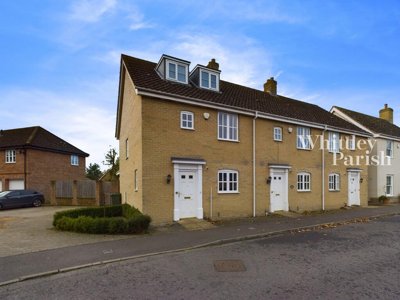
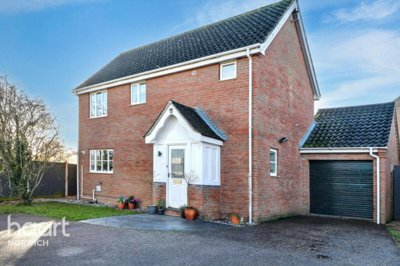
Browse 4 rental homes to rent in Weybread, Mid Suffolk from local letting agents.
£0/m
0
0
0
Source: home.co.uk
Weybread's rental market mirrors wider Mid Suffolk shifts, and our figures show the picture clearly. The overall average house price in Weybread stands at £517,500, while the IP21 5TJ postcode area averages around £324,824. Those purchase values help set the tone for rent levels, because landlords usually look at local property values and demand. Detached homes in the surrounding area command higher rents, with an average sale value of £539,068 for similar owned homes, while terraced properties average £242,333 and tend to offer the more affordable end of the market.
Sold prices in Weybread over the last year were 34% up on the previous year, although they were 23% down on the 2023 peak of £670,125. For renters, that points to a market that has settled after a spell of movement. The IP21 5TJ postcode has seen very little sales activity lately, with no recorded transactions in the last three years. Less stock coming forward can mean fewer rental choices at any one time, so serious renters often do well to register early with local agents.

Classic Suffolk village character is still very much intact here, with rolling farmland, a quiet setting and the familiar sight of Suffolk Pink rendered properties. The village sits within the Waveney District and on the High Suffolk claylands, a glacial deposit of boulder clay that shapes both the land and the way homes are built. That geology gives the countryside its gentle folds and fertile fields, while drainage and ditching are part of everyday life along the roadsides and across the farmland. It is a proper rural spot for walking, cycling and taking in the Suffolk countryside.
At the centre of village life is the historic Church of St Andrew (Grade II*), which gives the community a clear focal point. With 401 residents, Weybread feels small and familiar, the sort of place where neighbours tend to know one another. Mid Suffolk district, where the village sits, has grown by 6.2% since 2011 and now has 102,700 residents. The district is older than average too, with 25.3% of residents aged 65 and over compared with 18.4% nationally. For renters, that usually means a settled community, established households and a slower pace than you would find in a larger town.
Building materials in Weybread are traditional and easy to spot, from Suffolk Pink lime-washed render to black or orange clay pantiles and timber-framed construction. Weybread House, an early 19th-century building with 17th-century work to the rear, shows the white brick and hipped slated roof style often seen in the village. There are numerous listed buildings here, including Grade II properties such as Corner Farmhouse, Mill Lane Farmhouse and Weybread Hall, along with barns and cottages that add to the architectural character. If a property lies in a conservation area, additional planning restrictions may apply.

For families, the nearby education picture is workable rather than immediate. Weybread falls within the Mid Suffolk education catchment area, with schools serving a broad spread of rural communities. Primary education is usually found in neighbouring villages, and several primary schools sit within a reasonable driving distance of the village. These smaller rural schools often have close community links and plenty of individual attention for pupils, though capacity can be tighter than at larger urban schools.
Secondary education options include schools in nearby towns such as Diss, where students can access a wider range of facilities and curriculum choices. Families may also look at grammar schools in Suffolk, but entry depends on the 11-plus examination and catchment area arrangements. We would always suggest visiting schools and checking catchment boundaries before settling on a rental property. Mid Suffolk has an older population profile, which can affect school rolls and, at times, create swings in available places as communities change over time.
Further and higher education is available in larger towns including Ipswich, Norwich and Cambridge, all reachable through the local transport network. Sixth form provision varies from school to school, and some students choose to travel to sixth form colleges in nearby towns for a broader choice of A-level subjects. Parents renting in Weybread should check current Ofsted ratings, admission policies and transport arrangements, so they know educational needs can be met from this rural base.

Road travel is the main way in and out of Weybread, with the village sitting within easy reach of the A143 and connections to the A140 and A1066. Diss, about 6 miles from Weybread, gives access to the main railway line between Norwich and London Liverpool Street, with journeys to the capital usually taking around 90 minutes to 2 hours. That makes the village realistic for commuters who want rural living but still need to reach London for work. The nearby market town also has bus services linking surrounding villages and towns.
By car, Norwich lies approximately 20 miles to the north and brings Norwich International Airport, shopping and employment options within reach. Ipswich can be reached to the south via the A140, which opens up more rail links and a wider mix of amenities. Local bus services run across Mid Suffolk, though frequencies are limited compared with urban areas, so many residents see car ownership as a practical necessity. Cycling is common for short trips, but the rural road network demands care because road widths and surfaces vary across the Suffolk countryside.
Parking in Weybread reflects its village scale, with limited public parking but usually plenty of on-street parking for residents. Homes with private driveways or garages are especially useful, particularly for households with more than one vehicle. The nearest major motorway links are further away, with the A14 providing access to Cambridge and Felixstowe port to the west and south. In broad terms, Weybread suits people who work locally, commute to Norwich or London by rail from Diss, or work from home, while those needing daily access to major city jobs should weigh up journey times and transport costs carefully.

A good first step is to spend time in Weybread at different times of day and on different days of the week, so the village atmosphere feels clear before you commit. Check local amenities, mobile phone coverage and the nearest schools, shops and transport links. Rental supply is limited, so the competition for available homes can be strong.
Our advice is to sort a rental budget agreement in principle before the search begins. It shows landlords that you are a serious and financially viable tenant. Get your paperwork together too, including proof of income, employment references and previous landlord references if you have them. In Mid Suffolk, affordability has become difficult, with median house prices 8.93 times median earnings.
Local estate agents and property portals are worth registering with straight away. In Weybread, properties may be listed by agents in nearby towns like Diss or Harleston. View more than one home so you can compare condition, maintenance standards and rental value. It also helps to ask about the heating system, insulation and any recent renovation or maintenance work.
Before you sign, read the tenancy agreement carefully. Check the rental amount, deposit amount, lease length and notice periods, and remember that the deposit is capped at five weeks rent for properties with annual rent under £50,000. For homes in listed buildings or conservation areas, there may be extra restrictions on changes and decorations.
For older homes in Weybread, a RICS Level 2 Survey can be very useful, even though it is not always mandatory for renters. It gives information on property condition, structural risks and possible maintenance issues. That matters here because many of the buildings are old and the local clay soil adds its own complications. Survey costs in Suffolk typically range from £400 to £1,000, depending on property size.
On moving day, carry out a full inventory check with your landlord or agent before occupation. Photograph every room, along with fixtures and fittings, and make a record of the condition. Any existing damage or defects should be reported immediately, so you are not blamed for them later on. It protects the deposit and gives everyone a clear view of the property's starting condition.
Clay underpins much of the advice here. Weybread sits on High Suffolk claylands, where boulder clay soils can be prone to shrink-swell movement. That means some homes face subsidence risk, especially in long dry spells or where tree roots draw moisture from the soil. While viewing, we would look out for cracks in walls, uneven floors and doors or windows that no longer sit squarely. Mature trees close to a property deserve extra attention, because vegetation can make clay movement worse.
Flood risk needs a proper check for any property in Weybread, even though the short-term flood risk in Suffolk is generally low. Homes near watercourses, on low-lying ground or with poor drainage may still face long-term risk from rivers, surface water or groundwater. The Environment Agency's flood risk maps, available online, can give property-specific detail. Before committing to a tenancy, it makes sense to talk through the insurance implications of flood risk with current occupants and potential landlords.
Period features ask for a careful eye during viewings. Traditional Suffolk buildings often use timber framing, Suffolk Pink rendered walls and clay pantile roofs, all of which need the right maintenance and ventilation if damp is to be kept at bay. Watch for musty smells, discoloured walls and condensation. Heating should be adequate, and insulation ought to be up to standard for reasonable energy efficiency. Older homes may also have electrical systems that are out of date, which landlords should deal with before a tenancy begins, but renters still need to check.
Heritage rules matter in or near designated conservation areas, where planning restrictions can limit alterations to the building and its surroundings. With approximately 3,400 listed buildings in the Mid Suffolk District, Weybread has numerous Grade II and Grade II* listed properties, and those often need specific permissions for any works. Renters should be aware that restrictions on hanging pictures, decorating or making external alterations may apply. It is part of living in a village with real heritage, and it comes with character as well as limits.

Rental figures for Weybread itself are thin on the ground, but the wider Mid Suffolk rental market has moved sharply, with average monthly private rents rising by 21.5% between October 2021 and April 2024. For context, the average house price in Weybread is £517,500, while the IP21 5TJ postcode averages around £324,824. Actual rents will vary a great deal by property type, size, condition and whether the home is a period cottage or something more modern. Detached properties usually carry the highest rents, while terraced properties are the more affordable choice. Local letting agents in Diss or Harleston will have the latest asking prices.
Council tax in Weybread falls under Mid Suffolk District Council. Bands run from Band A for lower-value homes through to Band H for the most expensive properties. A property's band is based on its assessed value as of April 1991. You can check the council tax band for any specific address on the Valuation Office Agency website using the property address or postcode. Council tax helps fund services such as education, waste collection and local authority facilities.
Nearby primaries include village schools serving local communities within a sensible distance of Weybread. Secondary education is available in nearby towns, with schools in Diss and Harleston serving the wider catchment. Parents should look into current Ofsted ratings, admission catchment boundaries and transport arrangements, since these can all affect access from Weybread. Visiting schools directly and studying the admission policies helps families make a more informed choice about where to rent. Some households may also consider grammar school options, subject to 11-plus examination results and available places.
Public transport is limited, which is typical for a rural Suffolk village. The nearest railway station is in Diss, about 6 miles away, and it offers services to Norwich and London Liverpool Street. Local buses do link Weybread with surrounding villages and towns, although the service is much less frequent than in urban areas. For daily commuting or for getting around without a car, that limited connectivity matters. Most residents rely on private vehicles for regular travel, with the nearest major road connections via the A143 and A140. Taxis and community transport schemes are available as alternatives for those without a car.
Weybread suits renters who want an authentic rural Suffolk village experience, along with space, calm and a sense of community. The population is stable and established, at around 401 residents, which helps the village feel intimate and connected. It works well for people who value countryside living and are comfortable with the smaller set of amenities on offer, with more services in nearby towns. The heritage here, from the historic church to the many listed buildings, adds plenty of character. The trade-off is limited public transport, the likelihood of needing a car and fewer rental homes than you would find in a larger settlement.
Under the Tenant Fees Act 2019, deposits for rental properties are capped at five weeks rent where the annual rent is less than £50,000. So for a home renting at £800 per month, the maximum deposit would be £4,000. Holding deposits are limited to one week's rent. Permitted payments cover rent, council tax, utility bills and replacement keys. Fees for references, credit checks or tenancy administration should not be charged by letting agents or landlords. Before moving in, ask for a detailed inventory and photograph every room to protect your deposit when the tenancy ends.
Older housing dominates Weybread, from timber-framed cottages to brick-built farmhouses and period village houses. The materials are familiar to the area, including Suffolk Pink lime-washed render, clay pantiles and traditional brickwork. Many of the properties are listed, which affects what tenants can alter or maintain. High Suffolk claylands create a real risk of subsidence from clay shrink-swell, especially where older homes have shallow foundations. Some properties may also show damp or need upgrades to insulation and heating systems. A careful viewing, and possibly a RICS Level 2 Survey, can pick up issues before you commit.
From 4.5%
Compare rental budget rates and find the best deal for your Weybread rental
From £49
Expert referencing services for your Weybread property rental
From £400
RICS Level 2 Survey for your Weybread property
From £80
Energy Performance Certificate for your rental property
Beyond the monthly rent, renting a property in Weybread brings several other costs that tenants should plan for. The deposit, capped at five weeks rent under the Tenant Fees Act 2019, is usually the biggest upfront item. For example, a property renting at £950 per month would require a deposit of £4,125. That deposit must be protected in a government-approved scheme within 30 days of receipt, and tenants should be given written confirmation of which scheme is holding the money. The holding deposit, limited to one week's rent, secures the home while referencing and paperwork are completed.
Moving in Weybread also means thinking about the practical costs of getting settled. Removal van hire or professional removal services will vary depending on the amount of belongings and the distance from your current home. Because Weybread has limited public transport and only modest amenities within walking distance, we would also factor in vehicle costs such as fuel, insurance and possible parking provision. Utility connection fees for gas, electricity, water and broadband need to be budgeted for, although some landlords include certain services. Council tax begins on your tenancy start date, and Mid Suffolk bands run from A to H depending on property value.
For anyone thinking about buying later, knowing your rental costs and managing your budget well is a useful stepping stone. Weybread average prices currently sit at £517,500, while the wider area has seen prices shift up and down, with recent years bringing both peaks and corrections. Housing affordability in Mid Suffolk is 8.93 times median earnings, which is above the national average of 8.26. If you expect to buy eventually, it helps to think about how your rental period supports your savings and wider financial goals. A RICS Level 2 Survey, usually costing between £400 and £1,000 in the Suffolk area, provides valuable condition information whether you rent long term or plan to purchase.
Properties to Rent In London

Properties to Rent In Plymouth

Properties to Rent In Liverpool

Properties to Rent In Glasgow

Properties to Rent In Sheffield

Properties to Rent In Edinburgh

Properties to Rent In Coventry

Properties to Rent In Bradford

Properties to Rent In Manchester

Properties to Rent In Birmingham

Properties to Rent In Bristol

Properties to Rent In Oxford

Properties to Rent In Leicester

Properties to Rent In Newcastle

Properties to Rent In Leeds

Properties to Rent In Southampton

Properties to Rent In Cardiff

Properties to Rent In Nottingham

Properties to Rent In Norwich

Properties to Rent In Brighton

Properties to Rent In Derby

Properties to Rent In Portsmouth

Properties to Rent In Northampton

Properties to Rent In Milton Keynes

Properties to Rent In Bournemouth

Properties to Rent In Bolton

Properties to Rent In Swansea

Properties to Rent In Swindon

Properties to Rent In Peterborough

Properties to Rent In Wolverhampton

Enter your details to see if this property is within your budget.
Loans, cards, car finance
Estimated property budget
Borrowing + deposit
You could borrow between
Typical borrowing
Monthly repayment
Est. at 4.5%
Loan-to-value
This is an estimate only. Your actual budget may vary depending on interest rates, credit history, and personal circumstances. For an accurate affordability assessment, speak to one of our free mortgage advisors.
This calculator provides estimates for illustrative purposes only and does not constitute financial advice. Your home may be repossessed if you do not keep up repayments on your mortgage. Estimates based on 4.5% interest rate, repayment mortgage. Actual rates depend on your circumstances.
Homemove is a trading name of HM Haus Group Ltd (Company No. 13873779, registered in England & Wales). Homemove Mortgages Ltd (Company No. 15947693) is an Appointed Representative of TMG Direct Limited, trading as TMG Mortgage Network, which is authorised and regulated by the Financial Conduct Authority (FRN 786245). Homemove Mortgages Ltd is entered on the FCA Register as an Appointed Representative (FRN 1022429). You can check registrations at NewRegister or by calling 0800 111 6768.

We use cookies to show you personalised content and improve your experience of our website. Find out more in our Privacy policy and Cookie policy.