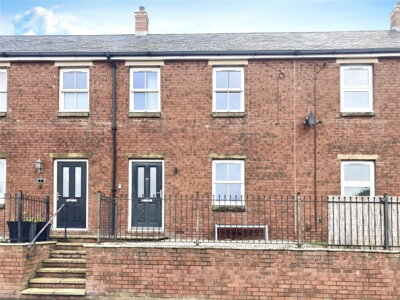
Browse 1 rental home to rent in Holme Low from local letting agents.
Holme Low’s rental market mirrors the feel of a small rural Cumbrian parish, with a limited but distinctive mix of homes. We mostly see traditional cottages, farmhouses and detached houses built from local sandstone and brick, which give the Cumberland area its familiar look. Many of the properties are older, so exposed beams, stone fireplaces and thick walls are common, all of which help with insulation against the Cumbrian climate. Farming has shaped the parish for generations, and that shows in the plots too, with generous gardens and outbuildings that offer storage and usable outdoor space, something far harder to come by in town.
For Holme Low, broader Cumbria figures provide the clearest guide, because there is little specific rental data for such a small place. In similar rural parts of Cumbrian, detached homes usually sit at £700-1,200 per month, depending on condition and specification, while terraced cottages tend to fall in the £400-600 range and give renters a lower-cost way in. Across the county, rents have held steady in recent years, and Cumbria still appeals to people who want countryside living without giving up everyday essentials. Silloth is close by, so residents can reach shops, healthcare and schools without too much effort.
Demand can be steady in Holme Low, but supply is narrow, which keeps competition at a moderate level. Applicants who have their paperwork ready, from financial documents to references and a clear budget, are usually in the strongest position when a suitable place appears. Local letting agents in Silloth are worth speaking to, because they know the market and can point people towards the latest listings. Tourism on the Solway Coast also plays a part, and during quieter periods, when caravan parks and holiday lets ease off, a few more long-term homes may come up.

Holme Low still runs to rural rhythms, and the parish had a population of about 350 after Silloth Civil Parish was separated in 1934, a figure that stayed much the same through to 2001. It is the sort of place where people know their neighbours and local events still matter. Farming has long been the backbone of the economy, shaping both the land and the community. More recently, tourism has brought caravan parks serving Solway Coast visitors, while light industry linked to the former Silloth Airfield has added extra jobs within a sensible travelling distance.
Skinburness Marsh is central to the look and feel of Holme Low. It was once common grazing land, and it still defines the local setting today. Open skies, plenty of birdlife and the dramatic tides of the Solway Firth all come with it. Grune Point and the nearby coastline give residents somewhere to walk, watch birds and enjoy a quieter stretch of coast. There is also a medieval sea dyke, a reminder of how long the community has managed water and shoreline conditions, and the ground here is likely to include alluvial deposits and clays left behind by the marshland.
Silloth, close by, has the everyday essentials, shops, pubs, a post office and community facilities, while Carlisle and Workington offer a much wider choice of retail and leisure. Scotland is not far away either, and Dumfries can be reached in around 90 minutes by car. For those who like the outdoors, the Solway Firth gives coastal walks and birdwatching, and the wider Cumbrian Lake District is within reach for a complete change of scenery. The slower pace in Holme Low suits renters who want calm, natural surroundings and a proper sense of community.

Families looking at a rental in Holme Low will usually rely on primary schools in the surrounding area, with Silloth Primary School the main local option for younger children. Because the parish is rural, education is generally accessed through neighbouring communities, and transport for school runs is often available for families living in more remote spots. Silloth Primary School takes children from Reception through to Year 6, and its small size helps teachers know pupils well. That kind of setting often means more individual attention and stronger pastoral care, which many families value during the early years.
For secondary education, pupils generally travel to schools in nearby towns, with Silloth or larger settlements providing the usual comprehensive option. School buses and arranged transport make life easier for families in rural areas, although the journeys can be longer than those faced by urban households. Anyone searching for a rental in Holme Low should think carefully about catchment areas and daily travel before committing to a property, so schooling fits neatly around family routines. Schools nearby are well regarded for both results and pupil wellbeing, but catchment lines do shift, so checking the latest position with the relevant education authority is wise.
Older children and students have further education choices in Carlisle and Whitehaven, where colleges offer A-levels and vocational courses. That means renters in Holme Low do not have to give up on post-16 study simply because they live in a rural parish. For university, Lancaster, Newcastle and Edinburgh are all within reach by car or public transport from the Holme Low area. Scotland nearby also brings another option, with a different fee structure for English students, which can matter for families planning the next stage.

Transport around Holme Low is shaped by its rural setting, though residents still have practical ways to get about. The A596 is the main route through the area, linking Holme Low with Silloth to the south and joining the wider Cumbrian road network. Carlisle is about one hour away by car, so city trips for shopping, appointments or evenings out are realistic. For people commuting to bigger towns or cities, a car is close to essential, but the distances are short enough that fuel bills are generally more manageable than for longer daily journeys.
Public transport is limited, but it does work for a place of this size. Buses run between Holme Low, Silloth and nearby villages at regular intervals. The nearest rail links are at Aspatria and Wigton, where passengers can connect to the Cumbrian Coast Line and then on to Carlisle and the West Coast Main Line, with access to London, Glasgow and Manchester. For people who work from home or locally, the quiet surroundings and decent mobile coverage in most spots help with flexible working. Dumfries is around 90 minutes by car too, and the Scottish Borders are close enough for a weekend trip.
For shorter journeys, cycling can work well on the flat ground around Holme Low, especially along the quiet lanes that join the parish to nearby communities. The Solway Coast also has some scenic routes for keen cyclists, though the wind can bite, particularly in spring and autumn. Walking is popular too, helped by a wide network of public footpaths leading into the countryside and along the coast. For longer trips, Newcastle Airport is about two hours away by car, while Liverpool John Lennon Airport and Manchester Airport can be reached in three to four hours, opening up domestic and overseas travel.

Renting in Holme Low means keeping an eye on issues that matter in a coastal rural area, especially where older buildings are concerned. Because the parish sits near Skinburness Marsh and the Solway Firth, flood risk history and any resilience measures in place should be checked early on. Current flood assessments for individual homes may not always be easy to find, so it helps to speak to the landlord or letting agent about past flooding and to view a property during, or just after, wet weather. That often tells us more than a summer visit ever could.
Age is another factor here. With parish origins going back to at least 1801, much of the housing stock is likely to be over 50 years old. Traditional construction is common, so timber frames, stone walls and older roofing materials may need more upkeep than a modern build. Electrical wiring, plumbing and heating all deserve a close look to see that they meet current standards and work properly. It is also sensible to ask about heating costs, because homes with less insulation can be expensive to warm through Cumbria’s cool winters and coastal conditions.
The geology around Holme Low, with its marshland, alluvial deposits and clay soils, can sometimes lead to ground movement over time. Serious structural issues are not common, but older homes should still be checked for signs of subsidence or movement, such as cracks, sticking doors or uneven floors. Ground-floor properties can be especially prone to damp in this coastal setting, so winter viewings or visits after wet weather are useful. Even so, many of the older houses have thick walls and traditional build quality that give them natural temperature control and a durability that has lasted for generations.

Before starting your search, we recommend getting a rental budget agreement in principle so you know what monthly rent you can comfortably manage. A financial adviser or mortgage broker can provide this, and it shows landlords that you are serious and financially sound. Our budget checks should include rent, council tax, utility bills and contents insurance, so the full cost of renting in this rural area is clear from the start.
Take time to get to know the area before choosing a home. Visit at different times of day and different days of the week, look at the shops and services in Silloth, and speak to people who already live here about day-to-day life and any practical points they have come across. The Solway Coast changes with the seasons, and summer tourism brings a different pace, so understanding that rhythm helps set realistic expectations for the year ahead.
Once a property catches your eye, arrange viewings through Homemove or directly with local letting agents in the Silloth area. Make notes as you go and ask about the state of the home, the lease terms and what fixtures and fittings are included. A second look at a different time of year can be revealing, especially with older rural homes that behave differently in wet, cold or windy weather.
For any property over 50 years old, it is sensible to book a RICS Level 2 Survey before you commit to a rental agreement. In Holme Low, that matters because traditional construction and older stock can bring concerns around damp, roof condition, electrical wiring and flood resilience, all of which deserve proper scrutiny. Survey costs usually sit between £400-1,000, depending on property value and size, and that outlay can save a good deal of trouble later on.
Once the right property comes up, get your tenancy application in quickly and include everything asked for, such as proof of identity, evidence of income and references from previous landlords or employers. Having those documents ready can make all the difference in a market with limited stock. Speed matters here.
Read the tenancy agreement carefully before you sign, and make sure the key points are clear, including rent payments, maintenance duties, notice periods and any renewal terms. The contract should also set out exactly which bills are covered by the rent and which fall to you as tenant, such as council tax, utilities and any service charges for shared areas.
Specific rental data for Holme Low is thin on the ground because so few properties come up in this rural parish. Wider Cumbria figures help fill the gap, with terraced homes usually at £400-600 per month and larger detached properties at £700-1,200 depending on size, condition and location. Homes in Holme Low often offer more space and land than an urban equivalent for similar money. Local letting agents in Silloth, or Homemove’s property search, will give the clearest picture of what is available right now and at what price.
For council tax, properties in Holme Low fall under Allerdale Borough Council, with bands A through H depending on assessed value. Rural homes with agricultural elements or larger plots can sometimes raise banding questions that do not arise with standard residential stock. Before you commit, ask the landlord or letting agent which band applies and what the yearly cost will be, because council tax is usually down to the tenant as well as rent. In Allerdale, Band D properties currently pay around £1,800-2,000 per year, although that changes with the band.
The nearest primary school is Silloth Primary School, which serves families from the surrounding rural communities, including those in Holme Low parish. It teaches children from Reception through to Year 6 and offers the personalised attention that smaller rural schools are known for, along with a strong reputation for pupil welfare. For secondary school, children usually travel to nearby towns, with coordinated transport available for families in outlying areas. Families weighing up a rental in Holme Low should check the current catchment position with Cumbria County Council and build journey times into their plans.
Public transport from Holme Low reflects its small rural setting, with buses running between the area and Silloth and giving access to local shops, healthcare and other services. Aspatria and Wigton are the nearest railway stations, linking into the Cumbrian Coast Line and then on to Carlisle, where the West Coast Main Line opens up travel to London, Glasgow and Manchester. For most residents, a car remains close to essential for everyday travel, though good mobile coverage in the area does support remote working and cuts down the need for regular commuting.
Holme Low offers a rental prospect that feels properly rural and distinctly Cumbrian, with Skinburness Marsh and the Solway Firth close by and the natural setting doing a lot of the work. The community is close-knit, the pace is slower and the appeal is strongest for renters who value quiet surroundings and outdoor life over town-centre convenience. The trade-offs are straightforward, limited local amenities inside the parish, with Silloth covering most essentials, car travel needed for much of daily life, and an older housing stock that calls for a little more maintenance awareness. For people who want coast and countryside together, it compares well with more urban rental markets.
In England, rental deposits are capped at five weeks rent where the annual rent is less than £50,000, so for a typical Holme Low property at £700 per month, the deposit would be capped at £2,395. Tenants should also plan for a holding deposit, usually one week’s rent to secure the home, the first month’s rent in advance and, where relevant, referencing fees charged by letting agents. Your deposit must be protected in a government-approved Tenancy Deposit Scheme within 30 days of receipt, and you should be given the protection details as a tenant. We always suggest asking for a full breakdown of every cost before you commit.
Because Holme Low sits near Skinburness Marsh and the Solway Firth, flood risk is one of the main issues for prospective renters. The medieval sea dyke that once protected agricultural land shows just how long the community has lived with coastal and flood pressures. We would always suggest discussing any flood history with the landlord, checking for resilience measures and, if possible, viewing the property after wet weather or high tides. Buildings insurance usually covers flood damage, and tenants should make sure their contents insurance does the same. Major flooding is not routine, but it pays to know where a property sits in relation to water.
Jobs around Holme Low are mainly tied to agriculture, tourism, including the caravan parks along the Solway Coast, and light industry linked to the former Silloth Airfield. Silloth nearby adds more retail and service work, while Carlisle and Workington open up wider employment markets for those who can drive. Remote workers also find the area appealing, thanks to the quiet setting and good broadband connectivity. Scotland is another possibility too, with Dumfries and the wider Scottish Borders offering extra options for anyone willing to commute now and then.
Knowing the full cost of renting in Holme Low helps tenants budget properly and avoid surprises once the tenancy starts. The deposit is usually the biggest upfront expense after the first month’s rent, and the law requires it to be protected in a government-approved Tenancy Deposit Scheme within 30 days of receipt. That protection means you should get your money back at the end of the tenancy, provided the home is left in good condition and the agreement has been followed. Your landlord must also tell you which scheme holds the deposit and how to contact it, and missing that deadline can bring financial penalties for the landlord.
There are other costs to factor in too, including holding deposits, usually one week’s rent and often taken off the final deposit or first month’s rent, plus reference and credit check fees charged by letting agents, along with the cost of moving your belongings. Council tax, utility bills and contents insurance also sit with the tenant, so they need to be built into the monthly budget. A rental budget agreement in principle gives a clear picture of what can be afforded each month, including all of those extras, and it also shows landlords that the application is serious. For first-time renters in England during 2024-25, some government schemes may help with certain costs, depending on eligibility.
When planning your budget for a Holme Low rental, remember that utility bills can rise and fall with the seasons, especially in Cumbria’s winter months when older homes with less insulation cost more to heat. Contents insurance is important for protecting your belongings against theft, fire, flood and other risks, and it should be arranged from the day you move in. It is also sensible to put aside a small emergency fund for unexpected replacements or minor costs during the tenancy, since landlords normally handle structural repairs while tenants are responsible for damage caused by negligence or poor care.
From 4.5%
Get a rental budget agreement in principle before you start looking.
From £30
Complete the referencing checks so your rental application moves faster.
From £400
Professional survey for properties over 50 years old
From £60
Energy performance certificate for your rental property
Properties to Rent In London

Properties to Rent In Plymouth

Properties to Rent In Liverpool

Properties to Rent In Glasgow

Properties to Rent In Sheffield

Properties to Rent In Edinburgh

Properties to Rent In Coventry

Properties to Rent In Bradford

Properties to Rent In Manchester

Properties to Rent In Birmingham

Properties to Rent In Bristol

Properties to Rent In Oxford

Properties to Rent In Leicester

Properties to Rent In Newcastle

Properties to Rent In Leeds

Properties to Rent In Southampton

Properties to Rent In Cardiff

Properties to Rent In Nottingham

Properties to Rent In Norwich

Properties to Rent In Brighton

Properties to Rent In Derby

Properties to Rent In Portsmouth

Properties to Rent In Northampton

Properties to Rent In Milton Keynes

Properties to Rent In Bournemouth

Properties to Rent In Bolton

Properties to Rent In Swansea

Properties to Rent In Swindon

Properties to Rent In Peterborough

Properties to Rent In Wolverhampton

Enter your details to see if this property is within your budget.
Loans, cards, car finance
Estimated property budget
Borrowing + deposit
You could borrow between
Typical borrowing
Monthly repayment
Est. at 4.5%
Loan-to-value
This is an estimate only. Your actual budget may vary depending on interest rates, credit history, and personal circumstances. For an accurate affordability assessment, speak to one of our free mortgage advisors.
This calculator provides estimates for illustrative purposes only and does not constitute financial advice. Your home may be repossessed if you do not keep up repayments on your mortgage. Estimates based on 4.5% interest rate, repayment mortgage. Actual rates depend on your circumstances.
Homemove is a trading name of HM Haus Group Ltd (Company No. 13873779, registered in England & Wales). Homemove Mortgages Ltd (Company No. 15947693) is an Appointed Representative of TMG Direct Limited, trading as TMG Mortgage Network, which is authorised and regulated by the Financial Conduct Authority (FRN 786245). Homemove Mortgages Ltd is entered on the FCA Register as an Appointed Representative (FRN 1022429). You can check registrations at NewRegister or by calling 0800 111 6768.

We use cookies to show you personalised content and improve your experience of our website. Find out more in our Privacy policy and Cookie policy.