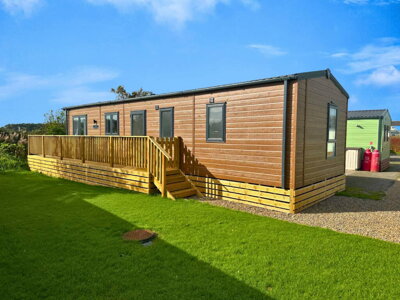
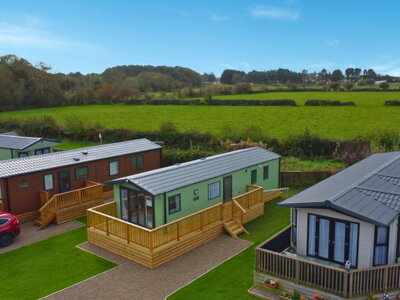
Browse 2 homes new builds in Holme Low from local developer agents.
Holme Low and the wider Solway Coast market has the feel of rural Cumberland, and the housing reflects that, with plenty of traditional local stone and brick construction. Detached family homes with sea views, or spots close to Skinburness Marsh, usually attract the strongest prices, while cottages and terraced properties can offer a more accessible way into this much-liked coastal setting. In our current listings, we see everything from traditional Cumbrian farmhouses to modernised period cottages, and prices tend to track the pull of this unspoiled stretch of coast. Across CA6, homes regularly sell well because supply is limited and demand stays steady among buyers drawn to the rural coastal lifestyle Holme Low offers.
Across the broader Solway Coast region, prices have held up better than some buyers expect, even through national market swings. In CA6, covering Holme Low and nearby Silloth-on-Solway, terraced homes commonly sit in the £150,000 to £250,000 bracket, semi-detached houses start from £250,000, and detached properties tend to begin at £400,000 upwards. Flats are relatively rare here, as most of the housing stock is made up of houses rather than apartments. We did not identify any active new-build developments in the immediate Holme Low area, so buyers wanting modern construction may need to widen the search to surrounding towns within driving distance. Much of the local stock is historic and many homes are over 50 years old, which makes survey choice an important part of any purchase.
In comparable Holme areas, average sold prices have sat around £242,000 to £315,000 depending on property type. Terraced homes have averaged between £198,000 and £256,000, semi-detached properties around £249,000 to £271,000, and detached houses between £422,000 and £587,000. That spread underlines the premium achieved by larger detached homes with land or coastal views in this part of Cumberland. Transaction numbers in Holme Low are relatively low each year, so one sale can shift the averages quite noticeably, which is why we always suggest looking closely at the individual property rather than leaning too heavily on broad figures alone.

Life in Holme Low is shaped by the Solway Coast, where marshland and shoreline have influenced the community for centuries. The parish has deep agricultural roots, with farmland running inland from the coast, while caravan parks nearer the shoreline point to the continuing importance of tourism in the local economy. It is still a small and close-knit place, with community life often centred on the parish church and nearby Silloth-on-Solway. The population has stayed fairly steady at around 350 residents, giving the area a distinctly intimate feel that is harder to find in modern Britain.
One of the parish landmarks is St Paul's Church at Causewayhead, a clear reminder of Holme Low's history and its place within the wider Solway Coast story. Set at grid reference NY1353, the church marks a long-established human presence in this coastal landscape. The economy here has broadened over time, moving beyond purely agricultural beginnings to include tourism and light industry, especially around the former Silloth Airfield, where commercial units support local businesses. Day to day, outdoor pursuits play a big part in local life, with walking, birdwatching and coastal activities all firmly woven in.
Skinburness Marsh is one of the area's real draws, especially for wildlife watching. Migratory birds use the Solway Firth as an important stopping point, and that brings excellent viewing opportunities close to home. The farming cycle and the shifting seasons across the marsh give the landscape a living, changing quality that many residents come to value deeply. Nearby Grune Point adds another highlight, with wide views across the firth to Scotland and a well-loved base for coastal walks and nature watching. For many buyers, that sense of space, quiet and closeness to nature is exactly why Holme Low stands out.

Families thinking about Holme Low usually look first towards Silloth-on-Solway for schooling, as it acts as the main service centre for the surrounding rural parishes. Silloth Primary School serves younger children locally, while secondary education is generally accessed through schools across the wider Allerdale district. Grammar school options are nearest in Carlisle, so catchment rules and transport arrangements need proper thought. Because Holme Low is rural, we recommend confirming school transport directly with Cumberland Council before a purchase is tied up.
Carlisle is the main hub for further education, with options including Carlisle College, the University of Cumbria campus, and specialist vocational training providers. Parents moving into Holme Low should check current school performance figures and Ofsted ratings for schools across the Solway Coast and Allerdale areas. The number of schools serving these rural parishes is limited, so catchment boundaries can make a real difference to where a child is offered a place. Early enquiries matter here, and school transport routes and subsidies should be checked with the local authority before committing to a purchase.
Because Holme Low has such a small population, primary school year groups are often small as well. That can be a real plus for individual attention and community feel, though it may also mean fewer extracurricular options than larger schools can offer. Secondary schools in the Allerdale district bring a wider choice of subjects and facilities, but families do need to build the daily travel distance into their routine. Some choose local boarding during the secondary years, some look at home education, and others simply work the commute into everyday life. Carlisle being nearby for sixth form and university study means older students can still reach broad higher education options without having to relocate for good.

Getting around from Holme Low is largely a matter of road travel, which is typical for a rural coastal parish. The A597 is the key route through the area, connecting Silloth-on-Solway into the wider road network via the A74(M), which in turn links to the M6 motorway. By car, Carlisle city centre is about 45 minutes away, so regular commuting is workable for many people employed in the county capital. The coastal road along the Solway Firth is scenic, no question, but it also calls for care behind the wheel, especially in the tourist season when traffic builds up.
Public transport is available, but it is limited, and bus services are the main alternative if you are not driving. Carlisle and Aspatria are the nearest railway stations, and both need either a bus connection or a drive from Holme Low. Once at Carlisle, the West Coast Main Line gives strong links to London Euston, Edinburgh, Glasgow and Birmingham. For those working in or around the nuclear industry, the Sellafield area in West Cumbria can be reached by the coast road, although a journey of around 90 minutes each way makes that a demanding daily trip. Many people here instead work locally or remotely and make the most of the quieter setting, which tends to suit home working well.
Holme Low can feel isolated for everyday amenities, but it is not cut off from bigger centres. Reaching the M6 at Carlisle places Manchester, Liverpool and the wider motorway network within practical range for occasional journeys. Scotland is also accessible, with Edinburgh and Glasgow reached either by rail from the West Coast Main Line or by road via the M74. That opens up work, leisure and cultural options beyond Cumbria. Carlisle Lake District Airport is nearby for limited flights, though for broader international travel most residents still head to Manchester or Liverpool.

Before arranging viewings in Holme Low, it pays to look into the area's particular issues. Flood risk linked to Skinburness Marsh, parish planning restrictions and the proximity of listed buildings can all affect a purchase. We also suggest getting clear on local market behaviour, including typical sale times, so decisions are based on how this area actually moves. The CA6 postcode may have implications for insurance and services, and it is worth checking the historic connection between the parish and the nearby Silloth Airfield commercial development as well.
We advise lining up a mortgage agreement in principle before the property search gets going. It shows you are ready to move and can strengthen your hand when offering in a competitive rural market where good homes sometimes sell quickly. Because many properties here are older, lenders may attach particular conditions to valuations and surveys. For that reason, speaking to a mortgage broker who knows rural Cumbrian housing before committing to borrowing is often a sensible step.
Try to see more than one property, and if possible do it in different seasons. Coastal surroundings and marshland can look and feel very different through the year. The condition of the building itself deserves close attention too, given the age of much of the local stock. Living near Skinburness Marsh and the Solway Firth means weather and sea conditions can change the atmosphere of a place quite dramatically, so viewing in a range of conditions can tell you a lot about the setting.
With the likely age of housing in Holme Low, we strongly recommend a RICS Level 2 Survey. It can pick up structural concerns, damp, roof defects and outdated electrics that often appear in period homes. Our surveyors are used to traditional Cumbrian construction and know the issues that marshland locations can bring, including possible foundation movement linked to shrink-swell soils and the effect of coastal weather on older buildings.
Legal work matters here. We recommend using a conveyancing solicitor who knows rural Cumbrian property and understands the issues that can arise in coastal or marshland settings. They should check flooding history, boundaries and any rights of way affecting the property. In the Skinburness area, the medieval sea dyke and historic drainage arrangements may also carry legal implications, and those points deserve specialist investigation.
Once the surveys and legal searches are in order, the next step is exchanging contracts and agreeing a completion date that leaves enough room for the move itself. Rural logistics can take a bit more organising. Removal firms may be coming from Carlisle or further away, so booking well ahead is wise. Timing can matter too, particularly around the tourist season and school terms, because coastal routes are often busier in the summer months.
Homes in Holme Low need careful checking because they are often older and they sit in a coastal environment. Skinburness Marsh and the historic medieval sea dyke that protects the area both point to the need for a proper flood risk review before purchase. Current property-specific assessments are not always easy to obtain, so buyers should ask for Flood Risk searches from the Environment Agency and weigh the property's position in relation to watercourses and the shoreline. Lower-lying homes, especially those with cellars or ground-floor accommodation, need close attention on drainage and any evidence of past flooding.
Marshland geology can have a direct bearing on buildings, and that includes alluvial deposits, silts and clays. Those conditions may create shrink-swell risks that affect foundations over time. Clay soils in particular react to moisture, expanding when wet and shrinking in dry periods, and repeated cycles over years can lead to movement in foundations. In properties that have stood for decades or centuries, that cumulative movement may show up as cracks, sticking doors and windows, or uneven floors. A detailed RICS Level 2 Survey should highlight signs of subsidence, movement or foundation trouble that could be expensive to put right.
Older homes here often rely on traditional Cumbrian construction, usually with local stone and brick, and they do not always suit modern repair methods. Lime mortar pointing, common in historic buildings, needs a different approach from cement-based mortars. Add in the coastal weather and external surfaces can deteriorate more quickly, which is why roofs, chimney stacks, render and pointing all deserve close inspection during a survey. We also advise checking whether a property sits within, or close to, a conservation area, as that can affect what alterations or extensions are allowed. Listed buildings bring plenty of character, but they also come with added responsibilities on maintenance and approvals.
Services are another area that deserves a hard look. Electrical and plumbing systems in older properties are often due for updating to current standards, and rewiring a period home can be both disruptive and expensive. The survey should therefore comment carefully on what is already in place. Plumbing may still include lead or galvanized steel pipes, heating systems may be dated, and single-glazed windows throughout can raise both maintenance costs and energy bills. We always suggest building these possible upgrades into the overall purchase budget before making a final decision.

Sold price evidence for Holme Low itself is thin, simply because there are not many transactions in this rural parish. In the surrounding Solway Coast area within CA6, prices usually run from £150,000 to £250,000 for terraced homes, £250,000 to £400,000 for semi-detached properties, and £400,000 upwards for detached houses with coastal or marshland views. Detached homes with extensive land or sea outlooks can move beyond £500,000. Limited supply in this sought-after coastal spot has helped values stay fairly steady despite wider national fluctuations. In similar Holme areas, homedata.co.uk shows average sold prices around £242,000 to £315,000, with the strongest figures generally attached to detached homes with large gardens and rural positions.
Holme Low falls within Cumberland Council, previously Allerdale Borough Council after the 2023 local government reorganisation. Council tax bands follow the usual England range from A to H. In practice, many period cottages and terraced properties sit in bands A to C, while larger detached houses and homes that have been improved may fall into bands D to F. The exact band depends on the 1991 valuation, and homes near Skinburness Marsh or on the coastal road may present particular valuation factors. Buyers should check the individual property through the Valuation Office Agency website so they have an accurate picture of the ongoing council tax cost.
Silloth-on-Solway provides the nearest primary school for Holme Low and serves the wider rural parishes along the Solway Coast. Silloth Primary School has long been part of local family life and is known for smaller classes, which can help with individual attention, though parents should still look up the latest Ofsted ratings and performance information themselves. For secondary education, most pupils go to schools in the Allerdale area, while some families choose Carlisle for grammar school access or particular subject choices. Transport and catchment can have a big effect on what is practical, so these details are worth checking early. For further education, Carlisle is the main destination at about 30 miles away, with both the University of Cumbria and Carlisle College offering broad options.
Transport links are modest here, which fits the rural coastal setting. Bus services run between Silloth-on-Solway and Carlisle, but they are less frequent than in urban areas, so most residents find a car essential. The X500 and similar services provide the main bus connections, although journey times are long compared with driving. Rail users generally head to Carlisle or Aspatria, and both stations require road transport from Holme Low. Carlisle station then gives strong West Coast Main Line connections to London, Edinburgh, Glasgow and Birmingham, with the fastest trips to London taking around three and a half hours. People working in Carlisle or other larger centres usually commute by car, or they work remotely and benefit from the peaceful surroundings and the reliable broadband now available across many rural locations.
For buyers looking at long-term value, Holme Low and the wider Solway Coast have a good deal going for them. Property values across CA6 have stayed resilient, backed by limited supply and consistent demand from people seeking coastal access, rural character and the community feel that Holme Low still has. The local tourism economy, helped by caravan parks and Solway Coast attractions, adds useful support for nearby services. It is not a market driven mainly by rental demand, though, because the population is small and major employment centres are some distance away. In many cases, capital appreciation is the more likely investment case than rental yield. Renovation projects can be especially interesting where traditional Cumbrian cottages need updating.
Stamp duty in England, effective from April 2024, applies in the usual way to purchases in Holme Low. The standard rates are 0% on the first £250,000, 5% on the slice from £250,001 to £925,000, 10% on £925,001 to £1.5 million, and 12% above £1.5 million. First-time buyers get relief on the first £425,000 at 0%, with 5% charged from £425,001 to £625,000. As Holme Low prices often come in below £500,000, many buyers will fall within reduced rates or first-time buyer relief where it applies. A first-time buyer paying £200,000 for a typical terraced home would owe £0, while a home mover buying a semi-detached property at £320,000 would pay 5% on the £70,000 above the £250,000 threshold, giving £3,500 SDLT. We still advise checking the final position with a financial adviser or solicitor because individual circumstances can change the calculation.
From £350
Qualified surveyors inspecting traditional Cumbrian property can spot the defects that older coastal homes often hide. We regularly identify issues such as damp, structural movement and roof condition problems.
From £500
For older homes, or any property already showing signs of trouble, a structural survey is often the right choice. We provide detailed reporting on construction, foundations and environmental factors, including marshland considerations.
From £80
An energy performance certificate is required for every property sale. It measures insulation, heating and overall energy efficiency, including in homes built with older traditional construction methods.
From £499
Buying in Cumberland calls for legal support that understands the area. Our conveyancing partners deal with local issues such as flood risk, boundaries and rights of way affecting Solway Coast properties.
Buying in Holme Low involves more than the agreed purchase price, so we always suggest budgeting for the extra costs from the outset. England's stamp duty rules apply here in the normal way, and the standard £250,000 threshold means no SDLT is due on purchases at or below that figure. On a typical terraced home in the Solway Coast area at around £200,000, there would be no stamp duty to pay under current thresholds. Semi-detached properties priced between £280,000 and £350,000 would attract stamp duty only on the portion above £250,000, charged at 5% of that excess.
First-time buyers purchasing up to £425,000 benefit from the higher nil rate band, which can save several thousand pounds against the standard rates. Take a purchase at £350,000, for example, a first-time buyer would pay no stamp duty on the first £425,000, leaving an SDLT bill of £0. Beyond stamp duty, buyers should also allow for survey fees, with a RICS Level 2 Survey from £350, conveyancing from £499, mortgage arrangement fees that vary by lender, and removal costs. In this coastal location, extra checks may also be needed for flood risk or the condition of older construction.
As a rough guide, total buying costs for a Holme Low purchase are often budgeted at 3% to 5% of the purchase price, not including mortgage-related fees. On a property bought for £300,000, that works out at around £9,000 to £15,000 in additional spending for surveys, legal work, stamp duty, searches and moving costs. We also strongly recommend holding back a contingency for works flagged in the survey, because homes in this area are often older. Our surveyors regularly find repair needs in traditional Cumbrian properties, from rewiring to roof work, and allowing for those costs early can save a nasty surprise after completion.

Properties New Builds In London

Properties New Builds In Plymouth

Properties New Builds In Liverpool

Properties New Builds In Glasgow

Properties New Builds In Sheffield

Properties New Builds In Edinburgh

Properties New Builds In Coventry

Properties New Builds In Bradford

Properties New Builds In Manchester

Properties New Builds In Birmingham

Properties New Builds In Bristol

Properties New Builds In Oxford

Properties New Builds In Leicester

Properties New Builds In Newcastle

Properties New Builds In Leeds

Properties New Builds In Southampton

Properties New Builds In Cardiff

Properties New Builds In Nottingham

Properties New Builds In Norwich

Properties New Builds In Brighton

Properties New Builds In Derby

Properties New Builds In Portsmouth

Properties New Builds In Northampton

Properties New Builds In Milton Keynes

Properties New Builds In Bournemouth

Properties New Builds In Bolton

Properties New Builds In Swansea

Properties New Builds In Swindon

Properties New Builds In Peterborough

Properties New Builds In Wolverhampton

Enter your details to see if this property is within your budget.
Loans, cards, car finance
Estimated property budget
Borrowing + deposit
You could borrow between
Typical borrowing
Monthly repayment
Est. at 4.5%
Loan-to-value
This is an estimate only. Your actual budget may vary depending on interest rates, credit history, and personal circumstances. For an accurate affordability assessment, speak to one of our free mortgage advisors.
This calculator provides estimates for illustrative purposes only and does not constitute financial advice. Your home may be repossessed if you do not keep up repayments on your mortgage. Estimates based on 4.5% interest rate, repayment mortgage. Actual rates depend on your circumstances.
Homemove is a trading name of HM Haus Group Ltd (Company No. 13873779, registered in England & Wales). Homemove Mortgages Ltd (Company No. 15947693) is an Appointed Representative of TMG Direct Limited, trading as TMG Mortgage Network, which is authorised and regulated by the Financial Conduct Authority (FRN 786245). Homemove Mortgages Ltd is entered on the FCA Register as an Appointed Representative (FRN 1022429). You can check registrations at NewRegister or by calling 0800 111 6768.

We use cookies to show you personalised content and improve your experience of our website. Find out more in our Privacy policy and Cookie policy.