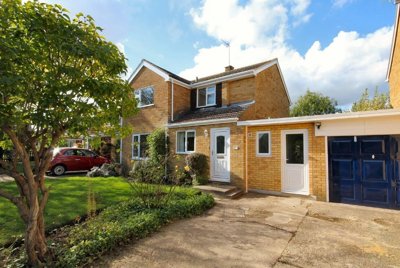
Browse 1 rental home to rent in Great Bradley from local letting agents.
Three bedroom properties represent a significant portion of the Great Bradley housing market, offering space for families with multiple reception rooms and gardens in many cases. Browse detached, semi-detached, and terraced options ranging from period character homes to contemporary developments.
Great Bradley’s rental market sits within the wider property picture for this part of Suffolk. Recent market data points to a sharp rise in values, with average prices up by as much as 39% on the previous year. That figure relates mainly to sales, but in a tight lettings market it usually means available homes attract strong interest from prospective tenants as well. Across the CB8 postcode area, the most common property types are four-bedroom detached houses and three-bedroom semi-detached homes, with detached properties averaging around £313,100 and semi-detached properties averaging approximately £345,000 in nearby Clarendon Estate.
For renters, that strength in the market usually means competition. Good properties can pick up multiple enquiries in short order. In Great Bradley itself, the housing stock ranges from historic timber-framed homes with traditional plastered finishes to later additions from the mid-to-late 1960s Clarendon Estate development. New build options are scarce in the village, although one scheme by Laragh Homes has brought in traditional-style properties with modern features such as air source heat pumps and underfloor heating. As you would expect, rental prices in Great Bradley tend to follow property type, size and condition, with larger detached homes usually achieving higher rents than smaller cottages or terraced properties.

There is a classic English village feel to Great Bradley, and much of that comes from its stock of listed buildings and open countryside setting. Among the better-known heritage properties are Great Bradley Hall, Yew Tree Cottage, Old Farm Cottage, Quince Cottage, St Edmunds Cottage, Matthews Farm, and St Mary's Church, which carries Grade II* listed status. The Malting House, described as an enchanting Grade II listed detached period cottage, is another strong example of the architectural character found around the village centre. Taken together, these buildings speak to the agricultural prosperity of the area from the 17th through 19th centuries, when local farms and estates shaped both the economy and the built environment.
The community here is small, settled and long-established. With a population of approximately 406 residents in the 2021 Census, Great Bradley has the sort of place-based feel where neighbours tend to know one another and local events still matter through the year. Around the village you will find fertile agricultural land, with boulder clay and chalk strata helping form the rolling Suffolk landscape. The nearby River Stour valley adds another layer to that setting, with pleasant walks through meadows and farmland. Day to day, there is a village pub, while fuller shopping, healthcare and leisure options are easy to reach in Newmarket and Haverhill.

Families looking to rent in Great Bradley usually rely on schools within easy reach rather than in the village itself. Primary provision is generally through smaller schools in surrounding villages, and the local primary school serving Great Bradley usually takes children from the village and nearby hamlets, with catchment areas extending across rural communities in West Suffolk. For secondary education, most pupils travel into Newmarket, where there are several options, including schools with strong academic records and good Ofsted ratings. We always suggest checking the latest catchment boundaries and admission arrangements with Suffolk County Council, as those details can affect allocations.
Just 7 miles from Great Bradley, Newmarket acts as the main education centre for the surrounding countryside. Families have access there to primary schools, secondary schools and further education facilities, which makes the town a practical choice when you want broad options without a long commute. Grammar school provision can be found in the wider area too, although entry depends on passing the 11-plus examination. Sixth form study is available in both Newmarket and Haverhill, with A-level courses and vocational qualifications on offer after GCSE. There are also private school options across the region, with several well-regarded independent establishments within a reasonable drive of the village.

Getting in and out of Great Bradley is fairly straightforward for a rural village. It lies about 15 miles west of Cambridge, so the city is usually reachable by car in around 30-40 minutes depending on traffic. That matters for work as much as convenience, given the scale of employment in Cambridge across technology, research and academia. For road links, the A11 trunk road gives a direct route towards Cambridge and Norwich, while the A1307 connects this part of Suffolk with Haverhill and onwards towards the wider Essex border region.
Most public transport here revolves around bus links to Newmarket and Haverhill, with rail connections picked up from there. Newmarket railway station has regular services to Cambridge and Ipswich, and journeys to Cambridge typically take around 20-30 minutes. That makes rail commuting a realistic option for some people working in Cambridge or nearby towns, without relying on the car every day. Bus frequencies are what we would expect in a semi-rural area, usually lighter in the evenings and at weekends than in urban networks. For cyclists, the flatter Suffolk landscape can make village-to-village journeys pleasant, and some nearby towns are seeing dedicated cycle paths developed.

Before we arrange viewings in Great Bradley, it is wise to have a rental budget agreement in principle from a lender in place. That shows landlords you are serious and that affordability has already been checked, which can give you an edge in a village market where available homes are limited.
Take some time to look around Great Bradley and the nearby villages before making decisions. We usually suggest visiting at different times of day, trying the route to Newmarket and Haverhill, and checking what local amenities are actually practical for everyday use. Rural village life suits some renters immediately. For others, it is better understood after a proper look around.
Once we have helped you identify suitable rental properties, book viewings quickly. Stock is limited in a village like this, so homes can be taken up fast. Go in ready with questions about condition, lease terms, included appliances and any specific requirements you may have.
Found a property you want to rent. Move quickly, and send over the full application with all required paperwork. This will usually mean proof of identity, evidence of income or employment, references from previous landlords, and your rental budget in principle. In small communities, landlords often carry out careful tenant checks.
Your preferred property will normally go through tenant referencing before anything is finalised. That means checks on credit history, confirmation of income, and contact with previous landlords or employers. We recommend having every document ready to go, as that is often the simplest way to avoid delays.
After satisfactory referencing, the tenancy agreement is issued for review and signature. Read it carefully. Pay close attention to the tenancy duration, rent amount, deposit amount and any special conditions, and raise questions on anything unclear before signing.
Once the agreement is signed, the next step is sorting the move-in date, usually after the inventory check has been completed. We also suggest arranging buildings insurance for tenants, opening utility accounts and transferring council tax into your name without delay. By law, the deposit must be protected in a government-approved scheme.
Great Bradley has the kind of housing stock that needs a closer look than a typical newer estate property. Many homes date back centuries and use traditional forms of construction, so the age and build method can make a real difference to upkeep. Timber-framed structures with plaster finishes, houses with original features, and buildings put up before modern building regulations can all bring issues that are common in older properties, including damp penetration through solid walls, timber deterioration and electrical wiring that no longer meets current standards. A thorough inspection, backed up by the right survey, can flag these points before you commit to a tenancy.
Listed status is another point to check. Great Bradley has a number of Grade II listed buildings, so some rental homes may fall under listed building consent requirements if alterations or improvements are proposed. If you are taking a listed property, speak with the landlord about any changes you have in mind and what permissions may be needed. The same applies if any part of the village is covered by conservation area designations, as permitted development rights and external alterations can be affected. Energy efficiency also deserves attention in older homes, because traditional construction often means higher heating costs than in a modern build. Ask for the EPC rating and factor that into your monthly utility spend.

There is only limited rental price evidence for Great Bradley, simply because the village has far fewer lettings than sales. Even so, the pattern is fairly clear, with detached properties and larger family houses typically attracting higher rents. In the surrounding CB8 postcode area, homes generally sit at around £1,200 to £2,000 per month depending on size, condition and exact location, and four-bedroom detached houses tend to be at the upper end. The sales market matters here too, because average prices have risen by up to 39% recently, which tends to support rental values.
For council tax, Great Bradley sits within West Suffolk Council. Properties in the village span a range of bands, which reflects the mix of historic cottages, mid-20th century homes and more recent additions. Many older homes, including a good number of the listed buildings near the village centre, often fall within bands A through D, while larger or more modern detached properties may sit higher. You can check the exact band through the Valuation Office Agency or on West Suffolk Council's website using the address.
School provision in Great Bradley itself is limited, so most families look to nearby villages and towns. Primary education is usually accessed through surrounding schools, many of which are viewed positively by Ofsted. For secondary education, Newmarket is the main destination at approximately 7 miles away, with several schools serving the wider rural catchment area. Before committing to a move, we would check current performance data, admission policies and transport arrangements for any school being considered.
As with many rural Suffolk villages, public transport in Great Bradley is functional rather than extensive. Bus services connect the village with Newmarket and Haverhill, where onward rail travel is available from railway stations. Frequencies are lower than in urban areas, especially in the evenings and at weekends, so that needs to be part of the planning. Newmarket railway station does provide regular services to Cambridge and Ipswich, which can make train commuting workable for people travelling into larger towns or cities. By car, the A11 remains the main route for access to Cambridge and Norwich.
For many renters, the appeal of Great Bradley is easy to see. It offers a peaceful rural setting, plenty of scenic countryside, strong historic character and a genuine sense of community among long-term residents. At the same time, Cambridge, Newmarket and Haverhill are close enough to cover work, shopping and leisure without losing the calm of village life. The trade-off is that rental stock can be very limited, and many homes come with the quirks of older, traditionally built properties.
In most cases, renting in Great Bradley will involve a security deposit equal to five weeks' rent, held in a government-approved deposit protection scheme for the length of the tenancy. Tenant referencing fees may apply for credit checks and reference verification, and these are usually in the region of £100 to £200. Some landlords also ask for a holding deposit while referencing is under way. If you are renting for the first time, remember that rent in advance is commonly required too, bringing total upfront costs to approximately six to eight weeks' rent. We generally advise getting a rental budget in principle sorted before starting the search.
From 4.5%
Compare rental budget rates and find the best deal
From £99
We arrange expert referencing services to verify your rental application.
From £150
Protect your deposit with a professional inventory check
From £85
Energy Performance Certificate for your rental property
Knowing the likely costs before you move makes budgeting much easier in Great Bradley. The usual security deposit for a rental property in England is five weeks' rent, and it must be protected in a government-approved scheme such as the Deposit Protection Service, MyDeposits, or Tenancy Deposit Scheme. At the end of the tenancy, that deposit is returned subject to any deductions for damage beyond fair wear and tear or unpaid rent. In a village where the stock runs from compact cottages to substantial detached homes, weekly rents vary widely, so deposit sums can range from approximately £600 for smaller properties to more than £1,500 for premium family homes.
There are other upfront costs to allow for as well. Tenant referencing generally costs between £100 and £200, covering credit checks, employment verification and landlord references. Some agencies still charge administration fees, although these have largely been removed for standard tenancies under government regulations. Rent in advance is usually needed, typically one month, which means total upfront costs often reach approximately six to eight weeks' rent before move-in. First-time renters should also budget for moving costs, furniture if needed, and utility setup fees including deposits for gas, electricity and water services. We strongly recommend obtaining a rental budget agreement in principle before starting the search, as it strengthens your application and shows landlords you are financially ready.
Properties to Rent In London

Properties to Rent In Plymouth

Properties to Rent In Liverpool

Properties to Rent In Glasgow

Properties to Rent In Sheffield

Properties to Rent In Edinburgh

Properties to Rent In Coventry

Properties to Rent In Bradford

Properties to Rent In Manchester

Properties to Rent In Birmingham

Properties to Rent In Bristol

Properties to Rent In Oxford

Properties to Rent In Leicester

Properties to Rent In Newcastle

Properties to Rent In Leeds

Properties to Rent In Southampton

Properties to Rent In Cardiff

Properties to Rent In Nottingham

Properties to Rent In Norwich

Properties to Rent In Brighton

Properties to Rent In Derby

Properties to Rent In Portsmouth

Properties to Rent In Northampton

Properties to Rent In Milton Keynes

Properties to Rent In Bournemouth

Properties to Rent In Bolton

Properties to Rent In Swansea

Properties to Rent In Swindon

Properties to Rent In Peterborough

Properties to Rent In Wolverhampton

Enter your details to see if this property is within your budget.
Loans, cards, car finance
Estimated property budget
Borrowing + deposit
You could borrow between
Typical borrowing
Monthly repayment
Est. at 4.5%
Loan-to-value
This is an estimate only. Your actual budget may vary depending on interest rates, credit history, and personal circumstances. For an accurate affordability assessment, speak to one of our free mortgage advisors.
This calculator provides estimates for illustrative purposes only and does not constitute financial advice. Your home may be repossessed if you do not keep up repayments on your mortgage. Estimates based on 4.5% interest rate, repayment mortgage. Actual rates depend on your circumstances.
Homemove is a trading name of HM Haus Group Ltd (Company No. 13873779, registered in England & Wales). Homemove Mortgages Ltd (Company No. 15947693) is an Appointed Representative of TMG Direct Limited, trading as TMG Mortgage Network, which is authorised and regulated by the Financial Conduct Authority (FRN 786245). Homemove Mortgages Ltd is entered on the FCA Register as an Appointed Representative (FRN 1022429). You can check registrations at NewRegister or by calling 0800 111 6768.

We use cookies to show you personalised content and improve your experience of our website. Find out more in our Privacy policy and Cookie policy.