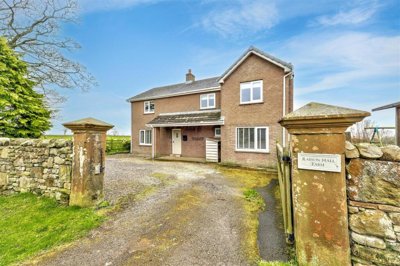
Browse 1 rental home to rent in Culgaith, Westmorland and Furness from local letting agents.
£0/m
0
0
0
Source: home.co.uk
The local sales market gives a useful clue about the kind of homes that come up to rent. Homedata.co.uk records show an average sold price of £321,088 over the last 12 months, with the village moving through a softer phase after a 7% annual decline. Price changes can be lumpy in a small place like Culgaith, so one sale can make a bigger difference than it would in a larger town. Renters should expect a market shaped by limited supply, family-sized homes, and countryside appeal rather than a big volume of flats.
Type-by-type data is interesting here because the averages do not follow a neat pattern. Semi-detached homes averaged £325,000, detached homes averaged £242,600, and terraced properties averaged £391,750 over the last year, which suggests a small sample and a very mixed stock profile. Postcode-level data for CA10 1QL shows detached homes making up around 62% of transactions, while the broader Culgaith market saw semi-detached homes as the most common sale type last year. That mix tells me the village is better suited to renters who want houses with character, parking, and a bit more breathing room.
Home.co.uk listings also point to some new-build activity on the village fringe, including an exclusive five-home detached scheme from Cumbrian Homes and a modern four-bedroom detached property from Willan Homes. Even where the stock is newer, the feel remains low-density and village-led. If you are waiting for the right place, it helps to move quickly when a suitable home appears because rural markets can shift with only a handful of listings. Keeping your documents ready will give you a better chance of securing the right let.

Culgaith is the kind of place that suits renters who like a quieter pace and a genuine village setting. The research suggests a housing mix dominated by houses rather than flats, with transactions leaning towards semi-detached and detached homes, so the village reads as residential and spacious. In practical terms, that usually means more gardens, more driveways, and less of the doorstep hustle you would expect in a larger centre. For many tenants, that trade-off is exactly the appeal.
The wider landscape matters here too, because Culgaith sits in the Eden Valley with the feel of open countryside around it. Traditional Cumbrian materials are common across the region, so you may find local stone, slate roofs, and older cottage forms alongside newer detached homes on the edge of the village. No specific geology or flood-risk data was included in the research pack, so it is sensible to ask agents for property-level risk details rather than assuming a standard village profile. That is especially useful if you are looking at an older home, an extended property, or a place with a more rural plot.
Daily life in Culgaith is usually built around nearby towns, local road links, and the simple rhythm of village living. Cultural life is quieter than in a city, but the reward is more space, more fresh air, and an easier connection to the surrounding countryside. Families, remote workers, and long-term tenants often value that balance, especially when they want home comforts without a busy urban edge. If you are comparing villages in the Eden area, Culgaith stands out for its settled feel and its low-rise character.
The research set does not list named schools for Culgaith, so I would not guess at catchments or Ofsted grades. What I can say is that families renting here should check the Westmorland and Furness Council admissions information early, because small rural villages often draw from more than one nearby school route. That matters for both primary and secondary planning, especially if you need transport at term time. A short commute can look simple on a map and still feel complicated at school-run hours.
Parents usually want to know which schools are easiest to reach, where the bus routes run, and how much of the journey has to be made by car. In a village like Culgaith, those practical details often matter more than a long school league table because the daily routine has to work in real life. If your child is moving into sixth form or further education, it is worth checking the wider Penrith and Carlisle areas for post-16 options. I would also ask each landlord whether the home has reliable broadband, since homework and remote learning can depend on it.
Rental decisions become much easier when the school picture is clear before you apply. Our advice is to shortlist homes only after you have checked travel times, term dates, and any required catchment proof. A small village market can leave less room for compromise, so an early school search can save a lot of stress later. That is especially true if you need a home before the next academic year starts.

Culgaith is best treated as a car-friendly village with wider connections picked up through nearby main routes. The village sits in a rural part of Cumbria, so most commuters will think first about road access to Penrith, Carlisle, Appleby, and the rest of the Eden Valley. That makes it a sensible base for people who value countryside living but still need to travel for work, school, or shopping. Public transport exists in the wider area, but it does not have the density of a city network.
Rail travel is usually accessed through Penrith, which gives you West Coast Main Line connections to major destinations further north and south. Journey times vary by service, so the key point is not a single commute number but the strength of the rail link once you reach the station. If you travel often, I would check parking at the station, peak-time availability, and whether your route relies on one road corridor. Those details can make a big difference to the day-to-day reality of living in Culgaith.
Cycling can work for local trips, although rural roads and weather need a sensible approach. Bus services in small villages tend to be more schedule-led than turn-up-and-go, so they suit organised commuters rather than spontaneous travel. For many renters, the real advantage is the balance between a quiet home base and straightforward access to the wider region by car. If your job involves hybrid working, Culgaith can be a strong fit because the village atmosphere and the transport links complement each other well.
Use our rental budgets service to get a rental budget agreement in principle before you start viewing, then include rent, deposit, council tax, fuel, and commuting costs in your plan.
Look at where the home sits within Culgaith, how it connects to Penrith and the A66 corridor, and whether the setting feels village-centre or more rural.
Rural lets can move quickly, so arrange viewings as soon as a suitable home appears and take time to test parking, signal, heating, and drainage.
Gather ID, income evidence, landlord references, and right-to-rent paperwork in advance so there is no delay once you find the right property.
Check the deposit amount, inventory, break clause, pet policy, and any bills included before you sign, then ask for anything unclear in writing.
Keep a reserve for first month rent, holding deposit, furniture, and set-up costs such as broadband and utility accounts, then confirm the move-in date before handing over funds.
Culgaith’s rural setting means the best rental homes often come with practical details that matter more than glossy finishes. Ask about heating fuel, insulation, parking, broadband speed, and whether the property relies on shared drainage or a private system. In older Cumbrian homes, you may also want to check damp, roof condition, and window performance because weather exposure can affect comfort over a long tenancy. Those points are easy to overlook at a first viewing, but they make a real difference through winter.
The research pack does not identify specific flood zones, conservation areas, or listed-building clusters in Culgaith, so property-level checks are the safest route. If a home sits in a converted farmhouse, an older terrace, or a building with heritage features, ask whether any alterations are restricted and who maintains external elements. Flat renters should also confirm what communal costs are included, since parking, bin storage, and shared maintenance can affect monthly value. A landlord or agent should be able to explain all of that before you commit.
Rural lettings can also vary in how they handle land, outbuildings, and garden maintenance. Make sure you know whether the garden is your responsibility, whether access is shared, and who clears paths in bad weather. If you keep pets, it is worth asking about boundaries, fencing, and any limitations on outdoor space. Clear answers at the start help avoid arguments later and make life in Culgaith feel much smoother.
The research pack does not include a live average rent for Culgaith, so I would not invent one. homedata.co.uk records show the average sold home price at £321,088 over the last year, which gives a sense of the village’s wider affordability backdrop. For live rental asking prices, home.co.uk is the place to check current availability and compare what is actually on the market. In a small village, asking rents can move quickly when a good home appears.
Council tax bands vary by individual property, so there is no single band for the whole village. Culgaith sits within Westmorland and Furness, so Westmorland and Furness Council is the local authority you should use for confirmation. The band should normally be shown in the listing, tenancy information, or council records. If you are budgeting carefully, always check that figure before you commit.
The research pack does not name specific schools in Culgaith, so I would check admissions and catchment maps rather than guessing. Families renting here usually look at the wider Eden Valley and Penrith education network because village provision can be spread across nearby settlements. You should also check how the school run works in practice, including bus routes and parking at peak times. That is often just as important as the school name itself.
Culgaith is connected in a rural-Cumbrian way rather than a city-style way. Most commuters will rely on road travel, with Penrith used as the main rail access point for longer journeys on the West Coast Main Line. Bus services are likely to be more limited and timetable-led, so they suit organised travel rather than frequent spontaneous trips. If you depend on public transport every day, make sure the route works at the exact times you need.
Yes, if you want village living, more space, and a quieter setting in the Eden Valley. The sales market suggests a small, house-led housing stock, with homedata.co.uk showing an average sale price of £321,088 and a 7% annual fall, so the market backdrop is softer but still distinctly rural. That can suit tenants who want a calmer base and do not mind a smaller choice of properties. I would say it is strongest for people who value lifestyle and setting over fast-moving urban convenience.
For most rentals in England, the holding deposit is usually capped at one week’s rent and the tenancy deposit at five weeks’ rent if the annual rent is under £50,000. You should not be charged banned tenant fees, but you may still need to cover the first month’s rent and any agreed extras such as bills or pet-related terms if they are permitted. Ask the agent for a full written cost breakdown before you pay anything. Our rental budgets service can help you compare those costs properly.
The data points to a village dominated by houses rather than flats. Over the last year, semi-detached homes were the most common sold property type in Culgaith, while postcode-level data for CA10 1QL shows detached homes accounting for around 62% of transactions. That combination suggests a mixed but low-density market, with family homes and larger properties more likely than apartments. Renters who want a house with outdoor space will usually find Culgaith more appealing than compact urban options.
From £0
Compare rental budget rates and get a clear monthly plan before you view homes
From £499
Fast checks that help your application move smoothly once you find the right home
From £65
Check energy efficiency details and likely running costs before you commit
From £350
Get a professional condition report if you want a deeper look at a property
Renting in Culgaith is not just about the headline monthly rent, because the upfront costs can shape how easy the move feels. Plan for the holding deposit, the tenancy deposit, the first month’s rent, and any moving costs such as van hire, insurance, broadband setup, or new furniture. If the property is rural, you may also need to budget for fuel, heating oil, or other energy arrangements depending on the tenancy. I always suggest that renters build a small buffer rather than spending right up to the limit.
The legal framework in England is straightforward enough once you know the basics. A holding deposit is usually capped at one week’s rent, while the tenancy deposit is generally capped at five weeks’ rent for properties under the standard threshold. Landlords and agents should not charge banned tenant fees, so if anything looks unclear, ask for the exact breakdown in writing before you pay. That is especially helpful in a village market where homes can move quickly and paperwork can feel rushed.
Culgaith’s lower-density setting also means that running costs can vary more from one property to the next than they do in a standard apartment block. A well-insulated newer home may feel much cheaper to live in than an older cottage, even if the headline rent looks similar. That is why our rental budget agreement in principle matters before you start viewing, because it helps you compare the whole cost of living, not just the monthly rent. When you combine the local market context with a realistic budget, you can move into Culgaith with far more confidence.
Properties to Rent In London

Properties to Rent In Plymouth

Properties to Rent In Liverpool

Properties to Rent In Glasgow

Properties to Rent In Sheffield

Properties to Rent In Edinburgh

Properties to Rent In Coventry

Properties to Rent In Bradford

Properties to Rent In Manchester

Properties to Rent In Birmingham

Properties to Rent In Bristol

Properties to Rent In Oxford

Properties to Rent In Leicester

Properties to Rent In Newcastle

Properties to Rent In Leeds

Properties to Rent In Southampton

Properties to Rent In Cardiff

Properties to Rent In Nottingham

Properties to Rent In Norwich

Properties to Rent In Brighton

Properties to Rent In Derby

Properties to Rent In Portsmouth

Properties to Rent In Northampton

Properties to Rent In Milton Keynes

Properties to Rent In Bournemouth

Properties to Rent In Bolton

Properties to Rent In Swansea

Properties to Rent In Swindon

Properties to Rent In Peterborough

Properties to Rent In Wolverhampton

Enter your details to see if this property is within your budget.
Loans, cards, car finance
Estimated property budget
Borrowing + deposit
You could borrow between
Typical borrowing
Monthly repayment
Est. at 4.5%
Loan-to-value
This is an estimate only. Your actual budget may vary depending on interest rates, credit history, and personal circumstances. For an accurate affordability assessment, speak to one of our free mortgage advisors.
This calculator provides estimates for illustrative purposes only and does not constitute financial advice. Your home may be repossessed if you do not keep up repayments on your mortgage. Estimates based on 4.5% interest rate, repayment mortgage. Actual rates depend on your circumstances.
Homemove is a trading name of HM Haus Group Ltd (Company No. 13873779, registered in England & Wales). Homemove Mortgages Ltd (Company No. 15947693) is an Appointed Representative of TMG Direct Limited, trading as TMG Mortgage Network, which is authorised and regulated by the Financial Conduct Authority (FRN 786245). Homemove Mortgages Ltd is entered on the FCA Register as an Appointed Representative (FRN 1022429). You can check registrations at NewRegister or by calling 0800 111 6768.

We use cookies to show you personalised content and improve your experience of our website. Find out more in our Privacy policy and Cookie policy.