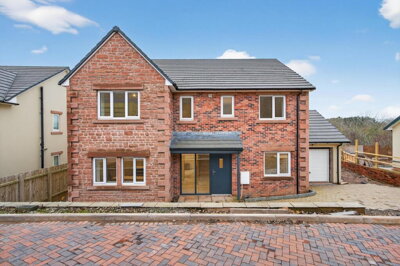
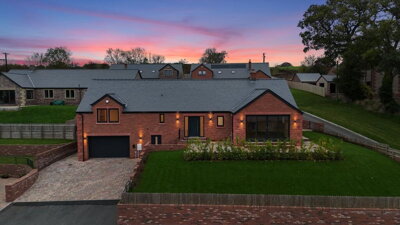
Browse 2 homes new builds in Culgaith, Westmorland and Furness from local developer agents.
£413k
20
0
171
Source: home.co.uk
Source: home.co.uk
Detached
13 listings
Avg £447,308
Semi-Detached
3 listings
Avg £265,000
Cottage
2 listings
Avg £217,500
House
1 listings
Avg £425,000
Link Detached House
1 listings
Avg £330,000
Source: home.co.uk
Source: home.co.uk
The Culgaith property market gives prospective buyers a fairly mixed picture, and that matters if we are looking at a move to this Eden Valley village. Recent figures put the overall average house price at £321,088, but that hides some sharp differences between property types. Terraced homes command the highest average at £391,750, detached properties sit at £242,600, and semi-detached houses are around £325,000. Those gaps mirror the village’s blend of traditional Cumbrian farmhouses, newer family homes and the period cottages that help define its stock. Prices have also drifted down over the last year, by about 7% compared with the previous year and 11% from the 2023 peak of £360,130, so buyers may find a more favourable opening than they would have done 12 months ago.
Even with that recent correction, the CA10 1QL postcode area has shown real resilience, with postcode-level data showing property values up 7.1% over the past year. home.co.uk records 177 property sales completed in the last year across the wider Culgaith area, which points to steady activity despite the wider economic mood. New-build options are also on the table. Cumbrian Homes has an exclusive scheme of five detached executive homes on the peaceful edge of the village, while Willan Homes has finished an immaculate modern four-bedroom detached property in the centre, a good example of the standard of contemporary build available to buyers with a sharper brief.
Looking at the CA10 1QL postcode area, detached homes make up roughly 62% of recent transactions. That suits Culgaith’s rural setting and the larger plots associated with traditional Cumbrian farmsteads and later residential schemes. Semi-detached and terraced properties account for a smaller share, though they often appeal to buyers who want a village-centre position or a garden that is easier to manage. First-time buyers and those downsizing from larger homes often focus on the terraced cottages here, since they can offer better value per square foot than detached alternatives in this sought-after Eden Valley spot.

Culgaith has that classic English village feel, set in the fertile Eden Valley between the Lake District fells and the Pennine hills. It sits within the wider parish and has the close-knit community many smaller Cumbrian places are known for. Residents can expect community events, proper pub culture and the sort of neighbourly spirit that has come through generations of farming life. There are miles of footpaths, bridleways and quiet lanes around the village, ideal for walking, cycling and taking in eastern Cumbria’s countryside. The River Eden, one of England’s most valued salmon rivers, runs nearby, drawing anglers and riverside walkers to its banks throughout the year.
Housing in Culgaith reflects its rural Cumbrian roots, with detached properties making up around 62% of recent transactions in the CA10 1QL postcode area. Stone cottages and farmhouses sit beside more modern developments, so the streetscape feels varied without losing sight of the village’s architectural history or the needs of modern living. Local properties usually feature slate roofs and Pennine stone construction, both of which shape the Eden Valley look. Within the village, there is a well-regarded primary school, a village hall and a pub, while Penrith and Appleby-in-Westmorland provide larger shops, healthcare and professional services within a short drive.
Its location strikes a useful balance between country calm and day-to-day practicality, with the M6 motorway corridor reachable in 20 minutes for commuting or wider regional travel. Culgaith also benefits from strong agricultural links, and local farms produce livestock and arable crops that form part of the working landscape visible from village homes. Weekend markets in Penrith and Appleby are handy for local produce, and the summer calendar brings agricultural shows and events that say a lot about the community here. The village pub is a social anchor, with informal dining and a space for local gatherings throughout the year.

Families thinking about Culgaith will find the local education offer well suited to children of different ages. The village has a primary school that gives younger pupils a solid start in a small setting, with plenty of individual attention and pastoral support. Children usually move on from the village school to secondary education in the nearby market towns. Small classes and close teacher-pupil relationships are often seen as a real strength of village primaries, especially for children who do best in a more nurturing environment.
For secondary education, Culgaith residents have several strong options within a sensible daily commute. QES, Queen Elizabeth School in Kirkby Stephen, a specialist sports college with a strong academic record, attracts pupils from across the Eden Valley, including families from Culgaith. In Penrith, schools such as Ullswater Community College offer a broad curriculum and extensive facilities. Sixth form choices are also available in both Penrith and Appleby-in-Westmorland, with A-level courses across a range of subjects. Parents should check current catchment areas and admissions policies, because these can affect eligibility, and it is wise to register early for school places when buying in the village.
Beyond state education, families in the Culgaith area may look at independent schools elsewhere in Cumbria. Several respected independent schools in Penrith and the surrounding area offer different educational routes for parents who want an alternative approach to their children’s development. Travel to secondary schools should be part of the search criteria, since journeys from Culgaith to schools in Penrith usually take 20 to 30 minutes by car. School buses run between the village and secondary schools in the market towns, although families should check current arrangements with Westmorland and Furness Council before they commit to a purchase.

Transport from Culgaith is mainly about the road network, which links the village to nearby towns and the regional motorway system. The A66 trunk road crosses the Eden Valley and gives direct access to Penrith, about 10 miles to the north, and to the M6 at junction 40 near Penrith. That places Culgaith within comfortable driving distance of Carlisle, Newcastle and Manchester for anyone who needs to head further afield now and then. The village sits at a crossroads of country lanes, so most residents find car ownership practical, though many do enjoy the scenic Eden Valley drives that come with rural Cumbrian living.
Public transport is limited, which is only to be expected in a rural settlement like Culgaith. Bus services run by Stagecoach and local operators link the village with Penrith and Appleby-in-Westmorland, though they are less frequent than urban routes and the journeys take longer. The nearest railway stations are in Penrith, with London Euston, Edinburgh and regional services on the West Coast Main Line, and in Appleby, which has local trains on the Settle-Carlisle line. For commuters based in Penrith or nearby, the daily drive from Culgaith is manageable, usually 15-20 minutes. Cyclists like the quiet lanes, though the hills mean a fair level of fitness is needed.
Parking in the village is generally straightforward, with most homes offering off-street space and on-road parking usually available for visitors. The local road network is in decent order, though buyers should remember that some lanes are narrower than urban roads and need care when meeting traffic. Winter can occasionally disrupt access in this part of Cumbria, especially on higher routes, although the main A66 corridor is prioritised for gritting and maintenance. Anyone thinking about Culgaith as a commuting base should look closely at journey times, particularly when agricultural traffic increases on local roads in peak seasons.

Start with current listings and recent sold prices so we can see what a budget will really buy in the village. It is worth comparing the average prices by property type, because detached homes average £242,600 while terraced properties are around £391,750. The 7% year-on-year price correction should also shape offer strategy. Our team tracks home.co.uk and homedata.co.uk data for the CA10 1QL postcode area, which helps us keep property search information current.
Speak to a mortgage broker and get an agreement in principle before arranging viewings. Brokers who know Cumbrian values can give borrowing figures that sit comfortably with your circumstances. Having the finance side lined up strengthens an offer on a Culgaith home. Several brokers specialise in rural Cumbria transactions and understand the quirks that come with mortgage applications for the non-standard construction found in parts of the Eden Valley.
Once the shortlist is ready, arrange viewings and use them to judge the village atmosphere, local amenities and the commute to work. Ask for the property’s Energy Performance Certificate and any survey reports while you are there. We suggest visiting Culgaith at different times of day and on different days of the week, so you get a proper sense of village life, including how busy it feels in the evening and at weekends.
Before you exchange, it is sensible to commission a Level 2 Homebuyer Report for any property that is seriously on the table. The survey checks walls, roof, structure and key systems, and it picks up defects that may need attention or negotiation with the seller. Our approved RICS surveyors know traditional Cumbrian construction well and can spot the issues that often affect stone-built homes in the Eden Valley.
Use a solicitor with experience of Cumbrian property work to deal with the legal transfer of ownership. They will carry out searches, handle contract negotiations and work with your mortgage lender through to completion. Local conveyancers who know Westmorland and Furness Council requirements can make the process much smoother.
When the searches are satisfactory and the finance is confirmed, contracts are exchanged and the deposit is paid. Completion usually follows within weeks, and that is when the keys are handed over and the new Culgaith home becomes yours.
Buying in rural Cumbria means paying attention to a few factors that are specific to the region and the property type. The age range in Culgaith is wide, with traditional stone-built homes from many decades ago sitting alongside newer builds. Older homes may have smaller rooms, lower ceilings and electrical or plumbing systems that are well past their best, so those issues need to be included in renovation budgets. A detailed RICS Level 2 survey is especially useful for traditional stone properties, where damp penetration, roof condition and the integrity of original structural elements need proper expert assessment. Buyers should also check whether any works to older homes had the right planning permissions and building regulations approval.
In the Eden Valley, rural homes often depend on private water supplies, septic tanks or sewage treatment systems rather than mains connections. That brings maintenance responsibilities and possible extra costs that many urban buyers are not used to. Oil-fired central heating is common in Culgaith, so prospective buyers should ask about the age and condition of oil tanks and boilers when viewing. Tenure is mainly freehold for houses, although any leasehold elements, such as shared driveways or communal areas, should be understood clearly before a purchase. Given the agricultural setting, buyers should also think about nearby farming activity, including harvest noise and the movement of agricultural vehicles on local roads.
Energy performance varies quite a bit across Culgaith’s housing stock, with older stone properties often receiving lower EPC ratings than newer equivalents. Homes with solid walls instead of cavity wall insulation may cost more to heat, and buyers should plan for possible energy-efficiency upgrades. Single-glazed windows, solid fuel heating or older boiler installations can all point to properties that need work to meet modern standards. By contrast, newer schemes such as the Cumbrian Homes development on the village outskirts provide modern insulation standards and heating systems that can reduce running costs. Asking for the Energy Performance Certificate during viewings lets buyers compare homes properly and build future heating costs into the budget.
It helps to understand the construction methods used in Culgaith homes, because they shape both character and maintenance. Traditional properties here are usually built with solid walls using locally sourced Pennine stone, and older buildings typically have natural slate roofs. Those materials give the village streetscape its appeal, but they need a different approach to maintenance than modern cavity-walled homes. Stone walls in Culgaith often use lime-based mortars and renders rather than cement, allowing the structure to breathe and to move naturally over time.
The solid wall construction seen in many Culgaith cottages and farmhouses brings both benefits and points to watch. These homes generally have good thermal mass, which helps keep internal temperatures more stable through the year, although any insulation upgrade has to be specified carefully so moisture is not trapped in the walls. Our approved surveyors know the details of traditional Cumbrian property assessments and can judge whether previous owners have handled insulation properly or whether remedial work is still needed. Homes with sound original stonework can be very good long-term investments, but buyers should still budget for roof, gutter and external render maintenance, since those elements protect the structure beneath.
More recent homes in Culgaith have introduced modern methods, including cavity wall insulation and contemporary building techniques. The Cumbrian Homes scheme on the village outskirts, together with similar recent projects, shows how new-build properties can keep the Eden Valley look while meeting current construction standards. They usually come with PVCu windows, composite doors and mains-connected utilities, all of which make day-to-day upkeep simpler than in older homes. When comparing properties from different periods in Culgaith, buyers should look closely at how the construction type affects both maintenance and running costs over the years they expect to own the property.
According to recent home.co.uk listings data, the average house price in Culgaith is £321,088, although that varies a good deal by property type. Semi-detached homes average around £325,000, terraced properties reach approximately £391,750, and detached houses average £242,600. Prices have eased by approximately 7% over the past year after reaching a 2023 peak of £360,130, which may open the door for buyers entering the market now. Other sources, including homedata.co.uk at £310,000 and home.co.uk at £306,000, show slightly lower averages, reflecting the different data sources and methods used by property portals.
Properties in Culgaith fall under Westmorland and Furness Council for council tax purposes, so the authority sets the rates for every residential property in the village. The bands follow the standard England system from A through to H, with the band assigned according to the property’s value at the last revaluation. Band D is usually the midpoint for the Eden Valley village area, though individual homes may sit above or below that depending on their characteristics and historic assessment. Buyers can check the current council tax band on the Westmorland and Furness Council website or in property listing details where those are shown.
Culgaith has its own primary school for younger children, giving local families a solid start within the village itself. Secondary choices include Queen Elizabeth School in Kirkby Stephen and Ullswater Community College in Penrith, both serving the wider Eden Valley catchment. Parents should check the latest admissions criteria and catchment maps on the Westmorland and Furness Council website, because school placement can have a big effect on which schools children from Culgaith can attend. Transport to secondary schools also matters when assessing properties, as the journey to Penrith schools usually takes 20 to 30 minutes by car.
Public transport from Culgaith is limited, which reflects its place as a small rural Eden Valley village. Stagecoach and local bus operators link the village with Penrith and Appleby-in-Westmorland, though the services are less frequent than in towns and the journeys take longer. The nearest railway stations are in Penrith, where West Coast Main Line services run to London, Edinburgh and regional destinations, and in Appleby, where the Settle-Carlisle line offers scenic routes to Leeds and Carlisle. Most residents rely on private cars for daily transport, and the M6 can be reached via the A66 in roughly 20 minutes north of the village.
Culgaith and the wider Eden Valley still hold investment potential, especially with the current year-on-year price correction of approximately 7%. The village’s position on the fringe of the Lake District brings in buyers who want a rural lifestyle within reach of national parks and open countryside. There is rental demand from professionals working in nearby towns, although the limited local job market can restrict tenant numbers. Longer-term prospects are supported by the lasting appeal of Cumbrian village life and the fact that prices remain more accessible than in many urban markets. Comparable Eden Valley villages have shown similar trends, which suggests Culgaith is moving with the regional market rather than on its own.
For standard residential purchases in Culgaith, no stamp duty is due on properties up to £250,000. Homes priced between £250,001 and £925,000 pay 5% on the part above £250,000, while those between £925,001 and £1.5 million attract 10% above £925,000. Properties above £1.5 million pay 12% on the amount over that threshold. First-time buyers get relief on the first £425,000 of the price, with 5% applying on £425,001 to £625,000, although there is no relief above £625,000. With the Culgaith average price at £321,088, most buyers would pay zero stamp duty. First-time buyers at the village average would also pay no stamp duty under the current thresholds.
Budgeting for Culgaith needs to include costs beyond the purchase price. Stamp Duty Land Tax is the biggest extra charge for most buyers, although at the current average price of £321,088 many buyers paying at or near the village average will be below the standard threshold and owe no duty at all. First-time buyers purchasing up to £425,000 get full relief, so a home at the village average would attract zero stamp duty. If a first-time buyer goes above £425,000, 5% applies to the portion between £425,001 and £625,000. Standard rate buyers begin to pay 5% once the purchase price passes £250,000.
There are other costs to plan for as well, not just stamp duty. Solicitor conveyancing fees usually run from £500 to £1,500, depending on complexity and whether the property is freehold or leasehold. A RICS Level 2 Homebuyer Report generally starts from around £350 for smaller properties, rising for larger or more complex homes. Mortgage arrangement fees can add £500 to £2,000, depending on the lender and product, although some buyers choose fee-free mortgages and accept a slightly higher interest rate instead. Search fees, land registry fees and electronic transfer charges normally come to £300 to £500. Buildings insurance must be in place from completion, and buyers should also allow for removals, possible redecoration and setting up utilities in a new Culgaith home. A contingency of around 10-15% of the purchase price is sensible for these extra costs and any issues that crop up during survey or conveyancing.
For buyers using a mortgage, the lender will ask for a property valuation as part of the application, although that is not the same as a full structural survey. Our recommended RICS surveyors can advise whether a Level 2 Homebuyer Report or the more detailed Level 3 survey is the better fit for the property you are buying. Homes in Culgaith with unusual construction, significant age or visible defects benefit especially from the depth of inspection that professional surveys provide. Spending to identify problems before completion usually proves excellent value when compared with the cost of unexpected repairs afterwards.

Properties New Builds In London

Properties New Builds In Plymouth

Properties New Builds In Liverpool

Properties New Builds In Glasgow

Properties New Builds In Sheffield

Properties New Builds In Edinburgh

Properties New Builds In Coventry

Properties New Builds In Bradford

Properties New Builds In Manchester

Properties New Builds In Birmingham

Properties New Builds In Bristol

Properties New Builds In Oxford

Properties New Builds In Leicester

Properties New Builds In Newcastle

Properties New Builds In Leeds

Properties New Builds In Southampton

Properties New Builds In Cardiff

Properties New Builds In Nottingham

Properties New Builds In Norwich

Properties New Builds In Brighton

Properties New Builds In Derby

Properties New Builds In Portsmouth

Properties New Builds In Northampton

Properties New Builds In Milton Keynes

Properties New Builds In Bournemouth

Properties New Builds In Bolton

Properties New Builds In Swansea

Properties New Builds In Swindon

Properties New Builds In Peterborough

Properties New Builds In Wolverhampton

Enter your details to see if this property is within your budget.
Loans, cards, car finance
Estimated property budget
Borrowing + deposit
You could borrow between
Typical borrowing
Monthly repayment
Est. at 4.5%
Loan-to-value
This is an estimate only. Your actual budget may vary depending on interest rates, credit history, and personal circumstances. For an accurate affordability assessment, speak to one of our free mortgage advisors.
This calculator provides estimates for illustrative purposes only and does not constitute financial advice. Your home may be repossessed if you do not keep up repayments on your mortgage. Estimates based on 4.5% interest rate, repayment mortgage. Actual rates depend on your circumstances.
Homemove is a trading name of HM Haus Group Ltd (Company No. 13873779, registered in England & Wales). Homemove Mortgages Ltd (Company No. 15947693) is an Appointed Representative of TMG Direct Limited, trading as TMG Mortgage Network, which is authorised and regulated by the Financial Conduct Authority (FRN 786245). Homemove Mortgages Ltd is entered on the FCA Register as an Appointed Representative (FRN 1022429). You can check registrations at NewRegister or by calling 0800 111 6768.

We use cookies to show you personalised content and improve your experience of our website. Find out more in our Privacy policy and Cookie policy.