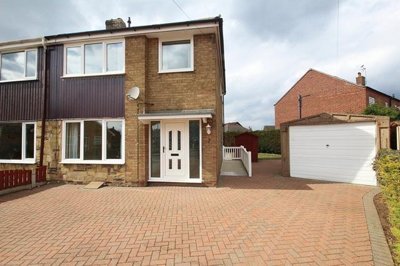
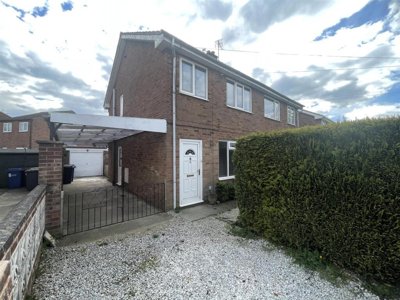
Browse 3 rental homes to rent in Camblesforth, North Yorkshire from local letting agents.
Three bedroom properties represent a significant portion of the Camblesforth housing market, offering space for families with multiple reception rooms and gardens in many cases. Browse detached, semi-detached, and terraced options ranging from period character homes to contemporary developments.
£850/m
1
0
43
Source: home.co.uk
Showing 1 results for 3 Bedroom Houses to rent in Camblesforth, North Yorkshire. The median asking price is £850/month.
Source: home.co.uk
Semi-Detached
1 listings
Avg £850
Source: home.co.uk
Source: home.co.uk
Our view of Camblesforth’s rental market is of a village shaped by a housing stock that leans firmly towards houses. Detached homes account for 45.4% of the stock, semi-detached properties 33.1%, terraced homes 16.5%, and flats and maisonettes just 5%. That leaves renters looking for space with plenty to choose from, while apartment options are thin on the ground. First-time renters and smaller households may find the terraced stock useful, but in practice this is a place where houses set the tone.
We have seen property prices in Camblesforth move ahead steadily, with the overall average up by 1.4% over the past 12 months. Detached homes sit at around £298,800, semi-detached properties average approximately £194,111, and terraced homes come in at about £165,000. Landlords tend to look at those levels when setting rent, alongside demand and the condition of the home. There were 30 property sales in the last 12 months, which points to a market that keeps ticking over and feeds rental availability through the year.
Sale data in Camblesforth points to a market that has stayed active rather than standing still. Over the last 12 months, the overall average price rose by 1.4%. Detached properties average around £298,800, semi-detached homes about £194,111, and terraced houses roughly £165,000. With 30 property sales in the last 12 months, there has been enough movement to keep the village’s rental stock turning.

Camblesforth is a village and civil parish in the Selby district of North Yorkshire, England. The 2021 Census recorded a population of 1,811 residents across 758 households, so it has the feel of a small, close-knit community where people are likely to know one another. Agriculture still shapes the area, with working farms around the village and the River Ouse flood plain influencing the landscape. The historic centre is around Main Street and the area near St. John the Baptist Church, a Grade II* listed building dating back centuries. The Camblesforth Conservation Area helps protect that character, keeping the older buildings and streetscape intact.
Red brick dominates Camblesforth, usually in the form of the red brick seen in Victorian and Edwardian homes. A few older places have render or stone detailing, especially the farmhouses and cottages that give the village its rural feel. The age profile is notable too, with 15.2% of homes built before 1919 and a further 18.7% between 1919 and 1945, so there is a fair amount of period stock. The largest slice, 38.1%, was built between 1945 and 1980, while 28% is post-1980, including the newer Camblesforth Manor development on Brigg Lane.
Day to day, the village is fairly well served. We have a primary school, a village hall, and local pubs that act as social hubs. For supermarkets, healthcare, independent shops and leisure facilities, people usually head to nearby Selby. Jobs in the wider district are tied to agriculture in part, but commuting to Leeds, York and neighbouring towns has become just as important. The A19 and M62 motorways are close by, which is a big draw for people who want village life without giving up city access. Because Camblesforth sits within the River Ouse flood plain, some homes carry flood risk, so it is sensible to ask about flood history and any mitigation when viewing lower-lying properties.
Riverside scenery is one of the village’s strong points, with walks by the River Ouse and open farmland defining much of the setting. Underneath, the ground is made up of superficial alluvium, including clay, silt, sand and gravel, sitting over Sherwood Sandstone bedrock. That combination brings a moderate to high shrink-swell risk, so soil movement can happen during drought or heavy rainfall. It is not usually an immediate issue, but older properties may show signs of movement over time, and period homes deserve a closer look.

For families, Camblesforth Primary Academy is the main local option, taking children from reception through to Year 6. It plays a central role in village life, and a number of nearby primary schools also serve surrounding neighbourhoods. Secondary pupils usually travel to Selby or the wider area, where several schools offer different academic routes and interests. The stable population of 1,811 residents across 758 households helps keep pupil numbers steady, which supports provision in the area.
The age mix matters for families because it affects what is on offer near school catchments and at different price points. Properties built before 1945 make up 33.9% of the housing stock, so period homes are a meaningful part of the local market. Many of those sit within the Camblesforth Conservation Area, close to the village centre and the primary school. That can mean shorter school runs and easy access to village amenities, along with character features such as original fireplaces, sash windows and solid brick construction.
Older children are usually sent on to Selby College, where A-level and vocational courses draw students from across the district. The college also supports local employment needs by offering qualifications that fit regional industries and common career routes. Parents renting in Camblesforth should check catchments and admission policies carefully, because the address can make a real difference to school placement. Being close to Selby gives families several secondary options, but catchment boundaries still decide who can attend where.

For commuters, the road network does a lot of the heavy lifting. The village sits near the A19, which runs north-south through the area, while the M62 is accessible to the south and opens up routes towards Leeds, Manchester and beyond. The A1041 links Camblesforth to Selby and the wider road system. That makes the village popular with people working in Leeds, York, Hull or Doncaster who want a quieter base.
Selby railway station provides the main rail link, with regular trains to Leeds, York and London Kings Cross. Journeys to Leeds usually take around 30-40 minutes, which makes daily commuting realistic for many professionals. There are also connections to Hull and the east coast, so travel in different directions is straightforward. Bus services run in the Camblesforth area too, linking the village with Selby and nearby places, although frequencies are not the same as in town. Anyone without a car would be wise to check the timetable closely, especially for appointments outside normal working hours.
Cycling is possible, but it is more rural than formal. The local lanes and country roads are popular with recreational cyclists, although dedicated cycle lanes are limited within the village itself. Parking is usually uncomplicated, thanks to Camblesforth’s rural layout, and most homes have off-street parking or garage space. Flood warnings are worth keeping an eye on too, as some lower roads can be affected when the River Ouse rises. In short, it suits people with a vehicle, while still leaving room for occasional public transport use.

We would suggest speaking to lenders or brokers early on to get an agreement in principle for your rental budget before you start searching. It gives a clearer picture of what you can afford and shows landlords in Camblesforth that you are serious. That affordability check is based on income assessment, and it can make the application process quicker once the right property appears.
Spend time in the village and the surrounding area before making a decision. We would look at the amenities, schools, transport links and general feel of the neighbourhood, then think about flood risk areas and any conservation restrictions that may matter. Walking the streets, calling into local pubs and talking to residents can give a much better sense of daily life in Camblesforth before a tenancy is signed.
On Homemove, we list rental homes that fit different requirements, and our team can help arrange viewings with local letting agents covering Camblesforth and the surrounding area. During a viewing, look beyond the décor. Roofs, windows, the heating system, damp patches and any sign of structural movement all deserve attention.
Before anything is signed, we would ask for a thorough inventory check so the property’s condition is documented from the start. That protects the deposit and flags any existing issues that need to be discussed with the landlord. In older Camblesforth homes, it is especially sensible to check for damp, timber condition, and the age of the heating system and electrical installations.
Once the right property has been found, the letting agent will usually take the tenancy application. That normally involves referencing, proof of income and identification documents. Landlords in Camblesforth often want references from previous landlords and employers, plus a credit check, to confirm that the tenant is suitable.
Read the tenancy agreement carefully so the rights and responsibilities are clear. Deposits should be protected in a government-approved scheme, as the law requires. The agreement ought to state the rent amount, deposit amount, tenancy duration and any specific terms attached to the property.
Camblesforth asks tenants to think beyond rent and commute. Its position within the River Ouse flood plain means flood risk should sit high on the list. Parts of the village fall within Flood Zone 2 and Flood Zone 3, which means a medium to high probability of flooding from the river. When viewing a home, ask the landlord or letting agent about any previous flooding, the property’s flood history, and any mitigation already in place, such as flood barriers or raised electrical outlets.
Ground conditions matter here too. The superficial deposits of alluvium, including clay, overlying Sherwood Sandstone bedrock create a moderate to high shrink-swell risk. That leaves properties vulnerable to ground movement during drought or heavy rain, and foundations can shift over time. Tenants of older homes should keep an eye out for cracks in walls or sticking doors, as those can point to movement below the surface.
Camblesforth’s homes cover several building eras, and the older ones, especially those built before 1945, often use solid brick walls and older construction methods. They may come with original features, but outdated wiring, older heating systems and lighter insulation are also common. Properties from 1945 to 1980 can bring their own issues, such as weak insulation, condensation and wear on windows, doors and rainwater goods. Asking for an EPC before committing helps us judge energy efficiency and estimate winter heating costs.
Homes inside the Camblesforth Conservation Area need a bit more care. There can be restrictions on alterations to the exterior, and listed buildings need Listed Building Consent for certain works. That affects what tenants can change. We would talk through any planned alterations with the landlord before committing, so there are no surprises later on and any personal touches stay within the rules.

Newer homes are on offer too, even if many are sold rather than let. Camblesforth Manor on Brigg Lane, built by Harron Homes, includes contemporary 3, 4, and 5-bedroom detached and semi-detached properties ranging from £269,995 to £464,995. Rental availability can occasionally pick up newer homes or similar modern builds elsewhere in the village. Demand stays steady because Camblesforth sits within reach of Leeds, York and Selby, which appeals to tenants who want village life with commuting flexibility. Detached homes, especially, draw families that need more space and gardens.
Council tax in Camblesforth falls under Selby District Council. Bands run from Band A at the lower end up to Band H for the most expensive homes. Most properties sit within Bands A through D, which reflects the mix of modest terraced cottages and larger family houses. Exact banding depends on the property’s assessed value, and specific homes can be checked on the Valuation Office Agency website. Payments are usually made monthly or annually, depending on the council’s options and the payer’s preference. When working out the cost of renting here, council tax needs to sit alongside rent and utilities in the monthly budget.
Camblesforth Primary Academy is the village’s main primary school. For secondary education, students typically move on to schools in Selby, including Selby High School, or to other options across the wider district. The 2021 Census figure of 1,811 residents across 758 households suggests a stable family community, which helps support local educational provision. Parents should still check school catchments and admission criteria, as those boundaries can decide which schools are open to a child. Selby College also provides sixth form and further education choices, with A-level and vocational courses that serve the Selby district’s employment needs.
Public transport is workable here, though a car still helps. Bus routes link Camblesforth with Selby and nearby villages, but evening and weekend services can be thin on the ground. Selby railway station offers direct trains to Leeds, York and London Kings Cross, and Leeds is usually 30-40 minutes away by rail. By road, the A19 and M62 are easy enough to reach, giving access to Leeds, York, Hull and the wider national network. Anyone commuting by bus should check the timetable carefully, as it may not match office hours.
Many renters are drawn to Camblesforth for its calmer pace and strong local feel. It is a peaceful North Yorkshire village with good links to larger towns and cities, plus everyday amenities such as a primary school, village hall and pubs. The 1,811 residents across 758 households make for a balanced community that includes families, couples and older residents. Riverside scenery and walks by the River Ouse add to the appeal, although flood risk has to be considered when choosing a particular property. People working in Selby, Leeds or York, or those working from home, often find the setting a good fit. The road network keeps it accessible without losing the village character.
Under the Tenant Fees Act 2019, the upfront costs are quite clear. The security deposit is equivalent to five weeks' rent and is capped accordingly, then protected in a government-approved scheme and returned at the end of the tenancy, subject to any deductions for damage or unpaid rent. A holding deposit of up to one week's rent may be requested while referencing is completed. Permitted fees can still include charges for late rent, lost keys and tenancy changes agreed by both parties. Before moving ahead, we would secure a rental budget agreement in principle so affordability is clear and landlords can see financial stability in a local market where good homes can move quickly.
New build homes in Camblesforth are often sold first, not let. Camblesforth Manor on Brigg Lane, for example, is a Harron Homes development with 3, 4, and 5-bedroom detached and semi-detached homes, but these are usually sold rather than rented. Rental stock changes regularly, so checking our listings often gives the best chance of finding the right match. Newer homes usually bring stronger energy efficiency and modern fittings, while older period homes tend to offer more character and often lower rents.
A careful viewing matters, especially in older Camblesforth homes. We would check for damp, timber defects and outdated electrics, then look at the heating system, as period properties may still have older boilers that are less efficient. For homes in lower-lying areas near the River Ouse, ask about flood history and any mitigation the landlord has put in place. An EPC is useful for judging energy efficiency and likely utility costs. If the home is in the conservation area or is listed, any restrictions on changes should be discussed before a tenancy is agreed.
We do not always get a full set of rent figures for Camblesforth, but the sale prices still give a useful guide. Detached properties average £298,800, semi-detached homes around £194,111, and terraced properties approximately £165,000. Rental prices usually range from £875 to £963 per month, depending on property size, condition and the number of bedrooms. The village’s links to Selby, plus road access to Leeds and York, make it appealing to renters who want something more affordable than city-centre living without losing commuting options. Bigger detached homes with gardens tend to sit at the top end, while compact terraced cottages are the more budget-friendly choice for individuals or couples.
A rental budget agreement in principle is a sensible first step before any viewings begin. It involves a financial assessment that shows how much can be spent on rent each month, which gives landlords confidence in the application. In Camblesforth, landlords often look for tenants whose monthly rent does not exceed a certain percentage of gross annual income. It also speeds up the paperwork and shows that the applicant is ready to compete in a market where the better homes can attract interest quickly.
Moving into Camblesforth usually means planning for more than rent. Moving costs, contents insurance and possible utility setup fees all need to be counted in. Older homes, especially period properties, can also bring higher energy bills in winter if the heating system and insulation are dated. The difference between properties is clear, with newer homes like those at Camblesforth Manor offering better thermal performance than homes built before 1945. Asking for an EPC before committing makes it easier to estimate ongoing energy costs and compare homes properly. Council tax, which usually falls in Bands A through D for most Camblesforth properties, adds another monthly cost to the budget.
Get pre-approved for your rental budget before searching
From 4.5%
Comprehensive referencing for landlords and tenants
From £99
Detailed survey ideal for older properties in Camblesforth
From £400
Check energy efficiency before you commit
From £85
Properties to Rent In London

Properties to Rent In Plymouth

Properties to Rent In Liverpool

Properties to Rent In Glasgow

Properties to Rent In Sheffield

Properties to Rent In Edinburgh

Properties to Rent In Coventry

Properties to Rent In Bradford

Properties to Rent In Manchester

Properties to Rent In Birmingham

Properties to Rent In Bristol

Properties to Rent In Oxford

Properties to Rent In Leicester

Properties to Rent In Newcastle

Properties to Rent In Leeds

Properties to Rent In Southampton

Properties to Rent In Cardiff

Properties to Rent In Nottingham

Properties to Rent In Norwich

Properties to Rent In Brighton

Properties to Rent In Derby

Properties to Rent In Portsmouth

Properties to Rent In Northampton

Properties to Rent In Milton Keynes

Properties to Rent In Bournemouth

Properties to Rent In Bolton

Properties to Rent In Swansea

Properties to Rent In Swindon

Properties to Rent In Peterborough

Properties to Rent In Wolverhampton

Enter your details to see if this property is within your budget.
Loans, cards, car finance
Estimated property budget
Borrowing + deposit
You could borrow between
Typical borrowing
Monthly repayment
Est. at 4.5%
Loan-to-value
This is an estimate only. Your actual budget may vary depending on interest rates, credit history, and personal circumstances. For an accurate affordability assessment, speak to one of our free mortgage advisors.
This calculator provides estimates for illustrative purposes only and does not constitute financial advice. Your home may be repossessed if you do not keep up repayments on your mortgage. Estimates based on 4.5% interest rate, repayment mortgage. Actual rates depend on your circumstances.
Homemove is a trading name of HM Haus Group Ltd (Company No. 13873779, registered in England & Wales). Homemove Mortgages Ltd (Company No. 15947693) is an Appointed Representative of TMG Direct Limited, trading as TMG Mortgage Network, which is authorised and regulated by the Financial Conduct Authority (FRN 786245). Homemove Mortgages Ltd is entered on the FCA Register as an Appointed Representative (FRN 1022429). You can check registrations at NewRegister or by calling 0800 111 6768.

We use cookies to show you personalised content and improve your experience of our website. Find out more in our Privacy policy and Cookie policy.