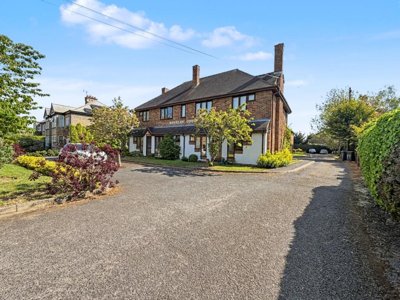
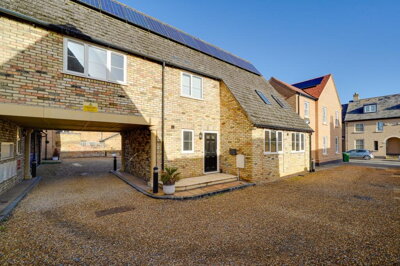
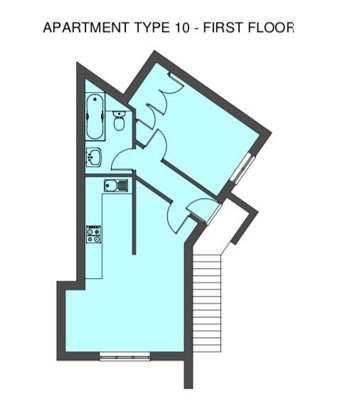
Browse 3 rental homes to rent in Wyton-on-the-Hill from local letting agents.
Studio apartments feature open-plan living spaces without separate bedrooms, incorporating sleeping, living, kitchen, and bathroom facilities. The Wyton On The Hill studio market includes properties in modern apartment complexes, converted Victorian and Georgian buildings, and purpose-built developments.
In Wyton, the housing mix is weighted firmly towards houses rather than flats. Across the wider area, around 55% of homes are detached, 24% are semi-detached, 8% are terraced and 14% sit in other categories, which leaves the stock feeling roomier than in many commuter spots. homedata.co.uk records average detached values at about £422,979, semi-detached at about £300,741, terraced at about £243,581 and flats at about £151,086. For renters, that usually translates into a market shaped more by driveways, gardens and family-sized layouts than by big apartment blocks.
Over the last year, prices have moved more softly, with the average sold price down 8.0%. That kind of backdrop can make landlords a little more guarded on asking rents, especially if a property is dated or in need of updating. We could not verify any active new-build scheme within the exact Wyton-on-the-Hill boundary, so the newest rental stock is more likely to turn up nearby than in a named village development. If you are weighing up options, start with what is live on the market now, then sense-check the budget before arranging viewings.

Wyton-on-the-Hill is a small parish, not a market town, and that comes through clearly in the way homes sit across the landscape. The streets are quieter, plots tend to be larger, and you do not get the same tight run of terraces and apartments you would expect in a bigger place. Area character data supports that, with detached homes making up most of the stock. For plenty of renters, that points to off-street parking, a garden and a little more breathing room.
Daily life here tends to feel practical rather than hurried. Shops, cafes and entertainment are not concentrated inside the immediate boundary as they would be in a larger centre, so many households work around nearby Huntingdonshire services and bigger-town errands. That trade-off suits people who like quieter evenings and an easy route out of the village. It also means it is worth thinking ahead about car use, the school run and rail station access before settling on a home.
Much of the appeal lies in the flat Cambridgeshire landscape and the open feel it gives the area. Homes with even modest outdoor space can carry extra appeal here, because the market is centred on family-sized property. Some records use simply 'Wyton', and we have treated those as the closest match to the village market while keeping the advice tied to the exact parish. For a location this small, that is the safest way to read the data.
The research pack does not identify exact schools within the parish, which is not unusual in a village of this size. Families often search across the wider Huntingdonshire catchment instead of assuming there is a school right nearby. That makes the exact address matter more, because catchment boundaries and transport links can affect the realistic choice of school far more than the village name on its own. A tenancy can look perfect on paper and still feel awkward if the morning trip is longer than expected.
For primary places, we would check current admissions maps, Ofsted reports and nursery availability before anything is signed. A village setting can be appealing to parents because it often brings a calmer residential backdrop, but the right catchment matters more than postcode wording in a listing. If younger children are part of the move, it is also worth checking wraparound care, breakfast club times and how manageable the school journey is in winter. Those details can matter every bit as much as the headline rating.
Older children usually mean casting the net wider across Huntingdonshire and the larger nearby towns, with sixth-form and further education choices more often outside the village itself. That is typical for a small rural settlement. It is also why many families here put road access and parking high on the list, alongside the home itself. When a rental makes the shortlist, ask the agent what peak-time school runs are really like and whether there is enough room for drop-offs without blocking the lane. Saving a few minutes each morning can make village living feel much easier.

Think of Wyton-on-the-Hill as a village that works well for drivers, with sensible links to the wider road network, rather than somewhere built around frequent urban buses. That often suits commuters who are content to drive to the station, work outside the village or connect into nearby Huntingdonshire routes. Many residents use Huntingdon as their main rail gateway, with direct services to London King's Cross helping keep the commute realistic. For regular travel, that station link tends to matter more than the village boundary itself.
Bus options are usually thinner in smaller settlements, so it pays to look at timetables before committing to a tenancy. Evening and weekend services can be more limited than daytime ones, which matters for shift workers and households without a second car. Cycling can fill some short local journeys, although rural lanes and the weather mean it tends to work best as part of a mixed travel plan. Parking is often easier than in a town centre, but older streets and shared drives still deserve a careful check at viewing stage.
Anyone driving regularly will want to test the run to the A14 and other main roads in both peak and off-peak periods, because a neat map route does not always mean a smooth commute. That matters even more if the week is split between village life and work in Cambridge, Huntingdon or further afield. Before signing, we would think about where station parking is, how long the school run actually takes and whether the property has enough room for visitors. In Wyton-on-the-Hill, a good rental needs to suit the journey as much as the rooms.
Before viewing anything, use our rental budget agreement in principle, then work back from rent, bills, council tax and commuting costs.
Choose first between a detached home, semi or smaller property, then check how well it works for parking, main roads and school routes.
Ask directly about heating, broadband, water pressure, parking and any past damp issues, because those checks matter in a small village housing stock.
Before committing, confirm the deposit, holding deposit, references, right-to-rent checks and exactly who deals with repairs, meters and utilities.
Use the inventory, photographs and meter readings as protection before handing over the keys.
Get council tax, utilities, broadband and travel routines organised early so the home works from day one.
Village homes often look similar on a listing and feel very different once you are living in them. In Wyton-on-the-Hill, we would look closely at parking, heating efficiency, broadband signal and the way the property sits on its plot, because those points often shape daily comfort more than a polished finish does. If the place is a flat or a conversion, ask about service charges, lease length and any ground rent before going ahead. The stock here leans towards houses, so flats can be a bit more specialised and worth extra scrutiny.
We could not verify a parish-wide flood hotspot or shrink-swell risk from the research pack, so the sensible approach is to check street by street. That becomes even more useful if a home sits near drainage ditches, low-lying ground or a road where surface water might collect after heavy rain. Older houses may also need a closer look at roof condition, insulation and ventilation, because village property can be full of character without being cheap to heat. On a tenancy lasting more than a year or two, those running costs form part of the real rent.
Planning history and conservation rules were not clearly flagged in the data either, so it is sensible to ask the agent about alterations, extensions or nearby development before signing. Where a property has been converted from a larger house or a farm building, confirm exactly which parts are included in the tenancy and who is responsible for any shared areas. Even a straightforward question about fences, sheds and gardens can prevent a lot of friction later on. In a small parish, the strongest rentals are usually the ones where the legal and practical details are as clear as the floorplan.

We do not have a verified live average asking rent for the exact parish in this research pack. The clearest hard figure available is sold-price context from homedata.co.uk, which shows an average of £243,000 and an 8.0% fall over the last 12 months. That suggests a relatively small, house-led market, so live rents are likely to vary by property type, condition and parking. For the freshest rental picture, check current listings on home.co.uk and set the budget before booking viewings.
Council tax will vary by property, so there is no single band for the whole village. The local authority area is Huntingdonshire, and the amount due depends on the home's valuation band rather than the village name itself. Detached properties will often sit higher than smaller terraces or flats, so the property type matters just as much as the street. Always check the exact band on the listing and build it into the monthly rental budget.
No exact schools inside the parish are named in the research pack, which is common in a small village. Most families will compare nearby Huntingdonshire primaries and secondaries, then verify catchment, Ofsted reports and transport routes before applying. A different street or house boundary can completely change which school is realistic, so the postcode alone is never enough. If school access matters most, only shortlist homes after checking admissions information.
Public transport here is workable, but it is not a dense urban system. Many residents rely on Huntingdon station for direct services to London King's Cross, while local bus choice is usually thinner than it would be in a town. That makes the village a sensible fit for drivers, hybrid workers and households able to plan around timetables. Late-evening and weekend services are worth checking if commuting, studying or shift work is part of the routine.
For the right tenant, yes. The stock is weighted heavily towards detached and semi-detached homes, so the place feels more spacious than a denser urban area. It suits people who want quieter streets, some outdoor space and access to the wider Huntingdonshire road network. The trade-off is straightforward, amenities and transport are less immediate, so village life needs to matter more than doorstep convenience.
For an England rental, the usual upfront costs are a holding deposit of up to one week's rent and a tenancy deposit capped at five weeks' rent, or six weeks' rent where the annual rent is over £50,000. Letting fees charged to tenants are generally banned, but it still makes sense to budget for moving costs, rent in advance and setup bills. If a future purchase is also part of the comparison, the 2024-25 deposit thresholds are 0% up to £250,000, 5% from £250,000-£925,000, 10% from £925,000-£1.5m, and 12% above that, with first-time buyers getting 0% up to £425,000 and 5% from £425,000-£625,000. Before viewings begin, get a rental budget agreement in principle so the monthly figure is clear.
We could not verify any active new-build development within the exact parish boundary. That points to a rental market made up mainly of existing village homes, plus occasional stock in the surrounding area. If brand-new finishes are high on the list, search across the wider Huntingdonshire market as well as the village itself. The exact postcode area is small, and live availability can move quickly.
Start with the practical side, heating type, insulation, broadband speed, parking and access at peak times. Then pin down the inventory, meter readings, deposit amount and who takes care of repairs. Where the home is a flat or conversion, ask about service charges, lease length and any shared maintenance responsibilities. In a small village, those checks matter because even the best homes can carry very different running costs.
Move-in costs are often what really shape the decision in a village such as Wyton-on-the-Hill. Alongside the rent, budget for the holding deposit, tenancy deposit, references, moving vans, utilities and the first council tax bill. With an older home, the true cost may appear later through energy bills rather than in the upfront rent, so ask about the EPC rating and heating before agreeing anything. A property that looks well priced can turn expensive quickly if commuting and winter running costs are left out.
On a standard tenancy in England, the legal deposit cap is usually five weeks' rent, rising to six weeks' rent where annual rent is over £50,000. That makes it worth checking the monthly rent at an early stage, because the cash needed on day one rises with the asking price. If renting is being weighed against a future purchase, remember the 2024-25 deposit thresholds, 0% up to £250,000, 5% from £250,000-£925,000, 10% from £925,000-£1.5m and 12% above that, while first-time buyers get 0% up to £425,000 and 5% from £425,000-£625,000. Those figures help with long-term planning, even if the next move is still a tenancy.
The best preparation is usually the simplest, set a firm monthly limit, keep proof of income ready and line up references before viewing. Our rental budget agreement in principle helps you move quickly when the right village home appears, and it can stop time being wasted on places that stretch the finances too far. For family moves, fold school transport, fuel and broadband into the same calculation. Homes that look affordable on paper are the ones that still feel manageable after the first month.
Properties to Rent In London

Properties to Rent In Plymouth

Properties to Rent In Liverpool

Properties to Rent In Glasgow

Properties to Rent In Sheffield

Properties to Rent In Edinburgh

Properties to Rent In Coventry

Properties to Rent In Bradford

Properties to Rent In Manchester

Properties to Rent In Birmingham

Properties to Rent In Bristol

Properties to Rent In Oxford

Properties to Rent In Leicester

Properties to Rent In Newcastle

Properties to Rent In Leeds

Properties to Rent In Southampton

Properties to Rent In Cardiff

Properties to Rent In Nottingham

Properties to Rent In Norwich

Properties to Rent In Brighton

Properties to Rent In Derby

Properties to Rent In Portsmouth

Properties to Rent In Northampton

Properties to Rent In Milton Keynes

Properties to Rent In Bournemouth

Properties to Rent In Bolton

Properties to Rent In Swansea

Properties to Rent In Swindon

Properties to Rent In Peterborough

Properties to Rent In Wolverhampton

Enter your details to see if this property is within your budget.
Loans, cards, car finance
Estimated property budget
Borrowing + deposit
You could borrow between
Typical borrowing
Monthly repayment
Est. at 4.5%
Loan-to-value
This is an estimate only. Your actual budget may vary depending on interest rates, credit history, and personal circumstances. For an accurate affordability assessment, speak to one of our free mortgage advisors.
This calculator provides estimates for illustrative purposes only and does not constitute financial advice. Your home may be repossessed if you do not keep up repayments on your mortgage. Estimates based on 4.5% interest rate, repayment mortgage. Actual rates depend on your circumstances.
Homemove is a trading name of HM Haus Group Ltd (Company No. 13873779, registered in England & Wales). Homemove Mortgages Ltd (Company No. 15947693) is an Appointed Representative of TMG Direct Limited, trading as TMG Mortgage Network, which is authorised and regulated by the Financial Conduct Authority (FRN 786245). Homemove Mortgages Ltd is entered on the FCA Register as an Appointed Representative (FRN 1022429). You can check registrations at NewRegister or by calling 0800 111 6768.

We use cookies to show you personalised content and improve your experience of our website. Find out more in our Privacy policy and Cookie policy.