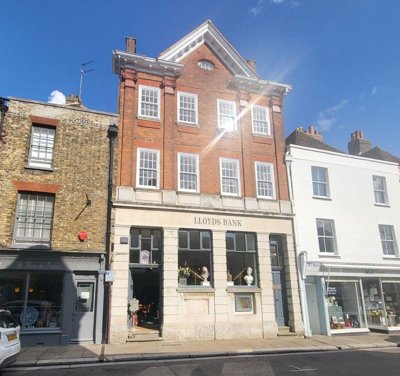
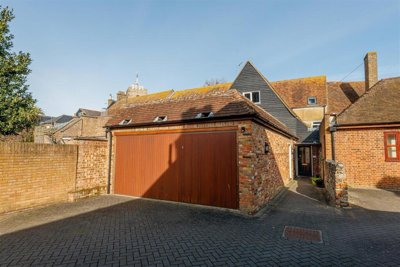
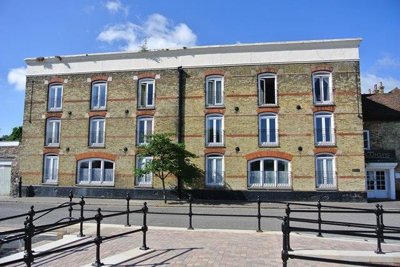
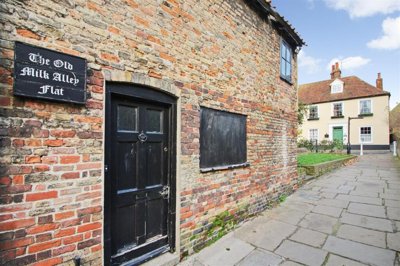
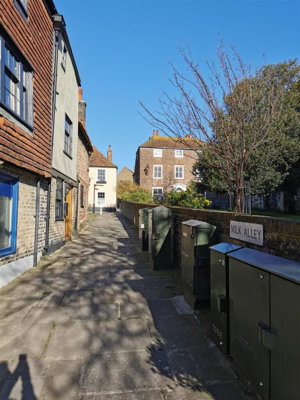
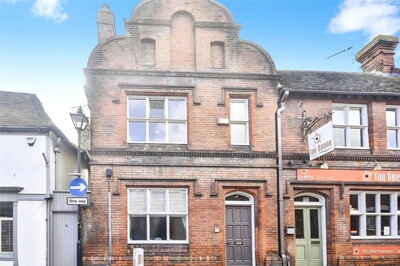
Browse 6 rental homes to rent in Worth from local letting agents.
Studio apartments feature open-plan living spaces without separate bedrooms, incorporating sleeping, living, kitchen, and bathroom facilities. The Worth studio market includes properties in modern apartment complexes, converted Victorian and Georgian buildings, and purpose-built developments.
Worth's rental market mirrors the wider Dover area, where terraced homes make up most of the sales activity and often give renters the easiest step onto the housing ladder. Recent figures show semi-detached homes in the Dover area rose by 5.0% in the year to December 2025, which points to steady demand for family-sized places. Flats have held their value over the same period, so they remain a reliable option for anyone after something smaller. Across all property types, the average sold price in Dover over the last twelve months was about £236,000 according to homedata.co.uk, while asking prices sat around £317,000.
Period properties are a real feature of Worth, and many of the homes on offer are likely to date from before 1919. Listed buildings across the village also point to the use of traditional brick and tile construction, very much in line with Kent building practice. Semi-detached homes in Dover average around £300,000, which suits families who want space without paying urban premiums. Detached houses typically come in between £396,000 and £497,000, giving room for extra bedrooms or a home office. Flats are still the cheapest route in, at roughly £143,000 to £160,000 on average, and they suit those who want lower-maintenance living.
In the CT17 0 postcode sector, house prices grew by 3.0% in the year to February 2026, a measured rise that helps underpin stable rental values. Over the past six months, asking prices in Dover have shifted by an average of -2.5% according to GetAgent data, which suggests a market with balance rather than shortage. For renters, that means Worth remains a sensible choice for medium to long-term lets in a clearly defined area.

Worth village offers a very traditional rural Kent setting, yet it still sits within reach of nearby towns and the coast. Its Conservation Area status has helped keep the local character intact, so hedgerows, countryside views and older buildings are part of daily life here. There is a genuine sense of community too, the kind larger towns often lose, with neighbours knowing one another and local events drawing people together through the year. The surrounding Kent countryside adds walking routes, quiet lanes for cycling and plenty of space to unwind away from traffic and noise.
Dover District gives residents access to a wide range of amenities, while the village itself keeps the essentials close at hand. Dover, only a short journey away, has major supermarkets, high street shopping, healthcare facilities including Dover Hospital, and a regular calendar of cultural events. Economic data put the district at roughly 40,000 jobs in 2015, with key employers including the state and county governments, Dover Air Force Base, and manufacturers such as Kraft Foods and Procter and Gamble. That base of employment matters to renters, because it brings job security and career options without a long daily commute to London or elsewhere.
The Dover area economy has shifted quite a lot over recent decades, especially after major pharmaceutical operations near Sandwich departed and changed the local jobs picture. Even so, Dover Air Force Base remains a major employer, with civilian and military posts providing steady work, while the port itself supports a good deal of logistics and services employment. Public sector roles through Kent County Council and Dover District Council also bring stability for teachers, administrators and service staff, many of whom choose surrounding villages like Worth for the quality of life and the more manageable property values compared with Brighton or London commuter areas.

Families renting in Worth have educational options across the Dover district, from primary age through to secondary school and beyond. Kent County Council oversees education provision across the area, with standards set against the national curriculum and regular Ofsted inspections. Nearby villages such as Alkham, Guston and Temple Ewell provide primary catchments that can work for Worth families, depending on where within the parish they are looking. It is worth checking the exact catchment lines and school capacity before choosing a property, because places at popular schools can be tight.
For older pupils, the usual route is into schools in Dover, including the Duke of York Royal Military School, which takes students from Year 3 through Sixth Form and attracts pupils from across the district. Other options include St. Edmund's Catholic School and Dover Grammar School for Girls, each with its own admissions rules and catchment considerations. Kent County Council publishes an annual admissions handbook, and we would always suggest checking the catchment boundaries, oversubscription rules and waiting list process before committing to a tenancy. Transport help may be available where a student lives beyond walking distance from the allocated school.
Sixth form and further education options are available in Dover and across Kent, and transport links make daily travel realistic for older students. Dover College provides further education courses, while Canterbury College offers a broader mix of vocational and academic programmes. Being close to Canterbury also opens up university-level study at the University of Kent campus, reached via the A2 or regular train services from Dover Priory. Worth students often head into Canterbury for specialist subjects not taught locally, with the journey taking about 35 minutes by car or 45 minutes by train.

Worth sits well within Kent's transport network, so the village has useful links to destinations across the South East. The A2 runs through the Dover area and gives direct driving access to Canterbury, then on to the M2 motorway and the wider network towards London. By car, Canterbury is usually around 30 minutes away, while the M25 London orbital motorway is generally about one hour, traffic permitting. Dover port also provides ferry crossings to France, which makes Channel travel straightforward for people who cross regularly for work or leisure.
From Dover Priory station, rail services to London Victoria take around two hours, so regular commuting to the capital is possible. The station also connects along the Kent coast to places such as Folkestone, Ashford International and Canterbury East. Ashford International is especially useful for commuters, because it offers high-speed trains to London St Pancras in under one hour. Bus services from Stagecoach and other operators cover the Dover district too, although rural village routes usually run less often than in town.
Cyclists tend to appreciate the Kent lanes, although some of the hills do call for a decent level of fitness on longer rides. The North Downs Way national trail runs close to Worth, giving scenic options for walking and leisure cycling. Parking is a mixed picture, because older settlements often rely on on-street spaces and heritage constraints can limit off-street parking. Anyone commuting to London on a regular basis should also allow for rail season ticket costs, since monthly or annual passes can work out much better than buying daily walk-up fares.

Before you start looking seriously in Worth, it helps to secure a mortgage in principle or, if you are renting, to confirm the monthly budget with a financial adviser. Knowing what you can afford narrows the search and shows landlords you are serious when you enquire. The calculations need to cover more than rent alone, because council tax, utilities, contents insurance and the upfront referencing and deposit costs all come into play.
Spend time in the village itself and visit at different points in the day, including weekends, so you get a feel for the noise, the pace and the local atmosphere. Check how close the amenities are, which schools fall into scope, and what transport links fit your routine. We would also pay close attention to Conservation Area boundaries and listed building locations, because they affect the changes tenants can make.
Local estate agents in the Dover area are a good place to start, especially those handling rental stock in Worth and the nearby villages. Our platform brings together listings from several agents, but local contacts often spot properties before they appear on the larger websites. That can make a real difference in a village like this, where turnover is low and good rentals do not stay available for long.
Once you have a shortlist, arrange viewings and come armed with questions about the lease, the fixtures and fittings, maintenance duties, and any rules on pets or smoking. Make a note of the condition of the property and take photographs of any existing damage. In Worth's conservation area, it is sensible to ask about recent planning permissions, listed building consents and any tenancy conditions that limit alterations.
After an offer is accepted, the landlord will usually carry out referencing checks covering credit history, employment verification and previous landlord references. Have your paperwork ready, including proof of income, ID and character references. In Kent, tenancy agreements typically begin with six-month initial terms, followed by monthly rent, although longer fixed terms can suit both sides better.
Before the keys are handed over, walk through the property with the landlord or agent and record the existing condition, meter readings and any included items. That protects the deposit and avoids later confusion about what was there at the start. We recommend the government-approved deposit protection schemes, which all landlords must use by law, so the deposit stays protected through the tenancy.
Renting in Worth comes with a few local points that set it apart from more ordinary residential areas. Because the village is in a Conservation Area, properties can face planning restrictions on external changes, colours and alterations that would be allowed elsewhere. Before signing any tenancy agreement, we would always confirm whether planning permission has already been granted for any recent change or extension, since that affects how much you can personalise the property. Listed building status adds another layer, and can limit works that would be fine in an unlisted home.
With so many older homes in Worth, construction quality and maintenance history need a close look during viewings. Period properties often bring damp through walls and foundations, roof issues on old tile or slate coverings, and problems with original timber elements. Older electrics may need updating to meet modern safety standards, while plumbing from earlier eras can contain materials now regarded as obsolete. A thorough viewing should look for damp staining, window operation, door alignment that might point to subsidence, and enough insulation. Homes with solid walls rather than cavity construction usually need a different heating approach and can cost more to run.
Because the Dover district is coastal, Worth properties can face weather exposure that inland homes do not. Westerly and south-westerly winds carry salt spray, which can speed up wear on external timber and metalwork and mean more regular maintenance. We have not seen specific flood risk data for Worth in the material available, but coastal homes should still be checked for drainage and possible water exposure during severe weather. Insurance for heritage-area rentals can differ from standard urban cover, with landlords normally responsible for buildings insurance and tenants arranging contents cover.
Older Kent properties often use traditional methods, including brick external walls with solid lime mortar joints, timber frame internal structures and lathe and plaster wall finishes. Those materials breathe differently from modern cavity wall construction, so the signs of damp or deterioration can also look different. We would ask about the age of the damp proof course, when the roof was last re-tiled or re-slated, and whether modern insulation has been added. Energy Performance Certificate ratings are a useful guide, and properties below band C are likely to have higher monthly heating costs in this exposed coastal location.

We do not have specific rental price data for Worth village itself in the CT17 0 postcode sector, but wider Dover figures show sale prices averaging around £271,000 to £317,000 according to home.co.uk listings data and homedata.co.uk data. Terraced homes usually offer the cheapest rents, while semi-detached properties attract premium rates from families who need more space, and the roughly 5% annual price growth seen in Dover supports firmer rental growth. The rental market has stayed steady, with flat values holding firm over recent months and semi-detached homes rising by around 5% in the year to December 2025. Local estate agents can give current rental prices for exact property types and sizes in Worth.
Worth falls under Dover District Council for local services, and council tax bands run from A through H, based on the valuation bands set in 1991. Band A homes, valued up to £40,000, pay the lowest rates, while Band H properties, valued over £320,000, make the highest contribution. Kent County Council sets the largest share of council tax, and Dover District Council adds its own portion for services such as refuse collection, street cleaning and local amenities. Before you commit, we would check the council tax band with the landlord or agent, because it forms part of the monthly housing cost alongside utilities. Bills can be spread across ten months, and student tenants may qualify for exemptions during holiday periods.
Schools in the Dover district serve Worth residents at both primary and secondary level, with primary schools usually in the surrounding villages and secondary schools in Dover itself, including the Duke of York Royal Military School and St. Edmund's Catholic School. Kent County Council handles admissions and publishes catchment area information to help families identify nearby schools, with boundaries reviewed annually and sometimes changed. Ofsted ratings differ from school to school, with some rated Outstanding and others needing improvement, so current reports are worth checking before a property is chosen. The University of Kent in Canterbury gives older students access to higher education within a reasonable commute, and direct trains from Dover Priory take about 45 minutes.
Public transport from Worth includes bus links to Dover town centre and nearby Kent villages, although rural routes tend to run less often than town services, sometimes only two or three buses per day. Dover Priory railway station has trains to London Victoria in about two hours, along with regional services to Canterbury, Folkestone and Ashford International, where faster high-speed services to London St Pancras are available. For international travel, the Channel Tunnel at Folkestone gives rail access to continental Europe, while Dover port ferries run to Calais for those who prefer the sea crossing. The A2 also runs through the Dover area, so car journeys to Canterbury are usually around 30 minutes and the M25 is about one hour in normal traffic.
Worth gives renters a rare mix of heritage character, rural surroundings and accessibility, and that makes it stand apart from standard suburban spots. The Conservation Area status keeps the setting attractive and protected, while the 30 listed buildings give the village a striking architectural character that has generally been well cared for. Rural communities often have a stronger social feel than larger towns, with neighbours building longer-term relationships and local events creating regular opportunities to meet. Dover is close enough for the hospital, major supermarkets and the railway station, yet the village still feels peaceful, which makes it a strong fit for families, retirees and anyone wanting a break from urban intensity. Stable employment from Dover Air Force Base, port activity and public sector roles helps keep rental demand consistent.
In the Dover area, standard rental deposits are usually five weeks rent and are held in a government-approved tenancy deposit scheme under the Housing Act 2004. Tenant referencing fees may still apply for credit checks, employment verification and previous landlord references, and these normally range from £100 to £300 depending on the provider and how detailed the screening needs to be. The first month's rent is also payable in advance, so renters should plan for roughly six weeks rent in total before they collect the keys. As of 2025-2026, there is no federal rental relief in the UK, although some benefits may help eligible renters. We always suggest asking for a full fee breakdown before signing anything, because transparency around admin charges and referencing costs is required under consumer protection rules.
The full cost of renting in Worth goes beyond the monthly rent, so tenants need to allow for both upfront fees and ongoing outgoings. The tenancy deposit, usually capped at five weeks rent for homes with annual rent below £50,000, gives landlords security against damage or unpaid rent during the tenancy. It has to be protected in a government-approved scheme within 30 days of receipt, and tenants must be given the prescribed information. Before moving in, prospective renters should inspect the property carefully and keep photographs and written notes of the existing condition, which helps avoid disputes when the deposit is returned at the end of the tenancy.
Tenant referencing charges vary between letting agents and landlords. Some fold them into wider administration fees, while others pass them straight to the applicant. Credit checks, employment verification and previous landlord references usually come to between £100 and £300, depending on the provider and the level of screening involved. Some landlords also ask for guarantors where applicants do not have a UK rental history or where income falls below certain thresholds, which can make the process more involved. Moving costs, such as van hire, packing materials and possible storage, are easy to underestimate too, especially for people renting in Worth for the first time.
Ongoing costs include council tax, utility bills, internet and telecommunications, and contents insurance, all of which tenants need to arrange and budget for. In Worth, older properties may cost more to heat than newer homes, especially where there is no cavity wall insulation or where solid walls lose heat more easily. Energy performance certificates below band C are a sign that the home may need more energy to keep warm, which can add a noticeable amount to monthly bills. Looking at the total monthly outlay, not rent on its own, gives a much clearer picture of affordability in the Worth area. Tenants should also allow for annual increases linked to RPI or any agreed percentage rise at renewal.
Properties to Rent In London

Properties to Rent In Plymouth

Properties to Rent In Liverpool

Properties to Rent In Glasgow

Properties to Rent In Sheffield

Properties to Rent In Edinburgh

Properties to Rent In Coventry

Properties to Rent In Bradford

Properties to Rent In Manchester

Properties to Rent In Birmingham

Properties to Rent In Bristol

Properties to Rent In Oxford

Properties to Rent In Leicester

Properties to Rent In Newcastle

Properties to Rent In Leeds

Properties to Rent In Southampton

Properties to Rent In Cardiff

Properties to Rent In Nottingham

Properties to Rent In Norwich

Properties to Rent In Brighton

Properties to Rent In Derby

Properties to Rent In Portsmouth

Properties to Rent In Northampton

Properties to Rent In Milton Keynes

Properties to Rent In Bournemouth

Properties to Rent In Bolton

Properties to Rent In Swansea

Properties to Rent In Swindon

Properties to Rent In Peterborough

Properties to Rent In Wolverhampton

Enter your details to see if this property is within your budget.
Loans, cards, car finance
Estimated property budget
Borrowing + deposit
You could borrow between
Typical borrowing
Monthly repayment
Est. at 4.5%
Loan-to-value
This is an estimate only. Your actual budget may vary depending on interest rates, credit history, and personal circumstances. For an accurate affordability assessment, speak to one of our free mortgage advisors.
This calculator provides estimates for illustrative purposes only and does not constitute financial advice. Your home may be repossessed if you do not keep up repayments on your mortgage. Estimates based on 4.5% interest rate, repayment mortgage. Actual rates depend on your circumstances.
Homemove is a trading name of HM Haus Group Ltd (Company No. 13873779, registered in England & Wales). Homemove Mortgages Ltd (Company No. 15947693) is an Appointed Representative of TMG Direct Limited, trading as TMG Mortgage Network, which is authorised and regulated by the Financial Conduct Authority (FRN 786245). Homemove Mortgages Ltd is entered on the FCA Register as an Appointed Representative (FRN 1022429). You can check registrations at NewRegister or by calling 0800 111 6768.

We use cookies to show you personalised content and improve your experience of our website. Find out more in our Privacy policy and Cookie policy.