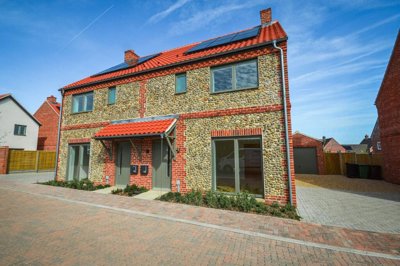
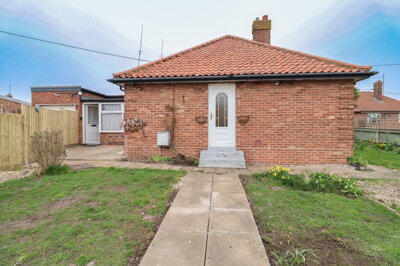
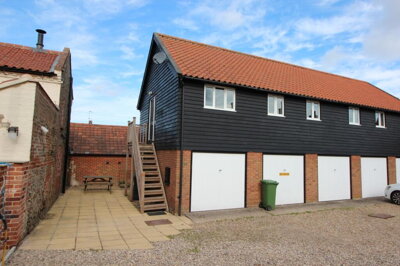
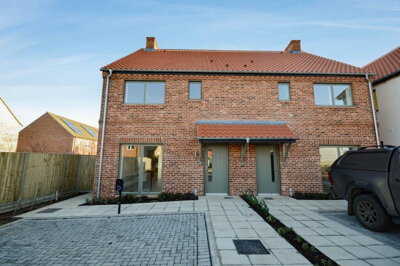
Browse 4 rental homes to rent in Wells-Next-the-Sea from local letting agents.
The Wells Next The Sea property market offers detached, semi-detached, and terraced houses spanning various price ranges and neighbourhoods. Each listing includes detailed property information, photographs, and direct contact with the marketing agent.
In Wells-Next-the-Sea, the rental picture sits within the wider NR23 1 postcode market, where house prices have stayed notably steady even as national trends have shifted around. Over the last year, values have moved only modestly, with sold prices down by approximately 5.2% while asking prices have stayed fairly level. The current average asking price is around £507,366, a figure that covers everything from smaller flint cottages to larger Georgian residences. That underlying demand for a coastal lifestyle keeps the market resilient, and it feeds through to rentals too, across both long-term lets and holiday accommodation.
There is a decent spread of rental property in Wells-Next-the-Sea, both by type and by monthly cost. From recent sales evidence and what we see in the local lettings market, terraced homes usually come in at around £900-£1,200 per month. Semi-detached houses tend to offer a bit more room for approximately £1,150-£1,425 per month. Detached homes, which make up a notable share of the housing stock here, also tend to fall between £1,150 and £1,425 per month depending on size, condition and how close they are to the harbour or beach. Flats, including those attractive conversions in the old maltings buildings by the harbour, often start from £800 per month.
A big influence on renting in Wells-Next-the-Sea is the number of second-home owners and holiday lets. Homes that could otherwise come onto the long-term rental market are sometimes switched to holiday use, especially those with sea views or easy access to the beach. For renters, that cuts both ways. Some landlords will offer competitive rates on longer tenancies for a steadier income, while others favour the flexibility of holiday letting in the busiest seasons.

Daily life in Wells-Next-the-Sea feels far removed from city pressure, but it still covers the basics well. Around Staithe Street and Church Plain, the town centre brings together independent shops, galleries and cafes, with antiques, artwork and fresh coastal produce all part of the mix. Near the harbour, the well-known fish shop draws people in for freshly caught crabs and lobsters. Local pubs lean into hearty meals made with Norfolk produce. Summer fills the place with beach-goers, then winter shifts the mood entirely towards quiet walks over the salt marshes and sand dunes.
The Buttlands gives this part of town much of its distinctive feel, a broad and elegant green framed by residential streets and the Georgian and Victorian architecture that defines so much of Wells. Large period houses run around its edges, many of them listed buildings that speak to the town's prosperous days as an important seaport. St Nicholas Church, a Grade II* listed building with origins in the 13th century, is one of the clearest reminders of that long history and is visible from several points across the settlement. Nearby Brigg Square and Park Road add more of the architectural character that sets North Norfolk apart.
Although the harbour now sits approximately one kilometre inland from the sea because of historical silting, it still works as a fishing port, with trawlers unloading their catch each day. The old maltings and granary buildings, once tied to malt production, have since become luxury flats and remain one of the defining features of the waterfront. Wildlife is another draw. Birdwatchers head here for Holkham National Nature Reserve, where bitterns, marsh harriers and thousands of pink-footed geese are seen in winter. Working heritage, open skies, sea air, sunsets over the marsh, Wells manages to hold all of it together.

Families looking to rent in Wells-Next-the-Sea do have local schooling, although options are naturally narrower in a place of this size. Wells Primary School serves the town as a community school and takes children from reception through to Year 6. It has close links with local families and benefits from the kind of support often found in smaller North Norfolk schools. For secondary education, most pupils travel into nearby Fakenham, where Fakenham Academy provides a comprehensive curriculum along with strong sporting facilities.
Beyond the town itself, the wider Wells-Next-the-Sea area includes other primary schools in surrounding villages, and families prepared to travel a little further may also look towards Snettisham and Burnham Market. These village schools often mean smaller class sizes, though transport has to be planned and paid for, which matters when working out the full cost of renting locally. Families wanting faith education usually find the nearest Catholic primary school in King's Lynn. Church of England schools are available in nearby market towns too, including options in Burnham Market and Holt.
Catchment rules are taken seriously in this part of Norfolk, so parents planning a rental move with children are wise to make enquiries early. Admission arrangements generally open in the autumn for the following September intake, and places at popular schools can fill quickly, with waiting lists building up. Sixth form and further education are centred mainly on Fakenham and King's Lynn. Both can be reached from Wells-Next-the-Sea by car or by public transport, with student bus services running on established routes.

Wells-Next-the-Sea is not a major transport hub, and it does not pretend to be, but the key links are there for commuting and occasional longer trips. The nearest rail station is at King's Lynn, approximately 30 miles away, with direct services to Cambridge and London King's Cross on the Fen Line. Norwich Airport, around 45 miles from Wells-Next-the-Sea, covers domestic flights as well as some European connections. In practice, most people rely on a car for regular travel, with Norwich reachable in approximately one hour via the A1067 and A47.
For anyone without a car, local buses matter. Lyns and Sanders run services linking Wells-Next-the-Sea with nearby villages and market towns, giving residents access to day-to-day essentials beyond the town itself. Timetables are regular, though not with the frequency you would expect in a city, so planning ahead tends to be part of using them. The Coasthopper is especially popular in the summer, running along the North Norfolk Coast and connecting Wells with Blakeney, Cley and Sheringham. It is practical, and it is part of the appeal for visitors as well.
Quiet country lanes make the area attractive for cycling, and the flat Norfolk landscape means longer rides to nearby towns are realistic for many people. Around Wells-Next-the-Sea, the ground is mostly level, which helps with daily journeys to schools or local amenities as much as leisure cycling. Parking is another matter in peak season. In summer, the main car park by the harbour can fill quickly once day-trippers arrive in numbers, so anyone renting in the more central parts of town should think about how those seasonal pressures might affect day-to-day life.

Before we start arranging viewings in Wells-Next-the-Sea, it helps to pin down a rental budget that covers more than the headline monthly rent. Council tax, utilities and contents insurance all need to be counted. Our partner service can give rental budget quotes based on your circumstances, so you can see what level of monthly rent is realistic in a coastal market where homes often range from £800 for simpler flats up to £1,425 for larger semi-detached properties.
It is worth getting a feel for the different parts of Wells-Next-the-Sea rather than treating the town as one single market. The harbour area has its converted maltings, the Buttlands brings Georgian architecture, and roads around Park Road and Brigg Square are generally quieter and more residential. As we help narrow a search, we would look at access to amenities, schools and transport links, but also at practical issues such as flood risk for homes near the harbour or on lower-lying roads.
Once you know what you are after, speak to local estate agents and line up viewings. Wells can move quickly, especially in the summer, when some homes that might have been long-term lets are also attractive to holidaymakers. That can tighten supply fast. If the right property comes up, it usually pays to act without too much delay.
Older housing stock is a big part of Wells-Next-the-Sea, from flint cottages and Georgian houses to converted maltings flats, and that is where a RICS Level 2 survey can be useful before you commit to a tenancy. Many of these buildings pre-date modern regulations, so issues linked to age and traditional construction are not unusual. Our RICS Level 2 survey service in Wells-Next-the-Sea starts from £400. It can flag concerns such as damp in solid-walled construction and older electrical systems that may not be obvious at first glance.
After a rental offer is agreed, the next stage is usually tenant referencing. Landlords and agents normally ask for proof of income and residency, and our partner can organise the checks quickly. These commonly cover credit checks, employment verification and landlord references from previous tenancies.
With the tenancy agreement signed and the deposit paid, attention turns to the move itself. On arrival at your new Wells-Next-the-Sea property, take meter readings straight away and work through the inventory carefully. Given the age and character found in many local homes, it is sensible to document the condition of fixtures and fittings in detail from the start.
Renting in Wells-Next-the-Sea comes with a few location-specific issues, and flood risk is high on that list. The town sits within a changing coastal landscape of salt marshes, sand dunes and a harbour approximately one kilometre inland from the sea. Homes near the harbour, or on lower roads leading towards the beach, may be more exposed during exceptional tides and storm events. The Wells tide is well known for how quickly it can cover the broad sandbanks and water channels on the beach. Before taking on a tenancy, we would always want a clear picture of the topography and any flood history affecting the specific property.
Listed status and conservation area controls also matter in Wells. A large number of homes use traditional flint construction, which needs a different approach to maintenance and may not suit anyone expecting modern insulation levels. Underfoot, the local chalk bedrock geology forms part of the Late Cretaceous Chalk Group, and that affects drainage and ground conditions. Around the Buttlands, Staithe Street, Church Plain and elsewhere in the conservation area, there are many Grade II listed buildings, where permitted development rights may be limited and landlords have particular maintenance responsibilities.
Anyone looking at flats in converted maltings buildings should take time to understand the service charge and the leasehold setup. These impressive conversions often come with higher service charges because communal spaces need maintaining and the historic fabric of the building has to be protected, something that is not always obvious during a viewing. Ground rent should also be clearly set out. We would want to check exactly which maintenance obligations sit with the tenant and which remain with the landlord. In older buildings, electrical systems or plumbing can also be dated, still serviceable but different from modern standards and sometimes more expensive to run.
Older homes in Wells often show the same recurring defects. Damp is common in solid-walled Victorian or Edwardian buildings that were constructed before cavity wall insulation became standard. Period properties can also suffer from roof wear, and older plumbing may rely on pipes that corrode with age. Many buildings dating from before 1999 may include asbestos-containing materials, although these are often managed in place rather than removed unless renovation is planned. Add the coastal setting, where salt air speeds up corrosion on metal parts and weathers external finishes, and the case for a careful survey becomes much stronger.

There is not a huge amount of detailed rental price data for the NR23 1 postcode, but the sales market still gives useful context. Average house prices sit at approximately £479,302, with asking prices around £507,366. From there, local evidence suggests rents usually start at around £800 per month for one-bedroom flats in converted buildings and rise to £1,425 per month for larger semi-detached properties with gardens. Terraced cottages that suit couples or smaller families generally fall in the £900-£1,200 per month bracket. Exact figures depend heavily on size, condition, position within the town and whether outside space comes with the property. Sea views or a harbour-side setting usually push rents higher.
Most homes in Wells-Next-the-Sea fall under North Norfolk District Council, and residential properties are commonly found in Bands A to D. Around the Buttlands and along the High Street, the larger Georgian and Victorian houses often sit in the upper bands because of their size and value, while smaller flint cottages may come under Bands A or B. Charges vary with the band and with any discount or exemption that applies, but for a Band B-D property in North Norfolk, annual council tax is typically around £1,400-£2,000. Before taking a property on, ask the landlord or letting agent to confirm the exact band.
For children aged 5-11, Wells Primary School is the main local option and keeps education within the town itself. It has served Wells for many years and has strong community links. Older pupils usually move on to Fakenham Academy for secondary education, and the school is well regarded for both academic and vocational routes, with sixth form provision as well. Elsewhere across North Norfolk, there are more primary choices in nearby villages, including Church of England schools in Burnham Market and Holt. Catchment areas should always be checked with Norfolk County Council, since changes can affect school place decisions, and admissions are generally handled through the county council's central system.
Public transport in Wells-Next-the-Sea is limited, but it does the job for a small town. Local buses connect Wells with surrounding villages and with Fakenham, where wider rail and bus links can be picked up. In the summer, the Coasthopper adds a scenic coastal route between Wells, Blakeney, Cley and Sheringham, and it is used by residents and visitors alike. For commuting, shopping in larger centres, medical appointments or evenings out, most people still find a car close to essential because services are not especially frequent. Rail access is via King's Lynn, approximately 30 miles away, with onward trains to Cambridge and London.
For many renters, Wells-Next-the-Sea offers exactly the kind of coastal life they are after, historic, attractive and slower paced. The town has the basics covered with shops, pubs, restaurants, a post office and a doctor surgery, while Holkham National Nature Reserve and the mile-long walk to the beach bring people here in every season. There is an active local community too, with events and groups through the year, many of them tied in some way to the harbour and the fishing trade. Still, summer and winter feel very different. Visitor numbers reshape the town in the warmer months, and anyone wanting late-night entertainment or extensive shopping may find Wells a bit quiet. Holiday lets and second homes also influence the feel of some streets.
In England, the standard tenancy deposit is usually set at five weeks' rent, worked out from the annual rent divided by 52 and then multiplied by five. On a typical Wells-Next-the-Sea rental at £943 per month, that means budgeting £1,083 for the deposit. It should be protected in a government-approved tenancy deposit scheme for the length of the tenancy. Most letting agents will also ask for references, proof of identity and employment verification. On top of that, you need the first month's rent ready in advance, plus any check-out inventory fee that may be charged at the end of the tenancy. Some landlords may also ask for a guarantor or extra security if the applicant has only a limited rental history.
Because Wells-Next-the-Sea sits on the North Norfolk coast, flood risk is a real point to check rather than a remote possibility. The town lies beside salt marshes, with a harbour approximately one kilometre inland from the sea, and lower-lying properties near the harbour or on roads towards the beach are generally more exposed to tidal or coastal flooding in exceptional weather and high spring tides. Surface water flooding can also happen after heavy rainfall because of the local geology and drainage conditions. Buildings insurance is usually in place on rental homes, but tenants should still think about contents insurance and be clear on their responsibilities if flooding does occur. We would always ask the landlord about any previous flood events and any resistance or resilience measures already installed.
From 4.5%
Checking rent affordability and setting a realistic budget for a Wells-Next-the-Sea tenancy
From £50
What landlords in Wells-Next-the-Sea usually want to see from employment and credit checks
From £400
Surveying older Wells-Next-the-Sea homes, including flint cottages and converted maltings
From £100
Energy performance certificate requirements for rental property in North Norfolk
Getting clear on the money side of renting in Wells-Next-the-Sea makes the move easier to plan and helps avoid awkward surprises later. In England, the standard security deposit is capped at five weeks' rent where the annual rent is less than £50,000, and it must stay in a government-approved tenancy deposit scheme during the tenancy. At the end, that deposit is returned subject to any deductions for damage beyond fair wear and tear or for unpaid rent. The landlord or letting agent should tell you which deposit protection scheme is being used within 30 days of receiving the deposit.
The deposit is only part of the upfront cost. In most cases, the first month's rent is due before, or on, the day you move in, so both sums need to be available at the same time. Letting agents used to charge a wider range of administration fees, though most of these were removed by the Tenant Fees Act 2019. Even so, some renters still need to budget for referencing fees, inventory check fees of approximately £100-£200, and in some cases charges linked to updating the EPC if the property does not already have a valid certificate.
Once you are in, the regular costs continue. Monthly rent is normally paid in advance, council tax in North Norfolk District typically comes in at around £1,400-£2,000 annually for a Band B-D property, and utility bills may also fall to you unless they are included in the rent. Contents insurance is strongly recommended for protection against theft, fire or water damage. In a town like Wells-Next-the-Sea, with many older
Properties to Rent In London

Properties to Rent In Plymouth

Properties to Rent In Liverpool

Properties to Rent In Glasgow

Properties to Rent In Sheffield

Properties to Rent In Edinburgh

Properties to Rent In Coventry

Properties to Rent In Bradford

Properties to Rent In Manchester

Properties to Rent In Birmingham

Properties to Rent In Bristol

Properties to Rent In Oxford

Properties to Rent In Leicester

Properties to Rent In Newcastle

Properties to Rent In Leeds

Properties to Rent In Southampton

Properties to Rent In Cardiff

Properties to Rent In Nottingham

Properties to Rent In Norwich

Properties to Rent In Brighton

Properties to Rent In Derby

Properties to Rent In Portsmouth

Properties to Rent In Northampton

Properties to Rent In Milton Keynes

Properties to Rent In Bournemouth

Properties to Rent In Bolton

Properties to Rent In Swansea

Properties to Rent In Swindon

Properties to Rent In Peterborough

Properties to Rent In Wolverhampton

Enter your details to see if this property is within your budget.
Loans, cards, car finance
Estimated property budget
Borrowing + deposit
You could borrow between
Typical borrowing
Monthly repayment
Est. at 4.5%
Loan-to-value
This is an estimate only. Your actual budget may vary depending on interest rates, credit history, and personal circumstances. For an accurate affordability assessment, speak to one of our free mortgage advisors.
This calculator provides estimates for illustrative purposes only and does not constitute financial advice. Your home may be repossessed if you do not keep up repayments on your mortgage. Estimates based on 4.5% interest rate, repayment mortgage. Actual rates depend on your circumstances.
Homemove is a trading name of HM Haus Group Ltd (Company No. 13873779, registered in England & Wales). Homemove Mortgages Ltd (Company No. 15947693) is an Appointed Representative of TMG Direct Limited, trading as TMG Mortgage Network, which is authorised and regulated by the Financial Conduct Authority (FRN 786245). Homemove Mortgages Ltd is entered on the FCA Register as an Appointed Representative (FRN 1022429). You can check registrations at NewRegister or by calling 0800 111 6768.

We use cookies to show you personalised content and improve your experience of our website. Find out more in our Privacy policy and Cookie policy.