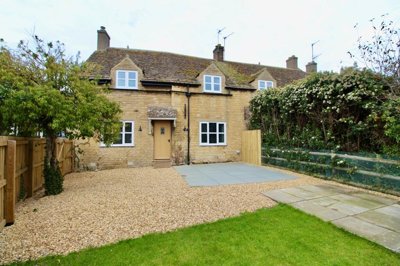
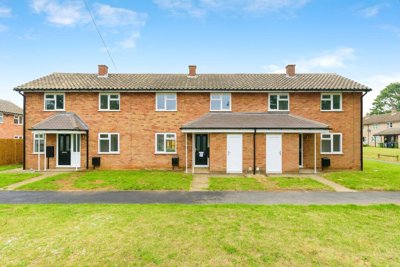
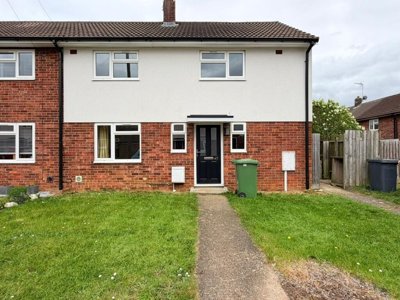
Browse 3 rental homes to rent in Thornhaugh, Peterborough from local letting agents.
£0/m
0
0
0
Source: home.co.uk
Thornhaugh does not have a large, fast-turning apartment market, and that is useful context for renters. homedata.co.uk shows detached homes leading locally at £640,000 on average, with semi-detached homes averaging £430,000, so the stock is weighted towards family houses and character properties. We have not identified any clearly verified active new-build developments in the village, which keeps supply tight. In practice, that usually means fewer homes available at any one time, but stronger demand for gardens, parking, and a quieter setting.
Turnover matters here as well. The local market recorded 40 property sales in the last 12 months, and across the wider PE8 area values were down only £2.5k, or 1%, over the same stretch, which makes the broader market look steadier than the sharper headline fall in Thornhaugh itself. Even with the 22% annual drop recorded locally, the average price is still close to the 2022 peak, and that suggests confidence has not disappeared. Older homes needing updating can be the ones to watch in a village like this, because they often leave the most room for negotiation.

Rural, historic, and quieter than a larger Peterborough suburb, Thornhaugh has a very settled feel. Much of that comes from its older housing character, including period homes built between 1800 and 1911 around the Thornhaugh Hall Estate. We also know of at least one Grade II listed cottage in the village, a small but telling detail that points to heritage carrying weight here, with some streets feeling more conservation-led than others. Renters wanting a modern estate and constant churn may find it too still. Those who like character and open surroundings usually see the attraction straight away.
The setting matters every bit as much as the houses. In Cambridgeshire, clay, chalk, and river terrace deposits often sit behind the local ground conditions, and clay can mean shrink-swell movement in older homes. We have not seen a verified flood map specific to Thornhaugh in the research set, so any property near low-lying land, drains, or a watercourse is worth checking more carefully. Day to day, most tenants here will be driving for bigger shops, evenings out, and routine services. That is the trade-off, and for many people it is part of why the village feels genuinely settled rather than newly built.
School planning usually reaches beyond the parish itself. The research set does not point to a large local school cluster within Thornhaugh, so families often focus on nearby primary and secondary options along the Peterborough and Stamford corridor. Catchment maps and admission rules can matter as much as the school itself. Where places are a priority, we suggest checking the proposed tenancy against preferred schools before committing to a long let.
For households that want a quieter base, Thornhaugh can work well, provided school runs by car or through a wider transport network are manageable. Peterborough brings further education, college choices, and a broader range of secondary schools, and many parents also include the Stamford side of the corridor in their search. In a village this small, road access and parking can shape school choice more than simple distance. We always advise checking the school year calendar, bus options, and real travel time at the hour you would actually need to leave.
Roads come first in Thornhaugh, rail second. The nearby A1 corridor makes journeys towards Peterborough, Stamford, and the wider East Midlands straightforward for drivers. For commuting by train, Peterborough station is the key hub, with fast direct services putting London King's Cross at roughly an hour and linking easily to other major cities. That mix suits people who want a rural address without giving up access to a strong commuter rail line.
Public transport is thinner here than in Peterborough, which is exactly what we would expect from a village of this size. Bus services across rural Cambridgeshire are often limited, so live timetables are worth checking before signing a tenancy if you do not drive. Cycling can work on the quieter lanes, though it is better for confident riders than for urban-style daily commuting. Parking matters too, and plenty of renters in Thornhaugh put real value on homes with room for at least two cars because so many journeys begin from the front door.
Compare Thornhaugh with nearby Peterborough and Stamford, then look closely at which parts of the parish fit your commute, school plans, and budget.
Get your rental budget agreement in principle in place before booking viewings, so we can move quickly when a strong option comes up.
Focus on the basics first, age, layout, parking, and whether the property is a period house, a semi-detached family home, or a rarer flat.
Before travelling, ask about heating, drainage, broadband, parking, and any listed-building or conservation constraints.
Keep ID, employment details, and landlord references ready. In a small rural market, things can move faster than expected.
Before move-in, check meter readings, condition notes, and deposit terms, then report anything needing attention straight away.
Older homes are central to Thornhaugh's appeal, but they deserve more scrutiny than a typical newer flat. Damp, roof condition, outdated electrics, and movement linked to clay soils are all worth checking, especially in period cottages or houses built before 1919. The local research also identifies at least one listed property, so anyone considering a heritage home should ask what alterations are permitted and what maintenance sits with the landlord. For renters, that can be just as important as the monthly rent, because many older properties hide quirks that do not show up in the photos.
Because flood risk has not been firmly verified for the village in the research data, plot-level checks make sense. A home near lower ground, a drainage line, or a garden that holds water after heavy rain calls for more questions before you proceed. Leasehold flats are unusual here, but on the rare occasion one comes up, service charges and ground rent need careful checking alongside the tenancy terms. A good Thornhaugh viewing should leave us clear on structure, access, and practical costs, not only on character.
We do not have a dependable village-wide average asking rent in the research set, and that is fairly typical for a small parish with low turnover. The clearest live guide is the homes currently shown in our search together with asking rents from local agents. For context, homedata.co.uk records an average sold price of £535,000, with detached homes at £640,000 and semi-detached homes at £430,000, placing Thornhaugh in a higher-value rural bracket. That tends to mean fewer bargain rentals and more characterful family houses.
Council tax is set at property level, not village level. Thornhaugh falls within the Peterborough area, so the band comes from the local authority valuation list and may differ between a cottage, a semi, and a detached house. Larger period homes are often in higher bands, while smaller homes usually sit lower. We always suggest asking for the exact band before applying.
Families rarely stop their search at the village boundary. Thornhaugh does not have a major school cluster of its own, so most households look towards nearby primaries and secondaries in the Peterborough and Stamford corridor. Catchment maps, school transport, and admission dates all carry weight here. Where school choice is important, it makes sense to check tenancy details and available places together, because a short commute can count for more than a school name on a brochure.
The strongest transport advantage is road access. With the A1 corridor close by, Peterborough, Stamford, and wider regional journeys are all practical, and Peterborough station adds fast rail links to London and other major cities. Bus provision is likely to be much lighter than in Peterborough itself, which is normal in a village this size. Anyone needing a commuter base should test the route at the time they would really travel.
More space, a rural setting, and a quieter street scene are what Thornhaugh does well. The market is weighted towards detached and semi-detached homes, with period properties and at least one Grade II listed cottage, so it suits renters who appreciate character. Limited new-build activity helps the village avoid an overdeveloped feel. It is a weaker fit for anyone relying on frequent buses, late-night amenities, or a dense apartment market.
For a tenancy, most people should plan for a holding deposit, the first month's rent, and a security deposit usually capped at five weeks' rent. It is also sensible to allow for moving costs, referencing, and any pet or furniture-related extras the landlord permits. Anyone thinking ahead to buying locally should keep the current 2024-25 stamp duty thresholds in mind, 0% up to £250,000, 5% from £250,000-£925,000, 10% from £925,000-£1.5m, and 12% above £1.5m, with first-time buyer relief at 0% to £425,000 and 5% to £625,000. Comparing rental and purchase plans early can save time later.
The recent sales picture is led by detached homes, with semi-detached properties next. Average sold prices sit at £640,000 for detached homes and £430,000 for semis, and pre-1919 stock shows up in locations such as Thornhaugh Hall Estate. Flats are scarce, and we found no verified active new-build scheme in the village. For renters, that usually translates into older character homes and family-sized houses rather than modern apartment blocks.
Ground conditions are worth paying attention to here. Cambridgeshire's clay geology can lead to shrink-swell movement, so an older property benefits from a careful inspection. We also suggest looking closely at drainage, boundary walls, and any signs of historic damp, particularly in period cottages and listed homes. Flood risk data specific to Thornhaugh was not verified in the research set, so the exact plot location should be checked before signing. In a village with older stock and garden land, those details matter.
From 4.5%
Compare rental budget rates and line up the best deal before you start booking viewings.
From £35
Speed up your application with trusted tenant checks
From £350
Check the energy efficiency of your next home
From £350
Useful if you may buy in Thornhaugh later
In Thornhaugh, renting is shaped more by the type of home available than by sheer volume of stock. With the village leaning towards detached and semi-detached houses, upfront costs can feel different from a city flat, especially once moving vans, utilities, and travel are added in. Most tenants should allow for a holding deposit, the first month's rent, and a five-week tenancy deposit, then keep a little extra available for referencing and inventory charges. In a small market, a home that works for both budget and commute can be worth acting on quickly, so having the figures ready helps.
Anyone weighing rent against a future purchase in Thornhaugh should keep the 2024-25 stamp duty thresholds in view, 0% up to £250,000, 5% from £250,000-£925,000, 10% from £925,000-£1.5m, and 12% above £1.5m, with first-time buyer relief at 0% to £425,000 and 5% to £625,000. That is relevant because the local sold market average of £535,000 sits comfortably within the middle of those thresholds, and detached homes average £640,000. Even for renters, the wider ownership cost picture is useful while comparing homes. We recommend having your rental budget agreement in principle ready before every viewing, so a fast decision is easier when the right place appears.
Properties to Rent In London

Properties to Rent In Plymouth

Properties to Rent In Liverpool

Properties to Rent In Glasgow

Properties to Rent In Sheffield

Properties to Rent In Edinburgh

Properties to Rent In Coventry

Properties to Rent In Bradford

Properties to Rent In Manchester

Properties to Rent In Birmingham

Properties to Rent In Bristol

Properties to Rent In Oxford

Properties to Rent In Leicester

Properties to Rent In Newcastle

Properties to Rent In Leeds

Properties to Rent In Southampton

Properties to Rent In Cardiff

Properties to Rent In Nottingham

Properties to Rent In Norwich

Properties to Rent In Brighton

Properties to Rent In Derby

Properties to Rent In Portsmouth

Properties to Rent In Northampton

Properties to Rent In Milton Keynes

Properties to Rent In Bournemouth

Properties to Rent In Bolton

Properties to Rent In Swansea

Properties to Rent In Swindon

Properties to Rent In Peterborough

Properties to Rent In Wolverhampton

Enter your details to see if this property is within your budget.
Loans, cards, car finance
Estimated property budget
Borrowing + deposit
You could borrow between
Typical borrowing
Monthly repayment
Est. at 4.5%
Loan-to-value
This is an estimate only. Your actual budget may vary depending on interest rates, credit history, and personal circumstances. For an accurate affordability assessment, speak to one of our free mortgage advisors.
This calculator provides estimates for illustrative purposes only and does not constitute financial advice. Your home may be repossessed if you do not keep up repayments on your mortgage. Estimates based on 4.5% interest rate, repayment mortgage. Actual rates depend on your circumstances.
Homemove is a trading name of HM Haus Group Ltd (Company No. 13873779, registered in England & Wales). Homemove Mortgages Ltd (Company No. 15947693) is an Appointed Representative of TMG Direct Limited, trading as TMG Mortgage Network, which is authorised and regulated by the Financial Conduct Authority (FRN 786245). Homemove Mortgages Ltd is entered on the FCA Register as an Appointed Representative (FRN 1022429). You can check registrations at NewRegister or by calling 0800 111 6768.

We use cookies to show you personalised content and improve your experience of our website. Find out more in our Privacy policy and Cookie policy.