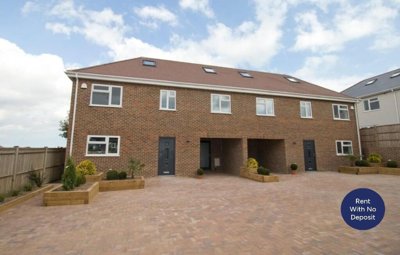
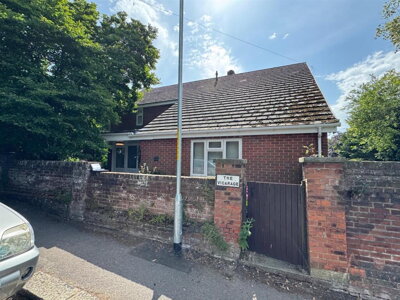
Browse 2 rental homes to rent in St. Margaret's at Cliffe from local letting agents.
Margaret's At Cliffe from local agents. The larger property sector typically features multiple bathrooms, substantial reception space, and private gardens or off-street parking. Four bedroom houses in St. Margaret's At Cliffe span detached, semi-detached, and occasionally terraced configurations, with styles ranging from period properties to modern executive homes.
St. Margaret's at Cliffe's rental market mirrors the village's coastal appeal and tight housing supply. home.co.uk reports a 21% increase in sold prices over the 12 months to January 2026. With the village's cliff-top position limiting new development, conditions are naturally competitive for prospective renters. The average sold price of £475,000 according to home.co.uk, up from £488,000 peak in 2023 per home.co.uk, points to sustained demand for homes in this sought-after spot.
Detached houses dominate the local stock, with average prices of £541,444 on home.co.uk and £440,875 on homedata.co.uk. Semi-detached homes average £723,333 (home.co.uk), while terraced properties sit at a more accessible £260,000 to £230,000. Flats average £404,250, which hints at limited apartment-style accommodation for first-time renters or anyone after lower-maintenance living. There are no active new-build schemes in the village, so rental stock is mainly drawn from existing homes, often with period character and original features.
The village's coastal setting shapes the homes available to let. Many properties use traditional Kentish construction, with local brick, flint, and stone reflecting the area's heritage. Inside, it is common to find fireplaces, exposed beams, and solid wood floors, all of which suit those who like period character. Older buildings can mean more upkeep, and energy efficiency may differ from newer homes. The chalk geology beneath St. Margaret's at Cliffe generally gives good structural stability, although homes very close to the cliff edge need extra scrutiny during any property inspection.
Life here is shaped by striking scenery and a strong sense of community. St. Margaret's at Cliffe takes its name from St. Margaret of Antioch and centres on the historic Church of St. Margaret's, described as "by far the most ancient feature of the village" worthy of more than passing notice. The South Foreland Heritage Coast sets the scene, while the White Cliffs of Dover can be seen from plenty of spots across the parish. That heritage designation helps protect the area's natural character and keeps the landscape unspoiled for future generations.
A small but welcoming community has access to the essentials, even with village life on the quieter side. St. Margaret's Bay gives residents a sheltered cove for coastal walks and beach picnics. The nearby Pines Garden attraction, centred around the restored South Foreland Lighthouse, brings cultural interest and events through the year. Ian Fleming also lived here, drawing inspiration from the coastline for his James Bond novels, which adds a literary edge for anyone who enjoys places with a story behind them.
Day-to-day living in St. Margaret's at Cliffe balances quiet village life with access to bigger town facilities. There is a village shop and post office for essentials, while more extensive shopping is available in Dover, just 3 miles south. The community holds seasonal events and other gatherings across the year. For outdoor time, the surrounding Kent countryside offers good walking and cycling, though the hilly ground near the cliffs takes some fitness levels. Being close to the Port of Dover also makes international travel and continental European links easy to reach.
Tourism is part of the local economy, with holiday parks and hotels supporting year-round jobs. Summer brings a livelier feel, then the pace drops back during the quieter months. That mix gives the village a steady rhythm without leaving it feeling cut off. It is a place where visitors come and go, but the community still feels settled.

Families looking to rent in St. Margaret's at Cliffe will find schooling within reach, even if the village itself has limited facilities. Primary education is usually sought in nearby villages or in Dover, and many parents make short trips so their children can attend preferred schools. Because the village is coastal and small, some households build school transport into their rental plans. The surrounding area includes Ofsted-rated good and outstanding primary schools, so there are choices for those who put education first.
The run to primary schools in nearby villages such as Alkham or Temple Ewell usually takes 10-15 minutes by car, and some routes have school bus services. Parents need to check current admission arrangements and catchment boundaries, as these can affect eligibility at popular schools. Some families choose faith schools in Dover, which may have extra places but still need applications through the Kent County Council admissions process. Early registration for school places is wise, because demand can be strong in village settings.
Secondary options sit in Dover and Deal, both reachable by local bus services or by car. Journey times are reasonable for families staying in the area, and Dover's secondary schools have improved in recent years. For anyone planning a longer tenancy, local catchment areas matter, since school places can be hard to secure in popular villages. Sixth form and further education are mainly based in Dover and Canterbury, so transport planning becomes important for older students working towards advanced qualifications.
Kent County Council's education portal has details on school admissions, catchment areas, and transport support for eligible families. Prospective renters with school-age children should speak to the local education authority directly to confirm the current position and any planned changes to provision in the area. Private schools are also available across wider Kent for families who are considering independent education.
St. Margaret's at Cliffe sits about 3 miles north of Dover, so the Port of Dover and its ferry links to continental Europe are close at hand. The A258 links the village with Dover and Deal and serves as the main route for daily travel and essential journeys. For people working in Dover, the commute is simple by car or bus and usually takes 10-15 minutes. That access to a major international port opens up jobs and travel options many coastal villages cannot match.
Public transport is available, though it runs on a limited schedule, with bus services linking St. Margaret's at Cliffe to Dover and Deal. Stagecoach provides connections into Dover town centre, including stops at Dover Priory station. Timetables are worth checking, as weekend and evening services may run less often than weekday ones. For anyone not relying on daily commuting, the current bus network is usually fine for essential travel.
Dover Priory railway station offers services to London Victoria on the High Speed line, with journey times to the capital at around 1 hour 15 minutes. That makes day trips to London realistic for work or leisure, although the last return train matters if evening plans are involved. Commuters heading to Canterbury or Folkestone have reasonable road access via the A2 and M20 respectively, though both journeys usually need a car because direct public transport is limited.
The Kent countryside around the village gives cyclists some scenic routes, although the hills mean a fair bit of effort in places. National Cycle Route 2 passes through the area, linking coastal communities along traffic-calmed sections where those are available. Parking varies from one property to another, so renters should ask about it early on, especially for homes near the village centre or beach access points.
Before viewing any properties, sort a rental budget agreement in principle so we know what we can afford. This document from lenders shows our maximum monthly rent and gives us a stronger position when we make offers on competitive homes. Several mortgage brokers in Kent provide rental affordability assessments as part of their service, and straightforward applications often get same-day decisions.
It pays to explore St. Margaret's at Cliffe properly, at different times of day and with a close look at local amenities, transport links, and community facilities. Getting a feel for the village helps us judge whether it suits our day-to-day life. We recommend walking the cliff top paths, visiting St. Margaret's Bay beach, and speaking with residents to get a genuine sense of how the place feels.
We contact local estate agents to arrange viewings of any rental homes that are available. Because stock is limited in the village, speed matters when a suitable place comes up. Notes and photographs from each viewing make it easier to compare options later. Agents covering the CT15 6 area include several Dover-based letting specialists who keep databases of village properties.
Homes in St. Margaret's at Cliffe often come with older construction and character features. A proper inspection helps pick up maintenance issues or other problems before we commit to a tenancy agreement. In coastal village properties, common concerns include roof condition, damp penetration, and the state of exterior stonework or flint panels.
Once we find the right property, the rental application should go in promptly, with all required documents, references, proof of income, and identification. Agents often receive several applications for desirable homes in this popular village, so having paperwork ready gives us an edge.
Our chosen references are checked by the letting agent within the agreed timeframe. Once everything is satisfactory, the tenancy agreement is signed, the deposit, typically equivalent to 5 weeks' rent, is paid, and the keys are handed over. We recommend a thorough inventory check at this stage so the condition of all fixtures and fittings is properly recorded.
Renting in St. Margaret's at Cliffe means weighing up several local factors that do not apply inland. The village's coastal position on the White Cliffs of Dover brings extra focus to flood risk and the potential for coastal erosion. While chalk geology generally gives good stability with low shrink-swell risk, homes very close to the cliff edge in St. Margaret's Bay need more scrutiny. Prospective renters should ask landlords about any history of coastal flooding, storm damage, or maintenance linked to the sea-facing setting.
The village's historic character means many properties are older and built using traditional Kentish methods. That can include local brick, flint, or stone, which adds charm but may need more maintenance than newer equivalents. The Church of St. Margaret's points to the likely presence of listed buildings in the area, and those come with planning restrictions on alterations as well as a need for more careful upkeep by tenants. Knowing which homes are listed, and how that affects any permitted changes during a tenancy, matters for anyone planning a longer let.
Older properties can also be less efficient, so EPC ratings are worth checking to get a sense of heating costs in colder months. Homes in St. Margaret's at Cliffe may need more heat because of their exposed positions and traditional construction. Asking about insulation, double glazing, and the age of the heating system gives us useful budgeting information. Some landlords have updated older homes with modern heating and better insulation, so the condition can vary a great deal from one property to the next.
Knowing where maintenance responsibilities sit in the tenancy agreement gives both landlord and tenant clarity. In older homes with character features, tenants are usually expected to report issues quickly and allow access for repair work. Sorting out garden maintenance, especially in larger grounds that are common with detached properties, helps avoid arguments later on. Homes with beach access or sea views may also bring extra exposure to salt air, which can affect outside fittings.
Public rental figures for St. Margaret's at Cliffe are thin on the ground, but the strong owner-occupier market points to competitive rents. Sold prices average between £353,333 (homedata.co.uk) and £523,219 (home.co.uk), which suggests rental homes command premium rates because of the village's coastal location and tight supply. Four-bedroom detached houses would generally attract higher rents than terraced homes, with the amount depending on condition, size, and the property's exact spot in the village. For current rental pricing, prospective renters should speak to local letting agents, as private rental market data is not published publicly.
For council tax, properties in St. Margaret's at Cliffe fall under Dover District Council. Bands vary by individual valuation, though typical residential homes in Kent villages range from Band B through Band G. Each property can be checked through the Valuation Office Agency website, or tenants can ask the landlord or letting agent before committing to a tenancy. Dover District Council tax rates are listed on the council's official website, along with any discounts for single occupancy or student status.
St. Margaret's at Cliffe itself has limited schooling, so primary education is usually sought in nearby villages or in Dover. Parents should check current Ofsted ratings for schools in the Dover area and think about catchment boundaries before choosing a rental property. Secondary schools in Dover and Deal serve the area, and transport arrangements matter for families. School admissions details are available through Kent County Council's education portal, including application deadlines, catchment areas, and oversubscription criteria for all schools in the district.
Public transport in St. Margaret's at Cliffe runs on a limited timetable, with bus services connecting the village to Dover and Deal. Dover Priory station provides rail links to London Victoria via the High Speed service, with journey times of around 1 hour 15 minutes to the capital. The village's closeness to Dover ferry port also gives access to France and further afield. Anyone who depends heavily on public transport should check current timetables and think carefully about the practical side of daily commuting, especially early morning and late evening services.
St. Margaret's at Cliffe offers a strong quality of life for anyone after coastal village living with dramatic scenery on the doorstep. The village brings a peaceful setting, a close community feel, and quick access to Dover's amenities and transport links. Rental stock is limited, so competition can be high and prices may reflect the location. For those who value the White Cliffs landscape, heritage coastline, and village character, renting here can be a very good fit despite the realities of rural village life. The South Foreland Heritage Coast designation helps protect the area's natural beauty for the long term, which matters to renters looking for a place with lasting appeal.
Standard deposits for rental homes in England are equivalent to 5 weeks' rent, and where annual rent exceeds £50,000 they are capped at 5 weeks' rent. Alongside the deposit, tenants usually pay a holding deposit equivalent to 1 week's rent while referencing is carried out. Other costs can include letting agent fees, which have been capped under the Tenant Fees Act 2019, and the first rent payment. First renters should plan for those costs, plus moving expenses and possible utility and telecommunications connection fees, when renting in St. Margaret's at Cliffe.
The coastal setting means homes very close to the cliff edge in St. Margaret's Bay need careful assessment for coastal erosion risk. Chalk geology usually gives good structural stability inland, but exposed cliff-top spots are subject to ongoing natural movement. Surface water flooding can also happen during heavy rain, so renters should ask the landlord or agent about flood history or any maintenance needed. Before a tenancy is signed for an exposed coastal property, buildings insurance and any specific risk assessments should be discussed.
The village mainly consists of detached family houses and traditional Kentish cottages, with fewer terraced homes or flats available. Most rental properties tend to be larger homes with four or more bedrooms, which makes the village a good fit for families or anyone who wants more living space. Traditional construction often uses local brick, flint, and stone, all part of the Kentish heritage. Because smaller homes are limited, single occupants or couples may face more competition, while larger families are likely to find decent options relative to property size.
Renting in St. Margaret's at Cliffe means keeping an eye on the finances beyond the monthly rent. The deposit, usually set at 5 weeks' rent, gives the landlord security against damage or unpaid rent during the tenancy. It is protected in a government-approved Tenancy Deposit Protection scheme within 30 days of receipt. On a property renting at £1,500 per month, that would come to around £1,731. Prospective tenants should plan for that upfront cost alongside moving expenses.
There is also the holding deposit of 1 week's rent, which takes a property off the market while references are checked. This sum is usually taken off the final deposit payment or the first rent payment. Under the Tenant Fees Act 2019, letting agents cannot charge certain fees, though permitted payments still include rent, deposits, and default fees for late rent payments. First-time renters in St. Margaret's at Cliffe should also allow for utility and internet connection costs, plus furniture costs if the home is unfurnished. Building contents insurance is another point, as landlords often require tenants to arrange it.
Tenancy agreements in England usually start with an initial fixed term of 6 or 12 months, with rent paid monthly in advance. The first month's rent and the deposit are due before the tenancy begins, together with the holding deposit paid when the property is secured. For homes in St. Margaret's at Cliffe, rent is usually paid by standing order on a monthly anniversary date. Budgeting for quarterly utility bills as well as monthly rent helps keep cash flow under control through the year.

Because of the coastal setting and the age of many homes, renters in St. Margaret's at Cliffe should be alert to common local housing issues. Damp can show up in several forms, especially in older properties and those exposed to sea weather. Musty smells, discoloured walls, and condensation on windows are all warning signs. Good ventilation and proper heating help manage moisture, but persistent damp may point to a more serious problem that needs landlord attention.
Roof condition deserves close attention in village properties, where older building methods and sea exposure can speed up wear. Missing or slipped tiles, worn felt underlay, and failing pointing are all common concerns that can let water in if they are left alone. During viewings, tenants should check the ceiling and ask about recent roof maintenance or any planned work. Homes with thatched roofs, which are sometimes found in historic Kentish villages, need specialist upkeep and may carry extra insurance implications.
Older homes with traditional timber can suffer from rot and woodworm. Floorboards, window frames, and structural timbers should all be checked for signs of deterioration. Modern treatments can deal with woodworm effectively, but evidence of active infestation should lead to a request for treatment records from the landlord. Salt air exposure, which is common in coastal locations, can also speed up corrosion of metal fixings and fittings, meaning maintenance needs tend to be higher than inland.
Older properties that have not had a full renovation often come with dated electrical wiring and plumbing. Consumer unit upgrades, earth bonding, and circuit additions point to modern safety standards that older systems may not meet. When viewing homes, it is sensible to ask about the age of the electrical and plumbing systems so future maintenance and improvement costs can be judged properly. Landlords are legally required to keep electrical installations safe throughout the tenancy.
From 4.5%
We sort a rental budget in principle before the property search starts.
From £30
We carry out referencing checks covering credit history, employment, and previous landlord references.
From £350
A professional property survey is sensible for older coastal homes with traditional construction and character features.
From £80
An Energy Performance Certificate is needed before renting, and it sets out the property's efficiency and running costs.
Properties to Rent In London

Properties to Rent In Plymouth

Properties to Rent In Liverpool

Properties to Rent In Glasgow

Properties to Rent In Sheffield

Properties to Rent In Edinburgh

Properties to Rent In Coventry

Properties to Rent In Bradford

Properties to Rent In Manchester

Properties to Rent In Birmingham

Properties to Rent In Bristol

Properties to Rent In Oxford

Properties to Rent In Leicester

Properties to Rent In Newcastle

Properties to Rent In Leeds

Properties to Rent In Southampton

Properties to Rent In Cardiff

Properties to Rent In Nottingham

Properties to Rent In Norwich

Properties to Rent In Brighton

Properties to Rent In Derby

Properties to Rent In Portsmouth

Properties to Rent In Northampton

Properties to Rent In Milton Keynes

Properties to Rent In Bournemouth

Properties to Rent In Bolton

Properties to Rent In Swansea

Properties to Rent In Swindon

Properties to Rent In Peterborough

Properties to Rent In Wolverhampton

Enter your details to see if this property is within your budget.
Loans, cards, car finance
Estimated property budget
Borrowing + deposit
You could borrow between
Typical borrowing
Monthly repayment
Est. at 4.5%
Loan-to-value
This is an estimate only. Your actual budget may vary depending on interest rates, credit history, and personal circumstances. For an accurate affordability assessment, speak to one of our free mortgage advisors.
This calculator provides estimates for illustrative purposes only and does not constitute financial advice. Your home may be repossessed if you do not keep up repayments on your mortgage. Estimates based on 4.5% interest rate, repayment mortgage. Actual rates depend on your circumstances.
Homemove is a trading name of HM Haus Group Ltd (Company No. 13873779, registered in England & Wales). Homemove Mortgages Ltd (Company No. 15947693) is an Appointed Representative of TMG Direct Limited, trading as TMG Mortgage Network, which is authorised and regulated by the Financial Conduct Authority (FRN 786245). Homemove Mortgages Ltd is entered on the FCA Register as an Appointed Representative (FRN 1022429). You can check registrations at NewRegister or by calling 0800 111 6768.

We use cookies to show you personalised content and improve your experience of our website. Find out more in our Privacy policy and Cookie policy.