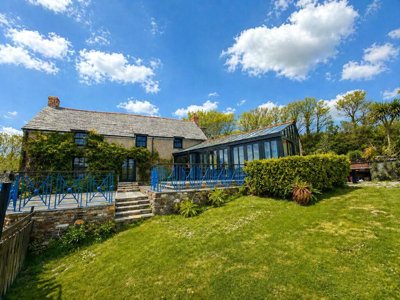
Browse 1 rental home to rent in St Gennys from local letting agents.
The larger property sector typically features multiple bathrooms, substantial reception space, and private gardens or off-street parking. Four bedroom houses in St Gennys span detached, semi-detached, and occasionally terraced configurations, with styles ranging from period properties to modern executive homes.
In St Gennys, the rental picture is shaped by restrictions that are unusually tight. The whole parish sits within the Cornwall National Landscape, formerly the Cornwall Area of Outstanding Natural Beauty, so Cornwall Council's Local Plan keeps a close rein on new residential development. St Gennys also carries a designated "Zero Housing Target", with no requirement for new affordable housing provision. In practice, that keeps the rental supply largely to existing homes, most often traditional farmhouses, cottages and converted agricultural buildings rather than modern developments.
Sales across the EX23 postcode area give a useful sense of St Gennys values. A detached property on Church Road sold in March 2024 for £312,500, and a cottage at Rosecare Farm changed hands in July 2024 for £173,500. Another substantial property on St Gennys sold in September 2024 for £351,000, while West Crannow reached £875,000 in August 2021. Taken together, those figures show the premium attached to this popular coastal parish, and rents tend to reflect both the rarity of available homes and the character of the local stock.
Seasonality has a real effect here. During the summer months, demand rises as holidaymakers look for temporary accommodation and some second-home owners let their properties. For tenants who can time a move for quieter periods, that can open up opportunities. We also find that, in a small and close local community, rental openings are often passed around by word-of-mouth before they reach any listing platform, so good local contacts, from letting agents to residents, matter.
Life in St Gennys is closely tied to the landscape and the turn of the seasons. This parish is marked out by Carboniferous geological formations known as the "Crackington Formation", which form the striking sea cliffs and rocky outcrops along this part of North Cornwall. The coastline is protected as a Site of Special Scientific Interest, a Special Area of Conservation, and designated Heritage Coast, which says plenty about its national importance. For residents, that means everyday access to exceptional scenery, from coastal walks and hidden coves to clear-day views across the Bristol Channel to Wales.
The parish has an unusually rich spread of historic buildings for such a small place, much of it rooted in a long agricultural past. At the centre stands the Church of St Genesius, partly Norman, dating from the medieval period, and listed Grade I. Its aisle arcades are built from local granite and Polyphant stone, materials seen across much of the area's traditional building stock. Then there is the Holy Well of St Gennys on the front lawn of the Old School House, Grade II listed, and traditionally said to date from around AD 500. That depth of history gives the village a strong sense of continuity in day-to-day life.
There is more to St Gennys than church history. The parish landscape also has deep geological interest, with historic slate quarrying and mining carried out across the area, including the former Wolframite, Lead, and Zinc mine at Mineshope. Local stone, cob, and slate appear again and again in the building stock, reflecting the geology underfoot as well as generations of Cornish craft. Cornwall Council's planning policies also stress suitable materials and a sympathetic use of colour in finishes, so any new work sits more comfortably within this protected landscape.

For families, education in St Gennys is geared to the realities of a small rural parish. Primary provision is found in surrounding villages and towns, and children commonly move on to secondary schools in nearby Bude. Budehaven Community School serves the area for secondary education and includes a sixth form offering A-Level courses, drawing students from across the wider district, including St Gennys. Families looking at independent options will find several well-regarded schools across Cornwall, though daily travel or boarding usually comes with that choice.
Access to schools in Bude and nearby helps make St Gennys workable for families with children of different ages. The trip to secondary school means travelling along country roads, but many families accept that as part of rural living. We would always suggest checking catchment areas and admission arrangements with Cornwall Council before committing to a rental, so you know how the allocation process applies to your circumstances. School transport for secondary-aged children travelling to Bude is handled under Cornwall Council's school transport policy.
Outside the classroom, children here have a setting that is hard to replicate in urban areas. Coastal paths, farmland and protected landscapes create a natural base for geography, biology and environmental studies. Rural schools also often have the small class sizes that can give children more individual attention, both academically and socially.

Transport is one of the practical points we always raise for St Gennys, because this is a rural parish away from the main transport corridors. The nearest mainline railway station is Bodmin Parkway, approximately 25 miles away, with services to London Paddington and other major destinations. Exeter Airport is around 70 miles away, and Bristol Airport approximately 90 miles. For everyday trips within the parish and to nearby towns, a car is effectively essential, though that is common across rural Cornwall and every journey comes with remarkable scenery.
Bus links do exist, connecting St Gennys with Bude and other local towns, but the service is limited compared with urban areas. On foot or by bike, the coastal path opens up superb routes along the cliffs towards Crackington Haven and beyond, without needing the car at all. Plenty of residents make active travel part of local life, and the compact nature of the community means the village centre and nearby hamlets can often be reached on foot or by bicycle. Here, the slower pace of getting around tends to feel like part of the place.
The main road route is the A39 Atlantic Highway, which runs inland through Cornwall to Bude and beyond. It links onward to the A30 at Bodmin for journeys deeper into Cornwall or across to Devon. Coming from the south or east, the run into St Gennys takes you through some of the best scenery in the region, with the road threading its way through the Cornwall National Landscape. For many people, that approach is part of the appeal.

Anyone renting in St Gennys needs to look closely at the realities of older rural buildings. Much of the parish stock is built in local stone, cob, and slate, all of which call for careful upkeep and the right approach to repairs. During viewings, we would pay particular attention to roof condition, especially where older slate is in place, and to cob walls, which can be prone to damp if maintenance has slipped. Because many homes are older, insulation may fall short of modern expectations, and heating systems can cost more to run than those in newer properties.
Flood risk is another point to check, especially for homes near watercourses or in lower-lying spots. No specific flood risk data for St Gennys was found in the available research, but the coastal position and the area's geological character mean drainage and any flooding history should be examined carefully. Conservation area controls and listed building status may also limit what can be altered, so it is worth confirming with the landlord or letting agent what changes would be allowed during the tenancy. Rental stock is thin in St Gennys, so it makes sense to plan for the long term, as openings can be infrequent.
Broadband and mobile signal deserve a proper check before you commit. Rural connectivity in St Gennys can be patchy, and some properties across the parish may have slow speeds or unreliable service. We recommend checking actual broadband speeds at the specific address you are considering, because performance can differ a lot even within the same hamlet. Mobile coverage can also be limited in places, so testing signal strength with your chosen network provider before agreeing a tenancy is sensible.

Before signing up to a rental in St Gennys, spend time in the parish in more than one season. Traffic levels, tourism and even the feel of community life can shift noticeably through the year. Visit the local shop if one exists, speak to current residents, and walk the coastal paths to see whether the remote setting works for your lifestyle and commuting needs.
Financial preparation helps. Secure a mortgage in principle or a rental budget agreement before you start searching, because limited rental stock in this protected landscape means good properties do not hang around for long. Being ready to move can give you an edge when something suitable appears. We would also get in touch early with local estate agents in Bude who handle homes in the St Gennys area and register your interest.
Rental listings in St Gennys are scarce, so quick action matters when one comes onto the market. Book viewings promptly and use them well, checking the condition of traditional materials such as stone, cob, and slate, all of which may bring specific maintenance issues. It is also worth asking direct questions about heating systems and insulation, because those can become significant costs in older homes.
Because St Gennys sits within the Cornwall National Landscape, planning limits are part of the picture. They may affect what alterations or improvements can be made to rental properties. Where a building is designated, listed building consent is required for changes, and your landlord will carry responsibilities for listed building maintenance.
Once you have found the right place, the next stage can move quickly. Tenant referencing and right to rent checks are much easier if your paperwork is ready from the start. We would also agree the move-in condition clearly and put together a detailed inventory to help protect your deposit. Before signing, check that you fully understand notice periods and any renewal options in the tenancy agreement.
Moving into St Gennys takes a little planning of its own, especially as country lanes can be awkward for larger vehicles. After the move, make time to introduce yourselves to neighbours and get a feel for the local community. It is also wise to register early with services in Bude, including GP surgeries and dentists, as waiting lists can apply.
Reliable rental price evidence for St Gennys is hard to pin down simply because so few properties are available at one time. What the market does show is a premium linked to the desirability of living within the Cornwall National Landscape. Sales across the EX23 postcode area vary widely, from cottages at around £173,500 to larger farmhouses above £350,000, which points to a similarly broad spread in likely rents for comparable homes. For current availability and pricing, local estate agents in Bude remain the best first call for the St Gennys area.
For council tax, properties in St Gennys come under Cornwall Council. The band depends on the home's value and characteristics, and traditional stone cottages and farmhouses can sit in different bands according to size and location. Cornwall Council lists current council tax bands on its website, so tenants can check the banding of a particular property before agreeing to a tenancy.
Education locally is centred less on the parish itself and more on the surrounding villages and towns. Primary schools cover the immediate area, while Budehaven Community School in Bude provides secondary education and A-Levels. Its catchment stretches widely across the North Cornwall coast. Families looking at rentals in St Gennys should check admissions arrangements carefully and weigh up the travel distances involved.
Public transport is limited in St Gennys, which is what most people would expect from its rural setting. Bus services link the parish with Bude and nearby areas, though they run less frequently than in urban locations. Bodmin Parkway, the nearest mainline railway station, is approximately 25 miles away, and Exeter Airport is around 70 miles distant. Most residents depend on private vehicles for daily travel, although the coastal paths provide a striking alternative for walkers and cyclists.
Connectivity is not uniform across the parish. Some parts of St Gennys can see much slower broadband than others, and that wider rural challenge affects plenty of properties across North Cornwall. We would always verify actual speeds at the exact property rather than rely on postcode-level estimates. The same applies to mobile phones, as coverage varies from spot to spot, so anyone who depends on a reliable signal should check strength with their network provider before taking on a tenancy.
Day-to-day amenities in St Gennys itself are limited, which is part of the bargain with a rural parish. For essentials, most people head to Bude, approximately 10-15 minutes by car, where there are supermarkets, pharmacies, and a post office. Local farm shops in the surrounding area offer fresh produce, and neighbours often share recommendations and practical help. The nearest hospital is in Truro, approximately 50 miles away, though Bude's community hospital can deal with minor injuries.
For the right tenant, St Gennys offers a very distinctive quality of life. You get spectacular coastal scenery, historic architecture and a close-knit community, all within one of England's most protected and beautiful landscapes. The trade-off is clear enough, limited rental stock, very few amenities within walking distance, and a heavy reliance on the car for most journeys. It tends to suit people who place natural beauty and tranquillity ahead of convenience and accessibility.
Upfront rental costs need close attention. In England, standard deposits are equivalent to five weeks' rent, capped at five weeks' rent where the annual rent is below £50,000. As of 2024-25, there is no cap for higher-value properties. First-time renters are not entitled to relief on these costs. Budget for the deposit, the first month's rent upfront, and any referencing fees and inventory check costs, and ask local estate agents about the fee structure for properties in the St Gennys area.
Beyond the monthly rent, the deposit is usually the biggest immediate commitment. The standard requirement is five weeks' rent, and it must be protected under the Tenancy Deposit Protection scheme. Using the figures in the example, a property with monthly rent of £1,000 would mean a deposit of £2,500, rising to £3,125 at £1,250 per month. The landlord or letting agent holds that money and must protect it in a government-approved scheme within 30 days of receiving the deposit. At the end of the tenancy, it is returned less any deductions for damage or unpaid rent, with an independent dispute resolution process available if needed.
There may be other costs before move-in as well. The first month's rent is typically payable before or on the day you move in, and a holding deposit may also be requested while references are checked. Tenant referencing fees differ between letting agents, and some tenants will also pay for a professional inventory check, which helps both sides by recording the condition of the property at the start and end of the tenancy. First-time renters should plan for all of this, along with moving expenses, with no relief available on rental deposits or fees. We find that getting a rental budget agreement in principle before viewings puts you in a stronger position when a suitable home in St Gennys comes up.

From 4.5% APR
Get financially prepared before your property search
From £75
Required by all landlords before tenancy
From £99
Protect your deposit with a professional inventory
From £85
Energy performance certificate for rental properties
Properties to Rent In London

Properties to Rent In Plymouth

Properties to Rent In Liverpool

Properties to Rent In Glasgow

Properties to Rent In Sheffield

Properties to Rent In Edinburgh

Properties to Rent In Coventry

Properties to Rent In Bradford

Properties to Rent In Manchester

Properties to Rent In Birmingham

Properties to Rent In Bristol

Properties to Rent In Oxford

Properties to Rent In Leicester

Properties to Rent In Newcastle

Properties to Rent In Leeds

Properties to Rent In Southampton

Properties to Rent In Cardiff

Properties to Rent In Nottingham

Properties to Rent In Norwich

Properties to Rent In Brighton

Properties to Rent In Derby

Properties to Rent In Portsmouth

Properties to Rent In Northampton

Properties to Rent In Milton Keynes

Properties to Rent In Bournemouth

Properties to Rent In Bolton

Properties to Rent In Swansea

Properties to Rent In Swindon

Properties to Rent In Peterborough

Properties to Rent In Wolverhampton

Enter your details to see if this property is within your budget.
Loans, cards, car finance
Estimated property budget
Borrowing + deposit
You could borrow between
Typical borrowing
Monthly repayment
Est. at 4.5%
Loan-to-value
This is an estimate only. Your actual budget may vary depending on interest rates, credit history, and personal circumstances. For an accurate affordability assessment, speak to one of our free mortgage advisors.
This calculator provides estimates for illustrative purposes only and does not constitute financial advice. Your home may be repossessed if you do not keep up repayments on your mortgage. Estimates based on 4.5% interest rate, repayment mortgage. Actual rates depend on your circumstances.
Homemove is a trading name of HM Haus Group Ltd (Company No. 13873779, registered in England & Wales). Homemove Mortgages Ltd (Company No. 15947693) is an Appointed Representative of TMG Direct Limited, trading as TMG Mortgage Network, which is authorised and regulated by the Financial Conduct Authority (FRN 786245). Homemove Mortgages Ltd is entered on the FCA Register as an Appointed Representative (FRN 1022429). You can check registrations at NewRegister or by calling 0800 111 6768.

We use cookies to show you personalised content and improve your experience of our website. Find out more in our Privacy policy and Cookie policy.