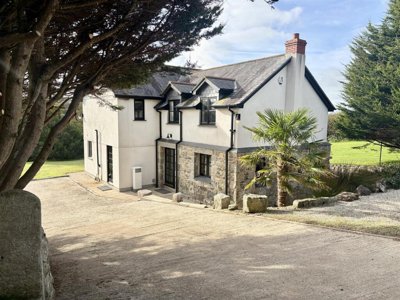
Browse 1 rental home to rent in St. Erth from local letting agents.
Erth from local agents. The larger property sector typically features multiple bathrooms, substantial reception space, and private gardens or off-street parking. Four bedroom houses in St. Erth span detached, semi-detached, and occasionally terraced configurations, with styles ranging from period properties to modern executive homes.
St. Erth's rental market mirrors wider pressure across Cornwall, where demand keeps running ahead of supply in this much sought-after village. We do not have a fixed rental figure for St. Erth without speaking to local agents, but the sales market gives a helpful guide, with average property prices at approximately £1,138 in recent data. Detached homes sit at around £1,150, while terraced properties average £1,125, which gives a feel for the spread available to people looking at different styles of home. In practice, that points to rentals ranging from modest period cottages through to larger family houses.
New homes have arrived here in a fairly steady stream over recent years. The Treloweth Lane scheme by Coastline Housing has added 44 properties, made up of 27 homes for social rent and 17 for shared ownership. Boscarnek, developed by Gilbert & Goode, has brought in 38 more, including 10 classed as affordable housing. Taken together, those schemes show real investment in the village's housing stock, and the St Erth Neighbourhood Plan (2017-2032) goes further, identifying a need for about 54 new dwellings between 2017 and 2030.
Walk around St. Erth and the housing stock changes from one street to the next. Traditional Cornish cottages with granite stonework and slate roofs sit alongside newer builds, while the conservation area in the village centre keeps much of the historic character intact. That often means rental homes with original features, which is part of the appeal, though it also means thinking about upkeep. Older properties can bring higher heating bills or the sort of quirks tenants either love or quickly tire of, such as uneven floors and single-glazed windows.

Day-to-day life in St. Erth is shaped by community more than hurry. The centre falls within a conservation area, so stone cottages, period homes and older streetscapes still set the tone, rather than anything built to a standard template. Through the year there are village events, from summer fetes to Christmas gatherings at the local pub, and those small routines matter. With a relatively small population, neighbours tend to know one another, which gives the place a settled, connected feel that suits families especially well.
The village's story is written into its buildings. The Grade I Listed Church, mainly from the 15th century, gives a clear sense of age, while the Grade II listed Star Inn reaches back to the 14th or 15th century and still serves as a social focal point for locals and visitors. That the pub is still open matters, because many rural communities have lost theirs. For renters, having it within walking distance of most village homes adds real day-to-day value. There is also a village hall for community use, and Hayle nearby brings supermarkets, independent shops and healthcare.
St. Erth sits on and around the River Hayle, so the landscape is part of everyday life here, not just something to admire from a distance. The St Erth Sand Pits, now a Site of Special Scientific Interest Geological Nature Reserve, are a notable local landmark, shaped by the historical extraction of Pliocene sands and clays for local industries. That geological past gives the area a character of its own, and the walking routes and wildlife habitats are a pleasant bonus. Add the coast, with St Ives and Hayle both within a short drive, and it becomes clear why people are drawn here.
Employment for renters based in St. Erth comes from several directions. Tourism, agriculture and the service sector all play a part locally, while Camborne-Redruth, not far away, has long roots in mining and now supports commercial and light industrial work. Truro, around 12 miles away, is the main centre for professional services in Cornwall. That is why many residents commute, relying on the village's railway station and road links to get them there.

Families looking at St. Erth will find schooling within sensible reach. The village sits within the catchment areas for primary schools serving the local community, and several respected primaries are based in neighbouring towns and villages. St Uny School in Lelant covers the southern part of the parish, and Hayle adds further choices. Before a tenancy is agreed, though, it is wise to check catchment boundaries with Cornwall Council, since admissions can be competitive in popular areas.
Secondary schooling nearby is generally strong, but it pays to look at the detail rather than assume one option fits all. The multisite Camborne School and Redruth School serves secondary-age pupils from the wider area, along with other schools in nearby towns. For families considering Catholic education, schools in Truro provide an alternative, although the distance means transport needs careful thought.
There are other routes too, if a family wants something different from the mainstream path. Cornwall has faith schools, academy schools and further education colleges in larger towns such as Truro and Camborne, so St. Erth's rural setting does not leave people short of options. Cornwall College, with campuses in Camborne and other places, opens up further and higher education for older students. Before moving with school-aged children, we would always suggest checking current school capacity and admissions arrangements with Cornwall Council, because popular schools can fill quickly during term time.

The railway station gives St. Erth a level of connectivity that many villages would envy. Regular services run out to major destinations across the region, and the Victorian railway footbridge at the station is Grade II listed, which tells you something about its local importance. From St. Erth, Truro is about 20 minutes away by rail and Plymouth around 90 minutes, with onward links into the wider national network via Plymouth and Exeter. For commuters who want a quieter home base without giving up access to larger cities, that makes a lot of sense.
Road access is another strength. The A30 trunk road is the main route through the region, linking St. Erth to the rest of Cornwall and beyond. Hayle is close by too, roughly 10 minutes drive from the village centre, and it works as the nearest everyday shopping and services hub. The A30 also gives access to Truro, about 20 minutes away, Exeter at 90 minutes, and, for longer trips, London Heathrow via the M5 and M4 motorways.
Public transport is not limited to the train. Bus services run across the area, tying St. Erth in with surrounding villages and towns. Route 17 and linked services reach Hayle, St Ives and nearby communities, although timetables are thinner than in the cities and they usually ease back further on weekends and public holidays. For most residents, the best pattern is a mix of train or bus for commuting, then the car for shopping trips and days out.

We would start by looking through available rental homes in St. Erth on Homemove and other platforms. Once you have a sense of the types of property on offer, it is easier to judge what is realistic on price and what sort of home suits your needs. Demand is strong here, so the better properties can attract several enquiries within days of appearing, which makes regular checking worthwhile.
After that, speak to the listing agents and get viewings booked in. In a village as popular as St. Erth, homes can go quickly, so being ready to view at short notice and having your paperwork lined up helps. A number of Cornwall letting agents now start with virtual viewings, then move to in-person visits for applicants who are serious about taking the property.
Before you commit to a rental, it is sensible to have a rental budget agreement in principle in place. Landlords and letting agents see that as evidence of affordability, and it tells them you are a serious applicant. Homemove can put you in touch with providers offering rental budget services, which makes the process easier. With that paperwork ready before you start enquiring, you stand a better chance when several people are competing for the same home.
References will still matter in St. Erth, just as they do elsewhere. Landlords usually ask for employment verification, references from previous landlords and credit checks. If those are ready before you find the right place, the application tends to move more smoothly. In some cases, particularly where someone has little rental history, a character reference may also be requested.
Once an offer has been accepted, the next step is an inventory check before you move in. It protects both sides by recording the property's condition and the items it contains. After that, the tenancy agreement is signed and the keys are handed over, and that is the point at which a new chapter in St. Erth begins. We always advise taking photographs during the inventory, just in case there is any disagreement when the tenancy ends.
Renting in St. Erth does call for a bit of local knowledge. Because the village sits on and around the River Hayle, flood risk needs checking for any property under consideration. The St Erth Neighbourhood Plan raises concerns about flooding from localised storms and tidal inundation, so it is sensible to ask about a home's flood history and any mitigation already in place. Properties close to the river, or in lower-lying parts of the village, deserve particular attention, including drainage arrangements and any previous flooding.
There are also the constraints that come with conservation areas and listed buildings. Many homes in St. Erth fall into one or both categories, which can limit the alterations a tenant can make. Traditional Cornish properties are full of character, though they can ask more of a tenant than a newer build. It is worth getting clear on service charges, any ground rent arrangement linked to leasehold elements, and who is responsible for repairs and maintenance. The landlord should also state plainly what the rent covers and what stays with the tenant.
Across St. Erth the housing mix is broad, from medieval-era cottages to recently completed new builds at Treloweth Lane and Boscarnek. Older stone-built homes usually have solid walls rather than cavity insulation, so they can feel colder in winter and cost more to heat than modern equivalents. Roofs vary as well, some still slate, others renewed in more recent materials. On viewings, we would ask about the age of the roof, windows, heating system and any recent work or improvements.
Accessibility is another point that needs honest discussion. Many period homes in St. Erth come with multiple levels, narrow staircases and stone floors, which can be awkward for anyone with specific mobility needs. Newer developments such as Treloweth Lane may offer better access and a more practical layout. Any particular requirement should be raised with the landlord or letting agent before you sign anything, because changes to listed buildings need planning permission and the landlord may not be willing to allow them.

Rental pricing in St. Erth depends heavily on property type, size and condition, and it can shift more quickly than sales values. The sales market still gives useful context, with average property prices around £1,138 and detached homes at £1,150. Rents often track sales values to some extent, although they can also move on their own depending on seasonal demand, landlord circumstances and the wider economy. For the latest figures, we would suggest checking Homemove where current listings are refreshed regularly, or speaking with local letting agents. Homes on the Treloweth Lane development may come in lower than period properties inside the conservation area.
Council tax for St. Erth properties falls under Cornwall Council. The bands run from A to H, with the exact band set by the property's assessed value. Historic and listed buildings can bring different considerations, and some homes may be exempt depending on their characteristics. With over 50 Listed Buildings in the village, a number of properties will sit in higher bands because of their assessed values. Before committing, check the council tax band and the likely cost with the landlord or letting agent, because it is part of the monthly housing bill.
Primary schooling for St. Erth families is available through nearby villages and towns. St Uny School in Lelant and schools in Hayle cover the local primary catchment, while secondary pupils usually head to schools in Camborne, Redruth or Truro. Cornwall Council's school admissions portal sets out catchment areas, oversubscription rules and current availability. For anyone putting school access first, we would suggest checking Ofsted ratings and the exact catchment position of a property before agreeing a tenancy in St. Erth. Transport to school should also be confirmed, especially for older children.
Public transport is one of the village's strongest cards. St. Erth railway station offers regular services to places such as Truro, about 20 minutes away, and Plymouth, around 90 minutes away, with wider national rail connections beyond that. Bus routes also run through the area, linking St. Erth with surrounding villages and towns, including Hayle, St Ives and other nearby destinations. For commuters who work in larger Cornish towns or cities, those links make village living much easier to manage. The station also gives access to St Ives through the scenic St Ives Bay Line.
For renters, St. Erth offers a way of living that feels distinctly Cornish without being cut off. The conservation area status, over 50 Listed Buildings and strong historic character create a setting that is increasingly hard to find in modern Britain. Add the community spirit, local pub and the easy reach of both coast and countryside, and it is clear why families and quieter-living renters are drawn here. New development in the area also shows continuing investment in infrastructure, while the St Erth Neighbourhood Plan (2017-2032) gives a framework for managed growth that should support both current and future residents.
In England, the usual renting process involves a security deposit worth five weeks' rent, held in a government-approved tenancy deposit scheme such as the Deposit Protection Service, MyDeposits or TDS. Tenant referencing fees, although limited by the Tenant Fees Act, can still apply for credit checks and references. Some landlords also ask for a holding deposit while references are being checked, usually one week's rent and generally offset against the main deposit. For anyone renting for the first time, there is no special relief on deposits for residential tenancy agreements, unlike stamp duty on property purchases. We would also budget for moving costs, furniture if needed, and the inventory check at the start of the tenancy.
The River Hayle runs through and around St. Erth, and flooding is one of the points raised in the St Erth Neighbourhood Plan, especially where localised storms and tidal inundation are concerned. Homes in lower-lying spots or near watercourses can carry some flood risk, so it is sensible to ask about the property's flood history and any mitigation already in place. Insurance can be more expensive where flood risk exists, and landlords ought to be able to explain their arrangements. Flood maps from the Environment Agency are also useful for checking the risk level of a specific property.
Before searching for a home in St. Erth, it helps to look at the whole financial picture rather than just the rent. On top of the monthly payment, tenants should usually set aside a security deposit, commonly five weeks' rent and held in a government-approved scheme. At the end of the tenancy, that money is returned subject to any deductions for damage beyond fair wear and tear or unpaid rent. An inventory check at the start of the tenancy protects both sides by setting out the condition of the property and its contents, and we strongly advise tenants to take part rather than relying only on the agent or landlord.
There are other ongoing costs to think about too, including council tax, utility bills and internet services, all of which sit with the tenant. Traditional construction can mean higher heating costs than you would expect in a modern build, especially in listed buildings and period cottages with solid walls and older heating systems. Broadband speeds in rural Cornwall vary from one location to another, so prospective tenants may want to check what is available at a specific address before making a commitment, because some village homes have limited high-speed options.
Tenant referencing and credit checks can still apply, despite the limits set by the Tenant Fees Act. During the referencing stage, some landlords ask for a holding deposit to reserve the property, and that is usually taken off the main security deposit or the first month's rent. We recommend getting a rental budget agreement in principle before you start your search, because it shows landlords that you are financially prepared and can strengthen your position in a village where the best homes often attract strong competition.
From 4.5%
Rent affordability assessment and agreement in principle
From £30
Comprehensive reference checks for landlords
From £85
Energy performance certificate for your rental property
From £100
Detailed property condition report
Properties to Rent In London

Properties to Rent In Plymouth

Properties to Rent In Liverpool

Properties to Rent In Glasgow

Properties to Rent In Sheffield

Properties to Rent In Edinburgh

Properties to Rent In Coventry

Properties to Rent In Bradford

Properties to Rent In Manchester

Properties to Rent In Birmingham

Properties to Rent In Bristol

Properties to Rent In Oxford

Properties to Rent In Leicester

Properties to Rent In Newcastle

Properties to Rent In Leeds

Properties to Rent In Southampton

Properties to Rent In Cardiff

Properties to Rent In Nottingham

Properties to Rent In Norwich

Properties to Rent In Brighton

Properties to Rent In Derby

Properties to Rent In Portsmouth

Properties to Rent In Northampton

Properties to Rent In Milton Keynes

Properties to Rent In Bournemouth

Properties to Rent In Bolton

Properties to Rent In Swansea

Properties to Rent In Swindon

Properties to Rent In Peterborough

Properties to Rent In Wolverhampton

Enter your details to see if this property is within your budget.
Loans, cards, car finance
Estimated property budget
Borrowing + deposit
You could borrow between
Typical borrowing
Monthly repayment
Est. at 4.5%
Loan-to-value
This is an estimate only. Your actual budget may vary depending on interest rates, credit history, and personal circumstances. For an accurate affordability assessment, speak to one of our free mortgage advisors.
This calculator provides estimates for illustrative purposes only and does not constitute financial advice. Your home may be repossessed if you do not keep up repayments on your mortgage. Estimates based on 4.5% interest rate, repayment mortgage. Actual rates depend on your circumstances.
Homemove is a trading name of HM Haus Group Ltd (Company No. 13873779, registered in England & Wales). Homemove Mortgages Ltd (Company No. 15947693) is an Appointed Representative of TMG Direct Limited, trading as TMG Mortgage Network, which is authorised and regulated by the Financial Conduct Authority (FRN 786245). Homemove Mortgages Ltd is entered on the FCA Register as an Appointed Representative (FRN 1022429). You can check registrations at NewRegister or by calling 0800 111 6768.

We use cookies to show you personalised content and improve your experience of our website. Find out more in our Privacy policy and Cookie policy.