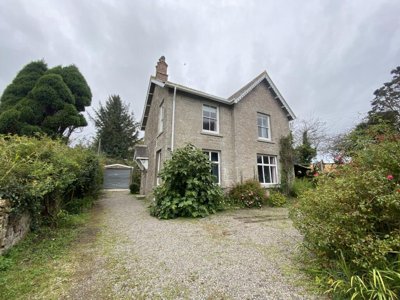
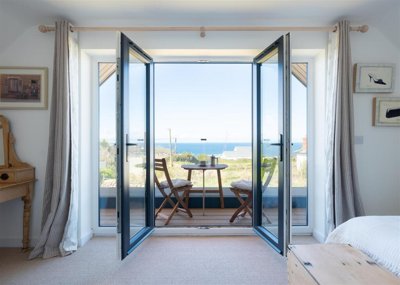
Browse 2 rental homes to rent in St Buryan, Lamorna and Paul from local letting agents.
The larger property sector typically features multiple bathrooms, substantial reception space, and private gardens or off-street parking. Four bedroom houses in St Buryan span detached, semi-detached, and occasionally terraced configurations, with styles ranging from period properties to modern executive homes.
St Buryan, Lamorna and Paul has a rental market shaped by the character of this coastal parish. We see traditional cottages, farmhouses and period homes that feel distinctly West Cornwall, alongside a smaller number of newer builds. The stock runs from centuries-old cob and granite properties to more modern developments, so renters can look across a spread of budgets and preferences. Our data suggests availability in rural Cornwall parishes like this remains tight, especially for family homes and places with outdoor space.
Recent census data puts the parish at approximately 533 dwellings, and the mix includes detached cottages, semi-detached homes and terraced properties. Much of the stock predates modern construction methods, so many rentals are full of period detail and character. Planning activity has also pointed to new supply, including Coastline Housing’s proposed scheme for 37 affordable homes off Wilbur Way in St Buryan, split into 26 social rent and 11 shared ownership homes. It is still awaiting approval, but it does show that local housing need remains on the agenda.
Centuries of Cornish building practice are still visible across St Buryan, Lamorna and Paul. Around the village centre, older homes have thick granite walls and the sort of traditional construction that took real skill to get right. To the west of St Buryan village, a post-war council estate grew further in the 1980s and 1990s, adding a more modern strand to the parish housing mix. For renters, that means a choice between period character and more straightforward contemporary homes.

Few places offer the same day-to-day backdrop as St Buryan, Lamorna and Paul. Set within an Area of Outstanding Natural Beauty, the civil parish brings together big coastal views, a close community and some of West Cornwall’s most memorable scenery. The former parish of Paul sat on fertile loam soil above killas and granite subsoil, which helped shape the agricultural life of the area. Traditional Cornish hedges and stone walls run along the lanes, giving the countryside its familiar patchwork feel.
Population growth has been steady here, rising from 1,681 at the 2011 census to approximately 1,771 residents today. That reflects the pull of rural Cornwall living, although it has also sharpened concerns about second homes and holiday lets taking pressure off the long-term rental market for local families. Agriculture remains central to the local economy, with tourism playing a useful supporting role thanks to visitors drawn by natural beauty, heritage sites and artistic communities. Village shops, pubs and community facilities handle everyday life while the parish keeps its quieter pace.
At the centre of St Buryan stands the striking Grade I listed St Buryan Church, a landmark that has anchored village life for centuries. Built from local granite in the Norman style, it speaks to the craftsmanship of early Cornish builders. The parish also includes other listed buildings such as Buryan House, Gilley, Dorminack and America, each adding to the area’s historic appeal. Since 1990 the village has been a designated conservation area, so changes to properties have to respect the character that has been protected for generations.

Families looking to rent in St Buryan, Lamorna and Paul will find schooling options in and around the parish. St Buryan has long served the community through local primary school provision, and secondary education is available in nearby Penzance. Across Cornwall, parents can choose between academy schools, community schools and faith schools. The Ofsted inspection framework gives a useful starting point for judging quality across the region.
Further education is also within reach. Penzance has colleges and sixth form centres, while the University of Exeter and University of Plymouth offer degree-level study that can be accessed via the area’s transport links. Good schools remain a major reason why families favour St Buryan, Lamorna and Paul, and homes within school catchment areas are in demand for much of the year.
We always suggest checking school performance data and admission rules before committing to a rental, especially where children are involved. In Cornwall, catchment areas for primary schools can be very specific, and homes close to school gates in villages like St Buryan often attract stronger rents because families want a better chance of securing a place at a popular local school. Speaking directly to the primary school serving the parish is the best way to confirm which streets are included, since boundaries can shift and do not always follow postcodes.

Getting around from St Buryan, Lamorna and Paul means planning for rural Cornwall. Penzance is the nearest major railway station, with direct trains to London Paddington and other key destinations on the UK rail network. The trip from Penzance to London takes approximately five hours, so occasional commuting is possible for people with flexible work. Bus services link the parish with Penzance and nearby villages, although they are not as frequent as urban routes.
For those who drive, the A30 trunk road is the main route through Cornwall, giving access to Truro, Redruth and the rest of the county. Newquay Airport sits approximately 45 miles away and offers flights to a range of UK and European destinations for regular travellers. Many people in St Buryan, Lamorna and Paul choose the quieter way of life here, while accepting that a car or dependable transport is part of daily living.
Being at the tip of Cornwall does mean some journeys take longer, but the scenery more than compensates. The road to Penzance along the coast opens up views across Mount's Bay, while the lanes through the parish reveal hidden valleys and traditional Cornish farmland almost without trying. For anyone working in Penzance or nearby, the commute feels less onerous when the route is lined with some of Cornwall’s best landscapes.

Before you book viewings, spend time getting to know St Buryan, Lamorna and Paul properly. Walk around The Green in St Buryan village, explore the lanes near Lamorna and Paul, and look at the local shops, pubs and transport links. It helps to visit at different times of day, and across the week too, so the rhythm of this coastal parish feels clearer.
Sort out a rental budget agreement in principle before you start viewing. Landlords take that as a sign that a tenant is serious and able to cover the monthly rent, usually backed up by references, employment checks and proof of income. In rural Cornwall, rents often sit between around £600 and £1,200 per month depending on property type and size, with deposit and the first month's rent added on top.
Through Homemove, we can put you in touch with local estate agents and landlords arranging viewings for available rentals. Make notes on the condition, ask which appliances are included, and check the landlord's preferred tenancy terms. With period properties in St Buryan, Lamorna and Paul, it is wise to look closely for damp, the state of stone walls and original windows, and the general standard of maintenance.
After you have found the right place, the next step is to complete referencing, hand over the requested paperwork and pay any reservation deposit so the property is held ahead of other applicants. Competition can be strong in this desirable parish, so having everything ready in advance helps the process move along more quickly.
At the start of the tenancy, a professional inventory check is well worth arranging. It records the condition of the property and any existing damage, which protects both tenant and landlord. If there is no EPC already in place, ask for one, since it gives useful insight into the energy efficiency of period homes that may still rely on older heating systems and solid wall construction.
Once the tenancy agreement is signed, collect the keys and settle into your new home in St Buryan, Lamorna and Paul. Take meter readings, complete the paperwork needed to begin the tenancy correctly, and register with local services such as the village shop and the nearby GP surgery. Then take a little time to explore the neighbourhood and say hello to the local community.
Renting in St Buryan, Lamorna and Paul means keeping a few local factors in mind. The parish has a strong heritage of period homes built from cob, granite and stone, and those materials need a different kind of upkeep from modern buildings. Solid stone walls are attractive, but Cornwall’s maritime climate can make them prone to damp, while older homes often need careful attention to humidity and ventilation through the year.
Because the parish sits within a conservation area, properties can face planning restrictions around alterations, extensions and exterior changes. Many buildings are listed too, especially around the village centre of St Buryan where the Grade I listed St Buryan Church remains the focal point of the historic settlement. Those protections help keep the area’s character intact, but they can also limit what tenants may do during a tenancy. Always check with the landlord and the local planning authority before making any change to a listed or conservation area property.
Our inspectors usually recommend a close look at several features typical of Cornish period homes. Check window frames and joinery for salt corrosion from coastal air, especially on south-facing elevations. Look at internal walls at ground floor level for signs of damp, which is common where the water table is high in West Cornwall. Original fireplaces, exposed beams and flagstone floors are all part of the appeal, but they need proper care and maintenance if they are in good order.

There are also environmental issues renters should understand before signing up in St Buryan, Lamorna and Paul. Cornwall’s mining history has left underground voids and unstable ground in some places, with former tin and copper mines raising the risk of subsidence or collapse. In areas with that sort of background, a mining search report can be useful. The problem known as mundic block, where concrete deteriorated because mining waste contained sulphide minerals and reactive silica, is still a concern in parts of Cornwall.
The St Buryan, Lamorna and Paul Parish Council has declared both a Climate Emergency and a Biodiversity Emergency, which reflects the way Cornwall can be hit by flash floods and surface water run-off. Those conditions matter to renters and property owners alike, particularly near watercourses or on low-lying ground. Lamorna Pottery has seen flooding issues, and footpaths near Kew Pendra have also been affected by surface water problems after heavy rain.
Homes close to the coast are exposed to salt-laden air as well, and that can speed up corrosion on metal fixtures, damage masonry and wear down window frames and roof materials over time. The granite construction found across much of the parish is durable, but even strong Cornish stone needs care to stand up to years of maritime exposure. Knowing about these local conditions helps renters make better decisions and look after a home properly through the tenancy.
Because this is a small parish, detailed rental price data is limited by the small number of transactions. Even so, rural Cornwall generally sits between £600 and £1,200 per month depending on property type, size and location. Traditional granite or cob cottages with period features and countryside views tend towards the higher end, while smaller homes or places needing modernisation are often more affordable. We advise speaking to local estate agents directly for live market rates, as availability changes regularly through the year.
For council tax, properties in St Buryan, Lamorna and Paul fall under Cornwall Council. Bands range from A to H depending on value, and most period cottages and smaller homes tend to sit in bands A to C because their market values are modest. The post-war council estate properties may also fall into lower bands, while larger period homes with higher values can sit in band D or above. The exact band for any property can be checked on the Cornwall Council website or in the tenancy agreement, which should set out the banding and current charges.
Primary education is available through local schools serving the parish, and secondary options are in nearby Penzance at schools with well-established reputations. Official government databases are the place to check school performance data and Ofsted ratings when choosing a rental, since catchment areas can affect school places for children of all ages. Good schools often push up demand in family-friendly parts of Cornwall, and homes within easy walking distance of primary school gates are particularly popular with households with young children.
Public transport here works, but only just, and that is part of rural parish life. Local buses link St Buryan with Penzance and surrounding villages, though timetables vary through the day and services are reduced on weekends and public holidays. Penzance railway station offers mainline trains to London Paddington, with the journey taking approximately five hours, plus connections across the wider rail network. Most residents find a car essential for daily life in this part of Cornwall, although the buses are useful for occasional journeys, shopping trips and school transport.
For anyone who values rural Cornwall, striking scenery and a strong sense of community, St Buryan, Lamorna and Paul has a lot to offer. The parish sits within an Area of Outstanding Natural Beauty, with immediate access to coastline, countryside walks and cultural landmarks including the historic St Buryan Church and the nearby listed buildings. Rental availability is limited, competition can be fierce, and housing affordability remains a challenge, not least because second homes affect the local rental market. Even so, those drawn to peaceful surroundings, traditional Cornish character and dramatic coastal views will find the parish very rewarding.
In England, standard rental deposits are capped at five weeks' rent where the annual rent is below £50,000. Most landlords ask for a security deposit and the first month's rent in advance, so the upfront figure is usually around six weeks' rent in total. There may also be referencing fees, tenancy administration charges and inventory check fees, although government rules limit what letting agents can charge tenants in many cases. Ask for a full cost breakdown before you agree to a tenancy, and make sure your deposit is protected in a government-approved scheme, as the law requires.
Many rentals in St Buryan, Lamorna and Paul show the kinds of defects commonly found in Cornish period homes, so tenants should know what to look for before signing. The maritime climate can bring damp into solid stone walls, particularly at ground floor level and in rooms with poor ventilation. Salt corrosion can affect metal fixtures, window frames and external joinery across the parish, especially near the coast. Older homes may also have outdated electrics, and timber-framed elements can be vulnerable to woodworm or other pests in properties of this age. A thorough inventory and condition report before moving in gives a clear baseline and helps prevent disputes over pre-existing issues.
Budgeting for a rental in St Buryan, Lamorna and Paul is easier when you know the usual costs. Once you have found the right property, you will normally pay a security deposit equal to five weeks' rent, depending on the annual rent level. That deposit is held in a government-approved scheme and returned at the end of the tenancy, subject to any deductions for damage or unpaid rent. Landlords also usually ask for the first month's rent upfront before handing over access.
Before the tenancy starts, it is sensible to set aside money for referencing and administrative charges that landlords often request. These can include credit checks, employment verification and tenancy administration costs, although regulations limit what letting agents can charge tenants in many cases. An inventory check at the beginning of the tenancy protects both sides by recording the property's condition in detail.
You may also want contents insurance for your belongings while you rent, especially if you are moving into a period property where the construction type may affect buildings insurance requirements. Detailed photographs taken during the inventory check give both parties extra protection. With the costs clear from the outset, you can plan a move to this beautiful part of Cornwall with confidence and avoid unwanted financial shocks.
Our platform gathers rental listings from across St Buryan, Lamorna and Paul, so you can see what is available in one place. We cover everything from a traditional Cornish cottage with original features to a modern family home near local schools, as well as properties with countryside views in this Area of Outstanding Natural Beauty. That makes it easier to find something that fits your circumstances.
The rental market in West Cornwall keeps moving, with new homes coming up throughout the year. We update our listings regularly so you have the latest information on properties to rent in this sought-after corner of Cornwall. Sign up for property alerts and we will let you know when new rentals matching your criteria appear in St Buryan, Lamorna and Paul and the surrounding area.
Properties to Rent In London

Properties to Rent In Plymouth

Properties to Rent In Liverpool

Properties to Rent In Glasgow

Properties to Rent In Sheffield

Properties to Rent In Edinburgh

Properties to Rent In Coventry

Properties to Rent In Bradford

Properties to Rent In Manchester

Properties to Rent In Birmingham

Properties to Rent In Bristol

Properties to Rent In Oxford

Properties to Rent In Leicester

Properties to Rent In Newcastle

Properties to Rent In Leeds

Properties to Rent In Southampton

Properties to Rent In Cardiff

Properties to Rent In Nottingham

Properties to Rent In Norwich

Properties to Rent In Brighton

Properties to Rent In Derby

Properties to Rent In Portsmouth

Properties to Rent In Northampton

Properties to Rent In Milton Keynes

Properties to Rent In Bournemouth

Properties to Rent In Bolton

Properties to Rent In Swansea

Properties to Rent In Swindon

Properties to Rent In Peterborough

Properties to Rent In Wolverhampton

Enter your details to see if this property is within your budget.
Loans, cards, car finance
Estimated property budget
Borrowing + deposit
You could borrow between
Typical borrowing
Monthly repayment
Est. at 4.5%
Loan-to-value
This is an estimate only. Your actual budget may vary depending on interest rates, credit history, and personal circumstances. For an accurate affordability assessment, speak to one of our free mortgage advisors.
This calculator provides estimates for illustrative purposes only and does not constitute financial advice. Your home may be repossessed if you do not keep up repayments on your mortgage. Estimates based on 4.5% interest rate, repayment mortgage. Actual rates depend on your circumstances.
Homemove is a trading name of HM Haus Group Ltd (Company No. 13873779, registered in England & Wales). Homemove Mortgages Ltd (Company No. 15947693) is an Appointed Representative of TMG Direct Limited, trading as TMG Mortgage Network, which is authorised and regulated by the Financial Conduct Authority (FRN 786245). Homemove Mortgages Ltd is entered on the FCA Register as an Appointed Representative (FRN 1022429). You can check registrations at NewRegister or by calling 0800 111 6768.

We use cookies to show you personalised content and improve your experience of our website. Find out more in our Privacy policy and Cookie policy.