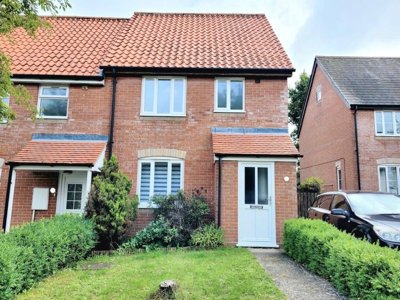
Browse 2 rental homes to rent in Semer, Babergh from local letting agents.
£0/m
0
0
0
Source: home.co.uk
Semer is not the kind of place where homes come onto the market in large numbers, and that matters for renters as much as buyers. homedata.co.uk records show the last year’s average sold price at £725,000, sitting close to the 2023 peak, which points to a stable but high-value local market. In practice, that usually means fewer rental options, stronger competition for the best homes and a premium on properties with good presentation. Our live search on home.co.uk is the best place to watch for new availability as soon as it appears.
The village does not currently show active new-build development in the research we reviewed, so most homes are likely to be older, established properties rather than fresh apartment blocks. That often suits renters who want period cottages, converted farm buildings or larger family houses with generous plots. Semer’s 13 Grade II listed buildings also hint at an older housing mix, which can influence everything from insulation to maintenance. If you are looking at a home here, expect the market to reward patience, prompt decision-making and a careful eye for condition.

Life in Semer is shaped by its rural setting, its historic buildings and the sense that the parish has grown around long-established lanes rather than modern estates. Ash Street stands out in the local research because so many of the listed buildings are clustered there, giving the village a very traditional Suffolk feel. The Bridge over River Brett is another reminder that this is a place defined by landscape as much as by housing. For many renters, that combination of green surroundings and architectural character is exactly what makes Semer memorable.
No specific population, household mix or housing stock breakdown was found for Semer, so the village has to be read through its physical character rather than through large-area statistics. Suffolk’s clay-heavy soils can be more prone to shrink-swell movement than some other parts of England, so older homes here deserve a close look for signs of subsidence or historic repair. No specific flood-risk hotspot was identified in the research, but countryside locations always deserve an extra check around access routes, drainage and nearby watercourses. Our view is that Semer suits renters who want a quieter pace, historic surroundings and a countryside setting that feels genuinely local.
The research we reviewed did not identify a village school within Semer itself, which is common for a small parish of this size. Families usually need to look to nearby settlements in Babergh and the wider Suffolk area, then check catchments carefully before making any commitment. That makes timing important, especially if you need a school place and are also trying to secure a home. A rental budget agreement in principle helps here too, because it keeps your housing costs realistic while you compare school runs and travel times.
Because Semer is small and rural, education planning is less about walking distance and more about practical access. Parents should check the latest admissions rules, transport options and nursery or wraparound provision before signing a tenancy. We could not verify Ofsted ratings, sixth-form options or local college details for the village boundary itself, so the safest approach is to confirm everything directly with the schools you are considering. That extra step matters in a rural location, where the right home can be slightly outside the most convenient catchment edge.

Semer is best understood as a village that works well for drivers and well-organised commuters, rather than as a rail-led settlement. The research did not identify any station within the parish boundary, so most journeys are likely to begin by car and then connect to larger transport hubs in nearby towns. That is a normal pattern in rural Babergh, where public transport can be thinner than in urban areas. If you rely on the train several days a week, it is worth mapping the full door-to-door journey before you commit to a tenancy.
Bus links in a parish like Semer are usually more limited than renters find in the town centres of Suffolk, so timetable checks are essential. Narrow village lanes, heritage frontages and occasional passing restrictions can also make parking and manoeuvring more of a factor than they would be in a newer development. For households with two cars, visitors or regular deliveries, off-road parking becomes a real advantage. If commuting is a priority, shortlist homes with easy access to the routes you use most often, then test them at peak times before finalising anything.
Cycling can be an appealing option for short local trips, but the rural road layout means you should plan with caution and good visibility in mind. Families and hybrid workers often find that a small village home gives them space and quiet, while still keeping the main road network within manageable reach. We recommend checking whether the property has secure cycle storage, practical parking and a sensible route to work or school. Those details often matter more in Semer than in a denser neighbourhood where transport choices are more varied.
Start with a realistic rental budget and get your rental budget agreement in principle before you view anything, especially in a village where available homes can be scarce.
Look closely at the exact part of Semer you want, because Ash Street, the listed-building cluster and the quieter rural lanes can each offer a different feel.
Good homes in a small market can move fast, so arrange viewings early and be ready to compare condition, parking, heating and access in one visit.
Ask for the tenancy terms, deposit details, inventory, gas safety information and EPC before you commit, and query anything that affects running costs.
In older Semer homes, check for damp, signs of movement, dated electrics, heating efficiency and any restrictions linked to listing or conservation status.
Once you are happy, submit your references, confirm the move-in funds and complete the agreement so the property is reserved before the next applicant steps in.
Older properties are a major part of Semer’s appeal, but they also deserve a more careful inspection than a standard modern flat. With 13 Grade II listed buildings in the parish, heritage features are part of the local story, and that can mean original windows, thicker walls, timber details and a more varied layout. Those features are charming, but they can also affect heating bills, moisture control and the ease of making future changes. If you are renting one of these homes, ask exactly what maintenance the landlord handles and what condition the key building elements are in before you sign.
Suffolk’s clay soils can create movement issues in some older homes, so watch for cracks around doors and windows, uneven floors, sticking frames and patch repairs that may hide a longer history. No specific flood hot spot was identified in the research, yet the Bridge over River Brett and the rural landscape mean it is still sensible to ask about drainage, surface water and access in heavy rain. Planning restrictions are another local factor to keep in mind, because listed status can limit alterations and make repairs more specialised. That does not make a home unsuitable, but it does mean you should enter the tenancy with clear expectations about what can and cannot change.
Service charges and ground rent are more relevant to landlords than tenants, yet they can still shape what gets included in your rent and how quickly repairs are handled in converted buildings. Flats and annexes in rural areas sometimes carry communal responsibilities, so it is worth asking who manages shared areas, parking spaces and outside maintenance. A good letting agent should explain whether the property is free-standing, part of a conversion or within a larger managed setting. The more clearly you understand the property structure, the easier it is to avoid surprises after move-in day.
We could not verify a live average rent for Semer from the research data we reviewed, which is typical of a very small parish with limited rental stock. The strongest market signal we do have comes from homedata.co.uk, which records an average sold price of £725,000 over the last year. That suggests Semer sits in a higher-value rural bracket, so any available rental home is likely to be priced with that character in mind. The best approach is to watch home.co.uk closely and move quickly when a suitable property appears.
Semer sits within Babergh District Council, but the council tax band is set by the individual property rather than the village as a whole. Bands can vary between older cottages, larger detached homes and converted buildings, even on the same lane. Always check the exact band on the listing or ask the agent before you apply. That way you can factor the monthly cost into your rental budget properly.
We could not verify a school within Semer itself from the research data, so families usually look at schools in nearby Babergh settlements and the wider Suffolk area. The best choice depends on your child’s age, your commute and the latest catchment rules. Always confirm admissions boundaries directly, because rural catchments can be tight and can change by postcode. If school access matters, treat it as part of your property search from day one.
Semer is a rural parish, so public transport is typically less frequent than in a larger town. The research did not identify a station inside the village boundary, which means many residents rely on a car for daily travel and then connect to mainline rail elsewhere. That is fine for some renters, but less convenient if you need frequent train journeys. Check bus times and the full commute before you commit to a tenancy.
Semer suits renters who want a quiet, historic village setting rather than a busy urban pace. The parish has 13 Grade II listed buildings, a strong rural identity and a stable high-value housing market, with homedata.co.uk showing an average sold price of £725,000 over the last year. Stock can be limited, though, so patience and fast decision-making both help. If you value character, countryside and a more local feel, Semer can be a very attractive choice.
For renting, the biggest upfront costs are usually the holding deposit, the tenancy deposit and the first month’s rent. In England, holding deposits are generally capped at one week’s rent, while tenancy deposits are commonly capped at five weeks’ rent for annual rents under £50,000. You may also need to budget for referencing, moving costs and utility setup. Ask the agent for a full breakdown before you apply so there are no surprises.
Yes, and this matters more in Semer than in many villages because the parish contains 13 Grade II listed buildings. Listed homes can look beautiful, but they may come with restrictions on alterations, repairs and external changes. Ask what is permitted, who maintains the structure and whether any recent work needed special consent. A careful viewing can save a lot of stress later.
Based on the village character and the lack of new-build activity in the research, older cottages, converted rural buildings and larger period homes are the most likely options. We did not find active new developments in the postcode area, so modern estate-style rentals may be rarer than in nearby towns. That means presentation and condition can vary a lot from one home to the next. If you want something specific, keep your search broad and be ready to book quickly.
Moving into a home in Semer usually means paying several costs close together, so planning ahead matters. The first bill is often the holding deposit, followed by the tenancy deposit and the first month’s rent, and older rural homes can also bring extra setup costs for heating, broadband or removals. If you are choosing between two properties, compare the monthly rent against the real running costs, not just the headline figure. A slightly higher rent can sometimes be better value if the home is warmer, easier to maintain or closer to your daily route.
Older village homes can also justify a closer look at condition before you pay over any funds, especially if the property has listed features or visible signs of age. A RICS Level 2 Survey is not a standard part of renting, but it can be useful if you are considering a long tenancy in a particularly old or characterful home. Nationally, RICS Level 2 Survey pricing often falls around the £400 to £1,000 range, with many reports quoted near £455, and our survey service starts from £350. For a place like Semer, that extra knowledge can help you decide whether the property really suits your budget and lifestyle.
Budgeting works best when you build in everything from the start, including moving vans, inventory checks, references and the first round of utility setup. home.co.uk is the place we use to follow live availability, while homedata.co.uk gives the pricing context that helps you judge whether a home feels sensibly priced for the local market. In a small parish like Semer, where good homes may be few and far between, being financially ready can make the difference between securing the right property and missing it. That is why we keep returning to the same advice: sort your rental budget agreement in principle early, then move decisively when a home matches your needs.
Properties to Rent In London

Properties to Rent In Plymouth

Properties to Rent In Liverpool

Properties to Rent In Glasgow

Properties to Rent In Sheffield

Properties to Rent In Edinburgh

Properties to Rent In Coventry

Properties to Rent In Bradford

Properties to Rent In Manchester

Properties to Rent In Birmingham

Properties to Rent In Bristol

Properties to Rent In Oxford

Properties to Rent In Leicester

Properties to Rent In Newcastle

Properties to Rent In Leeds

Properties to Rent In Southampton

Properties to Rent In Cardiff

Properties to Rent In Nottingham

Properties to Rent In Norwich

Properties to Rent In Brighton

Properties to Rent In Derby

Properties to Rent In Portsmouth

Properties to Rent In Northampton

Properties to Rent In Milton Keynes

Properties to Rent In Bournemouth

Properties to Rent In Bolton

Properties to Rent In Swansea

Properties to Rent In Swindon

Properties to Rent In Peterborough

Properties to Rent In Wolverhampton

Enter your details to see if this property is within your budget.
Loans, cards, car finance
Estimated property budget
Borrowing + deposit
You could borrow between
Typical borrowing
Monthly repayment
Est. at 4.5%
Loan-to-value
This is an estimate only. Your actual budget may vary depending on interest rates, credit history, and personal circumstances. For an accurate affordability assessment, speak to one of our free mortgage advisors.
This calculator provides estimates for illustrative purposes only and does not constitute financial advice. Your home may be repossessed if you do not keep up repayments on your mortgage. Estimates based on 4.5% interest rate, repayment mortgage. Actual rates depend on your circumstances.
Homemove is a trading name of HM Haus Group Ltd (Company No. 13873779, registered in England & Wales). Homemove Mortgages Ltd (Company No. 15947693) is an Appointed Representative of TMG Direct Limited, trading as TMG Mortgage Network, which is authorised and regulated by the Financial Conduct Authority (FRN 786245). Homemove Mortgages Ltd is entered on the FCA Register as an Appointed Representative (FRN 1022429). You can check registrations at NewRegister or by calling 0800 111 6768.

We use cookies to show you personalised content and improve your experience of our website. Find out more in our Privacy policy and Cookie policy.