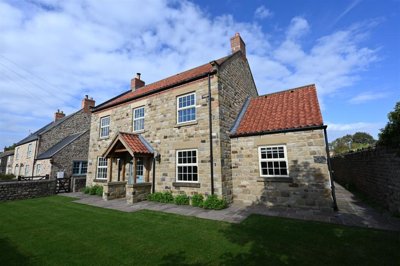
Browse 1 rental home to rent in Scorton, North Yorkshire from local letting agents.
The larger property sector typically features multiple bathrooms, substantial reception space, and private gardens or off-street parking. Four bedroom houses in Scorton span detached, semi-detached, and occasionally terraced configurations, with styles ranging from period properties to modern executive homes.
£0/m
0
0
0
Source: home.co.uk
Showing 0 results for 4 Bedroom Houses to rent in Scorton, North Yorkshire.
Scorton, North Yorkshire, has a rental market that suits the village itself, with everything from old agricultural cottages to newer homes tucked into more recent schemes. Terraced and semi-detached houses make up much of the stock, while the occasional detached property tends to sit at the top end because there are so few of them and they offer more privacy. Newer build developments have broadened what is available in recent years. From a compact one-bedroom place to a four-bedroom family house, there is a fair spread of options for different household sizes and budgets.
In villages such as Scorton, rental prices are shaped by property condition, the amount of garden space, local amenities, and how close a home sits to services. Two-bedroom properties usually sit in a moderate rental range for the area, while larger family houses with four or more bedrooms draw higher rents because of the extra space. The village’s position near the A1(M) corridor and the market town of Richmond can add value too, especially for commuters heading into regional centres. Our platform tracks listings across the Scorton area and updates daily, so we keep pace with the market for you.

Only around three miles from Richmond, Scorton is a small North Yorkshire village with plenty of life to it. There is a welcoming public house where locals meet, a village shop for day-to-day needs, and St Mary's Church, which has long been part of community life. Around the village, rolling farmland, scenic valleys, and the dry stone walls typical of the Yorkshire Dales countryside set the tone. Village fetes, social gatherings, and local events keep the calendar busy, and that neighbourly feel is exactly what many people look for in rural North Yorkshire.
Scorton’s agricultural past still shapes how it feels today. Traditional stone farmsteads and cottages sit alongside later residential development, and the village conservation area protects the historic core that gives the place its character. For walkers and cyclists, the public footpaths and bridleways across the surrounding countryside are a real draw. They open up views towards the Pennine Hills and the North York Moors beyond. Peaceful village living, access to urban amenities, and a strong sense of community sit neatly together here.

The housing stock in Scorton reflects the village’s move from farming roots to modern living. Older rental properties often include traditional stone cottages from the 18th and 19th centuries, with thick walls, original fireplaces, and exposed beams that bring a lot of Yorkshire character. Alongside those are semi-detached and terraced houses built during the mid-20th century expansion, offering more practical layouts while still using familiar traditional construction methods.
Recent development has added a more contemporary edge to the Scorton rental market, with homes from local schemes such as The Paddocks on Wyre View and Scorton Green on Gubberford Lane. These newer properties generally come with cavity wall construction, modern insulation standards, and fittings that can mean lower ongoing maintenance costs. Detached homes are still relatively uncommon, so when they do appear they often attract higher rents. It also helps to look beyond the rooms themselves and think about garden upkeep, off-street parking, and how near the property is to the village centre.
For families, renting in Scorton does bring schooling into the picture. Scorton Church of England Primary School serves the village directly, taking children from early years through to Key Stage 2 and keeping strong links with the local community. In a smaller North Yorkshire setting like this, supportive parent involvement is common and teachers often know families well. For secondary education, pupils usually head into Richmond, where several schools offer broad academic and vocational routes for students with different abilities and ambitions.
Richmond School and Sixth Form College is the main secondary choice for Scorton families, teaching students aged 11 to 18 and having a solid reputation for academic achievement alongside a wide mix of extracurricular activities. Catchment boundaries and admissions policies can change, so it is wise to check the latest position with North Yorkshire County Council. Nursery and preschool care is available too, with private nurseries and voluntary-run preschool groups in the village and nearby. Looking at school performance data, including the latest Ofsted inspection outcomes, is sensible if you are moving with school-age children, as places can be tight in smaller communities.

Transport links are one of Scorton’s stronger points. The A1(M) is within a short drive, giving quick access north to Newcastle upon Tyne and south towards Leeds, York, and the wider motorway network. That makes the village a practical base for professionals who want rural living without a punishing commute. Richmond is close by for extra services and transport options, yet Scorton still keeps its quiet village atmosphere despite the road connections.
Bus services connect Scorton with Richmond, Darlington, and other places across the region, which matters for residents without a car. North Yorkshire’s bus network gives useful day-to-day connectivity, especially for shopping and commuting trips. For rail travel, Darlington and Northallerton stations offer national links, with regular services to Newcastle, York, Leeds, and London King's Cross. Both stations also connect into East Coast Main Line services, so getting to the capital or other major cities is straightforward. Local taxi firms cover the Richmond area as well, which gives some useful flexibility when bus times do not quite match travel plans.

Start by looking at Scorton as a whole, then break down what matters most to day-to-day life in the village. Commute times, school catchments, local amenities, and the feel of each part of the area are all worth weighing up. Our platform includes detailed local area information, with guides to schools, transport options, and the property types available to rent.
Before you view rental properties in Scorton, it helps to obtain a rental budget agreement in principle from a lender so landlords can see you are financially ready. You will also need to budget for the first month’s rent in advance, plus a security deposit that is typically equivalent to five weeks' rent. Getting your finances organised before viewings begin can put you in a stronger position when you are applying for homes in this sought-after North Yorkshire village.
Once you have spotted suitable rental properties in Scorton on our platform, get in touch with the relevant estate agents or landlords to arrange viewings at times that work for you. We suggest seeing more than one property so you can compare condition, amenities, and value before making a choice. Notes and photographs taken during each viewing can be useful later when you are weighing up the details.
As soon as you find a rental property you want to take, move through the tenant application process quickly so another applicant does not beat you to it. Usually this means identification documents, proof of income, employment references, and previous landlord references if you have rented before. Your estate agent will talk you through the requirements for each home and help keep the application complete and competitive.
Landlords will carry out referencing checks, including credit checks, employment verification, and affordability assessments, to decide whether you are a suitable tenant. Having your documents complete and accurate speeds things along and shows you are reliable. Be ready for the referencing company to contact your current employer and previous landlords to confirm the details you have given.
After referencing is completed successfully, your tenancy agreement will be issued for careful reading before you sign. Go through every term, with particular attention to the tenancy length, monthly rent amount, deposit protection arrangements, and any special conditions attached to the property. If anything is unclear, your agent can talk it through before you decide to proceed.
Renting in a rural North Yorkshire village such as Scorton means looking closely at issues that are specific to the area. Flood risk is worth checking properly, because properties near watercourses or in low-lying spots can be vulnerable to surface water flooding during heavy rain. Scorton has areas with moderate to high risk of surface water flooding, especially near the River Wyre and its tributaries that run through the wider area around the village. The Environment Agency’s flood maps can help identify homes in flood risk zones, so you can weigh the risk before taking on a tenancy.
The age and build of rental properties in Scorton vary a great deal, from stone cottages that go back centuries to modern developments built within the last two decades. Older homes may have character details such as original fireplaces, exposed beams, and thick solid walls, though they often need different heating approaches from newer buildings. Energy efficiency can differ sharply from one property to another, so checking the Energy Performance Certificate, EPC, ratings is useful for judging future heating costs and whether the home meets modern insulation standards. Homes within or close to the village conservation area may also come with restrictions on changes or improvements, so any planning conditions should be clear before you sign up.

Knowing how Scorton properties were built can help you spot maintenance issues and think through any renovation possibilities during the tenancy. Traditional stone cottages here usually have solid wall construction with locally sourced materials, timber floor structures, and slate or clay tile roofs. They often used lime mortar rather than modern cement, which lets the building breathe but can call for more specialist maintenance. Mid-20th century homes usually shift to cavity wall brick construction, timber roof structures, and concrete tiles, showing a move towards more standardised building methods.
The ground around Scorton is mainly glacial till over Carboniferous bedrock, with clay soils that can show shrink-swell behaviour during periods of extreme weather conditions. Homes with mature trees nearby, especially those set on clay soils, may be more prone to subsidence or heave, both of which can affect foundations over time. That local geology is worth thinking about when you view older properties, particularly if there are signs of movement or crack patterns already visible. Properties built after 1980 usually benefit from improved foundation designs and modern construction standards that deal with these older problems more effectively.
Older rental properties in Scorton often share a few defects, so it pays to check them properly during a viewing. Damp problems, including rising damp and penetrating damp, can be common in traditional stone cottages and other older homes where damp-proof courses may be inadequate or have worn down over decades of service. Look for tide marks on walls, peeling wallpaper, musty odours, and condensation on windows and walls. Solid stone walls may also need a different ventilation and heating approach from modern cavity wall homes.
Roof condition is another important point, especially on properties with slate or tile coverings that can suffer from slipped tiles, damaged flashing, or simple wear and tear. In older timber elements, woodworm or rot can also appear, particularly where damp issues or poor ventilation are already present. Electrical wiring and plumbing in older homes may not meet current standards and could need updating by the landlord before or during your tenancy. We suggest asking about recent maintenance history and any known issues when you apply for rental properties in Scorton, as that gives a clearer picture of the home you are taking on.
There is limited rental price data for Scorton, largely because the village is small and has fewer rental transactions than urban areas. Prices are shaped by size, condition, and the amenities on offer, with two-bedroom homes usually drawing moderate rents and larger family houses attracting higher values. The village’s proximity to the A1(M) corridor can affect valuations too, since easy commuting access is attractive to working professionals. Speaking directly to local estate agents is the best way to get the most accurate current pricing for available homes.
For council tax purposes, properties in Scorton sit under North Yorkshire County Council. Council tax bands in North Yorkshire run from Band A for lower-value properties up to Band H for the highest-value homes. Traditional stone cottages and smaller homes are often placed in Bands A to C, while larger family houses and detached properties may fall into higher bands. The North Yorkshire County Council website lets you check the band for any specific home by entering the property address.
Scorton Church of England Primary School is the main school serving the village, and it teaches children from nursery age through to Year 6 with strong community links. For secondary education, pupils usually go to schools in nearby Richmond, with Richmond School and Sixth Form College the main choice for students aged 11 to 18. Before committing to a rental property, families should check the current admissions criteria and catchment area arrangements with North Yorkshire County Council, because school places can be competitive in popular areas.
Local bus services link Scorton with Richmond and nearby towns, giving residents without cars an important public transport option. The village’s position near the A1(M) at Catterick also gives strong road links for motorists, with straightforward routes to Newcastle, Leeds, and York. If rail travel is needed, Darlington and Northallerton stations provide national connections and regular services to major cities including London. The transport options are fine for a village of Scorton’s size, although having a private vehicle still gives the most flexibility.
Scorton offers a strong quality of life for anyone wanting rural Yorkshire living with good links to larger towns and cities. The village combines peaceful countryside surroundings with access to essential services in nearby Richmond, and there is a community spirit that tends to welcome new residents. Being close to the A1(M) keeps commuting realistic for people working in the region, while the surrounding countryside opens up plenty of recreation. If village life, scenic Yorkshire views, and the feel of traditional homes matter to you, renting in Scorton can work very well.
In England, standard deposits on rental properties are equivalent to five weeks' rent, and that cap is set by the Tenant Fees Act 2019. The deposit has to be protected in a government-approved scheme within 30 days of tenancy commencement, then returned at the end of the tenancy less any legitimate deductions. Permitted fees are limited to rent, deposit, utilities, council tax, and default charges for late payment or lost keys. Before you sign the tenancy agreement, ask for written details of every cost and check exactly what is covered by the rental commitment.
There are parts of Scorton with moderate to high risk of surface water flooding, particularly near the River Wyre and its tributaries that pass through the surrounding countryside. Homes in low-lying locations or close to watercourses can be more exposed during periods of heavy rainfall, so flood risk is worth checking before you commit to a tenancy. The Environment Agency provides online flood maps that show current flood risk zones for any specific property address in the Scorton area. Landlords do not have to disclose flood risk unless they are asked, so prospective tenants should do their own checking using these public resources.
Scorton’s rental market includes traditional stone cottages with character features, terraced and semi-detached houses from different eras, and the occasional detached family home. More recent homes from developments such as The Paddocks and Scorton Green have brought contemporary choices into the market over recent years. Detached properties are still relatively scarce in the village, so when they are available they often command higher rents. Most rentals in Scorton are semi-detached or terraced houses, which gives options for individuals, couples, and families of different sizes.
From 4.5%
We provide professional rental budget assessments to show what you can afford
From £50
We handle referencing support to keep your rental application moving
From £450
We arrange a professional survey to check condition before you commit
From £85
Energy performance certificate to understand heating costs
Renting a property in Scorton, North Yorkshire comes with more to pay for than the monthly rent alone, and knowing the full financial picture helps the tenancy start smoothly. The first costs usually include the first month’s rent in advance plus a security deposit equal to five weeks' rent, which is legally protected in a government-approved Tenancy Deposit Protection scheme and returned at the end of the tenancy, subject to any legitimate deductions. Those upfront amounts can come to six weeks' rent in total, so setting money aside before you begin looking for a home is a sensible way to keep the move under control.
There are other moving costs too, including removal expenses, connection fees for gas, electricity, water, and internet services, plus possible Contents Insurance to protect your belongings from the day you move in. If you are taking on a larger or older property, a professional survey can give useful background on condition before you commit to the tenancy. RICS Level 2 Survey costs for properties in the Scorton area usually range from £850 for smaller properties to £850 for larger family homes, giving detailed defect identification and helping our surveyors flag issues that need landlord attention. Obtaining a rental budget in principle before you start your search shows landlords and agents that you are financially ready, which can strengthen your application in competitive rental situations.
Properties to Rent In London

Properties to Rent In Plymouth

Properties to Rent In Liverpool

Properties to Rent In Glasgow

Properties to Rent In Sheffield

Properties to Rent In Edinburgh

Properties to Rent In Coventry

Properties to Rent In Bradford

Properties to Rent In Manchester

Properties to Rent In Birmingham

Properties to Rent In Bristol

Properties to Rent In Oxford

Properties to Rent In Leicester

Properties to Rent In Newcastle

Properties to Rent In Leeds

Properties to Rent In Southampton

Properties to Rent In Cardiff

Properties to Rent In Nottingham

Properties to Rent In Norwich

Properties to Rent In Brighton

Properties to Rent In Derby

Properties to Rent In Portsmouth

Properties to Rent In Northampton

Properties to Rent In Milton Keynes

Properties to Rent In Bournemouth

Properties to Rent In Bolton

Properties to Rent In Swansea

Properties to Rent In Swindon

Properties to Rent In Peterborough

Properties to Rent In Wolverhampton

Enter your details to see if this property is within your budget.
Loans, cards, car finance
Estimated property budget
Borrowing + deposit
You could borrow between
Typical borrowing
Monthly repayment
Est. at 4.5%
Loan-to-value
This is an estimate only. Your actual budget may vary depending on interest rates, credit history, and personal circumstances. For an accurate affordability assessment, speak to one of our free mortgage advisors.
This calculator provides estimates for illustrative purposes only and does not constitute financial advice. Your home may be repossessed if you do not keep up repayments on your mortgage. Estimates based on 4.5% interest rate, repayment mortgage. Actual rates depend on your circumstances.
Homemove is a trading name of HM Haus Group Ltd (Company No. 13873779, registered in England & Wales). Homemove Mortgages Ltd (Company No. 15947693) is an Appointed Representative of TMG Direct Limited, trading as TMG Mortgage Network, which is authorised and regulated by the Financial Conduct Authority (FRN 786245). Homemove Mortgages Ltd is entered on the FCA Register as an Appointed Representative (FRN 1022429). You can check registrations at NewRegister or by calling 0800 111 6768.

We use cookies to show you personalised content and improve your experience of our website. Find out more in our Privacy policy and Cookie policy.