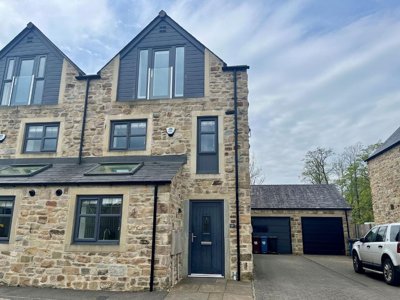
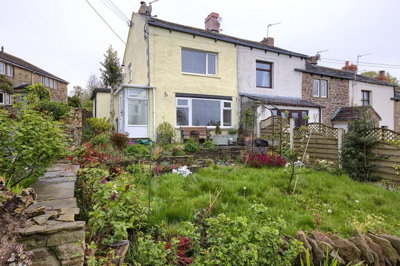
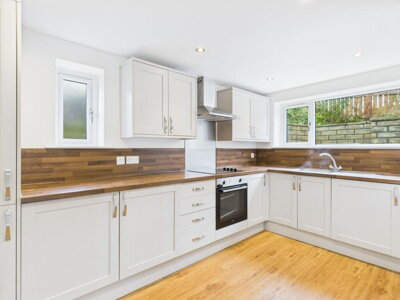
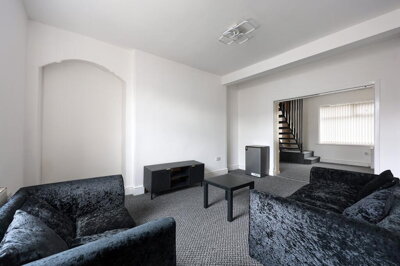
Browse 4 rental homes to rent in Sabden, Ribble Valley from local letting agents.
The Sabden property market offers detached, semi-detached, and terraced houses spanning various price ranges and neighbourhoods. Each listing includes detailed property information, photographs, and direct contact with the marketing agent.
£850/m
1
0
60
Source: home.co.uk
Showing 1 results for Houses to rent in Sabden, Ribble Valley. The median asking price is £850/month.
Source: home.co.uk
Semi-Detached
1 listings
Avg £850
Source: home.co.uk
Source: home.co.uk
Sabden’s rental market is smaller than the one you would find in major towns, but it still offers a real mix of homes that fit the village’s character and history. Available market data puts average property prices in Sabden at approximately £266,423 as of early 2026, which is a modest 1.1% fall over the previous twelve months. That sort of movement points to a steady local market even when the national picture shifts around, and it helps explain why Sabden keeps its appeal for buyers and renters alike. There were 15 property transactions over the past year, a sign of continued activity in a small rural market where homes change hands less often than they do in urban areas.
Different property styles do turn up for rent in Sabden, depending on what a household needs. Detached homes sit at the top end of ownership prices, at around £408,000, and they do occasionally come up as rentals for people after more space and privacy. Semi-detached properties, averaging approximately £239,333, make up a large share of the local stock and often strike a good balance for families weighing affordability against room to live. Terraced houses, with average prices near £194,000, suit Sabden’s historic core especially well, and many date from the 19th century in traditional stone that gives the village its look.
Flats are not common in Sabden, and average prices around £115,000 reflect how limited the supply is in a village built at low density. Anyone hoping for an apartment would usually need to look to Clitheroe or Whalley, where flat rentals are more plentiful and still within an easy commute of Sabden. Inside the village itself, the more realistic choices tend to be converted farm buildings, ground floor maisonettes in larger historic properties, or newly formed annexes that have been carefully introduced within the village’s Conservation Area.

Sabden captures rural Lancashire neatly, and the pace of life is one of the main reasons people settle here. The 2021 Census recorded approximately 1,372 residents across 592 households, which keeps the feel of a traditional Pennine village while still supporting the local services people need day to day. Historically, the village grew around agriculture and textile work, especially cotton spinning and weaving during the Industrial Revolution, and that has left behind a strong stock of stone buildings that now define much of its character. These days Sabden is largely residential, with many residents travelling to jobs in Clitheroe, Blackburn, Preston, and further afield, while tourism benefits from the village’s place within the Forest of Bowland AONB.
Its setting in the Forest of Bowland, one of England’s finest Areas of Outstanding Natural Beauty, gives Sabden much of its appeal, and Sabden Brook running through the centre adds to that sense of place. Underfoot, the ground is Carboniferous, mainly gritstone and shales, and those materials have long fed into the village’s stone-built houses. The result is a landscape of rolling moorland and valley scenery that keeps walkers and outdoor enthusiasts coming back through the year. Pennine weather brings cooler temperatures and higher rainfall than lowland areas, so renters do need to think about maintenance and energy efficiency when they look at a property.
Village life in Sabden tends to revolve around familiar local institutions, a parish church, a primary school, and pubs that act as social meeting points. The village hall has a busy calendar, from craft fairs to quiz nights, and that helps maintain the close-knit feel that many people want from rural living. Shops are limited by the village’s size, but there is a convenience store, a butchers, and a few specialist businesses serving both residents and visitors. Clitheroe, about five miles away, fills the gaps with larger supermarkets, high street retailers, healthcare services, and a wider choice of places to eat and go out.

Families looking to rent in Sabden usually start with Sabden Church of England Primary School, which takes children from Reception through to Year 6 and serves both the village and the surrounding countryside. Because the school sits at the centre of village life, it offers a smaller, more personal setting than many urban schools, and that can mean more direct attention for each child. For secondary education, children normally travel to schools in nearby towns, and Christ College in Clitheroe is a common option for families prepared to manage the daily trip. In rural areas, school transport matters a great deal, because route times and pick-up points can shape the whole routine of family life.
Clitheroe Royal Grammar School, just over in the nearby market town, is one of the most sought-after secondary schools in the wider Ribble Valley area, drawing pupils from Sabden and the surrounding villages. Families hoping for a place there should check catchment boundaries and registration deadlines well before they commit to a rental, since oversubscription is often a problem in rural education. Other nearby choices include Moorland School in Clitheroe and Witton Park High School in Blackburn, so there is some room to match schooling to individual circumstances. Sixth form students can also look to further education colleges in Clitheroe and Blackburn, where transport links and course options both matter.
For younger children, preschool and nursery provision is available in Sabden and in nearby villages, and rural playgroups often serve several settlements across the wider area. Prospective renters should look closely at the Ribble Valley local education authority’s information on admissions, catchment areas, and the latest Ofsted inspection reports before they settle on a property. That is especially important in rural renting, where a home may sit outside the preferred school catchment and where transport services might only cover certain routes.

Sabden’s transport links are typical of a rural village, with most residents depending on private cars and a limited public transport network for everyday journeys. The village is roughly five miles from Clitheroe, the nearest substantial town, and about ten miles from Blackburn, both of which offer mainline railway stations and broader connections. The A59 trunk road runs through the nearby area, giving direct access to Preston and Lancaster, while the M6 can be reached via the A59 for longer trips. That said, the road network does mean that commuting to Manchester, Liverpool, or Leeds takes time, usually 45 minutes to an hour in normal traffic.
Bus services do run from Sabden to Clitheroe and nearby towns, though the timetable reflects the area’s lower population density. During the day, services are usually hourly or less frequent, and evenings and Sundays are more limited, so people without cars need to plan carefully. Clitheroe and Blackburn are the nearest railway stations, both with Northern Rail services on local routes and links to Manchester, Preston, and Leeds through the wider regional network. Many residents working in Preston or Manchester drive to the station first, then use the train for the main part of the commute.
For cyclists, the Lancashire countryside and the Forest of Bowland bring both hard climbs and rewarding views, and cycle commuting to local towns can work for those with the fitness, equipment, and workplace facilities to match. The Pendle Cycleway and other signed routes give plenty of recreational options, though the hills mean a bit of preparation is needed. Parking is usually less of a headache here than in town, with most properties offering off-street parking or driveways. That practical side, along with the peace and space, is why many renters decide the transport trade-offs are worth making.

Begin by looking through the rental homes currently available in Sabden and narrow things down by budget, room count, and the features you cannot do without. It also helps to compare rental prices across the Ribble Valley so you have a clear sense of what the market looks like. Because Sabden is a small village and availability can change quickly, setting up alerts is a sensible way to stay on top of new listings.
Once a property catches your eye, arrange viewings with the estate agent or landlord named in the listing. We always recommend seeing more than one home so you can compare condition, location within the village, and overall value. Take photos and jot down notes as you go, it makes the details much easier to recall later. Ask about the property’s history, any recent renovation work, and exactly what the tenancy includes.
Before you put in an application, secure a rental budget agreement in principle so you can show landlords that the figures stack up. In Sabden’s competitive market, landlords often give preference to tenants who can demonstrate their budget capacity from the start. Gather the usual documents too, proof of identity, employment verification, previous landlord references, and bank statements that show regular income.
Fill in the tenant application form from the landlord or agent carefully, because accuracy and completeness matter. Submit any references and paperwork as soon as you can, since delays often slow the process down. Expect tenant referencing to be part of the standard procedure for renting in the Sabden area, and most applications are dealt with within a few days to a week.
After approval, read the tenancy agreement closely before signing anything. Check the rent amount, deposit amount, lease length, and notice period obligations so there are no surprises later. In Sabden’s older housing stock, it is worth paying close attention to maintenance responsibilities and any restrictions that come with the property’s Conservation Area status.
Pay the deposit once everything is agreed, usually the equivalent of five weeks' rent for properties with annual rents between £50,000 and £100,000. We would then coordinate the move-in date with the landlord or agent and arrange an inventory check at the property. On the agreed day, take meter readings and collect the keys, then you can settle into your new home in Sabden.
Renting in Sabden means looking out for issues that are specific to a rural Pennine village, and those concerns are a little different from the ones that tend to come up in towns and cities. Many homes here have historic features such as solid stone walls, traditional lime mortar pointing, and original timber windows, so maintenance needs are not the same as with modern construction. Roof condition deserves close attention, too, because the Pennine climate, with its higher rainfall and exposure, can speed up wear on coverings, and slipped slates or failing leadwork are common in older village properties. It is also worth checking whether a damp-proof course is present, since many older homes may not have modern damp proofing or may have systems that no longer work properly.
Flood risk is another point to watch in Sabden, because Sabden Brook runs through the village and low-lying properties near the watercourse may be vulnerable during heavy rain. Ask the landlord about any flooding history and think about the home’s position relative to the brook when weighing up the risk. Surface water flooding can also affect other parts of the village during exceptional rainfall, so the topography and drainage around the property should be understood before you commit. It is sensible to ask about flood resilience measures and whether the buildings insurance covers flood damage.
Sabden’s Conservation Area status places limits on the alterations tenants can make, and those restrictions often cover external changes, window replacements, and anything that affects the property’s appearance. Even where a landlord is happy, local planning authority consent may still be needed for certain changes, and that permission is often refused for homes in Conservation Areas. Some properties in the village are Grade II listed, which brings further constraints and means any planned modifications need careful thought. Energy efficiency matters too, because older stone houses can cost more to heat than modern ones, and the choice between gas, oil, or electric heating has a real effect on day-to-day bills.

Sabden does not have rental price data published in quite the same way as sales figures, but the local market still reflects its place in the Ribble Valley. One to two bedroom terraced cottages usually rent from £500 to £750 per month, while larger family homes with three or four bedrooms may achieve £850 to £1,200 per month depending on condition and location. Homes with especially good views, recent refurbishment, or unusual character can sit above those ranges. Because the rural rental market in the Forest of Bowland area is competitive, well-kept properties often attract several enquiries very quickly, so it pays to move fast when the right place appears.
Properties in Sabden fall within the Ribble Valley Borough Council area, and council tax bands run from A to F depending on assessed value. The local stock is mixed, from older terraced cottages to larger detached family homes, so the council tax burden varies a lot from one property to another. Band A homes, usually the lowest valued, attract the smallest annual charges, while higher-band properties come with correspondingly larger bills. It is worth checking the band for any home under consideration, because council tax is a major part of the ongoing cost of renting in Sabden alongside rent, utilities, and everything else.
Sabden Church of England Primary School serves the village directly and is the main educational option for families with young children, taking pupils from Reception through to Year 6. For secondary education, most students travel to schools in Clitheroe, and Christ College is a popular option for academically inclined pupils, while other families may look to Blackburn depending on their circumstances. Christ College and other nearby secondary schools have detailed admissions policies that take catchment areas and sibling links into account, so families should check eligibility before they commit to a rental property in Sabden. Further education colleges in Clitheroe and Blackburn provide sixth form and vocational courses for older students.
Public transport from Sabden is limited, but it does function for a rural village of this size, with bus services serving as the main option for those without cars. Routes link Sabden with Clitheroe, where passengers can pick up Northern Rail services to Manchester, Preston, and Leeds. During the day, buses usually run hourly, with reduced evening and weekend timetables, which makes car ownership a clear advantage for most residents. Clitheroe and Blackburn are the nearest railway stations, and both need either a bus ride or a car journey from Sabden. People commuting to bigger cities often drive to the station first, then switch to the train for the rest of the journey.
For renters seeking rural life within easy reach of Lancashire’s towns and cities, Sabden offers a striking balance of village community and the scenery of the Forest of Bowland. The village’s small population of around 1,372 residents gives it an intimate atmosphere, where neighbours know one another and village events help people connect in a way that is harder to find in urban areas. Those who work from home, commute to nearby towns, or have flexible arrangements often see Sabden as a strong alternative to pricier urban rental markets, especially because it still has character homes that would cost much more in more fashionable places. Demand is keen and supply is limited, so when a suitable rental does appear, it usually calls for quick action.
Deposits for rental properties in Sabden are usually set at five weeks' rent, worked out by multiplying the monthly rent by 12, dividing by 52, and then multiplying by 5. That deposit is protected in a government-approved deposit scheme within 30 days of receipt, and it should be returned in full at the end of the tenancy apart from any fair deductions for damage beyond normal wear and tear. Where lettings are handled by agents, tenants should expect agency fees, although these are now capped and regulated to stop excessive charging. Landlords are also increasingly asking for a rental budget agreement in principle before they proceed, since it shows that the rent is affordable. Upfront costs can also include the first month’s rent in advance, moving costs, and connection fees for utilities and internet services.
From 4.5%
Compare rental budget rates so you can see which Sabden option gives the best value.
From £499
We provide expert tenant referencing support for rental applications.
From £99
Professional inventory check to protect your deposit
From £85
Energy performance certificate for your rental property
To understand the full cost of renting in Sabden, it is not enough to look at the monthly rent alone, because deposits, fees, and day-to-day expenses all add up. In England, the standard security deposit is capped at five weeks' rent for properties with annual rents below £50,000, so for most homes in Sabden with monthly rents between £600 and £1,200, deposits usually fall somewhere between approximately £750 and £1,500. That money must be protected in a government-approved Tenancy Deposit Scheme within 30 days of receipt, and tenants should be given clear information about where it is held and what deductions can be made at the end of the tenancy. Landlords and letting agents have a legal duty to provide that information, and tenants should make sure they receive and acknowledge the relevant paperwork quickly.
Tenant referencing fees are a normal part of the rental application process, and they usually sit somewhere between £50 and £200, depending on how detailed the check is and whether the landlord or tenant pays. These checks confirm employment and income, review credit history, and contact previous landlords for references. In Sabden, landlords often want tenants to show an annual income of 2.5 to 3 times the annual rent, although the exact requirement can vary from one property to another. Some will accept a guarantor, usually a parent or close family member, who agrees to step in if rent is not paid. Going into viewings with a rental budget agreement in principle can make a real difference in Sabden’s competitive rural rental market.
Costs beyond the rent usually include council tax, utilities such as gas, electricity, and water, plus internet and mobile phone services, all of which sit with tenants under an Assured Shorthold Tenancy. In Sabden, some homes use oil heating or bottled gas instead of mains gas, and that affects both cost and convenience for anyone used to an urban property with central heating. Council tax bands in Ribble Valley run from A to F, with annual charges changing accordingly, so tenants should check the band of any home they are thinking about renting. Contents insurance is sensible for protecting personal possessions, while buildings insurance stays with the landlord. People renting for the first time, or moving to Sabden from elsewhere, should also allow for connection fees and possible waiting times for utility services, especially in more remote parts of the village where coverage can vary.
Properties to Rent In London

Properties to Rent In Plymouth

Properties to Rent In Liverpool

Properties to Rent In Glasgow

Properties to Rent In Sheffield

Properties to Rent In Edinburgh

Properties to Rent In Coventry

Properties to Rent In Bradford

Properties to Rent In Manchester

Properties to Rent In Birmingham

Properties to Rent In Bristol

Properties to Rent In Oxford

Properties to Rent In Leicester

Properties to Rent In Newcastle

Properties to Rent In Leeds

Properties to Rent In Southampton

Properties to Rent In Cardiff

Properties to Rent In Nottingham

Properties to Rent In Norwich

Properties to Rent In Brighton

Properties to Rent In Derby

Properties to Rent In Portsmouth

Properties to Rent In Northampton

Properties to Rent In Milton Keynes

Properties to Rent In Bournemouth

Properties to Rent In Bolton

Properties to Rent In Swansea

Properties to Rent In Swindon

Properties to Rent In Peterborough

Properties to Rent In Wolverhampton

Enter your details to see if this property is within your budget.
Loans, cards, car finance
Estimated property budget
Borrowing + deposit
You could borrow between
Typical borrowing
Monthly repayment
Est. at 4.5%
Loan-to-value
This is an estimate only. Your actual budget may vary depending on interest rates, credit history, and personal circumstances. For an accurate affordability assessment, speak to one of our free mortgage advisors.
This calculator provides estimates for illustrative purposes only and does not constitute financial advice. Your home may be repossessed if you do not keep up repayments on your mortgage. Estimates based on 4.5% interest rate, repayment mortgage. Actual rates depend on your circumstances.
Homemove is a trading name of HM Haus Group Ltd (Company No. 13873779, registered in England & Wales). Homemove Mortgages Ltd (Company No. 15947693) is an Appointed Representative of TMG Direct Limited, trading as TMG Mortgage Network, which is authorised and regulated by the Financial Conduct Authority (FRN 786245). Homemove Mortgages Ltd is entered on the FCA Register as an Appointed Representative (FRN 1022429). You can check registrations at NewRegister or by calling 0800 111 6768.

We use cookies to show you personalised content and improve your experience of our website. Find out more in our Privacy policy and Cookie policy.