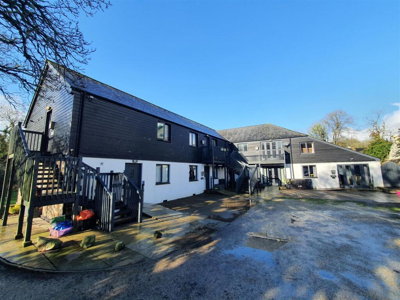
Browse 1 rental home to rent in Ruanlanihorne, Cornwall from local letting agents.
The 2 bed flat sector typically includes two separate bedrooms, dedicated living areas, and bathroom facilities. Properties in Ruanlanihorne span purpose-built blocks, converted period houses, and modern apartment complexes on various floors.
£795/m
1
0
52
Source: home.co.uk
Showing 1 results for 2 Bedroom Flats to rent in Ruanlanihorne, Cornwall. The median asking price is £795/month.
Source: home.co.uk
Flat
1 listings
Avg £795
Source: home.co.uk
Source: home.co.uk
Ruanlanihorne sits within the wider TR2 postcode area, taking in the Roseland Peninsula and parts of Truro. Across Cornwall’s TR2 area, residential sales average about £370,000, with detached homes at around £422,000 and semi-detached properties at approximately £280,000. Terraced houses average £230,000, while flats and maisonettes sit at £147,000 as of late 2025. Those sale values feed straight into the rental market, because landlords and investors work from capital values and expected yields. Conditions have been fairly steady too, with Cornwall’s average house price dipping by just 2.5% between December 2024 and December 2025 to £277,000 across the county.
In Ruanlanihorne itself, rental choice is thin on the ground. The parish has only around 251 residents and a housing stock that is mainly owner-occupied, so homes to rent are scarce. Census data from 2011 recorded 106 households in the parish, and 81 of those were living in their own properties, which tells its own story about ownership levels and the lack of rental supply. Renters usually need to widen their search into nearby villages and the broader Roseland Peninsula if they want a realistic chance of finding somewhere suitable. The local market tends to attract professionals after a rural lifestyle, second-home owners who let properties now and then, and seasonal workers in tourism. With 16-20% of the housing stock classified as second homes in 2009, some owners may prefer short-term or holiday lets instead, which can open up a different set of options for flexible tenancies.

Daily life here follows the pace of rural Cornwall, and that gives Ruanlanihorne a very distinct feel. The village lies between the River Fal and its tributary, the Ruan River, so the setting is all rolling farmland, old hedgerows and salt marshes that draw in wildlife. Its economy has shifted over time from agriculture, fishing and small-scale port trading towards tourism and conservation, although farming still matters locally. The parish sits wholly within the Cornwall Area of Outstanding Natural Beauty, so the landscape is protected and likely to stay that way for years to come. Clean air, dark skies for stargazing and a slower rhythm of life are all part of the picture.
Grey slate stone is the material that gives the village and its surrounding hamlets much of their character. Many cottages are said to have been built using stone from the demolished Lanihorne Castle, first built in the 14th century, which adds a pleasing bit of local lore to the parish’s buildings. The old quay, once busy with coal, timber, lime and bricks, has silted up over time as mining upstream reduced the river’s navigability, though the estuary still shapes the landscape beautifully. Much of community life centres on the historic Church of St Rumon, local pubs and the sense of continuity that comes from living somewhere with roots stretching back over a millennium. For day-to-day essentials, Truro is the nearest major centre, about 8 miles away, so most residents will need a car.

For families renting in Ruanlanihorne, schooling is mainly anchored in the nearby villages and towns across the Roseland Peninsula and greater Truro area. The village falls within the catchment for primary schools in the surrounding rural communities, with the nearest usually found in Probus, St Mawes or Grampound. These smaller schools often mean close-knit communities and smaller class sizes, although places can be limited and non-catchment pupils may face waiting lists. Before committing to a property, parents should check catchment boundaries and admissions rules carefully, because they can affect school placement quite a lot. Education in the area has a strongly rural character, with outdoor learning, environmental awareness and pastoral care all playing a big part.
Secondary provision is centred on Truro, where several schools serve the wider TR2 postcode area, including grammar schools and comprehensives. The Truro School area is especially popular, and Truro College offers further education and sixth form options for older students. Because Ruanlanihorne is rural, families need to think through transport to and from school with care, since the daily journey will usually mean travelling into Truro or another larger settlement. Truro College is the nearest further education college and offers a broad mix of academic and vocational courses for students aged 16 and above. For renting families, that transport planning is more than a minor detail, because school travel can add both cost and time every day.

Getting in and out of Ruanlanihorne takes a bit of organisation. The village is set on the Roseland Peninsula, well away from the main transport network, so travel links are limited. Truro railway station is the nearest, about 8 miles away, and from there passengers can join the national network with regular services to Plymouth, Exeter, Bristol and London Paddington. The trip from Truro to London Paddington takes around 4-5 hours, which keeps the capital within reach for occasional business or leisure trips, though most people would only make that journey for longer stays. The A3078 is the main road linking the peninsula to Truro, passing through some striking countryside before joining the A390 and the wider Cornwall network. In summer, that single route can get busy, especially when visitors head to the beaches and coastal attractions.
Bus services do run through the area, but they are infrequent and not much use for a daily commute to work or school in Truro. For most residents, a car is effectively a necessity if they want to commute, get to healthcare appointments or take part fully in community life. The position between the River Fal and the Ruan River gives the place its lovely scenery, but it also means some lanes are narrow and winding, so confident driving helps. Renters should also think about parking, because off-street space can be tight in older cottages and terraces. If you are working in Truro or Falmouth, the drive usually takes 20-30 minutes, although that stretches out in summer when tourist traffic builds. Cyclists can find some beautiful routes, just with hills and roads that often have little in the way of a shoulder.

Before you start looking properly, it makes sense to get a rental budget agreement in principle from a financial provider. That gives landlords and letting agents evidence that the rent is affordable, usually based on proof of income at 2.5-3 times the monthly rent. Cornish properties often carry a rural premium, so we would also factor in higher rent and possible extras such as heating costs in older stone-built homes.
It pays to spend time in Ruanlanihorne and across the Roseland Peninsula before signing anything. Visit at different times of day and on different days of the week, and make sure you also see it during the summer tourist season, when the area is much busier. Check how far it is to your workplace, any schools you need, and the essential services in Truro. Once you understand both the lifestyle and the practical side, it becomes much easier to judge whether rural Cornish living really fits.
We would start by searching for available rentals on Homemove and other property portals, then widen the net to the rest of the TR2 postcode area and nearby places such as Ruan Highlanes, Probus and St Mawes. View any property that meets your needs and use the appointment to check the condition of the home, the heating system and any signs of damp or maintenance problems that are common in older Cornish buildings. Ask about the tenancy terms, the deposit amount and anything else the landlord expects.
For older homes, especially those built from traditional Cornish stone and slate, a professional inventory check or survey is well worth considering before you finalise the tenancy. A proper inventory gives you a clear record of the property’s condition at the start, which helps protect your deposit. If any dispute comes up at the end of the tenancy, that paperwork can be invaluable.
Once you have chosen a property, the letting agent or landlord will usually ask you to pass tenant referencing checks. These typically cover credit checks, employment verification and references from previous landlords. Have your paperwork ready, including proof of identity and proof of income, plus any references you can supply. Be ready too for holding deposits, security deposits usually equal to 5 weeks rent, and possibly advance rent payments.
After referencing is complete and the tenancy agreement is signed, you can set the move-in date and arrange building contents insurance. On the day, take meter readings and photograph the property so you have a record for your files. You should also register with local services, including doctors in the nearest village, and begin getting to know your new part of the Roseland Peninsula.
Renting in Ruanlanihorne brings a set of local considerations that are quite different from urban renting, so it helps to know the lay of the land. The parish includes 24 listed buildings and structures, which means many homes are subject to the planning rules that apply to historic buildings. Those rules can limit alterations, renovations and even some maintenance work, so renters should ask the landlord exactly what changes are allowed during the tenancy. Homes in the Cornwall AONB may also face planning controls designed to protect the landscape, which can affect plans for extensions, outbuildings or major external alterations. Anyone hoping to personalise a property should understand these heritage and conservation constraints before signing up.
The local geology and geography also matter in day-to-day renting. Ruanlanihorne lies between the River Fal and the Ruan River, with salt marshes nearby that can create damp conditions, especially in older stone-built properties. Across Cornwall, traditional homes often suffer from damp, roof decay, timber defects and salt corrosion from coastal exposure, and the parish’s position near the Fal Estuary means those issues are worth checking for here too. Older stone cottages can be expensive to heat, so we would look closely at insulation, heating efficiency and the EPC rating before moving forward. Because there has been limited 20th-century development in the parish, most rentals are likely to be older homes that need careful inspection for outdated electrics, plumbing faults and structural concerns linked to heritage construction.
Some of the building stock reflects the area’s industrial past. Many properties in Ruanlanihorne contain bricks from the Trelonk works, which operated from 1891 to 1907, and those bricks were used throughout Truro, Falmouth and the Roseland Peninsula. As a result, a number of homes combine local slate stone with locally-produced brickwork. That kind of traditional construction can be solid, though it often needs more upkeep than modern materials. The Killas rocks beneath the Roseland Peninsula provide a firm geological base, but because watercourses are close by, it is still wise to check for damp penetration and drainage problems during any viewing.

There is no public rental price record for Ruanlanihorne itself, mainly because the village is small and rental transactions are limited. Even so, across the wider TR2 postcode area and the Roseland Peninsula, rents usually begin at about £800 per month for smaller homes, while family properties tend to sit between £1,000 and £1,800 per month depending on size, condition and location. Gardens, parking and views of the Fal Estuary usually push the rent up. With average house prices in the TR2 area at approximately £370,000 and Cornwall’s overall average at £277,000, rents reflect the premium attached to this desirable Area of Outstanding Natural Beauty location. Renters should expect costs to be higher than in many comparable urban areas.
Homes in Ruanlanihorne come under Cornwall Council, which sets council tax using valuation bands from A to H. Because the parish is rural and many properties are older and relatively modest in size, most tend to sit in bands A through D. The precise band depends on the assessed value of the property, so renters should check the relevant band with Cornwall Council or through the listing before working out their budget. Cornwall Council provides online tools for checking bands by address, and local council tax is usually paid monthly by direct debit.
For primary education, the strongest nearby options include Probus Primary School and St Mawes School, both of which serve the Roseland Peninsula catchment and have good reputations for pastoral care and academic achievement. On the secondary side, Truro High School for Girls and Truro School are notable independent choices, while Penryn College and Falmouth School serve the wider area as comprehensives. Truro College remains an excellent option for further education for students aged 16 and above. School transport from Ruanlanihorne to secondary schools usually means travelling into Truro and taking 20-30 minutes by car, so families need to think through the practical side of school choice.
Public transport links from Ruanlanihorne are limited, which is only to be expected in a small rural parish on the Roseland Peninsula. Truro is the nearest railway station, roughly 8 miles away, and it connects to the national rail network for journeys to major cities such as London, Bristol and Plymouth. Buses do run locally, but the timetable is too sparse for regular commuting to work or school. The A3078 is the main road connecting the peninsula to Truro, although journeys to other destinations usually involve changes and can take a long time. For practical daily life, car ownership is close to essential here, particularly if you need to commute, see a doctor or get to supermarkets.
For renters who value rural living, heritage and access to Cornwall’s outstanding natural landscape, Ruanlanihorne can be a very rewarding place to live. The village has a close-knit feel, with neighbours who know one another, strong local traditions and a pace that can support a healthier work-life balance. Because the setting sits within the Cornwall AONB, residents have daily access to scenic walks, coastal paths and wildlife habitats that many urban residents travel a long way to enjoy. The trade-off is practical rather than scenic, with limited amenities in the village, a need to travel to Truro for most services, restricted public transport and much heavier traffic in summer. The rental market is tiny, so finding the right place can be competitive, and the high proportion of second homes means some properties may not be available for standard Assured Shorthold Tenancies.
Deposits on rental homes in Ruanlanihorne are typically five weeks rent, which matches the standard across England and Wales under the Tenant Fees Act 2019. That deposit has to be protected in a government-approved Tenancy Deposit Scheme within 30 days of receipt, and renters should check that the landlord or letting agent has arranged it. You should also expect to pay the first month’s rent in advance, usually before or on the tenancy start date, along with any holding deposit needed to secure the property during referencing. Referencing fees are generally banned for homes with rents under £50,000 per year. It is also sensible to budget for building contents insurance, which landlords commonly require, plus moving costs and any connection charges for utilities and internet.
Because Ruanlanihorne sits between the River Fal and the Ruan River, flood risk from rivers is worth thinking about for some properties, especially those in lower-lying spots near watercourses or salt marshes. The Ruan River has silted up over time, which can alter drainage patterns, and the proximity to the Fal Estuary means tidal influences may also affect local flood behaviour. Interest in flood resilience is rising across Cornwall as climate change bites, so renters should ask about any flooding history at the specific property they are considering. Landlords ought to be able to provide details of any flood-related works carried out on the home, or local flood risk assessments from Cornwall Council or the Environment Agency.
With 16-20% of the housing stock estimated as second homes, some available properties in Ruanlanihorne may be offered as holiday lets rather than standard Assured Shorthold Tenancies. Holiday lets work to different rules and may not give the same security of tenure as a normal residential rental. Before signing anything, tenants should check which type of occupancy is being offered, because that will affect both rights and length of stay. Properties listed as Assets of Community Value can also come with special considerations, so any concerns about tenancy security should be discussed with the landlord or letting agent in advance.
Getting to grips with the full cost of renting in Ruanlanihorne means looking beyond the advertised monthly figure. The security deposit, capped at five weeks rent under the Tenant Fees Act 2019, is usually the largest upfront payment after the first month’s rent, and it must be protected in a government-approved scheme within 30 days of the landlord receiving it. For standard family homes in this area, deposits are usually between £800 and £1,500, with more expensive properties commanding higher amounts. That money is held against damage beyond normal wear and tear or unpaid rent, and the figure should be clearly set out in the inventory check carried out at the start of the tenancy.
In England, first-time renters benefit from protections under the Tenant Fees Act, which stops landlords and agents charging certain fees, although those rules mainly relate to upfront costs rather than deposit limits. It is wise to budget for extras such as building contents insurance, which is often required by the tenancy agreement and can cost between £150 and £400 a year depending on the property value and contents. Utility connection charges, internet installation costs and council tax registration should also be included in moving budgets. For anyone relocating from outside Cornwall, the cost of removals and any short-term accommodation while securing a permanent tenancy should not be overlooked. With rental properties in Ruanlanihorne so limited and the local market competitive, having immediate access to funds for deposits and referencing can make the difference when a suitable home comes up.
Properties to Rent In London

Properties to Rent In Plymouth

Properties to Rent In Liverpool

Properties to Rent In Glasgow

Properties to Rent In Sheffield

Properties to Rent In Edinburgh

Properties to Rent In Coventry

Properties to Rent In Bradford

Properties to Rent In Manchester

Properties to Rent In Birmingham

Properties to Rent In Bristol

Properties to Rent In Oxford

Properties to Rent In Leicester

Properties to Rent In Newcastle

Properties to Rent In Leeds

Properties to Rent In Southampton

Properties to Rent In Cardiff

Properties to Rent In Nottingham

Properties to Rent In Norwich

Properties to Rent In Brighton

Properties to Rent In Derby

Properties to Rent In Portsmouth

Properties to Rent In Northampton

Properties to Rent In Milton Keynes

Properties to Rent In Bournemouth

Properties to Rent In Bolton

Properties to Rent In Swansea

Properties to Rent In Swindon

Properties to Rent In Peterborough

Properties to Rent In Wolverhampton

Enter your details to see if this property is within your budget.
Loans, cards, car finance
Estimated property budget
Borrowing + deposit
You could borrow between
Typical borrowing
Monthly repayment
Est. at 4.5%
Loan-to-value
This is an estimate only. Your actual budget may vary depending on interest rates, credit history, and personal circumstances. For an accurate affordability assessment, speak to one of our free mortgage advisors.
This calculator provides estimates for illustrative purposes only and does not constitute financial advice. Your home may be repossessed if you do not keep up repayments on your mortgage. Estimates based on 4.5% interest rate, repayment mortgage. Actual rates depend on your circumstances.
Homemove is a trading name of HM Haus Group Ltd (Company No. 13873779, registered in England & Wales). Homemove Mortgages Ltd (Company No. 15947693) is an Appointed Representative of TMG Direct Limited, trading as TMG Mortgage Network, which is authorised and regulated by the Financial Conduct Authority (FRN 786245). Homemove Mortgages Ltd is entered on the FCA Register as an Appointed Representative (FRN 1022429). You can check registrations at NewRegister or by calling 0800 111 6768.

We use cookies to show you personalised content and improve your experience of our website. Find out more in our Privacy policy and Cookie policy.