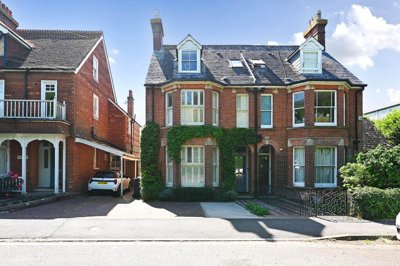
Browse 1 rental home to rent in Peasmarsh, Rother from local letting agents.
The larger property sector typically features multiple bathrooms, substantial reception space, and private gardens or off-street parking. Four bedroom houses in Peasmarsh span detached, semi-detached, and occasionally terraced configurations, with styles ranging from period properties to modern executive homes.
£0/m
0
0
0
Source: home.co.uk
Showing 0 results for 4 Bedroom Houses to rent in Peasmarsh, Rother.
Peasmarsh has a small but steady rental market, with professionals, families and retirees all drawn to village life inside the High Weald AONB. We do not have fixed rental figures for the village itself without speaking to local letting agents, but the sales market gives a clear sense of the value here. homedata.co.uk reports an average house price of £410,833 over the last year, while homedata.co.uk indicates an average sold price of £619,500, and homedata.co.uk shows £587,000 as of February 2026. That tells us this is a premium pocket of East Sussex, and landlords tend to price rentals with that level of demand in mind.
In Peasmarsh, rentals usually include semi-detached houses, detached family homes and terraced properties, with around 20% of the housing stock falling into terraced or flat categories according to the Peasmarsh Neighbourhood Development Plan. The housing mix stretches across several centuries, from modest mid-century homes built between 1936 and 1979 to striking period properties from the 15th and 16th centuries. Recent sales data puts semi-detached properties at £250,000 to £295,000, while detached homes range from £370,000 to over £1.1 million depending on size and condition. That spread carries through into the rental market, so we see homes suited to a wide range of budgets and household types.
homedata.co.uk shows that historical sold prices in Peasmarsh over the last year were 14% down on the previous year and 11% down on the 2020 peak of £463,464, though homedata.co.uk reports a rise of 12.2% over the last 12 months. That mixed pattern means tenants should speak to local letting agents for up-to-date rents, because the private rental market moves separately from sales and depends on landlord expectations, property condition and demand. Well-kept homes, or anything close to the village centre, can be snapped up quickly.

Peasmarsh has the feel of a classic English rural village, with around 1,199 residents living in a landscape shaped by community life and wide-open countryside. It sits within the High Weald Area of Outstanding Natural Beauty, an ancient setting of rolling hills, old woodland and historic farmsteads that has defined the area for centuries. Local facilities include a primary school for young families, three traditional pubs and a country hotel for visitors exploring the region. For renters who want a real village community rather than a suburban backdrop, it is hard to beat.
The village centre has an independent supermarket and petrol station, so everyday essentials are close at hand. Peasmarsh also has a strong architectural legacy, with 54 buildings listed by English Heritage, including the Grade I listed Parish Church of St Peter and St Paul and two Grade II* listed buildings at Woodside and Flackley Ash House. Much of the village is covered by an Archaeological Notification Area designated by East Sussex County Council, which underlines how significant this settlement is historically. Period homes, thatched cottages and traditional vernacular building styles give the streets plenty of character, though tenants should remember that listed buildings can carry limits on alterations and modifications.
Local life tends to revolve around events, the pub trade and the primary school, which gives residents a good chance to get to know one another. You can walk to many amenities, although car use still dominates because this is a rural place. The parish runs along the River Rother to the River Tillingham, which marks the southern boundary, and that brings some attractive countryside walks with it. For renters after peace, space and enough day-to-day facilities, Peasmarsh has a lot going for it in the Rother district of East Sussex.

Peasmarsh Primary School is central to village life and serves children of primary school age, so families who rent here have a school right on the doorstep. That matters, because it removes the need to travel to nearby villages for early years and primary education. Parents should check catchment areas and admissions policies directly with East Sussex County Council, as these can change school placement options. The school also acts as a social hub, giving parents a place to meet and settle into the community.
For secondary education, families in Peasmarsh usually look to nearby towns such as Rye or Tenterden, where schools serve wider rural catchments. The nearest secondary schools cater for pupils aged 11 through 16, with sixth form provision available either on site or at further education colleges in larger settlements. We would advise renting households to think carefully about transport, because bus links between rural villages and secondary schools need planning and may not line up neatly with school start times.
The village is also within reach of a number of independent schools across East Sussex, giving families private education choices as well. For further and higher education, Rye offers some provision, while Brighton, Canterbury and Eastbourne are all accessible by public transport or car for older students. That makes Peasmarsh a good fit for families with primary-age children, though those with older students will need to work travel into the weekly routine.

Anyone renting in Peasmarsh should think about transport early on, because this is very much a High Weald village where car ownership remains part of daily life for most residents. The Peasmarsh Neighbourhood Development Plan specifically notes the lack of cycleways and the limited public transport, so private vehicles do most of the work here. The village links into local roads towards Rye, around 5 miles away, with Tenterden to the north and Hastings and Folkestone further out. The A259 coastal road reaches the main towns in the region, while the A28 runs inland through the High Weald to Ashford and Canterbury.
Bus services do exist from Peasmarsh, but they are limited and connect the village with nearby towns and railway stations rather than offering a dense timetable for commuting. Rye and Appledore are the nearest stations, with rail links on to London, Brighton and the Channel Tunnel terminal at Folkestone. Journeys to London Victoria via local rail connections usually take 1.5 to 2 hours, which makes day trips to the capital workable for work or leisure. Even so, people without a car may struggle to reach the stations without taxis or lifts from neighbours.
For commuters heading to East Sussex or Kent towns, the road network gives access to Rye, Hastings, Ashford and Folkestone, although journey times depend on traffic and destination. Parking in Peasmarsh is generally more straightforward than in larger places, and resident vehicles are usually accommodated without much pressure. Cyclists should be aware that there is no dedicated cycling infrastructure, so cycling is more of a leisure activity than a practical commuting option. If we were budgeting for a move here, we would plan for car ownership or a working pattern that cuts down on the need for daily travel.
Renting in Peasmarsh means getting to know the quirks of a rural High Weald AONB village. Homes here cover a wide spread of eras, from mid-century houses built between 1936 and 1979 to historic properties from the 15th and 16th centuries, and each brings its own considerations. Older places can mean damp, roof issues or dated electrics and plumbing, so we would always recommend a thorough inspection or a professional survey before you commit. Brick, stone and timber framing all need different care from modern construction.
Because the village is an Archaeological Notification Area and has 54 listed buildings, rented homes may face planning controls over alterations, extensions or changes to the outside. Before signing, tenants should ask landlords or letting agents exactly what can and cannot be altered during the tenancy. Satellite dishes, replacement windows and garden structures can all fall under conservation rules, so it is best to get that clear early. Peasmarsh Place, a Grade II listed Neo-Georgian building of red brick with stone dressings and a tiled roof, is a good example of the village’s traditional look.
Rural renting here also means accepting that private transport is usually needed for trips beyond the village, because public transport is limited. Some homes, especially on the edge of the village, may rely on private drainage rather than mains sewage, and that is worth checking before you agree anything. Fences, boundaries and garden structures should be noted carefully at the start of the tenancy, since responsibility for them can become a sticking point later. In period properties, prompt reporting matters, because delays can make traditional building problems worse.

Before we start viewing, it is sensible to speak to local mortgage brokers or banks and secure a rental budget agreement in principle for Peasmarsh. Landlords and letting agents will want proof that the rent and the extra costs are affordable. Having that in place strengthens an application and shows you are ready to move quickly when the right home appears.
Take time to learn about Peasmarsh itself, its amenities, transport links and village character, so you can judge whether it fits the way you want to live. We would suggest visiting at different times of day and speaking to people who already live there. Once you have seen how rural the village really is, and how much car ownership matters, expectations tend to become more realistic.
We can use Homemove to browse rental homes in Peasmarsh and set alerts for new properties that match the criteria you have in mind. Because the market is rural, good homes can go quickly once they appear, so a fast response helps. It is also worth registering with letting agents in the Rye and Tenterden area, since some properties never reach the major portals.
Once you have a shortlist, arrange viewings and look closely at the property, its setting and how near it is to village amenities. Damp, roof condition and similar issues are common in older homes, so check for those. In period properties, do not stop at the décor, make sure the structure, plumbing and electrical systems are in decent shape too.
After you have found a suitable property, the tenant referencing stage comes next, and you will need to provide documents such as proof of identity, income verification and references from previous landlords or employers. Self-employed applicants should have full income records ready, since the process can take time. It is one of those steps that tends to move faster when the paperwork is already in order.
Once the paperwork is done, you will sign the tenancy agreement, pay the deposit and first month’s rent, then complete an inventory check before collecting the keys. With period properties, it is important to understand both maintenance responsibilities and any limits on alterations. Photographs taken during the inventory can be useful later, especially at the end of the tenancy.
Rental prices in Peasmarsh vary according to property type, size and condition, and the sales market gives a useful guide to values across the village. homedata.co.uk reports average sold prices of £410,833 while homedata.co.uk indicates £619,500, which points to the premium nature of this High Weald location. The AONB setting, historic architecture and closeness to Rye all feed into rental values. For actual rent levels, tenants should speak directly to local letting agents, because the private rental market runs separately from sales and depends on landlord expectations, property condition and demand.
For council tax, Peasmarsh falls under Rother District Council, and properties can sit anywhere from band A through to H depending on value. That range reflects the mix of period cottages, modern houses and larger detached homes in the village. Semi-detached homes have sold for £250,000 to £295,000, while detached properties run from £370,000 to over £1.1 million, which gives a wide spread of council tax bands across the area. Tenants can check individual homes on the Valuation Office Agency website using the property address or postcode TN31 to confirm the band and annual cost.
Peasmarsh Primary School serves the village and is a major part of local family life. Because it is inside the village, primary-age children do not need to travel far, and the school acts as a natural meeting point for parents as well. Secondary options are based in nearby towns including Rye and Tenterden, with catchment areas set through East Sussex County Council admissions policies. Families should always check current school places, catchment boundaries and admission criteria directly with the local education authority, as those details can shape day-to-day schooling plans.
Public transport in Peasmarsh is limited, which is exactly what we would expect from a rural village in the High Weald AONB. The Peasmarsh Neighbourhood Development Plan notes both the lack of cycleways and the fact that residents rely heavily on private vehicles. Bus services to nearby towns run infrequently, and the nearest stations at Rye and Appledore provide regional rail links to destinations including London Victoria, with journeys usually taking 1.5 to 2 hours. For most renters, car ownership is effectively essential.
Peasmarsh offers a very good quality of life for renters who want countryside living within a friendly village community in East Sussex. The essentials are all here, a primary school, three pubs, a country hotel and an independent supermarket, so day-to-day life does not always mean a trip to a larger town. The High Weald AONB gives the village its attractive surroundings, while 54 listed buildings and an Archaeological Notification Area reflect its history. Rye and the East Sussex coast are close enough for easy days out, though the main downsides are car dependence and the upkeep that older period homes can demand.
In England, the standard deposit for a rented home is five weeks' rent, worked out by taking the monthly rent multiplied by 12, divided by 52, and multiplied by 5. That deposit is held in a government-approved tenancy deposit scheme and returned at the end of the tenancy, subject to deductions for damage or unpaid rent. Under the Tenant Fees Act 2019, landlord and agent charges are tightly controlled. Allowed payments include holding deposits, a deposit capped at five weeks' rent, rent, and certain utility and council tax charges. First-time renters should plan for the deposit, the first month’s rent in advance and any tenant referencing costs.
Peasmarsh’s rental stock is varied, with semi-detached houses, detached family homes and terraced properties all available at different times. According to the Peasmarsh Neighbourhood Development Plan, around 20% of homes sit in the terraced or flat categories, which gives some choice for different household sizes and budgets. The village also includes period homes from the 15th and 16th centuries, thatched cottages and mid-century houses built between 1936 and 1979, so renters can choose between several architectural periods. From modest terraced cottages to larger detached houses, the market spans a broad range of rents.
Peasmarsh has 54 listed buildings and much of the village is also an Archaeological Notification Area, so rented properties can come with planning restrictions on alterations. Before signing, tenants should ask landlords or letting agents exactly what is allowed during the tenancy. Restrictions often affect exterior changes, window replacements and structural work in period properties. Getting this clear from the start helps avoid arguments later about any changes made while living there.
It helps to understand the financial side of renting in Peasmarsh before you begin looking seriously, because that is where surprises tend to appear. The standard security deposit for rented homes in England is capped at five weeks' rent, using the formula set out under the Tenant Fees Act 2019. It is held in a government-approved tenancy deposit scheme and returned at the end of the tenancy, subject to any deductions for damage or unpaid rent as recorded in the inventory check. Tenants should receive written confirmation that the deposit has been protected within 30 days of payment.
The first month’s rent is usually due in advance before keys are handed over, so new tenants need to budget for both the deposit and the first rent payment at the same time. A holding deposit of up to one week's rent may also be asked for while referencing checks are completed, and this is generally deducted from the overall move-in cost. Under current legislation, permitted tenant fees are limited to holding deposits, deposits, rent and charges for utilities, council tax or telecommunications where the tenant is responsible for them.
Other costs in Peasmarsh can include tenant referencing fees, inventory check fees and, in some cases, charges for changing the tenancy agreement. If you are renting a period property in this historic village, it is wise to keep money aside for maintenance issues or emergency repairs, because landlords of older homes usually expect problems to be reported quickly. Securing a rental budget agreement in principle before you start searching shows landlords that you are financially prepared, and that can make a difference in a competitive market.

From 4.5%
Professional tenant referencing and affordability checks
From £499
Complete referencing checks for your tenancy application
From £75
Energy Performance Certificate for your rental property
From £400
Professional survey for properties in Peasmarsh
Properties to Rent In London

Properties to Rent In Plymouth

Properties to Rent In Liverpool

Properties to Rent In Glasgow

Properties to Rent In Sheffield

Properties to Rent In Edinburgh

Properties to Rent In Coventry

Properties to Rent In Bradford

Properties to Rent In Manchester

Properties to Rent In Birmingham

Properties to Rent In Bristol

Properties to Rent In Oxford

Properties to Rent In Leicester

Properties to Rent In Newcastle

Properties to Rent In Leeds

Properties to Rent In Southampton

Properties to Rent In Cardiff

Properties to Rent In Nottingham

Properties to Rent In Norwich

Properties to Rent In Brighton

Properties to Rent In Derby

Properties to Rent In Portsmouth

Properties to Rent In Northampton

Properties to Rent In Milton Keynes

Properties to Rent In Bournemouth

Properties to Rent In Bolton

Properties to Rent In Swansea

Properties to Rent In Swindon

Properties to Rent In Peterborough

Properties to Rent In Wolverhampton

Enter your details to see if this property is within your budget.
Loans, cards, car finance
Estimated property budget
Borrowing + deposit
You could borrow between
Typical borrowing
Monthly repayment
Est. at 4.5%
Loan-to-value
This is an estimate only. Your actual budget may vary depending on interest rates, credit history, and personal circumstances. For an accurate affordability assessment, speak to one of our free mortgage advisors.
This calculator provides estimates for illustrative purposes only and does not constitute financial advice. Your home may be repossessed if you do not keep up repayments on your mortgage. Estimates based on 4.5% interest rate, repayment mortgage. Actual rates depend on your circumstances.
Homemove is a trading name of HM Haus Group Ltd (Company No. 13873779, registered in England & Wales). Homemove Mortgages Ltd (Company No. 15947693) is an Appointed Representative of TMG Direct Limited, trading as TMG Mortgage Network, which is authorised and regulated by the Financial Conduct Authority (FRN 786245). Homemove Mortgages Ltd is entered on the FCA Register as an Appointed Representative (FRN 1022429). You can check registrations at NewRegister or by calling 0800 111 6768.

We use cookies to show you personalised content and improve your experience of our website. Find out more in our Privacy policy and Cookie policy.