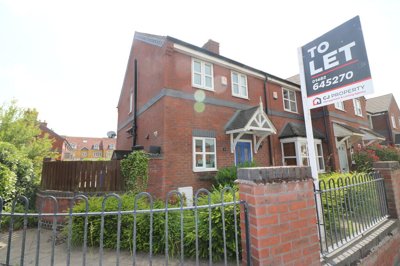
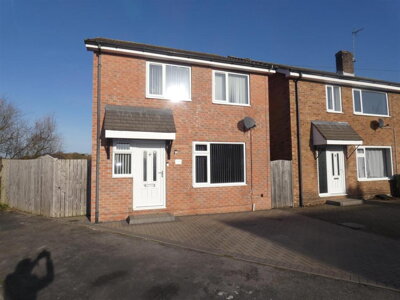
Browse 2 rental homes to rent in Newport from local letting agents.
Newport's rental market mirrors wider trends across the East Riding of Yorkshire, and demand is still backed up by strong transport links and a family-friendly feel. Rental figures for Newport itself are limited, but the sold data for the HU15 postcode area gives a solid read on the local market. Average sold prices in Newport reached £245,368 over the past year, with detached properties averaging £302,214, semi-detached homes at £216,094, and terraced properties around £163,500. Taken together, those figures point to a competitive market, where rent will usually turn on the type of home, its size, and condition.
Fresh supply is coming through from new build schemes in Newport, with Persona Homes delivering properties at Newport Lakes on Main Road and The Willows, offering 2, 3, and 4-bedroom homes from £199,995. They are mainly marketed for sale, of course, but as investors buy into those schemes, rental homes may well follow. The village also benefits from being close to Brough and its railway station, which keeps it attractive to renters needing regular trips into Hull or Leeds, so demand for homes to let stays fairly steady through the year.
Across the East Riding of Yorkshire, the housing mix is broadly around 40% detached properties, 33% semi-detached homes, 19% terraced properties, and 7% flats and apartments. Newport follows that same pattern, with a blend of traditional brick-built cottages and newer family houses, so renters have a decent spread of options depending on budget and how much space they need. In the centre, especially along Main Road, period features are more common, while the estates on the edge of the village tend to bring more modern layouts and better insulation standards.

Rural Yorkshire and everyday convenience sit comfortably side by side in Newport. With a population of 1,563 people, it keeps a close-knit feel, and neighbours tend to know one another while village events help hold the community together. In the centre, there are pubs, local shops, and the basics needed for day-to-day life, while the surrounding countryside opens up walking, cycling, and long views across the East Riding landscape. The Market Weighton Canal also cuts through the village, adding a pleasant route for walks and a reminder of the area's industrial past.
Families, professionals, and retirees are all part of Newport's make-up, which helps the village feel balanced rather than one-note. Around Main Road, the Conservation Area keeps the historic look of the place intact, and several Grade II listed buildings add real architectural interest to the streets. Agriculture and local services drive much of the economy, although plenty of residents head to Hull, Beverley, or further afield for work, helped along by the good road access from the nearby A63 trunk road.
For anyone who likes being outdoors, Newport gives straight access to the East Riding countryside, with public footpaths and bridleways running out from the village in several directions. Birdwatchers and nature enthusiasts are drawn to the nearby River Humber wetlands, and the Market Weighton Canal offers quieter waterside walks that tie Newport into the wider regional waterway network. The flat landscape across the East Riding makes cycling a natural choice too, with routes linking Newport to nearby villages and on to Beverley.

Education is well covered for families looking at Newport, with a range of options in the village and nearby. Local primary schools support children in the early years and Key Stage 1, while further primary provision can be found in neighbouring places such as North Ferriby and Brough. Secondary places are usually taken up in the wider East Riding area, so many families travel to nearby towns for them. Standards across the East Riding are generally highly regarded, and schools have often performed above national averages in Ofsted inspections.
Specialist schooling is within reach too, thanks to Newport's position close to larger towns. That puts grammar schools in Hull and selective admissions at schools in Beverley on the table. Sixth form provision is available at secondary schools in Brough and other nearby towns, with A-level subjects and vocational courses for older students. Parents should still check catchment areas and admission policies carefully, because those details can make a big difference to school allocations in popular spots.
Nurseries and preschools are available in Newport and the surrounding villages, so early years childcare is within easy reach of the village centre. For families with children who need SEN support, the East Riding local authority provides specialist services and resource bases at selected schools across the region. It also makes sense to think about school catchment areas before settling on a rental home, because properties near primary school admissions boundaries often attract a premium in the local rental market.

Commuters have a lot going for them in Newport. The A63 trunk road runs close by, giving direct access to Hull city centre to the north and linking into the M62 motorway for journeys to Leeds, York, and beyond. By car, Hull city centre is usually around 30 minutes away, which suits people who want rural living without losing access to urban jobs. Brough is also nearby, and its railway station offers regular services to Hull, Leeds, and Sheffield, which gives tenants another way to travel.
Local bus services run across the East Riding, connecting Newport with nearby villages and towns including Beverley, where the shopping, dining, and leisure choice is broader. Cycling is helped by the flat land, although the main roads nearby mean route planning matters if we are commuting by bike. Parking is usually simple in Newport, helped by the village's lower population density, and that is a real plus for residents with cars who want easy parking at their rental home.
From Brough station, rail travel offers a handy way into major cities without the cost of city-centre parking. Trains to Hull take approximately 25 minutes, Leeds is reachable in around 50 minutes, and Sheffield in approximately 1 hour 20 minutes. For renters who travel often for business, that makes Newport a practical base, pairing village living with strong rail links. The nearby Humber Bridge also gives access to North Lincolnshire for journeys south of the river.

Renting in Newport means taking a few local factors seriously, because they are specific to this corner of the East Riding of Yorkshire. The geology includes alluvial deposits with clay soils, and that brings a moderate to high shrink-swell risk, which can in turn lead to subsidence or structural movement in properties. Before we commit to a rental agreement, we would want to review any available survey reports and think about commissioning a survey of our own for older homes, or anywhere there are signs of structural stress such as cracks in walls or uneven floors.
Flood risk deserves equal attention in Newport, given the village's closeness to the River Humber and the Market Weighton Canal, which means some areas may be vulnerable to river flooding or surface water. The Environment Agency provides detailed flood risk maps that prospective renters can check, and it is sensible to verify whether any property sits within a flood risk zone. Many homes in Newport's Conservation Area are listed buildings too, so there can be restrictions on renovations, alterations, or external changes that tenants need to understand before signing a tenancy agreement.
Brick-built homes with pitched, tiled roofs are the usual construction style in Newport. Older properties may have solid wall construction instead of cavity walls, and that can affect insulation performance and heating efficiency. We would always check the Energy Performance Certificate rating before going ahead, because older solid-wall homes can have higher heating costs than modern cavity-wall insulated properties. At Newport Lakes and The Willows, the newer build homes bring modern insulation standards, though rental prices may be higher to reflect their newer condition.

Looking at the local geology helps explain some of the issues renters may face before taking a tenancy in Newport. The village sits within the Humberhead Levels, an area made up of alluvial deposits including clay, silt, and sand. Those clay soils bring a moderate to high shrink-swell risk, so homes can suffer subsidence or heave in periods of very wet or very dry weather. The point matters most for older properties with shallow foundations, which are often more exposed to ground movement.
Property construction in Newport reflects the wider building tradition of the East Riding of Yorkshire. Traditional homes along Main Road and within the Conservation Area usually have solid brick walls and pitched, tiled roofs. Many of those older properties also include timber features such as exposed beams and wooden floorboards, which are part of the charm but can be prone to woodworm or rot if maintenance has slipped. Homes built since the 1970s are more likely to use cavity wall construction with better insulation, although the exact structure should still be checked before a tenancy agreement is signed.
Damp is one of the most common problems in Newport's older housing stock. It may show up as rising damp where there is no damp-proof course, penetrating damp where roof coverings or lead flashing have failed, or condensation damp in homes with poor ventilation. Roof defects are also common, including slipped tiles, deteriorated felt, and damaged lead flashing. During viewings, we should look closely for damp marks on walls and ceilings, water staining, and cracks in plasterwork that could point to movement in the structure.
Given the village's closeness to the River Humber and the Market Weighton Canal, flood risk is a major environmental issue for renters in Newport. The Environment Agency identifies certain parts of the village as vulnerable to river flooding and surface water flooding, especially in low-lying areas near watercourses and drainage channels. Before committing to a tenancy, prospective tenants should check the Environment Agency flood risk maps and confirm whether the property falls within any designated flood risk zones.
Homes in flood risk zones can carry higher insurance premiums, so tenants should make sure their contents insurance covers flooding before moving in. Landlords in those areas may already have put measures in place, such as flood barriers or raised electrical sockets, but those should still be checked during the letting process. In some cases, tenants may also be asked to sign declarations that acknowledge the flood risk as part of the tenancy agreement.
Encouragingly, Newport has not seen major flood events in recent years, and the local authority works with the Environment Agency to keep flood defences and drainage systems in good order across the area. Surface water flooding can still happen in heavy rain, particularly where low-lying ground is overwhelmed. Properties on slightly higher ground away from the canal and river may offer a lower flood risk, while still giving all the advantages of village life.
A sensible first step is to explore available rental properties in Newport through Homemove and other property portals. Knowing the current rental prices for different property types helps us set a realistic budget and work out which parts of the village give the best value for what we need. Homes along Main Road may carry a premium because of their Conservation Area setting and period features.
Before we start arranging viewings, it helps to obtain a rental budget agreement in principle, as that shows landlords and letting agents we can meet the financial side of the tenancy. It also sets out the maximum monthly rent we can afford, which strengthens an application when several people are competing for the same Newport property. Landlords here usually ask for proof of income at 2.5 to 3 times the annual rent.
Local letting agents can then arrange viewings of properties that fit the brief. That is the time to inspect the home properly, checking for damp, structural problems, and the overall condition of the fixtures and fittings. We should ask about the tenure type, any planning restrictions, and what is included in the rent. For homes in the Conservation Area or listed buildings, it is sensible to ask specifically about restrictions on alterations.
Before any tenancy agreement is signed, the terms and conditions need a close read, including the deposit amount, notice periods, and who looks after maintenance and repairs. Where the property sits in Newport's Conservation Area or is listed, we should also check for any limits on changes to the home. It is worth confirming which bills are included and how maintenance problems should be reported.
Referencing checks, proof of identity, income verification, and references from previous landlords will all be needed by the letting agent. To avoid delays in securing a rental property in Newport, all paperwork should be provided promptly. Recent payslips, bank statements, employment references, and a landlord reference from the current or previous tenancy are the usual requirements.
Once moving day arrives, a full inventory check should be done with the landlord or letting agent, with the condition of the property and any existing damage carefully recorded. That helps protect against incorrect charges when the tenancy ends and makes the handover smoother. Date-stamped photographs of every room and any existing damage are useful evidence for the inventory records.
Budgeting properly matters when renting in Newport, because the costs can add up quickly if they are not mapped out in advance. Standard deposits for rental properties in the UK are typically equivalent to five weeks' rent, although that can vary depending on the property value and landlord requirements. In Newport, where rents reflect local property values, tenants should expect to pay a deposit of between one and five weeks' rent depending on the property type and size. That deposit will be protected in a government-approved tenancy deposit scheme within 30 days of receiving it.
There can also be extra charges, including referencing fees that cover credit checks and verification of income and rental history, which usually sit between £100 and £300 per applicant. Some letting agents may still charge administration fees, although those have largely been phased out under government legislation. For homes with an annual rent above £50,000, tenants are required to pay a higher stamp duty land tax, although most rental properties in Newport will be below that level. First-time renters should also budget for contents insurance, utility setup, and any moving expenses.
Moving costs need a proper budget too, because removal van hire or professional movers, connection fees for utilities such as gas, electricity, water, and broadband, and any rent paid in advance all have to be covered. In Newport, many landlords ask for one month advance rent plus a five-week deposit, so the equivalent of six weeks' rent may be needed before moving day. Contents insurance usually costs between £10 and £30 per month, depending on the value of the belongings.
Specific rental data for Newport is limited, but the local property market still gives useful context. Average sold prices reached £245,368 over the past year, with terraced properties averaging £163,500, semi-detached homes at £216,094, and detached properties around £302,214. Monthly rents for a two-bedroom property typically sit between £750 and £1,100, depending on condition, where in the village the property is, and the amenities available. Homes in Newport's Conservation Area along Main Road may command premiums because of their period features and character.
Newport, East Riding of Yorkshire, falls under the East Riding of Yorkshire Council tax scheme. Most properties in the village sit within bands A to D, although council tax bands run from A to H. The exact band depends on the property's assessed value, and prospective tenants can check the band through the Valuation Office Agency website or by contacting East Riding of Yorkshire Council directly. Band A homes typically pay around £1,200 to £1,400 per year, while band D homes may be £1,600 to £1,900 annually.
Local primary schools serve Newport and the neighbouring communities, with options including schools in North Ferriby and Brough. Secondary education is available across the wider East Riding, and many families use provision in Brough, Hull, or Beverley. When choosing a rental property for the family, it is sensible to look at specific Ofsted ratings and catchment areas, since those details can affect school places. Nearby Brough schools, including Brough Primary School and South Hunsley School and Sixth Form College, remain popular with Newport families.
Even with its rural setting, Newport benefits from good transport links. Brough's railway station offers regular services to Hull, Leeds, and Sheffield, with Hull city centre reachable in approximately 25-30 minutes by train. Local bus services link Newport with surrounding villages and towns including Beverley, while the A63 trunk road gives direct road access to Hull and joins the M62 motorway for longer trips. Buses to Hull usually run several times daily, although weekend services may be less frequent.
For renters who value rural living but still want strong connectivity, Newport offers a very good quality of life. The village combines a friendly community atmosphere with useful local amenities and attractive countryside surroundings. Walking routes by the River Humber and the Market Weighton Canal are a real draw, and the transport links make it easy to reach jobs and services in larger towns. Homes in Newport's Conservation Area have extra character, though renters need to keep an eye on planning restrictions. It is especially popular with commuters heading to Hull, Beverley, or the surrounding East Riding towns who want a quieter place to come back to after work.
Deposits for rental properties in Newport are usually five weeks' rent and are protected in a government-approved scheme. Referencing fees generally range from £100 to £300 per applicant, covering credit checks and income verification. There may also be a holding deposit to secure the property, usually equal to one week's rent, which is deducted from the final deposit once the tenancy agreement is signed. First-time renters should also budget for utility setup and contents insurance, with total moving costs potentially reaching £2,000 to £3,000 depending on property value and rental requirements.
From 4.5%
We recommend getting a rental budget in principle to strengthen the application.
From £99
Complete referencing checks to secure your rental
From £99
Document property condition to protect your deposit
From £85
Check property energy efficiency before renting
Properties to Rent In London

Properties to Rent In Plymouth

Properties to Rent In Liverpool

Properties to Rent In Glasgow

Properties to Rent In Sheffield

Properties to Rent In Edinburgh

Properties to Rent In Coventry

Properties to Rent In Bradford

Properties to Rent In Manchester

Properties to Rent In Birmingham

Properties to Rent In Bristol

Properties to Rent In Oxford

Properties to Rent In Leicester

Properties to Rent In Newcastle

Properties to Rent In Leeds

Properties to Rent In Southampton

Properties to Rent In Cardiff

Properties to Rent In Nottingham

Properties to Rent In Norwich

Properties to Rent In Brighton

Properties to Rent In Derby

Properties to Rent In Portsmouth

Properties to Rent In Northampton

Properties to Rent In Milton Keynes

Properties to Rent In Bournemouth

Properties to Rent In Bolton

Properties to Rent In Swansea

Properties to Rent In Swindon

Properties to Rent In Peterborough

Properties to Rent In Wolverhampton

Enter your details to see if this property is within your budget.
Loans, cards, car finance
Estimated property budget
Borrowing + deposit
You could borrow between
Typical borrowing
Monthly repayment
Est. at 4.5%
Loan-to-value
This is an estimate only. Your actual budget may vary depending on interest rates, credit history, and personal circumstances. For an accurate affordability assessment, speak to one of our free mortgage advisors.
This calculator provides estimates for illustrative purposes only and does not constitute financial advice. Your home may be repossessed if you do not keep up repayments on your mortgage. Estimates based on 4.5% interest rate, repayment mortgage. Actual rates depend on your circumstances.
Homemove is a trading name of HM Haus Group Ltd (Company No. 13873779, registered in England & Wales). Homemove Mortgages Ltd (Company No. 15947693) is an Appointed Representative of TMG Direct Limited, trading as TMG Mortgage Network, which is authorised and regulated by the Financial Conduct Authority (FRN 786245). Homemove Mortgages Ltd is entered on the FCA Register as an Appointed Representative (FRN 1022429). You can check registrations at NewRegister or by calling 0800 111 6768.

We use cookies to show you personalised content and improve your experience of our website. Find out more in our Privacy policy and Cookie policy.