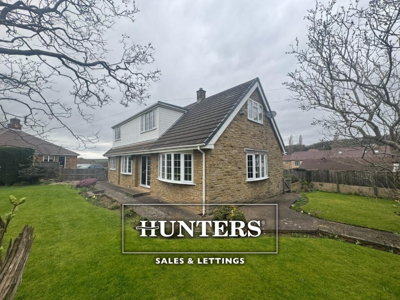
Browse 1 rental home to rent in Little Smeaton from local letting agents.
Three bedroom properties represent a significant portion of the Little Smeaton housing market, offering space for families with multiple reception rooms and gardens in many cases. Browse detached, semi-detached, and terraced options ranging from period character homes to contemporary developments.
The market here is best described as small, selective, and lightly traded. homedata.co.uk records show just 2 sales in the last 12 months, while 2025 saw 3 detached home sales and 1 semi-detached sale in the village. Prices have also moved sharply, with one set of data showing a 23% annual rise and another showing sold prices up 13.6% over the last 12 months. That kind of movement usually points to very limited stock, where one or two transactions can shift the picture quickly.
Detached homes dominate the available sale data, which is useful for renters because it suggests what sort of homes are most likely to return to the market. We did not find specific averages for terraced houses or flats in the supplied research, which usually means the sample is too small to draw a firm conclusion. No active new-build developments were identified in Little Smeaton, so renters are more likely to see established homes, converted properties, or individual houses than modern estate-style builds. If you want to secure one of the better homes, a prepared budget and fast response time will help.

Little Smeaton is a genuinely small rural village, and the research supplied reflects that scale. The parish population was recorded at 283 in the 2011 Census, while the 2021 data set gives either 301 or 183, so the source material itself shows a discrepancy that is worth bearing in mind. For renters, that tiny population matters because it means the housing market is narrow and homes are often occupied for long stretches. You are not dealing with a large turnover village, so when something suitable appears it tends to attract attention quickly.
The village sits in the Went Valley, with the River Went flowing through it and separating it from Kirk Smeaton. That river setting gives the area a calm, green feel, but it also means flood awareness should be part of every viewing checklist. Little Smeaton also has several Grade II listed buildings, including Salutation Farmhouse, The Old Bridge, and a milepost north of Salutation Farmhouse, which tells you the settlement has deep roots. Listed structures in and around the village use materials such as ashlar, Welsh slate, red brick, and tile roofs, so older character homes are a real part of the local fabric.
The supplied research does not give a verified list of local schools, which is common for a parish of this size. That makes catchment checks especially important, because a small rural address can sit on the edge of several school areas. With the parish population still only a few hundred people, families usually need to widen their search beyond the village itself and map the daily route before they sign anything. I would always check North Yorkshire Council admissions guidance against the exact postcode rather than relying on a village name alone.
For parents, the strongest rental choices are usually the homes that work on the school run as well as the work commute. Ask about walking routes, bus availability, safe parking for drop-off, and whether the property has enough storage for bikes, prams, and school bags. If you are planning for older children, look at sixth-form and college access as part of the same decision, because rural living can add real travel time later in the day. A good home in Little Smeaton should make the routine manageable, not just picturesque.

Transport here is shaped by the village’s rural setting, so most residents will rely on driving for the bulk of day-to-day travel. That is not a weakness, but it does mean you should test your commute carefully before you commit to a tenancy, especially if you travel at peak times. The wider area links into the road network around North Yorkshire and nearby towns, and that gives you access to rail services once you reach the larger stations. In a place this small, the quality of the last mile matters just as much as the station itself.
Bus frequency is often the deciding factor for non-drivers, and rural services can be less flexible than town routes. If you depend on public transport, look at first and last buses, Sunday services, and school-time timetables rather than just weekday daytime frequency. Parking is usually less intense than in a town centre, but older lanes and listed-property fronts can still make manoeuvring awkward. A viewing should include the driveway, turning space, and where visitors can park without blocking access.
Cycling can work well for local errands and leisure rides, although the road network and valley setting mean some routes will suit confident riders more than beginners. I would also ask about broadband, mobile signal, and delivery access, because village life often depends on those details more than people expect. Commuters who split their time between home and office should check how the route feels in bad weather, not just on a sunny weekday. Our advice is simple: test the journey, check the parking, and make sure the routine feels realistic before you fall in love with the setting.
Start with the local market, the River Went flood context, and the kind of older homes that are most likely to appear. Because stock is limited, you should compare every property against your budget and commute before you book a viewing.
Arrange a rental budget agreement in principle before you start viewing, so you can move quickly when the right home appears. In a small village market, being financially ready can make the difference between securing a place and missing out.
Ask about heating, drainage, parking, broadband, mobile reception, and any flood history the landlord or agent can confirm. For older homes, request details on maintenance, roof age, and whether the property has been renovated or altered.
Read the tenancy agreement carefully, check the deposit terms, and make sure the inventory matches the actual condition of the home. If the property is a converted flat or leasehold unit, ask about service charges, communal maintenance, and any restrictions that may affect you.
Photograph the rooms on day one, test the appliances, and record meter readings straight away. Keep copies of your inventory and agreement, because village lets can be informally marketed but the legal paperwork still needs to be precise.
Older rural homes can be lovely to live in, but they need a careful inspection. The village sits in the Went Valley, so river-related flood risk should be part of your decision, especially if the property is close to low-lying ground or has a history of damp. Ask about drainage, guttering, external ground levels, and any previous insurance issues, because those details tell you more than the paintwork ever will. A home that looks charming from the lane still needs to work in heavy rain.
Listed-building status is another local feature to keep in mind, because several properties and landmarks in Little Smeaton are Grade II listed. If you are renting a period home, some changes may already be fixed by heritage rules, which can affect windows, heating upgrades, or external alterations. That does not make the home a problem, but it does mean repairs and improvements may follow a slower, more formal route. Ask what the landlord can and cannot change before you assume the property will be easy to adapt.
Flats are not the main story here, yet if a converted flat or leasehold unit appears, you should check service charges, ground rent, and the remaining lease term. Those costs matter even to renters because they affect the landlord’s outgoings and can shape future rent reviews. I would also look closely at storage, heating efficiency, and access in winter, since village properties often trade convenience for character. In Little Smeaton, a good let is usually the one that balances charm with practical everyday living.
The supplied research does not give a verified average asking rent for Little Smeaton, which is typical for a very small rural parish with limited stock. To understand the local market, I would use homedata.co.uk figures as a guide to the type of housing available, where the average house price over the last year was £479,875, detached homes averaged £548,167, and semis averaged £275,000. That tells you the village is not a low-cost rental pocket, even if individual lets vary widely. For current asking rents, check live availability and compare the home’s size, condition, and location in the village.
Council tax bands vary from property to property, and Little Smeaton falls under North Yorkshire Council. Because the village has a mix of older detached homes and smaller semi-detached properties, the band can vary a lot from one address to another. Check the exact property before you set your monthly budget, especially if you are comparing a period house with a converted or more modern home. The difference between bands can be meaningful in a small market like this.
The supplied research does not verify a specific school list, so I would avoid making assumptions based only on the village name. The best choice for your family will depend on the exact address, catchment boundaries, and transport links, which can change quickly in a rural parish. Because Little Smeaton is so small, parents often need to widen the search to nearby schools and then check admissions carefully. North Yorkshire Council’s admissions guidance is the right starting point for any family planning a move here.
Little Smeaton is more car-reliant than a town or city, which is normal for a small rural village. Bus and rail access are best checked from the exact address, because last-mile travel can matter as much as the main route itself. If you commute regularly, test the journey at the time you would normally travel and check parking at both ends. For many renters, the real question is not just whether transport exists, but whether it feels practical week after week.
It can be a very appealing place to rent if you want a quiet village setting with older homes and countryside around you. The housing market is thin, though, with only 2 sales in the last 12 months and no active new-build developments identified in the research. That means good homes can be harder to find, but they often have the sort of character that renters in rural North Yorkshire value. I would say it suits people who are happy to plan ahead and who prefer space and setting over constant convenience.
For a rental, you should usually budget for a security deposit and your first month’s rent, plus any move-in costs set out in the tenancy agreement. If you later decide to buy in the area instead, the current 2024-25 stamp duty thresholds are 0% up to £250,000, 5% from £250,000 to £925,000, 10% from £925,000 to £1.5 million, and 12% above £1.5 million. First-time buyer relief is 0% up to £425,000 and 5% from £425,000 to £625,000. I mention that because some movers compare renting and buying at the same time, especially in a village with low turnover.
Yes, definitely. Little Smeaton sits in the Went Valley and the River Went flows through the village, so river-related flood awareness should be part of any viewing. Ask about past flooding, drainage, insurance history, and whether the property has ever needed remedial work after heavy rain. Even if a home looks elevated or well kept, the surrounding ground and access routes matter just as much.
From 4.5%
Compare rental budget rates and get a clearer monthly budget before you book viewings
From £499
Expert support to handle your tenant checks and move-in paperwork
From £350
Useful for older rural homes if you are also thinking about a future purchase
From £60
Check energy efficiency and understand likely heating costs before you commit
Renting in Little Smeaton is less about flashy letting fees and more about being ready for the real monthly costs of a rural home. A security deposit, the first month’s rent, utilities, council tax, and travel costs can add up quickly, especially if the property is older and less energy efficient. That is why I always recommend a rental budget agreement in principle before you start arranging viewings. It gives you a clean ceiling to work from and helps you focus on homes that genuinely fit.
Older village homes can also bring extra running costs, even when the asking rent looks reasonable. Heating demand, broadband solutions, and car use all matter here, because rural convenience is different from town-centre convenience. If a property is leasehold or part of a converted building, ask about service charges and any restrictions that could affect your monthly outgoings. Those details are easy to miss at first glance, yet they shape the true cost of living in the village.
Some movers compare renting with buying at the same time, and that is where the current stamp duty thresholds become useful context. For 2024-25, the rates are 0% up to £250,000, 5% from £250,000 to £925,000, 10% from £925,000 to £1.5 million, and 12% above £1.5 million, while first-time buyer relief is 0% up to £425,000 and 5% from £425,000 to £625,000. Little Smeaton’s sold prices mean those thresholds may matter if you decide the right rural home is better bought than rented. Until then, focus on a clear budget, a careful viewing checklist, and a fast application when the right tenancy appears.
Properties to Rent In London

Properties to Rent In Plymouth

Properties to Rent In Liverpool

Properties to Rent In Glasgow

Properties to Rent In Sheffield

Properties to Rent In Edinburgh

Properties to Rent In Coventry

Properties to Rent In Bradford

Properties to Rent In Manchester

Properties to Rent In Birmingham

Properties to Rent In Bristol

Properties to Rent In Oxford

Properties to Rent In Leicester

Properties to Rent In Newcastle

Properties to Rent In Leeds

Properties to Rent In Southampton

Properties to Rent In Cardiff

Properties to Rent In Nottingham

Properties to Rent In Norwich

Properties to Rent In Brighton

Properties to Rent In Derby

Properties to Rent In Portsmouth

Properties to Rent In Northampton

Properties to Rent In Milton Keynes

Properties to Rent In Bournemouth

Properties to Rent In Bolton

Properties to Rent In Swansea

Properties to Rent In Swindon

Properties to Rent In Peterborough

Properties to Rent In Wolverhampton

Enter your details to see if this property is within your budget.
Loans, cards, car finance
Estimated property budget
Borrowing + deposit
You could borrow between
Typical borrowing
Monthly repayment
Est. at 4.5%
Loan-to-value
This is an estimate only. Your actual budget may vary depending on interest rates, credit history, and personal circumstances. For an accurate affordability assessment, speak to one of our free mortgage advisors.
This calculator provides estimates for illustrative purposes only and does not constitute financial advice. Your home may be repossessed if you do not keep up repayments on your mortgage. Estimates based on 4.5% interest rate, repayment mortgage. Actual rates depend on your circumstances.
Homemove is a trading name of HM Haus Group Ltd (Company No. 13873779, registered in England & Wales). Homemove Mortgages Ltd (Company No. 15947693) is an Appointed Representative of TMG Direct Limited, trading as TMG Mortgage Network, which is authorised and regulated by the Financial Conduct Authority (FRN 786245). Homemove Mortgages Ltd is entered on the FCA Register as an Appointed Representative (FRN 1022429). You can check registrations at NewRegister or by calling 0800 111 6768.

We use cookies to show you personalised content and improve your experience of our website. Find out more in our Privacy policy and Cookie policy.