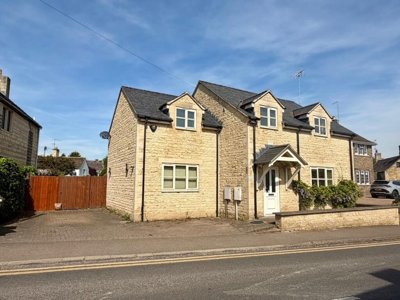
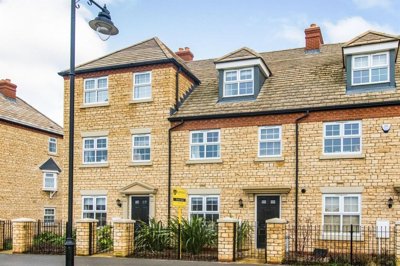
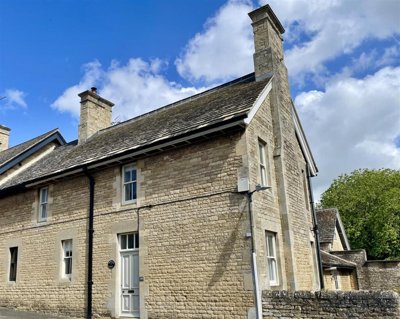
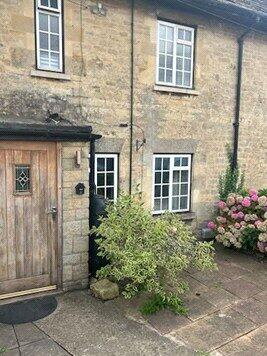
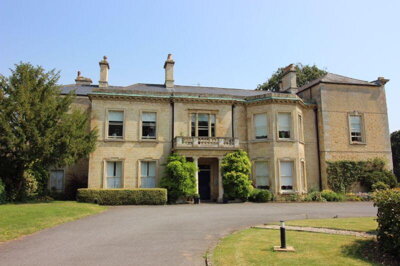
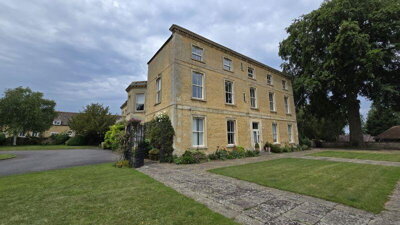
Browse 7 rental homes to rent in Ketton, Rutland from local letting agents.
£0/m
0
0
0
Source: home.co.uk
Ketton's rental market draws a broad mix of tenants, from young professionals and couples to families and retirees. Detailed rental figures for the village itself are thin on the ground, so we use the sales market as the best guide for what renters can expect. As of early 2026, overall average house prices in Ketton sit at approximately £337,300, with detached homes averaging £437,800, semi-detached properties at £277,000, terraced homes at £222,000, and flats at £145,000. Over the last twelve months, prices have eased by around 0.8%, which points to a steady market and decent value for anyone planning to stay put for longer.
Two new-build schemes add useful choice to Ketton's housing stock. Ketton Grange, by Davidsons Homes on Empingham Road, includes 2, 3, 4, and 5-bedroom homes priced from £299,995 to £629,995. The Maltings, by Larkfleet Homes on Pit Lane, offers the same bedroom range at broadly similar prices. For renters, these developments bring in energy-efficient homes with modern fittings, while the village's older stone houses keep the character side of the market alive. That mix matters, because it gives people a real decision between heritage and convenience.
The PE9 postcode area covering Ketton recorded 102 property sales in the twelve months leading to January 2026, which suggests a market that keeps moving without feeling overheated. We often use that sales activity as a yardstick for rental demand, since rents in settled villages such as Ketton tend to track property values over time. For current availability, home.co.uk gives the clearest picture of what is on offer and at what price, because rents can shift quite a lot depending on condition, size, and where the home sits in the village.

Ketton captures the feel of a rural English village very neatly, with open Rutland countryside all around and a calm pace of life. Its name comes from Ketton Stone, the local Jurassic limestone that appears across the village, from historic cottages to the church itself. That geological thread gives the place a strong visual identity, and even newer homes often echo it with sympathetic stone detailing. In the centre, the historic fabric still dominates, and the many Grade II listed buildings add to the sense of long-established charm that renters often warm to quickly.
Ketton Cement Works is a major local employer and has been part of the area for many years. Beyond that, the village has the sort of practical amenities people need day to day, a primary school, village shop, post office, and several pubs that regularly host community events and gatherings. There is plenty to explore on foot or by bike too, with public footpaths running through fields and woodland and showing off Rutland's countryside through every season. Stamford and Oakham are close enough for bigger shops, restaurants, and entertainment, so residents can dip into town life and still come home to village quiet.
Underneath Ketton, and much of Rutland, lies Jurassic limestone from the Great Oolite Group, the same formation that includes the well-known Ketton Stone used in buildings for centuries. That generally gives the area stable ground conditions, although some superficial clay deposits mean a few spots can see minor movement. Homes close to the River Chater enjoy a lovely setting beside the waterway, and the river's proximity carries a low flood risk rather than a major one. It is a strong combination, solid geology, countryside views, and the basics needed for comfortable village living.

Education in Ketton centres on Ketton Church of England Primary School, which serves local children of primary school age. Because it sits in the village, travel time is minimal for families. For secondary education, pupils usually travel to schools in nearby towns, with Stamford and Oakham among the main options. Renting families should still check school allocations and admissions criteria carefully before they move, as those details can shape day-to-day life more than people expect.
Rutland has 11 schools within its area, so even a small county still gives families some choice. Ketton Church of England Primary School covers the village and the surrounding rural area, and current Ofsted ratings and inspection reports can be found on the official Ofsted website. It is wise to look at the latest performance data and the admissions catchment areas before committing to a move, because those boundaries can make a real difference. Smaller schools here are often praised for their close-knit feel, with teachers and staff usually knowing children and parents well.
Older children who need secondary places have several choices within a sensible travelling distance. Stamford has both state and independent schools, while Oakham School provides secondary education within Rutland itself. The A1 makes travel between places fairly straightforward, and many parents find the journey times manageable because Ketton sits so centrally in the area. As ever, the exact school a child can attend depends on the address, so it is worth confirming allocations before renting in Ketton.

Ketton benefits from transport links that make commuting to larger employment centres realistic, even without a city address. The village lies between Stamford and Oakham, both of which have regular bus services linking Ketton into wider transport networks. For commuters heading to Peterborough, Leicester, or Nottingham, those nearby towns also provide rail connections that open up the East Midlands and beyond. Stamford gives access to the A1 motorway, around 10 miles away, and that route runs north to Newcastle, Leeds, and Sheffield, and south towards London and Birmingham.
Road travel around Rutland is usually uncomplicated, and the county's small size means most places are 30 to 40 minutes away by car. Ketton's position makes the main towns easy to reach, while the countryside around it gives pleasant driving routes for days off. Parking in the village is generally fine for residents, though spaces can tighten up when village events are on. For anyone working remotely, digital connectivity is improving steadily, which helps make home working more practical.
In rural villages, public transport always needs a little more planning than it does in towns and cities, so we recommend checking the latest bus timetables for Ketton before you rely on them. Services to Stamford and Oakham usually run several times daily, although evenings and weekends are often thinner on the ground than weekdays. For people who commute regularly to offices elsewhere, the A1 at Stamford gives drivers flexibility, while Stamford and Peterborough rail stations offer sensible alternatives for train travel.

We suggest starting with home.co.uk to see what is currently available to rent in Ketton. Looking through the choices, from traditional stone cottages to modern new-build homes at Ketton Grange and The Maltings, helps us set realistic expectations and narrow down what suits best. It is worth noting the property types, where they sit in the village, and the rental prices being asked, because those details shape the search quickly.
Before we book viewings, we ask for a rental budget agreement in principle. It shows landlords and estate agents that the finances are in place and that the rent can be met without difficulty. It also gives us a clear spending limit for the Ketton market. Having that paper ready tends to speed things up once a property starts to look right.
Once suitable homes have been identified, we arrange viewings in person. During the visit, we look closely at condition, proximity to village amenities, the surrounding neighbourhood, and any signs of maintenance work that may need doing after move-in. In Ketton's Conservation Area, we also check which external features may fall under planning restrictions.
Before anything is signed, we go through the tenancy agreement line by line. That means checking the length of the tenancy, the rent amount and payment schedule, the deposit amount and protection scheme, and the responsibilities for maintenance and repairs. In Ketton, where many homes are older stone buildings, we also pay attention to clauses about historic features and any limits on alterations.
References, proof of identity, and sometimes a credit check will usually be needed by the chosen estate agent or landlord. Once those checks are satisfactory, the tenancy agreement is signed, setting out the terms, duration, rent amount, and the tenant's responsibilities in Ketton. We always advise keeping copies of every document for the records.
Move-in day needs a bit of coordination with the landlord or agent, so keys, meter readings, and any other paperwork are ready for the new rental property in Ketton. We also carry out a full inventory check at the start of the tenancy, noting the condition of fixtures and fittings carefully so there is a clear record when it comes time to leave.
Renting in Ketton means keeping a few local points in mind that may not be obvious to anyone new to village life or the area market. Homes in the Conservation Area are subject to planning restrictions on exterior alterations, so tenants should know what needs permission before they commit. Ketton limestone gives many properties real character, but it also means maintenance can differ from standard brick-built homes, with lime mortar pointing and stone repairs often needing specialist tradespeople.
Flood risk is something to think about for certain Ketton properties, especially those in lower-lying parts of the village or close to the River Chater. The village is not exposed to major river flooding, but heavy rain can cause surface water to collect in some spots. We always suggest asking about any historical flooding issues and considering suitable insurance. For homes with gardens, the Jurassic limestone geology can affect drainage and landscaping, while mature tree roots can occasionally affect foundations where clay deposits sit near the surface.
Many of Ketton's older homes are built in stone, and that means damp, outdated electrics, and roof condition deserve a proper look. Most landlords keep their properties in good order, but an older house will not always match the standards of newer construction. Ask about the age of the wiring, the roof's condition, and any recent repairs or improvements when viewing. By contrast, newer rental homes at Ketton Grange or The Maltings usually come with contemporary fittings and energy-efficient specifications that reflect modern building standards.
Viewings are also the time to think beyond the monthly rent. Council tax bands can run from A to H, depending on the property value, and energy efficiency varies a lot between older stone homes and modern builds. Properties with solid walls behave differently from cavity-wall construction, so heating bills may be higher in period homes over the winter. Those practical costs matter just as much as the rent itself.

Public rental data for Ketton is not recorded in detail, but rents in Rutland villages tend to reflect the value of the homes around them. With overall average house prices around £337,300, terraced properties at £222,000, and flats at £145,000, monthly rents for standard homes might sit between £800 and £1,500 depending on size, condition, and specification. Newer homes at Ketton Grange or The Maltings, and larger properties in better positions, usually command more. For the latest pricing, home.co.uk is the place we would check, because its Ketton listings are updated daily with live market figures.
All properties in Ketton fall under Rutland County Council, and council tax bands vary from home to home. The scale runs from A for lower-value properties up to H for the most valuable houses. Because Ketton has a mix of traditional stone buildings and newer homes, the village contains properties across several bands. On the average value data, many homes sit in bands C through E. We would always ask the landlord or agent for the exact band, as it is part of the ongoing cost of renting here.
Ketton Church of England Primary School serves the village and surrounding area, giving primary education for local children. Its village setting and community focus are a real plus, and there are 11 schools across Rutland overall. For secondary education, pupils usually move on to schools in Stamford or Oakham, with several options within a reasonable travelling distance. Parents should still check current Ofsted ratings and admissions catchment areas, as those can affect access. Rutland's smaller schools are often appreciated for their close attention to each child.
Local buses connect Ketton with Stamford and Oakham, and from there passengers can pick up further public transport, including rail links. Stamford also gives access to the A1 motorway, around 10 miles away, which keeps road travel practical for many journeys. Ketton has no railway station of its own, but Rutland is compact enough that bus services can still work well for daily use. Anyone relying on public transport should check the current timetables for the routes serving Ketton, because evening and weekend frequencies can be limited.
For renters after a quiet village setting with strong links to larger towns, Ketton offers a very good quality of life. There is a genuine community feel here, with local amenities such as a shop, post office, and pubs, while the surrounding Rutland countryside gives plenty of walking and cycling routes. The housing mix ranges from traditional stone cottages to modern new-build homes, so different tastes and budgets are well catered for. Ketton Cement Works brings local jobs into the picture, and Stamford and Oakham broaden the employment options further. It is a strong choice for anyone who wants rural charm without feeling cut off.
In England, standard tenancy deposits are capped at five weeks' rent, calculated based on your annual rental value. In Ketton, many landlords ask for a deposit equal to one month's rent as security, and that money is usually held in a government-approved tenancy deposit scheme. Tenant referencing fees may still apply, typically covering credit checks and employment verification. Some agents charge administration fees for setting up the tenancy, although tenant fee legislation has removed most of the old charges. First-time renters should factor in moving costs, the first rent payment, and possibly contents insurance as well as the deposit.
Some parts of Ketton do carry a surface water flooding risk, especially in lower-lying areas of the village. The River Chater runs nearby, but that means the immediate area has a low river flooding risk. When we view properties, we ask the landlord or agent about any historical flooding and check whether the home sits in a flood risk zone. Standard home insurance policies usually cover flooding, but tenants should still confirm the cover is suitable before signing, particularly near the river or in known low-lying spots.
Ketton's housing stock is weighted towards detached homes, which make up 49.3% of the total, while semi-detached properties account for 26.8% and terraced homes for 18.2%. Flats and maisonettes represent around 5.7% of available properties. Renters can choose between traditional stone cottages in the Conservation Area, mid-century houses from the post-war years, and newer homes from developments such as Ketton Grange and The Maltings. That spread means there is something here for a range of budgets and preferences.
Keeping an eye on the costs of renting in Ketton helps prospective tenants plan properly and avoid nasty surprises. The initial outlay usually includes the first month's rent in advance and a security deposit, normally equal to five weeks' rent. That deposit is protected in a government-approved Tenancy Deposit Scheme, which gives both tenant and landlord a layer of protection during the tenancy. Rent is usually paid monthly in advance, though the exact method and timing can vary from one landlord to another.
There can be a few extra costs on top of the rent. These may include tenant referencing fees where they still apply, inventory check fees to record the property's condition at the start and end of the tenancy, and sometimes a small administrative charge for preparing the tenancy agreement. Since tenant fee legislation came in, most standard letting agent fees have gone, which has made the process more transparent. It is also sensible to budget for moving costs, furniture if the property is unfurnished, utility bills, council tax, internet services, and contents insurance to protect belongings during the tenancy.
Council tax is one of the bigger ongoing costs, and it depends on the property's band. In Ketton, homes range from council tax bands A through H, with lower-band properties attracting lower monthly bills. Energy costs can also vary a lot between older stone houses with solid walls and modern homes with cavity wall insulation. When we budget for a rental in Ketton, we always allow for the possibility of higher heating costs in winter in the older places, balanced against the character they bring.
Knowing how homes are built in Ketton makes viewings easier to read. The village is famous for Ketton Stone, the Jurassic limestone that appears in many traditional buildings. Older properties often use this stone in coursed or random rubble patterns, which gives the village its familiar look. Solid wall construction is common in these period homes, and that is very different from the cavity wall construction found in most post-1920s brick-built homes.
Mid-20th century homes in Ketton often come with brick and render finishes, which gives them a different feel from the older stone houses. Newer developments such as Ketton Grange on Empingham Road and The Maltings on Pit Lane show the village's more modern side, with contemporary construction, energy-efficient homes, cavity wall insulation, and double glazing. These homes usually need less maintenance than older stone properties and often have open-plan layouts that many modern renters prefer. When weighing up older against newer rentals, we would look closely at maintenance responsibilities, energy efficiency, and the character of the home.
Because a significant proportion of Ketton's housing stock is over 50 years old, renters should be ready for the sort of issues that can affect period homes. Damp from poor ventilation or failed damp-proof courses, roof problems such as slipped tiles or degraded pointing, and timber defects including woodworm or rot in roof structures and floor joists can all come up. Older homes may also have electrical systems or plumbing that fall short of current standards. Landlords are usually responsible for the structure and exterior, while tenants normally look after internal decoration and minor wear and tear.
Properties to Rent In London

Properties to Rent In Plymouth

Properties to Rent In Liverpool

Properties to Rent In Glasgow

Properties to Rent In Sheffield

Properties to Rent In Edinburgh

Properties to Rent In Coventry

Properties to Rent In Bradford

Properties to Rent In Manchester

Properties to Rent In Birmingham

Properties to Rent In Bristol

Properties to Rent In Oxford

Properties to Rent In Leicester

Properties to Rent In Newcastle

Properties to Rent In Leeds

Properties to Rent In Southampton

Properties to Rent In Cardiff

Properties to Rent In Nottingham

Properties to Rent In Norwich

Properties to Rent In Brighton

Properties to Rent In Derby

Properties to Rent In Portsmouth

Properties to Rent In Northampton

Properties to Rent In Milton Keynes

Properties to Rent In Bournemouth

Properties to Rent In Bolton

Properties to Rent In Swansea

Properties to Rent In Swindon

Properties to Rent In Peterborough

Properties to Rent In Wolverhampton

Enter your details to see if this property is within your budget.
Loans, cards, car finance
Estimated property budget
Borrowing + deposit
You could borrow between
Typical borrowing
Monthly repayment
Est. at 4.5%
Loan-to-value
This is an estimate only. Your actual budget may vary depending on interest rates, credit history, and personal circumstances. For an accurate affordability assessment, speak to one of our free mortgage advisors.
This calculator provides estimates for illustrative purposes only and does not constitute financial advice. Your home may be repossessed if you do not keep up repayments on your mortgage. Estimates based on 4.5% interest rate, repayment mortgage. Actual rates depend on your circumstances.
Homemove is a trading name of HM Haus Group Ltd (Company No. 13873779, registered in England & Wales). Homemove Mortgages Ltd (Company No. 15947693) is an Appointed Representative of TMG Direct Limited, trading as TMG Mortgage Network, which is authorised and regulated by the Financial Conduct Authority (FRN 786245). Homemove Mortgages Ltd is entered on the FCA Register as an Appointed Representative (FRN 1022429). You can check registrations at NewRegister or by calling 0800 111 6768.

We use cookies to show you personalised content and improve your experience of our website. Find out more in our Privacy policy and Cookie policy.