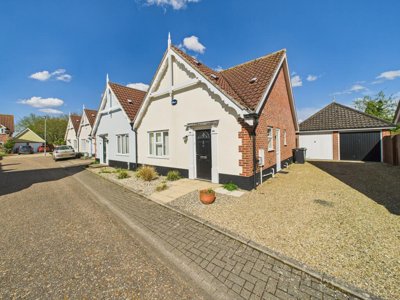
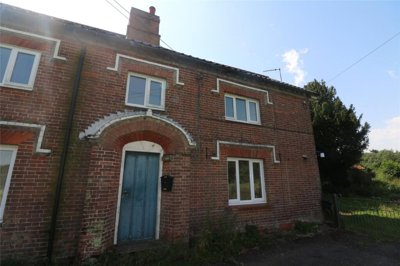
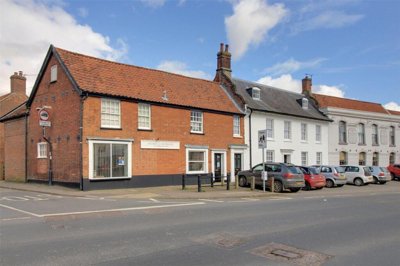
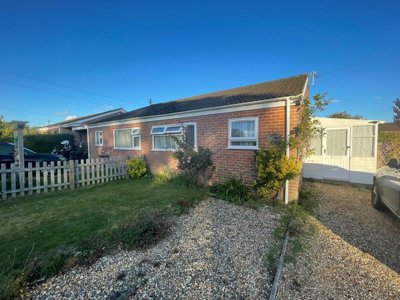
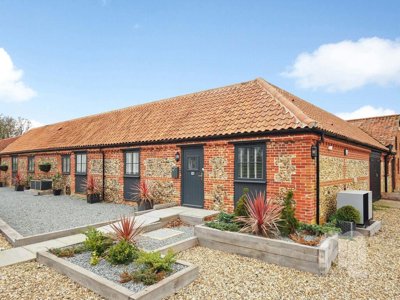
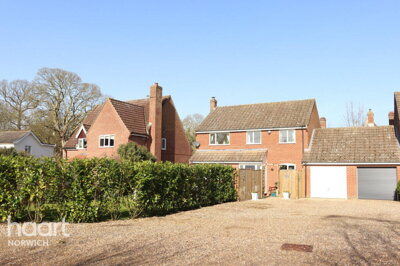
Browse 6 rental homes to rent in Hingham, South Norfolk from local letting agents.
£1,050/m
1
0
33
Source: home.co.uk
Source: home.co.uk
Bungalow
1 listings
Avg £1,050
Source: home.co.uk
Source: home.co.uk
2,543 (2021 Census)
Population
1,184
Households
73.7%
Home Ownership Rate
27.7%
Detached Properties
32.4%
Bungalows
100+
Conservation Area Buildings
For anyone sizing up the Hingham market, the sales picture gives useful rental context. homedata.co.uk records an average sold price of £344,353, while home.co.uk reports £347,763 over the past year, with home.co.uk putting the figure at £318,000 as of January 2026. Detached homes sit higher at approximately £386,354, while semi-detached properties average £277,500. Terraced homes in Hingham have achieved around £363,000 in recent sales, a premium that reflects the village's historic character. In practice, landlords often pitch rents against the capital value of the homes they hold.
Prices in Hingham have not stood still. home.co.uk listings data shows values rising 14% on the previous year, bringing them back to levels close to the 2023 peak of £347,682. Over the twelve months to January 2026, home.co.uk reports a 2.9% increase. The median house price also climbed by 49% between 2012 and 2021, moving from £174,500 to £260,000. That kind of long-run growth supports the rental market, and it helps explain why landlords can often ask strong rents in a village with easy reach of Norwich. For renters, the practical point is simple, good homes tend to move quickly in popular Norfolk villages.
Change may be coming to the local housing supply. In September 2025, Hingham Town Council considered a proposed development of 110 residential dwellings on land south of Norwich Road. If it proceeds, that scheme could widen rental choice in Hingham over the next few years. For now, though, renters are mostly choosing from the existing stock, which still covers a fair spread from period cottages to more modern family houses.

Hingham's look today owes a great deal to a fire in 1688. Much of the town was rebuilt through the Georgian era, and that upheaval left behind the streetscape people now come to see, red brick facades, white and pastel rendered buildings, and decorative gable ends. Around the centre, the Market Place and Bond Street still set the tone, with the Mansion House standing as a Grade II listed example of Georgian grandeur. The Fairland, Chapel Street, and Norwich Road complete the picture, giving the village a preserved Norfolk character that continues to draw people towards homes with some history to them.
Day-to-day life in Hingham is well covered locally. There is an industrial estate on Ironside Way supporting employment, alongside shops and businesses trading from older buildings in the centre. The village also has traditional pubs, a primary school, and regular local services. Step beyond the centre and the wider setting quickly takes over, with scenic walking and cycling routes across the Norfolk countryside. Hingham sits on the chalky glacial till plateau typical of this part of South Norfolk, and the surrounding farmland and country lanes give plenty of scope for rural exploring.
Hingham sits within the wider Central Norfolk Housing Market Area, tied into employment patterns across South Norfolk, North Norfolk, Breckland, Broadland, and Norwich City Council areas. A good number of residents now commute into Norwich, balancing village life with city-based work. That pattern feeds directly into the rental market. Homes with decent parking and straightforward access to the A47 and A11 tend to be especially attractive for people travelling in and out of Norwich.

Families renting here have a straightforward starting point for primary education, with the local primary school serving Hingham and the surrounding catchment area. Secondary options are usually in nearby towns, and bus services link the village with schools across South Norfolk, including Wymondham, Dereham, and Attleborough. The area falls under the Norfolk local education authority, which manages admissions and catchment arrangements across the district. Before choosing a property, we recommend checking current catchment boundaries and admission policies directly with Norfolk County Council.
There is more to Hingham's educational story than just the local school run. Families looking at specialist secondary places, including grammar schools, need to account for the relevant selection assessment as well as distance criteria from Norwich. For older students, further education colleges in Norwich and Wymondham offer sixth form and college-level courses that can be reached by public transport from Hingham. University of East Anglia in Norwich also keeps higher education within a reasonable commuting distance for older children and young adults living in the village.
School travel is one of the more practical things to weigh up before signing for a rental in Hingham. Homes on the eastern side of the village can suit routes towards Attleborough and the A11 corridor, while addresses on the western side may work better for schools in Wymondham. It is also worth looking at how close a property sits to established school bus routes. If needed, we can advise on likely locations in relation to school transport options.

For most people, commuting from Hingham means heading towards Norwich, approximately 12 miles away. Road access is one of the village's selling points, with links to the A47 and A11 for routes into Norwich and onwards towards Cambridge. Buses do run between Hingham and nearby towns, but services are usually less frequent than on urban routes. Because of that, many working residents drive, so parking and general car practicality are well worth raising with landlords when viewing rental homes.
Rail travel generally starts at Norwich railway station. From there, London Liverpool Street is reachable in approximately two hours, and there are regular services through the day plus regional connections across East Anglia. That makes train commuting workable for some residents, rather than relying entirely on the car. Anyone travelling to Cambridge will usually look to the A11, which gives a direct road route, though the journey is longer than the run into Norwich. We always suggest checking the day-to-day commute before committing to a tenancy.
Cycling around Hingham can be rewarding, but Norfolk's rural lanes do need a bit of care because road surfaces and traffic volumes vary. The village's inland position means there is no coastal flood risk, although surface water flooding has historically affected roads including Dereham Road and Norwich Road during heavy rainfall. The local geology matters here too, because the chalky glacial till influences drainage across the village. On lower-lying ground, some properties can be more prone to surface water pooling after a downpour.

Before booking viewings, it helps to spend some time in Hingham itself. A walk around the village usually gives a clearer sense of the atmosphere, the practical reach of local amenities, and the journey to work than any listing ever will. We would also shortlist with the basics in mind, parking, broadband speeds, and flood risk on particular streets. If possible, visit at different times of day to judge traffic and noise, then talk to existing residents about how their part of the village feels to live in.
Get a rental budget agreement in principle sorted first. It shows landlords and agents that the finances stack up, which can matter a lot if more than one renter is chasing the same property. In busy markets, that preparation can make the difference. Having bank statements, payslips, and references ready before viewings also speeds the application process considerably.
Once we start arranging viewings through local letting agents or online listings, it pays to stay methodical. Take notes on condition, flag any maintenance points, and ask about tenancy terms, deposit amounts, and included fixtures at every property. In Hingham's Conservation Area, period homes need a little extra care, so it is sensible to ask whether any planning restrictions could affect how the property can be used or altered during the tenancy.
Good rentals do not usually wait around for long, so once a suitable property comes up, the referencing application should go in promptly. Most landlords will want credit checks, employment verification, and landlord references from previous tenancies. Having the paperwork ready keeps things moving. It also puts us in a stronger position against slower applicants where competition is tight.
After an application is accepted, the next steps are the tenancy agreement and the deposit, capped at five weeks rent under the Tenant Fees Act 2019. An inventory check at move-in records the condition of the property and protects both sides. One date matters here, 30 days. Written confirmation of the deposit protection scheme being used should be provided within 30 days of payment.
There is a small flurry of admin before move-in, utility transfers, contents insurance, and mail redirection all need sorting before the tenancy start date. On arrival, carry out a careful inspection and report any discrepancies to the landlord within the agreed timeframe, typically seven days. In older Hingham homes, that first check can be particularly important. If a tenancy is likely to be long term, and especially where the property is being rented as a condition of sale, a RICS Level 2 Survey may also be worth arranging before committing.
Older homes are a big part of Hingham's appeal, but they do come with their own quirks. The village's Georgian heritage and Conservation Area designation mean many properties still have traditional construction, solid brick walls without modern damp-proof courses, clay pantile roofs that need periodic maintenance, and vertically proportioned sash windows. Those details add character, though they can call for a different maintenance approach from a newer house or flat. At viewing stage, we would ask about recent upkeep, the age of the roof covering, and any known history of damp or condensation.
Ground conditions are another point worth having in mind. Hingham sits on a chalky glacial till plateau with clay-rich soils that can be prone to shrink-swell behaviour. In dry spells or after heavy rainfall, that can mean some ground movement, which may affect the foundations of older buildings. It is a broad local characteristic rather than a warning about every property, but homes with large trees nearby or lower-lying plots can be more exposed. A RICS Level 2 Survey can help pick up signs of subsidence or structural movement before a tenancy is agreed.
Not every part of Hingham carries the same flood profile. Surface water risk is known to affect some areas, especially around Seamere Road and homes near Norwich Road and Dereham Road. Hingham Town Council records also note local flood issues on the adjoining site to The Hops off Norwich Road, with high risk from surface water, and this has historically contributed to flooding of listed buildings and Seamere Road. Most of the village still falls within Flood Zone 1, the lowest river and sea flood risk category, but the history is specific enough that property choice and insurance should be checked carefully. In the Conservation Area, planning restrictions may also limit alterations or improvements, so we would clear up what is and is not allowed with the landlord before moving ahead.

Exact rental evidence for Hingham usually means speaking directly to local letting agents, because the research here centred on sales values rather than rents. Using comparable homes in South Norfolk and an average sold price of approximately £344,000 as a guide, two-bedroom properties are likely to rent from around £750 to £950 per month. Larger family homes may reach £1,100 to £1,400 depending on condition and specification. Three and four-bedroom detached houses tend to achieve the strongest rents, especially where there are gardens and off-road parking on streets such as The Fairland and Chapel Street. For current availability, we would go straight to local agents.
For council tax, Hingham falls under South Norfolk Council. Bands run from A to H, and many Georgian and interwar homes are typically assessed in bands B to E. The exact band depends on the Valuation Office Agency assessment, with period properties around Market Place and Bond Street often sitting in the middle ranges because of their historic character and sought-after setting. It is always sensible to ask landlords or agents for the confirmed band during enquiries, as council tax forms part of the real monthly cost of renting.
Schooling remains one of Hingham's stronger practical draws for families. The village has a local primary school serving the immediate community, with good Ofsted ratings for Key Stage 1 and Key Stage 2. For secondary education, families generally look to Wymondham, including Wymondham College, Dereham, and Attleborough, all accessible by school transport. Norfolk uses a co-ordinated admissions scheme, so catchment depends on where a family lives and what capacity is available. Anyone considering grammar school routes should also factor in the selection assessment centres in Norwich and the distance criteria attached to the relevant school.
Public transport is available, though it is not usually the main reason people choose Hingham. Bus services link the village with Norwich and nearby towns, but frequencies are lighter than in more urban areas. The bus to Norwich runs several times daily, while weekend services can be particularly sparse. That is why many residents find private vehicle ownership the practical option. For longer-distance travel, Norwich railway station provides mainline services to London Liverpool Street in approximately two hours, along with regional routes across East Anglia, so parking at a rental property is often high on the checklist for day-to-day commuting.
What Hingham offers is a mix that still feels quite hard to fake, historic character, a recognisable community feel, and workable access to Norwich for city-based jobs. The home ownership rate of 73.7% points to strong local demand, which can translate into a tighter rental market and fewer available homes than in larger towns. Even so, the village covers the essentials, with shops, traditional pubs, and a primary school all in place. For renters who want rural Norfolk living without being cut off from urban services, that balance can be a real draw. The Conservation Area designation also helps preserve the character that many people come here for.
Deposit rules are set quite clearly under the Tenant Fees Act 2019. For annual rentals below £50,000, the cap is five weeks rent, so on a property at £900 per month the maximum deposit would be £2,072. That deposit must go into a government-approved scheme, Tenancy Deposit Protection, within 30 days of receipt, and written information should confirm which scheme is holding the money. Holding deposits are capped at one week's rent. Permitted payments cover rent, council tax, utilities where agreed, and reasonable replacement keys or security device costs. Before paying anything, we would ask for a full breakdown from the letting agent and written confirmation of what is included.
Surveys are usually associated with buying, but they can still be useful for a tenancy, especially in an older place. In Hingham, with its Georgian heritage and stock of period homes built with solid walls and other traditional methods, a RICS Level 2 Survey can help flag damp, roof defects, or structural cracking before a long-term commitment is made. Local RICS surveyors in Norfolk offer Level 2 Surveys starting from around £375. For anyone planning to stay several years, or taking on a property that already shows signs of age or patchy maintenance, that cost may be money well spent.
National fee rules apply in Hingham just as they do elsewhere. Under the Tenant Fees Act 2019, security deposits are capped at five weeks rent where the annual rent is below £50,000, which means a home renting at £900 per month would have a maximum deposit of £2,072. The landlord must protect that sum in a government-approved scheme within 30 days of receipt, and details of the scheme should be provided. There is also prescribed information that has to be given, including contact details for the protection scheme and the process for resolving disputes.
Moving into a first rental usually costs more than just the deposit. There is often one month of rent to pay in advance, plus moving costs and any agency fees if applicable. Renting budgets typically range from 4.5% depending on provider, which can be useful to keep in mind for anyone hoping to buy locally later on and wanting a sense of what they could borrow before committing to a tenancy. Energy Performance Certificates are compulsory for rental homes, and even though landlords normally arrange them, the rating is still worth checking because it gives a clue to likely fuel costs. In Hingham's Conservation Area, many older properties have solid brick walls and single-glazed windows, so insulation can be weaker than in newer builds, with a noticeable effect on comfort and running costs.
Build the wider moving budget before committing. Council tax will depend on the South Norfolk Council band for the property, and contents insurance is sensible in almost any tenancy if belongings need protecting. There may also be setup costs for gas, electricity, and broadband, depending on the home, and removal vans or moving firms should be factored in as well. In Hingham, older period houses can cost more to heat through Norfolk winters because traditional construction is still common across the village.
From 4.5%
Work out what the monthly budget can comfortably cover before searching for rental properties in Hingham.
From £25
Get referencing lined up early so the rental application is stronger once the property hunt begins.
From £375
On older Hingham properties, think about a survey before agreeing the tenancy so any issues come to light first.
From £85
Check the energy rating on each rental property to get a clearer idea of likely heating costs.
Properties to Rent In London

Properties to Rent In Plymouth

Properties to Rent In Liverpool

Properties to Rent In Glasgow

Properties to Rent In Sheffield

Properties to Rent In Edinburgh

Properties to Rent In Coventry

Properties to Rent In Bradford

Properties to Rent In Manchester

Properties to Rent In Birmingham

Properties to Rent In Bristol

Properties to Rent In Oxford

Properties to Rent In Leicester

Properties to Rent In Newcastle

Properties to Rent In Leeds

Properties to Rent In Southampton

Properties to Rent In Cardiff

Properties to Rent In Nottingham

Properties to Rent In Norwich

Properties to Rent In Brighton

Properties to Rent In Derby

Properties to Rent In Portsmouth

Properties to Rent In Northampton

Properties to Rent In Milton Keynes

Properties to Rent In Bournemouth

Properties to Rent In Bolton

Properties to Rent In Swansea

Properties to Rent In Swindon

Properties to Rent In Peterborough

Properties to Rent In Wolverhampton

Enter your details to see if this property is within your budget.
Loans, cards, car finance
Estimated property budget
Borrowing + deposit
You could borrow between
Typical borrowing
Monthly repayment
Est. at 4.5%
Loan-to-value
This is an estimate only. Your actual budget may vary depending on interest rates, credit history, and personal circumstances. For an accurate affordability assessment, speak to one of our free mortgage advisors.
This calculator provides estimates for illustrative purposes only and does not constitute financial advice. Your home may be repossessed if you do not keep up repayments on your mortgage. Estimates based on 4.5% interest rate, repayment mortgage. Actual rates depend on your circumstances.
Homemove is a trading name of HM Haus Group Ltd (Company No. 13873779, registered in England & Wales). Homemove Mortgages Ltd (Company No. 15947693) is an Appointed Representative of TMG Direct Limited, trading as TMG Mortgage Network, which is authorised and regulated by the Financial Conduct Authority (FRN 786245). Homemove Mortgages Ltd is entered on the FCA Register as an Appointed Representative (FRN 1022429). You can check registrations at NewRegister or by calling 0800 111 6768.

We use cookies to show you personalised content and improve your experience of our website. Find out more in our Privacy policy and Cookie policy.