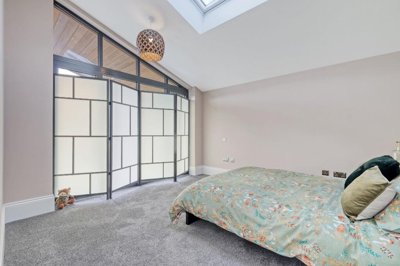
Browse 1 rental home to rent in High Easter from local letting agents.
The larger property sector typically features multiple bathrooms, substantial reception space, and private gardens or off-street parking. Four bedroom houses in High Easter span detached, semi-detached, and occasionally terraced configurations, with styles ranging from period properties to modern executive homes.
High Easter sits in a strong-value market, so both sales and rental homes tend to command premium prices that reflect how sought-after the village is. Property values have been resilient too, with a 38% increase over the previous year and a 9% rise above the 2021 peak of £761,406. That kind of growth points to lasting demand, and it feeds straight into rent levels and how quickly homes come back onto the market. In the CM1 4QL postcode, prices have risen by 1.6% over the past year, 13.4% over five years and 34.3% over the past decade.
Detached homes account for most of the higher-value sales in High Easter, averaging around £1,026,740, while semi-detached properties sit at about £640,000. In the CM1 4QL postcode area, terraced homes make up around 63% of transactions, so that type clearly carries the local market. Renters will usually see a mix of period cottages, traditional terraces and detached family houses, each suiting different budgets and household sizes. Because the village is rural, lets can move more slowly than in urban centres, so registering early with local estate agents can be a smart move if a particular layout or location matters.
Looking at historical listing data, around 230 properties have been linked with High Easter sales over time, and the CM1 4QL postcode has recorded 8 property sales in the past 29 years. That limited volume underlines the village’s small-scale character, and it also means that when a rental does appear, interest can be strong. Much of the older stock sits along The Street and the surrounding lanes, while new development has remained modest because Uttlesford district takes a conservation-minded approach. Anyone budgeting for a move should be ready for premium rents, since the local market reflects both the village’s appeal and the quality of homes available.

High Easter captures the feel of a classic English village and sits within Uttlesford district, an area known for attractive countryside and well-kept settlements. The built environment is full of period homes, including 18th-century and 19th-century buildings made with traditional brick and oak timber frame methods, which gives the village a lasting sense of character. Historic cottages, some of them centuries old, still show features such as solid brick walls and original oak frames, and that makes the streetscape distinctive. A house along The Street offers a good example, with 19th-century solid brick walls, an 18th-century oak frame and a brick plinth, all of which reflect the village’s architectural heritage.
Life here is close-knit. High Easter is small, rural and easy to settle into, with local connections and community spirit playing a big part in daily life. The surrounding Essex countryside is on the doorstep, so walks and outdoor time come naturally. Public footpaths run out from the village centre and thread through farmland and woodland towards Good Easter and the Roxwell, giving plenty of rambling routes. There are essential amenities in the village itself, and Chelmsford is close enough for shopping, dining and entertainment when people want a broader choice.
CM1 gives residents the benefit of Essex transport links without losing the quiet pace that village life brings. The White Hart acts as a traditional pub and a social point for locals, while the village hall hosts events through the year. A farm shop nearby offers fresh local produce, which cuts down on trips to larger towns for everyday bits and pieces. Put together, the village charm, community atmosphere and easy access to the countryside make High Easter appealing to families, retired couples and anyone looking for a slower rhythm without being cut off from urban conveniences.

Families looking to rent in High Easter have schooling available in the village and in the surrounding area, with primary provision close at hand and secondary options within a reasonable journey. High Easter Primary School serves the village and its catchment, taking children from Reception through to Year 6. The CM1 postcode area also has a range of Ofsted-rated schools, and several are rated Good or Outstanding for pupils of different ages. Parents should check catchment boundaries and admissions rules carefully, because school placement can shape the daily routine and travel pattern for the whole household.
Chelmsford’s proximity broadens the picture for older students, giving access to sixth form colleges and further education providers. Writtle University College, near Chelmsford, offers higher education courses in land-based and environmental subjects. In the Chelmsford area, secondary options include grammar schools and comprehensives, with admissions usually decided by catchment area and selection criteria. Families willing to look beyond the city will also find established schools in the wider Uttlesford district, which opens out a few more choices in nearby villages and towns.
Being in Uttlesford district also means school choices extend into nearby towns, where grammar and comprehensive schools can be reached through the local transport network. That becomes especially important for homes further from the village centre, where children of secondary age may need bus services to get to school. Our rental listings cover properties across different school catchments, so families can weigh up education alongside the rest of their move. Early registration with local schools is wise, particularly because popular places in this rural area can be competitive.

Road links are central to travel from High Easter, with the CM1 postcode giving access to routes that connect the village to surrounding towns and the wider Essex area. The A12 trunk road lies within reach through Chelmsford and links to Colchester, Ipswich and the M25 motorway network beyond. That makes commuting possible while still returning home to a quieter setting at the end of the day. Driving to Chelmsford city centre usually takes 20-30 minutes, and Stansted Airport is generally around 40 minutes away for those needing international connections.
From Chelmsford station, rail services run regularly to London Liverpool Street, with journey times of around 40 minutes, so day commuting to the capital is realistic for many people. Getting there from High Easter means using the local road network, and travel time will depend on traffic and the time of day. Services run throughout the day, with peak-hour frequencies giving commuters some flexibility around working patterns. The station also links into lines serving East Anglia and the wider rail network, which helps for other regional journeys too.
Bus routes do serve the area, linking High Easter with neighbouring villages and the town centre for anyone relying on public transport. Service frequency is not the same as you would find on urban routes, so timetables need checking before planning regular journeys. The X10 bus provides a connection between Chelmsford and Stansted Airport, which is useful as an alternative to driving. Cyclists and walkers are well served too, thanks to the rural lanes and public footpaths around the Essex countryside, with routes feeding into the wider Essex footpath network.

Before we arrange viewings in High Easter, it helps to have a rental budget agreed in principle by a landlord or letting agent. That gives a clear picture of what rent sits comfortably within your income and day-to-day spending. It also shows landlords that an applicant is serious, which can matter when more than one tenant is interested in the same home.
Spend time in the village and across the Uttlesford district so you can judge the amenities, commute times, school catchments and general feel of each area. It is worth visiting at different times of day and at weekends to get a proper sense of what life there is like. Check how close a potential home is to The Street and the village facilities, and think about noise from nearby farms during harvest season, along with agricultural traffic on local roads.
Because turnover can be low in a rural village like this, registering directly with estate and letting agents in the Chelmsford area means you hear about High Easter and nearby villages early. Agents working in the CM1 postcode and the wider Uttlesford district often know about upcoming lets before they reach public listing platforms. A good relationship with them can make all the difference in a market where the best homes can go quickly.
At viewings, take a close look at period features, appliance age, any damp, structural issues and the overall upkeep provided by the landlord. Many homes here still have solid brick walls, oak beams and original windows, so their condition matters just as much as the layout. Energy performance certificates are worth checking too, since heating efficiency can be a real issue in older homes with higher running costs.
Once a suitable property is found, the referencing process checks identity, income, employment status and rental history. Having payslips, bank statements and references ready can speed things up. In High Easter, landlords usually want proof of income at 30 times the monthly rent, so anything that shows financial stability will strengthen an application.
Before moving in, a full inventory should be carried out so the condition of the property is properly recorded. That helps protect the deposit at the end of the tenancy by setting out clear evidence of the home’s starting state. For period properties with original features, the inventory needs to cover details such as oak beams, original fireplaces and traditional windows, as well as the usual fixtures and fittings. Take photographs of every room and keep copies for your records.
Renting in High Easter means paying close attention to the village’s older property stock and the way those homes were built. Many of the 18th- and 19th-century properties use solid brick walls, oak timber framing and original features that need regular care and maintenance. Roof condition, signs of damp and the state of heating systems should all be checked, especially in homes that pre-date modern construction. The solid brick cottages along The Street may be sturdy, but their insulation properties can differ from newer buildings.
Energy efficiency matters, particularly in period homes where heating bills can be higher than in newer properties. Solid brick construction and original windows may not insulate in the same way as modern materials, which can affect comfort as well as running costs. Our listings include energy performance certificate details so you can compare homes before committing to a tenancy in High Easter. Homes with secondary glazing or upgraded heating systems can offer a better balance between character and efficiency.
Foundations and drainage are worth a close look in High Easter, especially because the Essex geology can include clay substrates with shrink-swell behaviour. No specific subsidence issues were identified in the village, but the age of many properties makes it sensible to check foundations and drainage carefully. Watch for cracks in walls, uneven floors or damp that might point to movement. Homes with extended foundations or modern damp-proof courses often fare better. Regular gutter and drainage maintenance is especially important for protecting period houses in a rural setting.

Because the village is small, rental data for High Easter is limited, but the market sits within a high-value area where overall average house prices reach £833,370 and detached homes average £1,026,740. In the CM1 4QL postcode, terraced properties account for around 63% of transactions, which may make them a more accessible rental option than larger detached houses. Rents here usually mirror the premium nature of the local housing stock, and period cottages and family homes will vary depending on size, condition and features. For the most accurate figures, check current listings, since individual homes can differ quite a lot.
For council tax, properties in High Easter fall under Uttlesford District Council, with each home placed in a band based on its assessed value. The mix of period housing means bands vary widely, from older cottages through to larger family homes. Band D is common for mid-sized period properties, while substantial detached homes can sit in higher bands. The exact band for any property can be checked on the Uttlesford District Council website or requested from the letting agent when asking about a specific rental in High Easter.
Primary provision is available within the village, with the local primary school serving the immediate community. Across the CM1 postcode and the wider Uttlesford district, several schools hold Good or Outstanding Ofsted ratings, giving families options at different stages of education. It is important to look closely at catchment areas, since admissions can be competitive, especially for well-liked village primaries and grammar schools in the Chelmsford area. Secondary schools in nearby towns are reachable through the local transport network, and several long-established institutions serve the wider area.
Public transport from High Easter includes bus links to neighbouring communities and Chelmsford town centre, which matter for anyone without a car. The X10 route runs along the corridor between Chelmsford and Stansted Airport and stops at villages in the surrounding area. Chelmsford railway station is roughly 20-30 minutes away by local roads and offers regular trains to London Liverpool Street, plus connections to Colchester, Ipswich and Cambridge. The village’s rural setting means many residents still rely on private transport, but buses and trains do provide workable options for commuting and essential trips across Uttlesford district.
For renters, High Easter combines rural character, a strong community feel and easy access to the Essex countryside, so it suits people who put quality of life ahead of urban convenience. The village offers a calm setting with historic appeal, yet it is still within reasonable reach of jobs, schools and fuller amenities in nearby Chelmsford. The strength of the market is plain to see, with prices up 38% over the past year and 34.3% over the past decade, reflecting the village’s appeal in Uttlesford. Locals also have the White Hart pub, the village hall and the farm shop close by, while the footpaths give plenty of room for walks through the surrounding countryside.
In England, standard rental deposits are capped at five weeks’ rent, calculated from the annual rent divided by twelve and then multiplied by five. On top of that, tenants often pay a holding deposit to reserve a property, capped at one week's rent, and may also face referencing fees, administration charges and check-in costs. First-time renters should also factor in inventory fees, which can be £100-200 depending on the size of the home. In High Easter, where property values are premium, rents and upfront costs reflect the market, so it makes sense to allow for deposits and fees as well as the monthly payment. Setting aside two to three months' rent in available funds is a practical way to prepare.
High Easter’s rental stock mirrors the village itself, so the main choices are period cottages, traditional terraced houses and larger detached family homes. In the CM1 4QL postcode area, terraced properties account for approximately 63% of transactions, which shows how common they are locally. One example on The Street is a 19th-century cottage with solid brick walls and an 18th-century oak frame on a brick plinth, sometimes later extended in 2007 with green oak construction. Detached homes make up much of the higher-value market, so rentals with three or more bedrooms form a sizeable share of what is available. Smaller homes for individuals or couples can be harder to find in this family-focused village, which is why early contact with letting agents is useful for anyone after compact accommodation in High Easter.
Essex geology in and around High Easter can include clay substrates with shrink-swell behaviour, and that can affect foundations over time. No specific subsidence issues were identified in the village, but it is still sensible to check for cracks, uneven floors or any signs of movement that might point to structural concerns. Older homes with original foundations can be more vulnerable than newer builds. Energy performance certificates also help by showing the property’s current condition and efficiency, which makes it easier to judge maintenance obligations and likely running costs.
From 4.5%
Compare rental budget options and see which route works best for a move to High Easter.
From £49
Carry out the referencing checks needed to back up a rental application.
From £85
Arrange an Energy Performance Certificate for the rental property.
From £120
Professional inventory service to protect your deposit
Monthly rent is only part of the picture when renting in High Easter, because deposits, fees and other upfront payments all have to be planned for as well. The standard security deposit in England is capped at five weeks' rent and is held by the landlord or letting agent in a government-approved tenancy deposit scheme during the tenancy. It acts as protection against damage or unpaid rent, and it should be returned in full at the end of the tenancy if no deductions are required. In a place like High Easter, where homes are premium and often characterful, deposits can be higher in practical terms because of the cost of maintaining period features and traditional construction.
Anyone renting in High Easter for the first time should also budget for holding deposits, referencing fees and check-in charges, which together can come to several hundred pounds. Add the first month's rent and moving costs, and tenants will usually want the equivalent of two to three months' rent available before taking on a new home. Fees can also arise for application processing, tenancy changes or early termination, so it is sensible to read the terms carefully before signing. Our comparison services for rental budgets and tenant referencing help us keep those costs clear, so you know exactly what you are taking on before committing to a tenancy in this attractive Uttlesford village.
Properties to Rent In London

Properties to Rent In Plymouth

Properties to Rent In Liverpool

Properties to Rent In Glasgow

Properties to Rent In Sheffield

Properties to Rent In Edinburgh

Properties to Rent In Coventry

Properties to Rent In Bradford

Properties to Rent In Manchester

Properties to Rent In Birmingham

Properties to Rent In Bristol

Properties to Rent In Oxford

Properties to Rent In Leicester

Properties to Rent In Newcastle

Properties to Rent In Leeds

Properties to Rent In Southampton

Properties to Rent In Cardiff

Properties to Rent In Nottingham

Properties to Rent In Norwich

Properties to Rent In Brighton

Properties to Rent In Derby

Properties to Rent In Portsmouth

Properties to Rent In Northampton

Properties to Rent In Milton Keynes

Properties to Rent In Bournemouth

Properties to Rent In Bolton

Properties to Rent In Swansea

Properties to Rent In Swindon

Properties to Rent In Peterborough

Properties to Rent In Wolverhampton

Enter your details to see if this property is within your budget.
Loans, cards, car finance
Estimated property budget
Borrowing + deposit
You could borrow between
Typical borrowing
Monthly repayment
Est. at 4.5%
Loan-to-value
This is an estimate only. Your actual budget may vary depending on interest rates, credit history, and personal circumstances. For an accurate affordability assessment, speak to one of our free mortgage advisors.
This calculator provides estimates for illustrative purposes only and does not constitute financial advice. Your home may be repossessed if you do not keep up repayments on your mortgage. Estimates based on 4.5% interest rate, repayment mortgage. Actual rates depend on your circumstances.
Homemove is a trading name of HM Haus Group Ltd (Company No. 13873779, registered in England & Wales). Homemove Mortgages Ltd (Company No. 15947693) is an Appointed Representative of TMG Direct Limited, trading as TMG Mortgage Network, which is authorised and regulated by the Financial Conduct Authority (FRN 786245). Homemove Mortgages Ltd is entered on the FCA Register as an Appointed Representative (FRN 1022429). You can check registrations at NewRegister or by calling 0800 111 6768.

We use cookies to show you personalised content and improve your experience of our website. Find out more in our Privacy policy and Cookie policy.