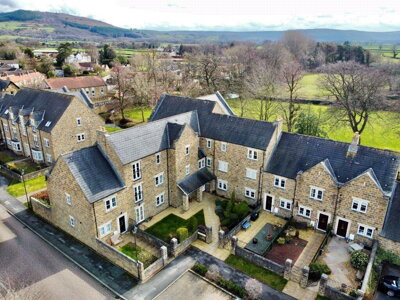
Browse 1 rental home to rent in Great Ayton from local letting agents.
The 2 bed flat sector typically includes two separate bedrooms, dedicated living areas, and bathroom facilities. Properties in Great Ayton span purpose-built blocks, converted period houses, and modern apartment complexes on various floors.
Great Ayton’s rental market has a broad spread of homes, so different households and budgets can find a fit. On comparable sales data, terraced properties usually sit around £600-£800 per month, semi-detached homes tend to reach £800-£1,100 per month, and detached properties, which make up approximately 40.5% of the local housing stock, can run from £1,200 to £1,800 per month depending on size, condition, and where they sit in the village. Flats and apartments account for around 9.1% of available accommodation, and they usually start from £500 per month.
Over the last twelve months, Great Ayton’s property prices have risen by approximately 2.22%, with semi-detached and terraced homes leading the way at around 2.65% and 2.67% respectively. That steady climb points to ongoing demand, helped by the village’s attractive setting, strong educational provision, and good transport links to Middlesbrough, Stockton-on-Tees, and the wider Teesside region. For renters, it suggests a market that is stable rather than jumpy, with rental values likely to stay firm.
Different eras sit side by side here, from Georgian and Victorian stone cottages in the historic centre to post-war semi-detached homes and modern detached properties on established estates. So, if you want a character home with original features or a more contemporary place with modern fittings, the village has options. Homes in good school catchment locations, or close to the village centre and transport links, usually draw the strongest tenant interest.

Great Ayton manages to mix historical character with day-to-day convenience, and that gives it a distinct feel in North Yorkshire. The centre clusters around the historic High Street and Low Green, both within a designated Conservation Area that helps protect the architectural heritage. Much of the housing uses local Jurassic estuarine sandstone, quarried from the upper layers of the nearby moors, which gives the village its warm, golden-brown tone. Red brick became more common from the Victorian era onwards, so the street scene has a pleasing variety.
Tourism plays a big part in the local economy, thanks in large measure to Great Ayton’s link with the explorer Captain Cook. The Captain Cook Schoolroom Museum keeps that history alive, while the surrounding countryside offers plenty of walking, cycling, and outdoor recreation along the Cleveland Hills and into the North York Moors National Park. Agriculture supports jobs in the surrounding rural areas, and there are also retail, education, and healthcare roles within the village itself. The community feels active and welcoming, with regular events and activities that help newcomers settle in.
With a population of approximately 4,682, the village has a balanced mix of residents, from families drawn by the schools to professionals commuting to Teesside and retirees looking for peace and practical local amenities. Daily life is straightforward, with convenience stores, pubs, restaurants, and recreational facilities all close at hand. The local geology, including Sherwood Sandstone and Jurassic mudstones, shapes the landscape and also gives useful context for construction methods and any ground conditions tenants may want to keep in mind.

Education is a major reason families look at Great Ayton, and the schools serving the village and nearby communities are a real draw. The primary school gives younger children a solid start, and because it is so conveniently placed, many families can walk there rather than rely on transport. Parents with small children tend to value that most, especially as the compact layout and traffic-calmed streets make the school run easier and safer.
Older students have a wider set of choices in the surrounding area, including highly regarded schools in nearby towns where academic and sporting reputations are strong. Teesside also broadens the picture, with sixth form colleges and further education providers offering both vocational and academic courses. For households with teenagers, that range of secondary and post-16 options is one of the key advantages of living in Great Ayton.
School quality, both in the village and nearby, has a clear effect on the rental market. Properties in strong catchment areas often command premium rents and stay in demand throughout the year. Parents should check catchment boundaries and admission arrangements carefully, because they can affect school placement and competition for homes in sought-after streets can be intense. The village’s settled residential feel also helps school communities build close ties between teachers, pupils, and families, which supports strong educational outcomes.

Commuters working in Teesside often find Great Ayton a practical base, thanks to its good transport links and village setting. The A172 is close by and gives direct access to Middlesbrough in approximately twenty minutes, while also linking to the wider motorway network through the A19. That makes it possible to enjoy a quieter North Yorkshire address without losing straightforward access to major employment centres, shops, and leisure options in Teesside.
Bus services connect Great Ayton with nearby towns including Stokesley and Middlesbrough, which matters for anyone without a private car. They are also handy for schoolchildren travelling to secondary schools in surrounding towns, and for residents who simply prefer not to drive. For rail travel, Middlesbrough and Darlington are the nearest mainline stations, with links to Newcastle, York, Leeds, and London. From Darlington to London King's Cross, the journey is approximately two and a half hours, so a day trip to the capital is perfectly realistic.
Durham Tees Valley Airport is also within easy reach, giving residents access to domestic and international flights for work or leisure. Walkers and cyclists are well served too, with a wide network of public footpaths and bridleways leading out from the village towards the Cleveland Hills and the North York Moors National Park. Those routes are popular for commuting as well as recreation, and they cut down car use for shorter journeys while supporting the healthy way of life many residents enjoy.

Before starting a property search in Great Ayton, get a rental budget agreement in principle from a financial provider. It gives landlords and letting agents proof that the rent is affordable and can make the application process smoother. Most landlords want evidence of income at around 2.5 to 3 times the monthly rent, so having that paperwork ready can give applicants a useful edge.
Take time to walk around Great Ayton and get a feel for the different neighbourhoods, the local amenities, and how close each area sits to schools and transport. Think about the commute you make each day, and which parts of the village suit your routine best. There are distinct character areas here, from the historic Conservation Area around the High Street with its sandstone cottages to newer developments near Guisborough Road on the outskirts. Seeing it at different times of day is the best way to understand the atmosphere and the community spirit.
Our advice is to keep a close eye on current rental listings in Great Ayton through Homemove and other property portals. Availability in rural villages can change quickly, so be ready to book viewings without delay. Homes in good school catchment areas or near transport links tend to attract strong interest, and well-presented properties can receive multiple applications within days of being listed.
Arrange viewings for homes that match your needs, and go along with a list of questions. While you are there, check the overall condition, note any maintenance issues, and ask about the tenancy terms, deposit amount, and what fixtures and fittings are included. It also helps to take photographs for later comparison. Give particular attention to the exterior, the roof, and any places where water damage or structural movement might show.
Once you have settled on a property, put in a formal tenancy application with proof of identity, proof of income, employment references, and previous landlord references if you have them. The letting agent or landlord will carry out referencing checks before a tenancy is offered. A holding deposit is usually needed to remove the property from the market while those checks are underway, and that is standard practice.
Read the tenancy agreement properly before signing, and make sure you are clear on the rent amount, payment schedule, deposit protection arrangements, and notice periods. By law, your deposit will be protected in a government-approved scheme within 30 days of receipt. For homes in Great Ayton's Conservation Area or Listed Buildings, check any restrictions on alterations and understand your responsibilities for maintaining period features.
Renting in Great Ayton means paying attention to a few location-specific points that can make a real difference to day-to-day living. Homes near the River Leven should be assessed carefully for flood risk, especially those on lower ground or with gardens running to the riverbank. The village has generally good drainage, but heavy rainfall can still lead to surface water pooling in some spots, so it is sensible to understand the flood history and drainage characteristics of any property you are considering. The local geology includes superficial deposits such as glacial till and alluvium along river valleys, which also affects drainage patterns.
Clay-rich soils are another factor here, and they can leave properties, especially older ones with shallower foundations, more vulnerable to ground movement in periods of dry weather or heavy rain. Cracks in plasterwork, doors or windows that stick, and uneven floors can all point to this. The underlying geology includes Sherwood Sandstone Group and Jurassic mudstones, which can contribute to shrink-swell behaviour in clay soils. A careful inspection during the viewing, along with questions about any previous structural works or underpinning, can flag up issues before you commit to a tenancy.
A fair number of rental homes in Great Ayton sit within the designated Conservation Area or are Listed Buildings, and that can mean limits on alterations. Tenants should ask what changes need landlord permission, and whether any planning or listed building consent requirements apply, before signing. The features that make these homes appealing, such as original sandstone construction, sash windows, and traditional fireplaces, need proper care. That heritage character is part of the attraction, but it does come with responsibilities.
Energy performance varies a lot across the housing stock. Older stone properties can be more expensive to heat because of solid walls and limited insulation, so it is wise to request the EPC certificate and ask about upgrades such as double glazing, insulation improvements, or modern heating systems. Homes built before the 1980s may also have older wiring or plumbing that no longer meets current standards. These details affect both comfort and ongoing rental costs, so they deserve attention early on.

On comparable sales data and current market conditions, rents in Great Ayton usually sit around £500-£600 per month for one-bedroom flats, £600-£800 for two-bedroom terraced properties, £800-£1,100 for semi-detached homes, and £1,200-£1,800 per month for larger detached properties. The exact figure depends on size, condition, where the home is in the village, and which amenities are included. Gardens, or a spot near the village centre or school catchment areas, often push the rent higher. Strong links to Teesside and the village’s desirability have kept values steady, even when the wider market has moved around.
Great Ayton sits within the Hambleton District Council area, now managed by North Yorkshire Council. Council tax bands run from A to H according to property value, and most residential homes in the village fall within bands B through E. You can confirm the exact band for a specific property through the North Yorkshire Council website or your tenancy agreement, which should show the current liability. Discounts for single-occupancy households, or exemptions for unoccupied properties, can also affect the final amount.
Families are well served here, with a respected primary school in the village and secondary school options in nearby towns that are reachable by school transport. Great Ayton is especially popular with parents because of the quality of local education and the safe, supportive atmosphere the village offers. Catchment areas and admission policies still need checking before choosing a home, because they can affect school placement. Homes within walking distance of the primary school are especially popular with families with young children, since they remove the need for school transport arrangements.
Regular bus services run between Great Ayton and nearby towns including Stokesley and Middlesbrough. The A172 gives convenient road access to Teesside, and Middlesbrough is approximately twenty minutes away by car. For rail travel, the mainline stations at Middlesbrough and Darlington provide links across the UK. Durham Tees Valley Airport is the nearest airport, with domestic and international flights. For regular commuters, the closeness of the A19 and A172 makes Great Ayton attractive, because it gives easy access to work in Middlesbrough, Stockton-on-Tees, and the wider Teesside region without the hassle of city-centre living.
Great Ayton brings together rural charm, strong community spirit, and practical connectivity in a way that makes it a very appealing place to rent. The village has a safe, family-friendly feel, good local amenities, excellent schools, and attractive countryside on the doorstep, including access to the Cleveland Hills and North York Moors National Park. Demand stays strong, and the rental market is stable, which reflects the quality of life available here. Availability may be tighter than in larger towns, but the village atmosphere and lifestyle benefits make the search worthwhile. Regular events and activities also help tenants feel part of the community quickly.
Typical deposits for rental properties in Great Ayton are equivalent to five weeks' rent, capped at five weeks where the annual rent exceeds £50,000. A holding deposit of up to one week's rent may also be requested while referencing and paperwork are completed. Other possible costs include the first month's rent in advance and any letting agent fees for administration, inventory checks, or references. Before applying, always ask for a full breakdown of costs. Budgeting for at least one and a half months' rent plus fees is a sensible approach when moving into a new rental property.
Homes next to the River Leven carry a higher flood risk, and surface water flooding can also affect different parts of the village during heavy rainfall because of the local topography and drainage. When viewing, ask about any previous flooding, check the flood risk category, and make sure suitable contents insurance is available. Clay-rich soils in some parts of the village can also affect drainage, so it is sensible to understand the ground conditions at the property. Slightly elevated homes away from the river valley often offer safer options for tenants who want to reduce flood exposure.
Many properties in Great Ayton fall within the designated Conservation Area, and some are Listed Buildings, so modifications and alterations can be restricted. Tenants should ask the landlord what changes need permission and understand any planning or listed building consent requirements before signing the tenancy agreement. These limits usually cover external alterations, extensions, and significant internal changes to period features. The attractions of these homes, including original stonework, sash windows, and traditional fireplaces, come with a need for proper care, and tenants are usually expected to help preserve them during the tenancy.
Knowing the financial side of renting in Great Ayton helps with budgeting and cuts down on surprises later. Where the annual rent is less than £50,000, the standard security deposit is capped at five weeks' rent, giving landlords protection against damage or unpaid rent. That deposit must be protected in a government-approved Tenancy Deposit Scheme within thirty days of receipt, and at the end of the tenancy it is returned minus any legitimate deductions for damage or cleaning. Your landlord must also tell you which scheme is holding it within 30 days of receiving it.
Most letting agents charge administration fees for processing tenancy applications, carrying out referencing, and preparing contracts. The amounts vary, but the initial tenancy setup usually falls between £100-£300. There may also be inventory check fees of around £100-£200, which cover a detailed record of the property condition at the start and end of the tenancy. Before you commit to a property, ask for a complete breakdown of all fees and costs. If any charge looks excessive or unclear, ask for it to be explained first.
As a rule, the first month's rent is paid in advance, often with the deposit, so it is wise to budget for two months' rent plus fees when moving into a new rental property. Securing a rental budget agreement in principle before you start looking can show landlords that the finances are in place and may help with negotiating favourable terms. For homes in the Conservation Area or Listed Buildings, remember to allow for restrictions on modifications and any extra responsibility for preserving period features. Character properties may also need closer attention to heating and ventilation, otherwise condensation or damp can become an issue in older construction.
From 4.5%
Get pre-approved for your renting budget from £4.5%
From £29
Complete referencing checks for landlords from £29
From £400
Professional survey for properties in Great Ayton
From £85
Energy performance certificate for Great Ayton properties
Properties to Rent In London

Properties to Rent In Plymouth

Properties to Rent In Liverpool

Properties to Rent In Glasgow

Properties to Rent In Sheffield

Properties to Rent In Edinburgh

Properties to Rent In Coventry

Properties to Rent In Bradford

Properties to Rent In Manchester

Properties to Rent In Birmingham

Properties to Rent In Bristol

Properties to Rent In Oxford

Properties to Rent In Leicester

Properties to Rent In Newcastle

Properties to Rent In Leeds

Properties to Rent In Southampton

Properties to Rent In Cardiff

Properties to Rent In Nottingham

Properties to Rent In Norwich

Properties to Rent In Brighton

Properties to Rent In Derby

Properties to Rent In Portsmouth

Properties to Rent In Northampton

Properties to Rent In Milton Keynes

Properties to Rent In Bournemouth

Properties to Rent In Bolton

Properties to Rent In Swansea

Properties to Rent In Swindon

Properties to Rent In Peterborough

Properties to Rent In Wolverhampton

Enter your details to see if this property is within your budget.
Loans, cards, car finance
Estimated property budget
Borrowing + deposit
You could borrow between
Typical borrowing
Monthly repayment
Est. at 4.5%
Loan-to-value
This is an estimate only. Your actual budget may vary depending on interest rates, credit history, and personal circumstances. For an accurate affordability assessment, speak to one of our free mortgage advisors.
This calculator provides estimates for illustrative purposes only and does not constitute financial advice. Your home may be repossessed if you do not keep up repayments on your mortgage. Estimates based on 4.5% interest rate, repayment mortgage. Actual rates depend on your circumstances.
Homemove is a trading name of HM Haus Group Ltd (Company No. 13873779, registered in England & Wales). Homemove Mortgages Ltd (Company No. 15947693) is an Appointed Representative of TMG Direct Limited, trading as TMG Mortgage Network, which is authorised and regulated by the Financial Conduct Authority (FRN 786245). Homemove Mortgages Ltd is entered on the FCA Register as an Appointed Representative (FRN 1022429). You can check registrations at NewRegister or by calling 0800 111 6768.

We use cookies to show you personalised content and improve your experience of our website. Find out more in our Privacy policy and Cookie policy.