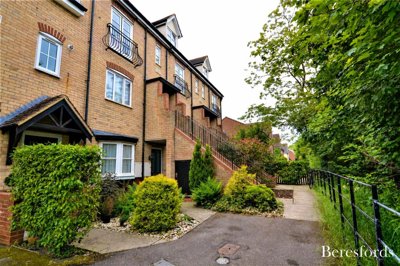
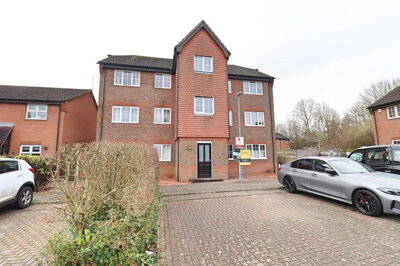
Browse 2 rental homes to rent in Great and Little Leighs from local letting agents.
Studio apartments feature open-plan living spaces without separate bedrooms, incorporating sleeping, living, kitchen, and bathroom facilities. The Great And Little Leighs studio market includes properties in modern apartment complexes, converted Victorian and Georgian buildings, and purpose-built developments.
Great and Little Leighs sit in a rural Essex postcode where detached homes set the tone of the rental market. Those larger properties dominate the stock in both villages, and the rents reflect that, along with the appeal of bigger plots and family-friendly layouts. In Great Leighs, detached homes usually achieve the strongest rental values, while semi-detached and terraced properties give renters with tighter budgets a more workable way in. Little Leighs leans towards the higher end, with detached homes averaging well above the Great Leighs equivalent, which is why it tends to appeal to renters after a prestige address in an unspoiled countryside setting. That detached character usually means generous gardens, off-street parking and internal space that is becoming harder to find in urban areas.
Sales figures give a useful guide to how the rental market behaves here. Great Leighs shows an average sold price of around £416,000 to £459,000 depending on the source, with home.co.uk recording detached properties at approximately £467,375 and terraced homes at £400,000. Little Leighs is clearly higher value, with home.co.uk reporting an average of £925,000 over the last year and detached properties averaging £814,375. homedata.co.uk puts Little Leighs even higher at £1,575,000, which reflects a small number of high-value sales in this exclusive village. Those prices feed straight into rent levels, because landlords price homes to sit alongside the capital value of the area. The market here also tends to favour longer tenancies from people who like village life, so properties are often kept in good order and rental arrangements can be steady for both sides.

As a parish in the Chelmsford district of Essex, Great and Little Leighs have a clear rural identity and a strong sense of community. Their agricultural past is still visible in the farmland around them and in the countryside walks that shape daily life. There is a calmness here that small villages do well, with open space, public footpaths running through fields and hedgerows, and a pace that feels very different from nearby Chelmsford. Village fetes, quiz nights at the local pub and other events through the year help bring people together.
Basic day-to-day amenities are available in the villages, while Chelmsford, a few miles to the east, offers a much wider choice of shopping, eating out and entertainment. Great Leighs holds most of the local facilities, including a well-used village pub that acts as a social centre. Little Leighs is quieter and more exclusive, with fewer commercial premises but a strong reputation as an affluent address. Both villages sit in the CM3 postcode area, so residents remain within sensible reach of Chelmsford’s jobs and amenities as Essex’s county town. For renters who commute or want city entertainment but prefer to come home to countryside peace, that mix works very well.

Families looking to rent in Great and Little Leighs will find education options within a reasonable distance. Early years and Key Stage 1 provision is available at nearby village schools, and the surrounding communities provide further primary choices. Several local primaries serving the village areas are Ofsted-rated good or outstanding, and they can usually be reached by school transport or a short drive. Parents need to check catchment areas and admission rules carefully, because these can affect where a child can be placed and may shape the choice of rental property. In a rural setting, transport to and from school deserves proper thought before a tenancy is agreed.
Secondary education is also available in Chelmsford and the surrounding towns, with a number of respected secondary schools and academies within reach of Great and Little Leighs. Chelmsford itself has a broader range of options, including grammar schools for academically able students, comprehensive schools with solid reputations, and further education colleges offering A-levels and vocational routes. Chelmsford College and other providers support students moving on from secondary school, with courses from A-levels through to vocational diplomas. Anyone renting in the area should think about school transport and journey times before choosing a property, because catchment boundaries and places can be competitive. That range of good schools adds a lot to the family appeal of the villages.

Road links are the main transport story in Great and Little Leighs, with Chelmsford acting as the hub for public transport connections. The villages are within easy reach of the A131 and A12, giving access to Chelmsford city centre and the wider Essex road network. For commuters heading into Chelmsford, the journey is usually under twenty minutes by car, and parking is available at railway stations and employment centres. Those same roads also give access to Maldon and the Essex coast, which makes leisure travel through the county straightforward.
Chelmsford station offers regular trains to London Liverpool Street, and with journey times of approximately 35-40 minutes, the route works for daily commuters into the capital. That access to London, without London commuter prices, is one of the reasons Great and Little Leighs can look such good value to renters. Local buses link the villages with Chelmsford and nearby towns, although the service frequency is nowhere near urban levels, so car ownership or careful planning is wise for anyone without private transport. Short local trips are often easiest by bike on quiet lanes, and the flat Essex landscape makes cycling a practical choice for able-bodied commuters. The A12 also gives direct access to Colchester and the ports at Felixstowe for people working in logistics or needing international travel links.

Before we start looking for a property, it helps to obtain a rental budget agreement in principle. A mortgage broker or financial adviser can provide this document, which confirms how much rent we can comfortably afford and gives our application more weight when we find the right home in Great and Little Leighs. Having it ready shows landlords that our finances are in order, and that can make a real difference in a village market where several tenants may want the same property.
Using Homemove, we can browse the current rental properties in Great and Little Leighs and filter by property type, number of bedrooms and price range to find homes that fit our needs. We can also set property alerts, so we hear about new listings as soon as they appear. Our platform gathers listings from local estate agents and private landlords active in the CM3 postcode area, so we get strong coverage of what is available in the village.
We then contact the estate agents and landlords to arrange viewings of the homes that catch our eye. Seeing a few properties makes it easier to compare condition, position within the village and the rental terms before settling on one. At the viewing, ask about appliances, garden maintenance and parking arrangements. In Great and Little Leighs, where a property sits in relation to the village centre, the pub and the bus routes can shape day-to-day life, that detail matters.
Once we have chosen a preferred property, the rental application needs to go in quickly, with all the documents asked for, including proof of identity, employment references and, where relevant, previous landlord references. The rental budget agreement in principle helps here too, because it supports the application and shows the landlord that our finances are credible. In desirable village areas like Great and Little Leighs, a complete application sent promptly can be the difference between getting the place and missing out.
Before signing, we should read the tenancy agreement with care, paying close attention to the deposit amount, notice periods, fixtures and fittings, and any terms that relate specifically to the property in Great and Little Leighs. A solicitor or letting agent can talk through anything that is unclear. We should also look closely at clauses covering garden maintenance, heating oil deliveries and any duties linked to the rural setting.
On moving day, arrange insurance for your belongings, transfer the utilities into our name and carry out a full inventory check with photographs. The signed inventory then needs to be returned to the landlord within the agreed timeframe, so the deposit is protected. For rural homes, it is sensible to understand how the oil tank is monitored and how deliveries are arranged, because many village properties rely on oil-fired heating systems that need forward planning and budgeting.
Renting in a rural village like Great and Little Leighs calls for a different approach from an urban search. The housing stock here is often older, which reflects the village’s heritage and long-established community. Older homes may come with features that need careful management, such as private drainage, oil-fired heating or solid fuel burners instead of mains gas. We should ask what type of heating system is fitted, what it costs to run and who handles maintenance during the tenancy. Period details such as timber beams, thatched elements or original fireplaces may also need specialist care and insurance consideration.
The rural setting can also mean patchy mobile signal, and the strength will depend on the network provider and the exact position of the property in the village. Prospective renters should test the signal at the house or ask about broadband availability and speeds, because reliable internet is now essential for work and personal use. Virgin Media and BT broadband services may be available in parts of Great Leighs, while more remote properties in Little Leighs may rely on satellite broadband. Parking needs attention too, since village homes may have limited off-street spaces or shared drives with neighbours. Garden maintenance responsibilities should be clearly set out in the tenancy agreement, so there is no confusion over lawn care, hedge cutting and general upkeep through the seasons.
Homes in Great and Little Leighs often sit on larger plots than urban properties, so garden care can be a real commitment for tenants. The Essex clay soil common in this area can lead to ground movement during dry spells, so it is worth checking whether there is any subsidence insurance or warranty already in place. Many village properties also have outbuildings, garages or barns that may provide useful storage, although their condition and permitted use should be set out in the tenancy agreement. If the property sits on a private drive or lane, there may be shared maintenance responsibilities with neighbours, and these should be documented to avoid arguments later on.

We do not see public rental price data for Great and Little Leighs in the sources we monitor. Even so, sales figures help to frame likely rental values. Detached homes in Great Leighs sell for approximately £416,000-£459,000 on average, while Little Leighs averages around £925,000. In rental terms, terraced and semi-detached homes in Great Leighs usually sit around £1,200-£1,800 per month, with larger detached properties rising to £1,800-£3,000 or more. Premium positions and recent renovations can push prices higher. For the most up-to-date rental figures, search our listings, because the CM3 postcode area remains active and new homes come up regularly.
For council tax, Great and Little Leighs fall under Chelmsford City Council. The bands run from A through to H, with valuations based on the property value as assessed in 1991. Rural village homes in Great and Little Leighs can sit in a range of bands depending on their size and condition, and many detached family houses fall in bands D through F. Because Little Leighs homes are generally higher in capital value, they often sit towards the upper council tax bands. The exact band can be checked through the Valuation Office Agency website using the property address, and the tenancy agreement should state whether council tax is included in the rent or paid separately by the tenant.
Primary schools serving Great and Little Leighs include those in nearby villages and the wider area, and several good-rated schools are within a short drive. Families should check current Ofsted ratings and admission catchment areas, as both can affect school placement. Secondary schools in Chelmsford, including grammar schools for academically able students, can be reached by school transport or car. Further education choices include Chelmsford College and other providers across the wider area. For Great Leighs, primary options include schools in White Notley, Cressing and Felsted, each of which has a good name with local families. Chelmsford County High School for Girls and King Edward VI Grammar School are among the selective schools drawing pupils from across the wider area.
Public transport in Great and Little Leighs is limited compared with urban areas, so bus services are the main alternative to private cars. The routes do connect the villages with Chelmsford, although the frequency may not suit every commuting pattern. Chelmsford railway station, which can be reached by car or bus, runs regular services to London Liverpool Street in approximately 35-40 minutes. Anyone without a car needs to factor those transport limits into the rental choice and check that work and other regular commitments are practical to reach. The nearest bus stops are usually on the main roads through Great Leighs, and the latest timetables should be checked with Essex County Council or the local bus operators.
For renters who want rural Essex village life but still need good links to Chelmsford and London, Great and Little Leighs can offer a very appealing quality of life. The villages have peaceful surroundings, a strong community spirit and homes ranging from charming period cottages to modern family houses. A stable property market with consistent price growth of 2-3% annually points to continued demand, which helps landlords and tenants alike through better property maintenance and longer-term tenancy security. Families, commuters and anyone after countryside calm can all make a good fit here. The village community also puts on regular events, including the annual village fete, quiz nights at the local pub and seasonal celebrations that help new residents settle in quickly.
For rental properties in England, standard deposits are capped at five weeks rent, worked out from the annual rent value divided by 52 and then multiplied by five. In Great and Little Leighs, most landlords ask for the first month rent in advance as well as that security deposit before occupation. Other costs can include referencing fees, administration charges from letting agents and inventory check costs. Anyone renting for the first time should also budget for removal vans, utility connection fees and contents insurance, on top of the deposit and advance rent. Homes with large gardens can lead to extra end-of-tenancy cleaning costs if the garden is not kept to the standard set out in the tenancy agreement.
Planning the budget for a rental in Great and Little Leighs means looking beyond the monthly rent. The deposit is usually the biggest upfront cost, typically set at five weeks rent and held in a government-approved tenancy deposit scheme for the duration of the tenancy. It is returned at the end of the tenancy, subject to any deductions for damage beyond fair wear and tear or unpaid rent. Because of the deposit cap, even more expensive rentals still have a maximum deposit equivalent to five weeks rent, which gives tenants clarity on the amount needed to secure the property. Our team often sees disputes at the end of tenancies over garden condition, so taking detailed dated photographs at the start is well worth doing.
We also need to budget for the first month rent in advance, which is standard alongside the deposit. Letting agent fees, where they apply, can include referencing charges, tenancy administration fees and check-in costs. Those charges have fallen in recent years after government regulation, but they can still come to £200-£400 depending on the agent. Utility connection fees for gas, electricity and water should be allowed for, together with internet installation costs. Contents insurance is essential for protecting belongings during the tenancy. If the agreement calls for professional cleaning at the end of the tenancy, that should also be factored in, because leaving the property in the required condition can affect the deposit. Rural properties in Great and Little Leighs may bring extra utility considerations too, including oil deliveries for heating systems and, in some homes, private water supplies.
Getting a rental budget agreement in principle before we start searching shows landlords that we are financially ready, and it can strengthen our position when applying for homes in competitive village locations like Great and Little Leighs. Mortgage brokers or financial advisers can provide this document, and it sets out how much rent we can comfortably afford based on income and existing financial commitments. When landlords are comparing several applications, they often prefer tenants who have shown their finances up front, because it reduces the risk of later payment issues and makes referencing simpler.
From 4.5%
Financial assessment to check our rental budget before we start searching
From £99
Thorough tenant referencing, including credit checks and employment verification
From £85
Energy Performance Certificate needed for every rental property
From £100
Professional inventory service to protect your deposit
Properties to Rent In London

Properties to Rent In Plymouth

Properties to Rent In Liverpool

Properties to Rent In Glasgow

Properties to Rent In Sheffield

Properties to Rent In Edinburgh

Properties to Rent In Coventry

Properties to Rent In Bradford

Properties to Rent In Manchester

Properties to Rent In Birmingham

Properties to Rent In Bristol

Properties to Rent In Oxford

Properties to Rent In Leicester

Properties to Rent In Newcastle

Properties to Rent In Leeds

Properties to Rent In Southampton

Properties to Rent In Cardiff

Properties to Rent In Nottingham

Properties to Rent In Norwich

Properties to Rent In Brighton

Properties to Rent In Derby

Properties to Rent In Portsmouth

Properties to Rent In Northampton

Properties to Rent In Milton Keynes

Properties to Rent In Bournemouth

Properties to Rent In Bolton

Properties to Rent In Swansea

Properties to Rent In Swindon

Properties to Rent In Peterborough

Properties to Rent In Wolverhampton

Enter your details to see if this property is within your budget.
Loans, cards, car finance
Estimated property budget
Borrowing + deposit
You could borrow between
Typical borrowing
Monthly repayment
Est. at 4.5%
Loan-to-value
This is an estimate only. Your actual budget may vary depending on interest rates, credit history, and personal circumstances. For an accurate affordability assessment, speak to one of our free mortgage advisors.
This calculator provides estimates for illustrative purposes only and does not constitute financial advice. Your home may be repossessed if you do not keep up repayments on your mortgage. Estimates based on 4.5% interest rate, repayment mortgage. Actual rates depend on your circumstances.
Homemove is a trading name of HM Haus Group Ltd (Company No. 13873779, registered in England & Wales). Homemove Mortgages Ltd (Company No. 15947693) is an Appointed Representative of TMG Direct Limited, trading as TMG Mortgage Network, which is authorised and regulated by the Financial Conduct Authority (FRN 786245). Homemove Mortgages Ltd is entered on the FCA Register as an Appointed Representative (FRN 1022429). You can check registrations at NewRegister or by calling 0800 111 6768.

We use cookies to show you personalised content and improve your experience of our website. Find out more in our Privacy policy and Cookie policy.