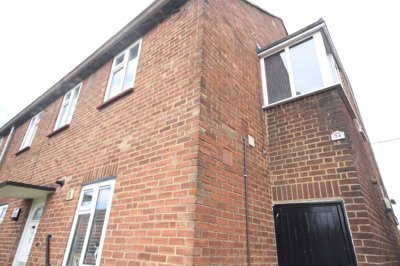
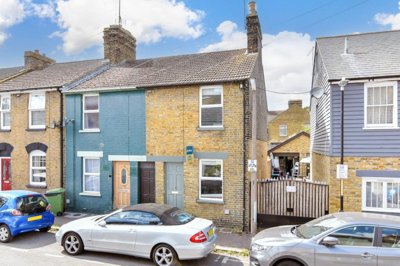
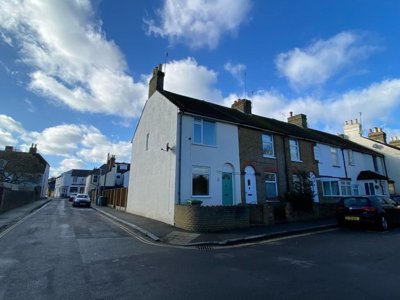
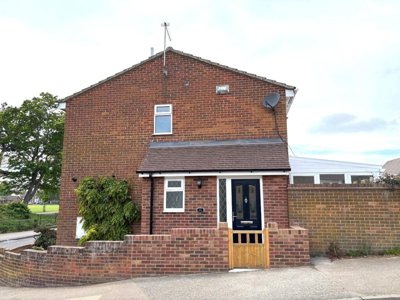
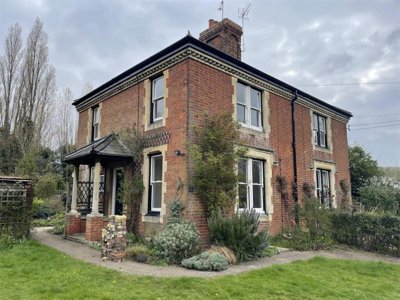
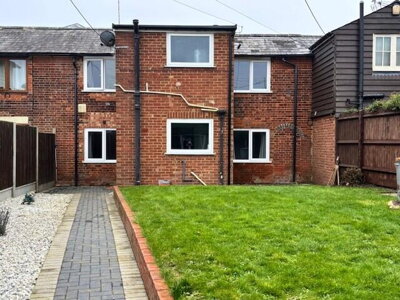
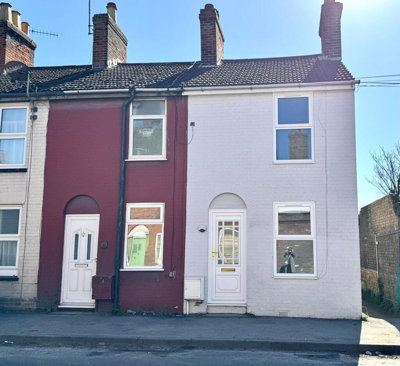
Browse 7 rental homes to rent in Graveney with Goodnestone from local letting agents.
The 2 bed house market features detached, semi-detached, and terraced properties with two separate bedrooms plus living spaces. Properties in Graveney With Goodnestone range from Victorian and Edwardian period homes to modern new builds, with pricing varying across different neighbourhoods.
Graveney with Goodnestone's rental market mirrors this rural Kent parish, where the stock is mostly period homes rather than modern apartments. Through our platform, we give access to rental listings across the area, so prospective tenants can compare homes against their needs and budget. Expect converted farm buildings, historic cottages with original features, and larger family houses built in the Kentish way. Supply is tighter than in urban places, so moving quickly on a suitable listing matters if you want to secure a tenancy here.
Sale data gives rental figures useful context, because landlords often pitch rents against capital values. Graveney has recorded average sale prices of around £415,000 over the past year according to home.co.uk listings data, while homedata.co.uk reports an average sold price of £330,000 over the trailing twelve months. Goodnestone sits higher, with average values near £1,050,000 according to home.co.uk listings data, although that may reflect a smaller set of high-value transactions in this exclusive hamlet. Recent individual sales in Graveney include Wheelwrights Cottage, a semi-detached property that sold for £500,000 in December 2025, and 5 Murton Place, another semi-detached home that reached £330,000 in July 2025. Taken together, those figures point to rental levels that will vary sharply by property type, size, condition, and exact position within the parish.
Older buildings are a big part of the appeal here. In Graveney with Goodnestone, properties often come with original fireplaces, exposed timber beams, and solid brickwork tied to traditional Kentish building methods. A sizeable share of the housing stock is likely to be pre-1919 construction, so maintenance needs and any renovation issues deserve proper attention. Conservation area or listed building status, which is probable given the area’s historical significance, can also restrict alterations and mean specialist maintenance approaches, something tenants ought to raise with landlords before signing up.

Life here is properly rural, yet it sits within the Borough of Swale, one of Kent's largest local authority areas covering over 37,000 hectares from the North Downs to the Kent coast. Farmland wraps around both settlements, shaping the open views across marshland and countryside that define the place. The civil parish structure keeps local voices close to decision-making, and that helps protect the rural environment residents value. There is a neighbourly feel too, the sort that is increasingly hard to find in urban settings, where familiarity and mutual support can make village life feel far more welcoming for newcomers.
The history runs deep. Archaeological evidence shows continuous occupation since prehistoric times, and Roman-era building materials found nearby confirm settlement during the occupation period. Graveney first appeared in written records in 811 AD, which places it among the oldest continuously settled spots in Kent. Between 800 and 1100 AD, rising sea levels brought severe flooding to this stretch of coast, and the shoreline had eroded by at least two miles over historical time. By 1340, sea walls were being built, and marshland reclamation followed through an extensive web of walls and drainage ditches.
That long battle with water still shapes the landscape. The reclaimed marshland now supports productive farmland right out to the current coastline, while the old sea walls remain important when people look at flood risk in the area. Clay soils linked to these former marshes can shrink and swell in drought or heavy rain, which may affect foundations in older homes. For renters, that geological background is worth understanding, because it speaks to both the character of the countryside and the care needed for buildings set on clay substrates.

For families, the education picture is centred on the surrounding Swale area, with primary schools serving local villages and secondary options available in nearby towns. Graveney with Goodnestone's rural position means transport planning matters when choosing a home. Children of primary school age usually attend schools in nearby villages or Faversham, where there are several options for Foundation Stage and Key Stage 1. Many parents value the shorter journeys that come with village primary schools, since they cut down on commute stress and leave more time for family life and homework support.
The Swale area also has several primary schools rated Good or Outstanding by Ofsted, giving families decent choices within a sensible drive of Graveney with Goodnestone. Schools in the surrounding villages and in Faversham provide solid foundations in core subjects, alongside extracurricular activities that add to classroom learning. Secondary provision opens up further, with schools in Faversham and the wider area offering strong academic programmes and facilities suited to students across Key Stages 3 and 4. In Faversham, The Abbey School offers full secondary education, while Queen Elizabeth's Grammar School provides a selective route for academically able pupils through the Kent Selection Test.
Kent still runs a selective system, so families looking at grammar school places need to look at Canterbury and other nearby towns, where entry may depend on passing the Kent Selection Test. Sixth form students often head to Faversham or Canterbury, where college settings offer a broader spread of A-level subjects and vocational courses than smaller village schools can usually provide. The University of Kent in Canterbury also gives older students higher education options within a reasonable commute, while keeping family links in the Graveney with Goodnestone area. School transport should be part of the property search, because the right home needs to work with the route to preferred schools.

Transport is part of the trade-off with rural living. Most residents rely on private vehicles for day-to-day commuting, while public transport tends to suit occasional trips and longer journeys. The A299 Thanet Way runs through the general area and gives direct access to the M2 and the wider road network linking Kent with London and the Channel ports. That matters for anyone travelling to Canterbury, the Medway Towns, or further afield to London via the M2 and M25 corridors. For home workers, the setting can be ideal, although we would still check that a specific property has reliable broadband before relying on remote work.
Rail links come via nearby Faversham and Selling, which connect residents to the wider Kent network and Southeastern mainline services into London. From Faversham, journeys to London Victoria or London St Pancras International take about 1 hour 30 minutes, so occasional office days remain workable for London-based workers who want country living. The Southeastern network also reaches coastal towns such as Ramsgate, Dover, and Canterbury East, which gives plenty of scope for day trips and time out. Selling railway station is a little further away from Graveney, though it may suit some parts of the parish better, and it offers similar Southeastern services.
Bus links are modest but useful. Arriva and local operators connect Graveney with Goodnestone to Faversham, giving access for people without a car and helping with school journeys too. The 362 bus service runs between Faversham and the surrounding villages, so residents can get to town centre shops, healthcare services, and the railway station without driving. Cyclists may enjoy the network of rural lanes around the village, though narrow roads and agricultural traffic during harvest seasons call for extra care. Timetables are worth checking closely, because rural services can run less often on certain days and during school holidays.

Before you start looking, we recommend getting a rental budget agreement in principle from a lender or mortgage broker. It sets out the maximum rent you can afford and gives landlords a clear signal that your finances are in order, which can help in a competitive rural market. With the paperwork ready before viewings begin, you can move fast when the right place comes up, and that matters when rental supply in this parish is limited.
Take time to walk the area and the wider Swale district before you commit to a tenancy in Graveney with Goodnestone. Visit at different times of day and across the week, so you can judge noise, traffic, and how easy it is to use local services. Check broadband speeds at individual properties, because they can vary a lot even in small rural pockets, and compare distances to the nearest shops, schools, and bus stops. Speaking to people who already live there can be helpful too, as they often know more about local life and any practical issues than a brochure ever will.
Use Homemove to browse the rental homes currently available in Graveney with Goodnestone, and set up instant alerts because this rural market moves fast when stock is thin. Book viewings quickly once a suitable place appears, and take notes and photographs so you can compare properties afterwards without relying on memory. Ask landlords or letting agents about lease terms, what is included, maintenance responsibilities, and any property-specific matters such as conservation area restrictions or listed building obligations. Homes here often carry character features that need a particular approach to upkeep, so it helps to know the likely costs before you move in.
Once you have chosen a property, the landlord or letting agent will usually ask for references, credit checks, and right to rent verification before a tenancy is confirmed. We advise arranging tenant referencing services without delay, since competition for rural rentals can be fierce. Employment references, previous landlord references, credit checks, and bank statements normally form part of the process. Anyone moving in from outside Kent should keep all documents ready and make sure employers can reply quickly when references are requested.
Before moving into the new home, ask for a full inventory check so the condition is recorded and your deposit is protected against later disputes. Read the tenancy agreement carefully, and be clear on rent payments, maintenance responsibilities, utility arrangements, and notice periods. Some Graveney with Goodnestone properties may carry clauses tied to conservation area obligations or listed building restrictions, so those points need attention before signing. Once the paperwork is signed and returned, arrange building insurance and any required utility connections for the move-in date.
Flood risk deserves close attention in Graveney with Goodnestone, given the area’s history with coastal flooding and the reclaimed marshland in the surrounding landscape. Sea walls built from the 14th century onwards still offer protection, but anyone looking at ground floor homes or lower-lying spots should check current flood risk assessments and the property’s flood resilience measures. Homes nearer the present coastline, or on former marshland, may face higher exposure from coastal surge, river flooding, or surface water during severe weather. That can feed through into buildings insurance costs, which landlords may reflect in rent levels or service charges.
The age of the local housing stock matters here, especially with properties dating from different periods and some likely pre-1919 construction linked to the area’s Domesday Book heritage. Structural surveys can be particularly useful before a tenancy starts. In older homes, common problems include damp penetration through solid walls, roof deterioration, outdated electrical wiring that may no longer meet current regulations, and timber issues such as woodworm or rot that are not always obvious at a viewing. Clay soils in former marshland areas can also move in drought or heavy rain, leading to subsidence or settlement that shows up as cracks or distortion in walls and floors. Our RICS Level 2 survey service can pick up these issues before you commit, which may save a good deal of expense and hassle.
Converted agricultural buildings need a bit of extra checking. We would always ask for planning permissions and building regulations compliance certificates, because those documents protect both landlord and tenant in homes that have been heavily altered. Conservation area or listed building status, which is highly probable given the historical significance dating from 811 AD, may also limit alterations and call for specialist maintenance, something tenants should discuss with landlords in advance. Original features such as exposed timber beams, fireplaces, and period windows add a lot to the character of homes in Graveney with Goodnestone, but they can also mean greater heating costs and more care than modern alternatives. Those trade-offs between charm and efficiency are worth weighing before you decide which home fits your day-to-day life.

There is no single published rental figure for Graveney with Goodnestone as a combined civil parish, although comparable homes across the surrounding Swale area give useful guideposts. Sale prices in Graveney average around £415,000 according to home.co.uk listings data, while Goodnestone sits nearer £1,050,000, so rents are likely to vary widely by type, size, condition, and exact location in the parish. In the wider Faversham area, two-bedroom cottages usually rent for £900-£1,200 per month, and larger family homes with four or more bedrooms can reach £1,400-£1,800 per month depending on condition and features. Homes with unusual character or recent renovation can attract higher rents, which is not surprising in a historic rural area where those properties are in demand.
For council tax, properties in Graveney with Goodnestone sit under Swale Borough Council, and the banding still follows the 1991 property value assessment used for current classifications. Because so much of the housing stock is older, much of it pre-1919, a good number of properties fall into bands A through D. Larger period homes, converted farm buildings, and substantial family houses may sit in higher bands E through H. It is sensible to check the council tax band for any property under consideration, since it sits alongside rent, utility bills, and any service charges that apply to flats or managed homes. Swale Borough Council sets annual charges for each band, so the band should match both the home and the budget.
Families in Graveney with Goodnestone usually look to nearby villages or Faversham for primary schooling, and several settings across Swale have Good or Outstanding Ofsted ratings. Dargate Primary School and Hernhill Church of England Primary School serve villages in the area, while Faversham has a choice of primaries including Bysouthgate Junior School and St Mary's Catholic Primary School for families who prefer faith-based education. Secondary options in Faversham include The Abbey School and Queen Elizabeth's Grammar School, with the latter offering a selective route through Kent's grammar school selection process. For grammar school places, some families also look to Canterbury, which is reachable via the A299 and regular bus services, while the University of Kent in Canterbury offers higher education within a reasonable commute for older students.
Bus services are the main public transport link from Graveney with Goodnestone to Faversham, where mainline railway stations connect into the Kent rail network and Southeastern services to London. The 362 route, run by Arriva, gives regular links between Faversham town centre and the surrounding villages, which helps residents reach shops, healthcare at Faversham Cottage Hospital, and the railway stations without needing a private car. The nearest stations are Faversham and Selling, both with Southeastern trains to London Victoria and London St Pancras International, taking around 1 hour 30 minutes to the capital. People without a car should look at the exact bus timetables, since rural services can run less often on certain days and during school holiday periods when demand changes.
Graveney with Goodnestone offers a strong quality of life for renters who want real countryside living while still being within reach of Kent's major towns, transport links, and employment centres. The village history, stretching back to 811 AD and supported by continuous settlement through Roman and medieval periods, gives the place a depth that newer estates simply do not have. Its small community of about 499 residents helps create genuine neighbourly ties, and the civil parish structure keeps local voices central to community decisions. Rural life does ask for a few practical compromises, such as vehicle ownership for most daily needs and travel for specialist services, but that suits people who value space, tranquillity, and natural beauty more than urban convenience. With rental supply limited in this parish, competition for available homes can be strong, so early preparation and financial pre-qualification matter if you want to secure a tenancy here.
Deposits on rental homes in Graveney with Goodnestone usually come to five weeks' rent, and they are held in a government-approved tenancy deposit scheme for the duration of the tenancy to protect both sides. On top of that, there is often the first month's rent in advance and any referencing fees charged by letting agents, which usually sit between £100-£300 depending on the provider and the number of tenants being checked. A holding deposit may also be needed while references are processed, often equal to one week's rent and offset against the main security deposit when the tenancy starts. Tenants should arrange contents insurance and may want to consider RICS Level 2 surveys for homes with a higher risk profile, such as older buildings built before modern building regulations or properties in flood-risk locations, so they know the likely maintenance liabilities before committing. First-time renters and those moving from outside Kent should also budget for removal costs and possible bridging expenses during the move.
Several environmental points matter when renting in this historic coastal parish. Flooding between 800 and 1100 AD, followed by sea wall construction, means properties close to the coastline or on reclaimed marshland can face higher flood exposure from coastal surge, river flooding, or surface water during severe weather. Clay soils in former marsh areas can shrink and swell through long dry spells or heavy rain, which may affect foundations and create subsidence issues in older buildings that were not designed with deep foundations. Coastal erosion has removed at least two miles of coastline over historical time, and although the sea walls still provide protection, we would still suggest checking flood risk assessments for any home you are considering. There is no evidence of mining history in the Graveney with Goodnestone area, so mining-related subsidence is not a concern here.
From 4.5% APR
Sort out your rental finances before you begin looking for a home in Graveney with Goodnestone.
From £99
We complete the reference checks landlords ask for before tenancy confirmation.
From £350
We book professional surveys for older homes in this historic parish, where much of the stock is pre-1919.
From £80
An energy performance certificate is required for every rental property.
Budgeting for a rental in Graveney with Goodnestone means allowing for upfront and monthly costs that go well beyond the advertised rent. The first outlay usually includes the first month's rent in advance, a security deposit equal to five weeks' rent, and sometimes a holding deposit to hold the property while references are checked. Reference and credit check fees normally range from £100 to £300 depending on the letting agent and how many occupants need verification. If you are taking a furnished property, factor in any early replacement costs for white goods, furniture, or other items supplied by the landlord if they are not suitable or are damaged.
Monthly costs do not stop at rent. You will also have council tax payments to Swale Borough Council, utility bills for gas, electricity, and water, plus internet and mobile phone services, which have become part of everyday living and remote work. In this rural area, older construction methods, solid walls with less effective insulation than cavity wall equivalents, and sometimes larger rooms can all push heating costs above those of newer homes. Original fireplaces and period features can be lovely, but they may need extra heating support to keep the property comfortable through Kent's winter months. Contents insurance is strongly recommended to cover personal belongings against theft, fire, or water damage, and premiums for rural homes are often competitive given the low crime rates in the Swale area.
For older period homes in Graveney with Goodnestone, we suggest setting aside a contingency fund for minor repairs that fall to the tenant, so small issues do not turn into disputes at the end of the tenancy. Timber structural elements may need the occasional treatment for woodworm or other timber problems, while solid brick walls can show penetrating damp that should be reported to the landlord without delay. Knowing your maintenance responsibilities under the tenancy agreement helps prevent minor faults becoming bigger headaches, and it protects your deposit when the tenancy ends. We also recommend asking for a full inventory at the start and recording any existing issues in writing, so the deposit return process runs more smoothly when you move on from your rental home in this historic Kent parish.
Properties to Rent In London

Properties to Rent In Plymouth

Properties to Rent In Liverpool

Properties to Rent In Glasgow

Properties to Rent In Sheffield

Properties to Rent In Edinburgh

Properties to Rent In Coventry

Properties to Rent In Bradford

Properties to Rent In Manchester

Properties to Rent In Birmingham

Properties to Rent In Bristol

Properties to Rent In Oxford

Properties to Rent In Leicester

Properties to Rent In Newcastle

Properties to Rent In Leeds

Properties to Rent In Southampton

Properties to Rent In Cardiff

Properties to Rent In Nottingham

Properties to Rent In Norwich

Properties to Rent In Brighton

Properties to Rent In Derby

Properties to Rent In Portsmouth

Properties to Rent In Northampton

Properties to Rent In Milton Keynes

Properties to Rent In Bournemouth

Properties to Rent In Bolton

Properties to Rent In Swansea

Properties to Rent In Swindon

Properties to Rent In Peterborough

Properties to Rent In Wolverhampton

Enter your details to see if this property is within your budget.
Loans, cards, car finance
Estimated property budget
Borrowing + deposit
You could borrow between
Typical borrowing
Monthly repayment
Est. at 4.5%
Loan-to-value
This is an estimate only. Your actual budget may vary depending on interest rates, credit history, and personal circumstances. For an accurate affordability assessment, speak to one of our free mortgage advisors.
This calculator provides estimates for illustrative purposes only and does not constitute financial advice. Your home may be repossessed if you do not keep up repayments on your mortgage. Estimates based on 4.5% interest rate, repayment mortgage. Actual rates depend on your circumstances.
Homemove is a trading name of HM Haus Group Ltd (Company No. 13873779, registered in England & Wales). Homemove Mortgages Ltd (Company No. 15947693) is an Appointed Representative of TMG Direct Limited, trading as TMG Mortgage Network, which is authorised and regulated by the Financial Conduct Authority (FRN 786245). Homemove Mortgages Ltd is entered on the FCA Register as an Appointed Representative (FRN 1022429). You can check registrations at NewRegister or by calling 0800 111 6768.

We use cookies to show you personalised content and improve your experience of our website. Find out more in our Privacy policy and Cookie policy.