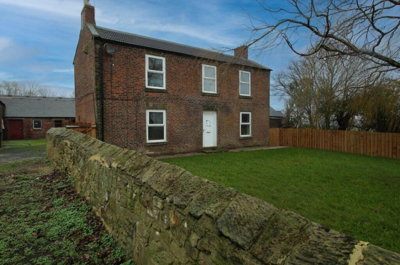
Browse 1 rental home to rent in East Bedlington from local letting agents.
The larger property sector typically features multiple bathrooms, substantial reception space, and private gardens or off-street parking. Four bedroom houses in East Bedlington span detached, semi-detached, and occasionally terraced configurations, with styles ranging from period properties to modern executive homes.
East Bedlington’s housing stock sits within the wider Northumberland pattern, where semi-detached homes make up the largest share at over 52%. Terraced properties account for approximately 31% of homes, detached houses around 18%, and flats roughly 11% of available accommodation. Prices have eased a touch over the last twelve months too, with overall values down by approximately 1%, which gives the market a more settled feel for renters. In short, the balance looks steady, with little sign of homes being pushed far above, or below, where they should be.
Rental options in East Bedlington cover a fair spread, from old mining terraces through to newer semi-detached family houses. We see two-bedroom terraces that suit first-time renters, three-bedroom semi-detached homes for smaller families, and the occasional larger detached property when more space is needed. The average property value in East Bedlington is approximately £156,711, with semi-detached homes averaging around £158,167 and terraced properties at approximately £125,000. That gives useful market context, while local letting agents can advise on current rents for individual homes.
The rental market here also benefits from solid transport links and close access to major employers in renewable energy and advanced manufacturing. Northumberland Energy Park is a key growth area, building on established specialisms in advanced manufacturing and bringing work closer to home for local residents. Once the Northumberland Line rail services are up and running, commuting should be even easier, which will add to East Bedlington’s appeal for people working in Newcastle or nearby towns.

East Bedlington still carries the feel of a historic Northumbrian mining village, even as it has developed into a modern residential community. Around the village centre, red brick homes and sandstone details give a clear nod to traditional North East building methods. Day to day, residents have convenience shops, pubs serving real ales, and a useful spread of services without needing to head into a larger town. Local events, sports clubs, and volunteer groups help keep the place close-knit.
East Bedlington Parish Council governs the area, serving a population of approximately 8,500 residents across nearly 3,850 households. Housing renewal has been gradual, with improvements aimed at stock that residents have described as too large, in the wrong location, or in need of major repair. That came through clearly in a 2019 Housing Needs Survey, which echoed those same concerns. The River Blyth adds green space and walking routes along the riverbank, and the village is also well placed for Northumberland’s coastline and countryside.
One of the area’s best-known historic features is the nearby Bedlington Conservation Area, which includes the old core around St. Cuthbert’s Church, a Grade I listed building dating from the 11th century. Homes within, or next to, this conservation area can face tighter planning controls, something renters should bear in mind if they are thinking about a longer stay. Mining heritage still shows in the street layout and older architecture, much of it built for coal industry workers. It gives the village character, while the modern services keep everyday life comfortable.

Families looking at rentals in East Bedlington have a reasonable choice of schools for different ages and needs. The village and the wider Bedlington area contain several primary schools, with options usually within easy walking or bus distance. In the broader area, primary education covers children aged 5 to 11, and catchment areas are generally tied to neighbourhoods within the village. It is wise to check the catchment and admissions rules for each school, since those details can affect placement.
For secondary education, pupils in the wider Bedlington area can continue through to GCSE level and beyond. Schools nearby cater for students aged 11 to 16, and further education is available at colleges in neighbouring Ashington. Ofsted reports and other official school data are the best place to compare performance and see which schools fit particular needs. Transport to school, whether by bus or on foot, depends on the exact property location in East Bedlington, so it is sensible to confirm arrangements before taking a tenancy.
Ashington, close by, provides college facilities for those going on to further education, while Newcastle opens the door to universities and other higher education institutions. The improving rail links through the Northumberland Line project should make that route even more straightforward, including access to universities in Newcastle. For families with older children thinking about university, the direct rail journey to Newcastle will typically take around 30 minutes once the new service starts. Part-time and vocational study is available through local colleges as well.

Transport is one of East Bedlington’s real strengths, with road links that work well for employment centres across the North East. The A189 spine road gives direct access to Cramlington, where manufacturing and retail employers are important, while the A1 trunk road opens up commuting to Newcastle and further afield. Bus services run through the area and link East Bedlington with Bedlington, Blyth, and Ashington. Being set off the main road network also means journeys tend to be less congested than in more urban areas, something many residents value during the working week and at weekends.
The Northumberland Line rail project is a major change for the area, as it will bring passenger services back to Bedlington Station. Expected to open in March 2026, the station will link directly with Ashington and Newcastle, with a 30-minute journey time to the regional capital. That will open up more jobs and study options for East Bedlington residents, and should make local homes even more appealing to commuters who want village life but work in Newcastle. For motorists, parking varies from home to home, with some properties offering off-street spaces and others relying on the on-street parking common in older village streets.
The wider road network also gives easy access to major employment locations such as Northumberland Energy Park, where renewable energy growth is creating new jobs, along with manufacturing sites in Cramlington and Blyth. People travelling to Ashington benefit from the direct A189 connection, while Morpeth is reached via the A1068. East Bedlington sits neatly between several employment centres, which makes it a practical option for workers in different sectors who want to avoid the higher housing costs of Newcastle city centre and its immediate surroundings.

It is sensible to set a firm budget before viewing homes, and that means allowing for rent, council tax, utility bills, and moving costs. Our rental budget tool can help with the numbers across East Bedlington’s different property types. Semi-detached family homes usually command higher rents than terraced properties, while flats tend to sit at the lower end of the market. If on-street parking restrictions apply in the area you prefer, do not forget the cost of any parking permits.
Use Homemove to browse current listings in East Bedlington and see which homes fit your requirements. From terraced cottages to semi-detached family houses, there is enough variety to match different household sizes and preferences. You will find homes at several price points, from compact one and two-bedroom terraces that suit singles or couples through to larger family houses with gardens. Setting up property alerts is sensible, because good rental homes in the village can move quickly, especially near school catchment areas.
Arrange viewings for any property that looks promising, so we can judge its condition, setting, and overall suitability properly. The age of the home matters, as does its position in relation to the River Blyth floodplain, together with the state of the fixtures and fittings. During a viewing, check for damp or condensation, which often points to ventilation problems in older houses. Ask the landlord or letting agent about the property’s mining history, any past flooding, and whether any recent renovation work has been done. Photographs help when comparing several homes later on.
Once a property feels right, take time over the tenancy agreement before anything is signed. The length of the tenancy, deposit amount, notice periods, and any specific property conditions all need to be clear. In East Bedlington, standard Assured Shorthold Tenancies usually last for six or twelve months, though longer terms can sometimes be arranged for tenants wanting stability. Clauses covering maintenance, alterations, and how repairs are reported deserve close attention. If the plan is to rent long term, asking for a RICS Level 2 Survey can be useful, as it may highlight defects that could affect the decision or need landlord action.
Tenant referencing checks are standard, and they usually include credit history, employment verification, and rental history. Having the paperwork ready makes the application process much smoother. Typically, that means proof of identity, recent payslips or bank statements, employment references, and previous landlord references if available. First-time renters without a rental record may need a guarantor or a higher deposit, so it is best to talk through those options with the letting agent early on. Our tenant referencing service can help keep the process moving and give landlords confidence in the application.
Before moving in, carry out a full inventory check and record the condition of the property carefully. That protects both tenant and landlord by setting out the home’s starting point. Go through every room with the inventory document, note any existing damage, wear and tear, and check the condition of appliances and fixtures. Dated photographs are useful evidence, and both the tenant and landlord should sign the final inventory. When the tenancy ends, that document becomes the reference point for any deposit deductions, which helps keep the outcome fair.
Renting in East Bedlington calls for a bit of extra attention to features that are specific to the area. Because of the village’s mining history, older properties may sit above former coal workings. Before committing to a tenancy, it is sensible to ask for information about the property’s mining history and whether any stability concerns are known. Clay soils are common in Northumberland because of glacial till deposits, and those soils can move as conditions turn dry or wet. That is usually more of a homeowner issue, but renters should still know that foundation movement can sometimes lead to cracks or damp.
Flood risk is another point to think about, especially for homes near the River Blyth, which runs south of the village. Most residential streets are not in high-risk flood zones, but surface water flooding can still happen during heavy rain, particularly in lower-lying spots. We would always ask the landlord or letting agent about any flood history and whether flood mitigation measures are already in place. If a property is in a flood risk area, insurance arrangements may affect service charges or landlord responsibilities. Homes inside, or close to, the Bedlington Conservation Area can also have planning limits on alterations or renovations, so that is worth checking if changes are planned during the tenancy.
Because much of the housing stock in East Bedlington is older, renters should look closely at the condition of the property. Typical issues include outdated electrics, such as rubber or lead sheathed wiring, and plumbing systems that may still contain lead pipes. Roofs deserve a proper check too, particularly on terraced properties where shared roof structures can create complicated maintenance responsibilities. Insulation levels matter as well, since older homes often lack sufficient loft, wall, and floor insulation, which can push heating costs up. Solid wall construction, common in pre-1919 homes, can make properties more expensive to heat and may need extra ventilation to reduce condensation and damp.

Rental prices vary by property type and condition, but East Bedlington is generally more affordable than Newcastle and other large regional centres. The ownership values give a useful guide, with semi-detached homes averaging around £158,167 and terraced properties at approximately £125,000. Typical rents range from competitive rates for one and two-bedroom terraces, often suited to first-time renters or couples, to higher figures for larger semi-detached or detached family homes. For current rental pricing on specific homes, local letting agents are the best point of contact, since the rental market moves separately from sales values.
For council tax, East Bedlington falls under Northumberland County Council. The bands run from A through to H, depending on the assessed value of the home, and most traditional terraced and semi-detached properties in the area sit in bands A to C. Some of the higher-value detached homes in the village may be in bands D or E. The Valuation Office Agency website can confirm the band for any property using its address, which is useful when working out total monthly costs as a renter.
Local schools serve several primary age groups in East Bedlington and the surrounding area, with options within walking distance of many residential streets. Secondary schooling is available in the wider Bedlington area, and catchment boundaries will determine which options are open to residents. Official Ofsted reports are the best place to compare school performance and identify the right fit for children’s needs. Because catchment areas can change, it is wise to confirm placements before choosing a rental property, especially where children are nearing secondary school age.
Bus services link East Bedlington with Bedlington, Blyth, and Ashington, and there are further connections to Cramlington and Newcastle through intermediate stops. The Northumberland Line rail services are set to make a major difference to public transport, with Bedlington Station expected to open in March 2026. Once that happens, direct trains to Newcastle will make the 30-minute journey much easier, improving access to work, education, and leisure across the region. That rail connection is likely to have a serious impact on East Bedlington’s reach into the regional job market.
For renters looking for value, East Bedlington has a strong case. The village combines semi-rural character with better access to major employment centres, which makes it a good fit for commuters, families, and anyone wanting more for their money. Ongoing investment, together with the coming rail link, adds to the long-term appeal of living here. Shops, pubs, and community facilities are all close at hand, while Northumberland’s countryside and coastline are within easy reach. There is also a good mix of housing, from traditional terraced homes with mining heritage to more contemporary family properties.
Rental deposits are usually equivalent to five weeks’ rent and are held in a government-approved deposit scheme for the duration of the tenancy. This applies to all deposits where the annual rent is below £50,000, so tenants have the reassurance that their money is protected and should be returned fairly at the end. Tenant referencing fees, credit checks, and administration charges vary from one letting agent to another, so it is sensible to ask for a full fee breakdown before applying. A first-time renter may find upfront costs are lower in some cases, and some landlords will accept guarantors instead of a long rental history. Moving expenses, utility connection fees, and any upfront broadband or TV costs also need to be included.
East Bedlington’s mining heritage means some homes may sit above former coal workings, which can occasionally affect ground stability. The clay soils in the area can also move during periods of extreme weather, leading to shrink-swell movement and possible issues where foundations are shallow. Homes near the River Blyth may be exposed to surface water flooding in heavy rain, so it is worth checking the Environment Agency flood maps for the exact property location. If a property is within a conservation area, alterations may be restricted, so that should be confirmed before any plans are made to personalise the rental home.
Knowing the cost structure around renting helps with budgeting and cuts down on surprises during the application process. The biggest upfront payment is usually the security deposit, capped at five weeks’ rent for homes with annual rent below £50,000. That deposit has to be protected in a government-approved scheme within 30 days of receipt, and the tenancy paperwork should set out which scheme is being used. When the tenancy ends, the deposit is returned after any deductions for damage beyond fair wear and tear or unpaid rent, and disputes are dealt with through a free resolution service.
There can also be referencing fees for credit checks and employment verification, administration charges for processing the application, and check-in fees for the inventory stage. Those costs vary quite a bit between letting agents, so comparing agents is a sensible move when searching for rentals in East Bedlington. Some landlords reduce fees or waive admin charges to attract reliable tenants, especially where a longer let is involved. Getting a rental budget agreement in principle before starting the search helps clarify affordability and shows landlords and letting agents that the application is being taken seriously.
First-time renters should also set money aside for moving costs, utility connection fees, and any upfront payment for broadband. Some homes need accounts opening with specific utility providers, while others leave more choice in the tenant’s hands. Contacting utility companies early helps make sure services are live before move-in day, so there is no gap in supply or last-minute connection charge. Energy performance certificates for rental properties set out insulation standards and expected heating costs, which makes monthly outgoings easier to judge for the homes being considered.
From 4.5%
Calculate what we can afford to spend on rent each month with our rental budget tool
From £35
Complete referencing checks to support our rental application
From £400
Book our professional survey to identify defects in a potential rental property
From £80
Energy performance certificate for rental properties
Properties to Rent In London

Properties to Rent In Plymouth

Properties to Rent In Liverpool

Properties to Rent In Glasgow

Properties to Rent In Sheffield

Properties to Rent In Edinburgh

Properties to Rent In Coventry

Properties to Rent In Bradford

Properties to Rent In Manchester

Properties to Rent In Birmingham

Properties to Rent In Bristol

Properties to Rent In Oxford

Properties to Rent In Leicester

Properties to Rent In Newcastle

Properties to Rent In Leeds

Properties to Rent In Southampton

Properties to Rent In Cardiff

Properties to Rent In Nottingham

Properties to Rent In Norwich

Properties to Rent In Brighton

Properties to Rent In Derby

Properties to Rent In Portsmouth

Properties to Rent In Northampton

Properties to Rent In Milton Keynes

Properties to Rent In Bournemouth

Properties to Rent In Bolton

Properties to Rent In Swansea

Properties to Rent In Swindon

Properties to Rent In Peterborough

Properties to Rent In Wolverhampton

Enter your details to see if this property is within your budget.
Loans, cards, car finance
Estimated property budget
Borrowing + deposit
You could borrow between
Typical borrowing
Monthly repayment
Est. at 4.5%
Loan-to-value
This is an estimate only. Your actual budget may vary depending on interest rates, credit history, and personal circumstances. For an accurate affordability assessment, speak to one of our free mortgage advisors.
This calculator provides estimates for illustrative purposes only and does not constitute financial advice. Your home may be repossessed if you do not keep up repayments on your mortgage. Estimates based on 4.5% interest rate, repayment mortgage. Actual rates depend on your circumstances.
Homemove is a trading name of HM Haus Group Ltd (Company No. 13873779, registered in England & Wales). Homemove Mortgages Ltd (Company No. 15947693) is an Appointed Representative of TMG Direct Limited, trading as TMG Mortgage Network, which is authorised and regulated by the Financial Conduct Authority (FRN 786245). Homemove Mortgages Ltd is entered on the FCA Register as an Appointed Representative (FRN 1022429). You can check registrations at NewRegister or by calling 0800 111 6768.

We use cookies to show you personalised content and improve your experience of our website. Find out more in our Privacy policy and Cookie policy.