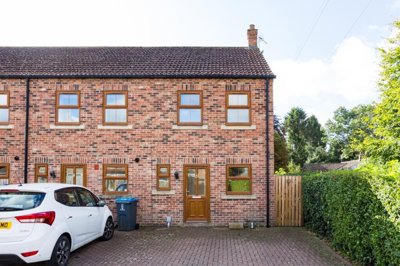
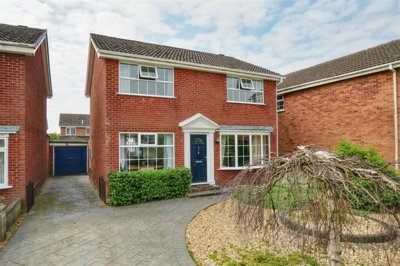
Browse 2 rental homes to rent in Easingwold, North Yorkshire from local letting agents.
Three bedroom properties represent a significant portion of the Easingwold housing market, offering space for families with multiple reception rooms and gardens in many cases. Browse detached, semi-detached, and terraced options ranging from period character homes to contemporary developments.
£1,425/m
1
0
24
Source: home.co.uk
Showing 1 results for 3 Bedroom Houses to rent in Easingwold, North Yorkshire. The median asking price is £1,425/month.
Source: home.co.uk
Detached
1 listings
Avg £1,425
Source: home.co.uk
Source: home.co.uk
Easingwold’s rental market reflects just how much people want to live in this part of North Yorkshire. Property prices in the area average around £352,567 according to home.co.uk listings data, with homedata.co.uk reporting £367,165 and home.co.uk at £364,000 as of early 2026. That solid sales backdrop feeds through into rents, so well-kept homes in this popular spot tend to attract competitive pricing. Detached homes typically command values of approximately £462,638, semi-detached properties sit closer to £296,611, and terraced homes sell at around £286,714.
Prices have been edging up rather than jumping, with property values rising by 0.77% over the last twelve months according to homedata.co.uk using HM Land Registry data. homedata.co.uk reports sold prices 5% up on the previous year, while homedata.co.uk indicates a rise of 4.2%. Over the last year there were 59 residential property sales in Easingwold, which shows the market has kept moving even with wider economic pressure.
New build schemes are slowly widening the choice of homes in Easingwold. The Hambleton Chase development by Tilia Homes on Stillington Road offers 2, 3, and 4-bedroom homes, including bungalows and properties with garages. At Fountains Walk, Taylor Wimpey’s range starts at £267,995 for 2-bedroom semi-detached homes and rises to £376,995 for 3-bedroom detached properties. For renters, that means modern layouts and energy-efficient construction are starting to appear alongside the town’s older stock.

Easingwold is a civil parish and market town in North Yorkshire, with a population of approximately 5,900 residents according to recent estimates. Household numbers grew by 18% over the ten years leading to the 2021 Census, which says a fair bit about the town’s pull. It combines the character and community feel of a traditional Yorkshire settlement with the practical amenities that make day-to-day life comfortable for people of all ages.
In the town centre, 51 listed buildings are clustered along streets such as Long Street and Uppleby. Among them are houses, cottages, traditional public houses, and the familiar market cross, all of which underline Easingwold’s past as a trading centre. The local architecture uses the building materials you would expect in North Yorkshire, including pale red-brown brick, pale brown brick, and stone, with Welsh slate or pantile roofs on many period homes. Close by, the York Handmade Brick Company supplies traditional bricks that help keep that local character intact.
For the surrounding villages, Easingwold acts as the local economic centre, with independent retailers and everyday services concentrated in the town. One of the larger employers is the Cabinet Office’s Emergency Planning College at The Hawkhills, which provides a good number of jobs for the area. York is close enough to widen the employment picture further, while still leaving residents with the advantages of smaller-town living. We think that mix of heritage and modern life is a big part of the appeal.

Families are well served here, and that has helped make the town popular with renters who have school-age children. Primary education is available through local schools within Easingwold, while secondary options include choices in the town and nearby areas. Catchment boundaries can vary, so we always suggest checking them carefully before signing for a property. School performance data and Ofsted ratings are useful markers when comparing the options.
AreaInsights puts the average household size in the Easingwold Ward at 2.1, which points to a blend of family homes and smaller households, including retirees. That profile helps explain why education still matters so much locally, with schools serving not only Easingwold itself but also the villages that look to the town as their nearest hub.
York’s proximity opens up further education routes too, including sixth form and college provision at places such as York College and Fulford School. That nearby choice adds to Easingwold’s appeal for families weighing up the rental market. We should also bear in mind that school admission policies often favour children living inside specific catchment zones, so early research is a must for households with school-age children.

Easingwold has strong road links, which makes driving in and out of town fairly straightforward. The A19 runs close by, giving direct access to York, about 12 miles to the south, and onward routes to Leeds, Teesside, and the wider motorway network. That position suits commuters who work in York or across the region but would rather live somewhere smaller. A car journey into York usually takes around 25-30 minutes, depending on traffic and the exact destination.
Local bus services link Easingwold with York and nearby villages, giving residents another option if they do not want to rely on a car. They make it possible to get into the town centre, and into York from time to time, without the cost of running a vehicle. For tenants keeping an eye on their monthly outgoings, that can be a sensible compromise.
For journeys beyond York, rail travel is available from York railway station, which has strong connections to London, Edinburgh, Leeds, and Manchester. Put together, the road and rail options give Easingwold renters real flexibility, whether they travel by car, use public transport, or mix the two. Parking is generally decent for a town of this size too, with on-street spaces and public car parks available for residents and visitors.

The local economy offers work across several sectors, with Easingwold acting as a service centre for the villages around it. The Cabinet Office’s Emergency Planning College at The Hawkhills is one of the biggest employers, with jobs in training, administration, and emergency planning. Shops, pubs, and hospitality venues in the town centre also provide employment, and healthcare plus care services add another layer of opportunity for local people.
York widens the employment picture still further for people living in Easingwold. Many residents commute there, using the A19 for a straightforward run into the city and access to a broader job market. Finance, healthcare, education, retail, and professional services all feature in York, offering roles that are not always available locally. That commuting pattern has an effect on rents too, with commuter-friendly homes tending to command a premium.
Local property professionals have been upbeat about the York area’s housing outlook, pointing to continued falls in interest rates and planning reforms as support for demand. A leading Yorkshire developer based in Easingwold has gone as far as to call the current conditions a possible golden period for the housing market, which tells us a lot about confidence in the town’s long-term residential appeal.

Before we begin a property search in Easingwold, it makes sense to sort a rental budget agreement in principle from a lender, or work out what rent is affordable based on income and spending. That document shows landlords and letting agents that the monthly rent is within reach, which helps an application stand out in a busy market. Most lenders will base it on income, employment status, and credit history.
Different parts of Easingwold suit different lifestyles, so it pays to look around rather than settle on the first available street. Think about school proximity if children are in the picture, commuting needs to York or another employment centre, and how close you want to be to shops, pubs, and parks. Long Street and Uppleby have more character homes in the centre, while newer areas bring a more modern style of housing and construction.
After spotting suitable properties to rent in Easingwold, we would contact local letting agents to arrange viewings. Each home deserves a proper inspection, with attention paid to the fixtures, fittings, and any appliances included in the rental. For period properties or listed buildings, the roof, brickwork, and any signs of damp or structural movement deserve extra scrutiny.
Period homes and properties with unusual features need a careful look before any commitment is made. With 51 listed buildings in the town, many rentals fall within Conservation Areas or are listed in their own right. Homes with solid walls rather than cavity walls can behave differently in terms of insulation and heating, which can affect comfort and energy bills. We would ask about the energy efficiency rating and any recent maintenance history.
Once a property feels right, the application goes through the letting agent with references, proof of income, and the rental budget agreement included. Landlords usually ask for credit checks, employment references, and references from previous landlords as part of tenant selection. Having everything ready ahead of time can speed the process up quite a bit.
After the references are approved, the tenancy agreement is signed and the deposit, plus any upfront rent, is paid. We recommend reading the terms carefully, especially the length of the tenancy, notice periods, and who is responsible for maintenance and repairs. The deposit will be protected in a government-approved deposit scheme within 30 days of the start of the tenancy.
There are a few area-specific points to keep in mind when renting in Easingwold. Because the town has 51 listed buildings, many rental properties sit within Conservation Areas or are listed themselves. If a listed building or conservation area home is on the table, certain alterations may need consent, and landlords can have their own requirements for maintaining period details. The Conservation Area includes Long Street, the parish church, Church Hill, Uppleby, and the market place.
Flood risk is another factor worth checking. Easingwold has seen surface water flooding before, including incidents affecting homes in July 2021 when firefighters were called to flooding on a residential street. Anyone considering a property should check the long-term risk from rivers, surface water, and groundwater through the GOV.UK service. Homes on higher ground, or with better drainage, may suit tenants who want less to worry about.
Traditional brick and stone construction is the norm in Easingwold, with Welsh slate or pantile roofs on many homes. A lot of the listed buildings use pale red-brown brick, pale brown brick, and stone, while some older converted buildings and public houses feature rendered brick. The look is part of the town’s charm, though it can mean more upkeep than modern construction. During viewings, roof condition, brickwork, damp, and any structural movement should all be checked. Solid walls, as opposed to cavity walls, may also behave differently in terms of insulation and heating.
Specific rental prices in Easingwold vary with property type and condition, but the overall average property price in the area sits around £352,567 to £367,165 according to homedata.co.uk recent sales data. Rental levels usually track property values, so larger homes like detached properties will generally command higher monthly rents than smaller terraced houses or flats. For up-to-date rental pricing, we recommend searching our home.co.uk listings, which are refreshed regularly and cover properties across all rental price points in Easingwold and the surrounding YO61 postcode area.
Easingwold properties come under North Yorkshire Council for council tax. Bands run from A through to H depending on the property’s assessed value, although many of the town’s traditional terraced and semi-detached homes fall into bands B to D. The specific band can be checked through the North Yorkshire Council website using the property address, and the monthly contribution follows from that banding. With the Easingwold Ward average household size at 2.1, the council tax range reflects a mix of property types.
Easingwold has education options for children at both primary and secondary level, and it acts as a local hub for the villages around it. Parents should look closely at school performance data and Ofsted ratings to narrow down the strongest choices. Catchment areas can have a major effect on which schools children can attend, so school places should be checked before a rental decision is made if education is a priority. At secondary level, schools in neighbouring areas are also available, and York brings further options including sixth form provision at larger schools and colleges.
Local bus routes connect Easingwold with York and the surrounding villages, which gives residents without cars a workable alternative. The nearby A19 offers strong road links into York and across the wider region, with the trip to York usually taking around 25-30 minutes by car. From York station, rail passengers can get direct trains to London, Edinburgh, Leeds, and other major cities. Taken together, the bus network and the A19 mean Easingwold is reasonably well connected for a town of its size, though having a car still makes life easier for reaching everything locally.
For renters, Easingwold combines historic character, a strong sense of community, and the practical amenities that make daily life easier. Household numbers rose by 18% over the decade to 2021, which shows the town has become more desirable as a place to live. Independent shops, traditional pubs, road links to York, and local schools mean most essentials are close at hand in a compact, walkable centre. With 51 listed buildings and conservation areas, the town has kept much of its architectural heritage, which adds character to the rental market and gives it something newer developments simply cannot match.
Renting in Easingwold usually means paying a deposit equal to five weeks rent, subject to the cap based on annual rent levels. That deposit is protected in a government-approved scheme within 30 days of the start of the tenancy and is returned at the end, minus any deductions for damage or unpaid rent. Upfront rent, often one month in advance, may also be due, along with any fees the letting agent charges for referencing, administration, or inventory services. Some landlords also ask for a holding deposit while references are checked, which is normally taken off the final move-in costs but may not be refundable if the application is withdrawn.
The new build developments in Easingwold are mostly aimed at buyers, although rental opportunities can appear if first owners decide to let their homes. Tilia Homes’ Hambleton Chase on Stillington Road includes 2, 3, and 4-bedroom homes, with bungalows among the mix, while Taylor Wimpey’s Fountains Walk offers homes from 2-bedroom semi-detached up to 5-bedroom properties. Further proposals, including the Alne Road scheme by Karbon Homes and Oaktree Living, would bring affordable rental housing into the area, and the York Road development has outline planning permission for senior living apartments and bungalows.
Period properties in Easingwold have plenty of charm, but they also bring a few practical issues. Homes built before modern damp-proof courses can be prone to rising damp, and solid wall construction insulates less effectively than cavity walls, which can push heating costs up. The clay soils common across North Yorkshire can cause shrink-swell movement over time, leading to cracks or other structural movement. Properties with original wiring or lead pipework may also need upgrading to meet current safety standards. Before we commit to a tenancy, we would ask about recent maintenance, the age of the wiring and plumbing, and any history of structural issues or damp treatment.
Knowing the upfront cost of renting matters before starting a search in Easingwold. The biggest single payment is usually the security deposit, capped at five weeks rent for annual rents below £50,000. It has to be protected in a government-approved scheme within 30 days of the tenancy start date, and it is returned at the end minus any deductions for damage or unpaid rent. First-time renters should budget for that outlay alongside moving costs and furniture purchases.
Beyond the deposit and the first month’s rent, there may be extra fees from letting agents, including referencing fees, administration charges, and inventory check costs. Transparency rules mean these should be explained before any commitment is made, but we still advise asking for a full breakdown when discussing a property. Some landlords may also want a holding deposit while references are checked, usually deducted from the final move-in costs, although it may not be refundable if the application is withdrawn.
Ongoing costs while renting in Easingwold include monthly rent, council tax, utilities, and contents insurance. Homes with poor insulation or older heating systems can lead to higher utility bills, so it helps to ask about the energy efficiency rating of any property under consideration. Understanding the condition of the home before signing the tenancy agreement can prevent surprise costs later on, and it also means any existing issues are properly recorded before they become a dispute at the end of the lease. An inventory check at the start of the tenancy will note the condition of the property and its contents, which gives evidence if damage is argued over at the end.
From 4.5%
We recommend getting pre-approved for your rental budget to strengthen your application.
From £25
Complete your referencing checks quickly through our approved providers.
From £85
Check the energy efficiency of properties before you rent
From £100
Document property condition to protect your deposit
Properties to Rent In London

Properties to Rent In Plymouth

Properties to Rent In Liverpool

Properties to Rent In Glasgow

Properties to Rent In Sheffield

Properties to Rent In Edinburgh

Properties to Rent In Coventry

Properties to Rent In Bradford

Properties to Rent In Manchester

Properties to Rent In Birmingham

Properties to Rent In Bristol

Properties to Rent In Oxford

Properties to Rent In Leicester

Properties to Rent In Newcastle

Properties to Rent In Leeds

Properties to Rent In Southampton

Properties to Rent In Cardiff

Properties to Rent In Nottingham

Properties to Rent In Norwich

Properties to Rent In Brighton

Properties to Rent In Derby

Properties to Rent In Portsmouth

Properties to Rent In Northampton

Properties to Rent In Milton Keynes

Properties to Rent In Bournemouth

Properties to Rent In Bolton

Properties to Rent In Swansea

Properties to Rent In Swindon

Properties to Rent In Peterborough

Properties to Rent In Wolverhampton

Enter your details to see if this property is within your budget.
Loans, cards, car finance
Estimated property budget
Borrowing + deposit
You could borrow between
Typical borrowing
Monthly repayment
Est. at 4.5%
Loan-to-value
This is an estimate only. Your actual budget may vary depending on interest rates, credit history, and personal circumstances. For an accurate affordability assessment, speak to one of our free mortgage advisors.
This calculator provides estimates for illustrative purposes only and does not constitute financial advice. Your home may be repossessed if you do not keep up repayments on your mortgage. Estimates based on 4.5% interest rate, repayment mortgage. Actual rates depend on your circumstances.
Homemove is a trading name of HM Haus Group Ltd (Company No. 13873779, registered in England & Wales). Homemove Mortgages Ltd (Company No. 15947693) is an Appointed Representative of TMG Direct Limited, trading as TMG Mortgage Network, which is authorised and regulated by the Financial Conduct Authority (FRN 786245). Homemove Mortgages Ltd is entered on the FCA Register as an Appointed Representative (FRN 1022429). You can check registrations at NewRegister or by calling 0800 111 6768.

We use cookies to show you personalised content and improve your experience of our website. Find out more in our Privacy policy and Cookie policy.