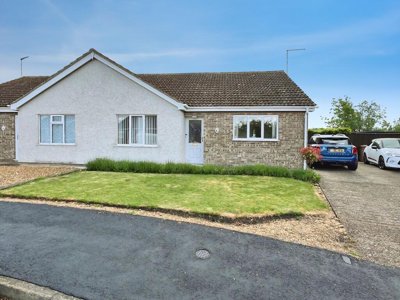
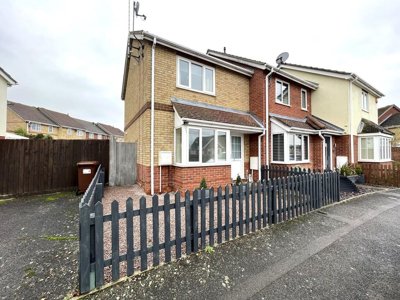
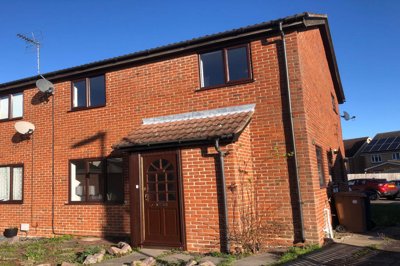
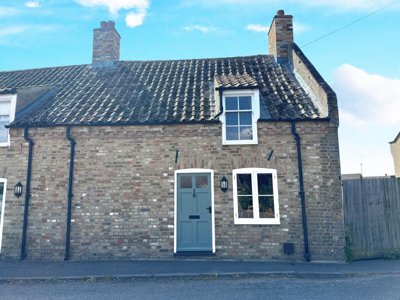
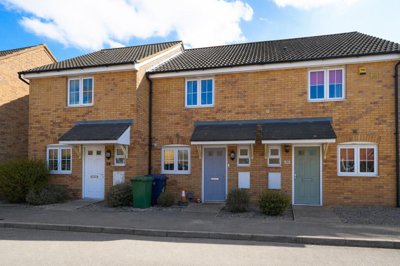
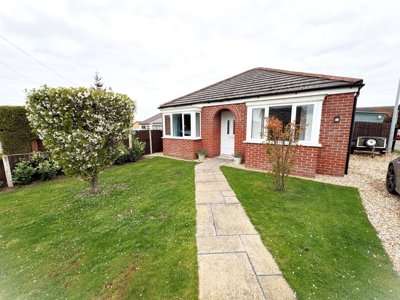
Browse 6 rental homes to rent in Doddington from local letting agents.
The 2 bed house market features detached, semi-detached, and terraced properties with two separate bedrooms plus living spaces. Properties in Doddington range from Victorian and Edwardian period homes to modern new builds, with pricing varying across different neighbourhoods.
Doddington’s rental market mirrors the village’s detached-led character. Recent data shows average sold prices of approximately £310,106 over the past twelve months, while detached properties command an average of £381,881. Semi-detached homes average £243,571, and terraced properties typically sell for around £182,300. In practice, rent levels tend to follow those values, with two and three-bedroom houses making up most of the available lettings. New development has been limited in recent years, although planning applications for sites including Land South of Wimblington Road and Land at May Meadows point to future growth. At the bottom of Wood Street, a new development delivered 28 bungalows in 2020-2022, which shows there is still investment in the local housing stock. May Meadows goes further upmarket, with eco-luxury detached homes including six and seven-bedroom properties from £600,000 to £700,000, sitting at the top end of the local market.
Houses dominate the rental stock in Doddington, and flats are almost absent according to census data. That leaves renters mainly looking at detached and semi-detached homes, often better suited to families, with approximately 30% of properties offering four or more bedrooms. Some 83% of houses in the village are classed as under-occupied, so space is rarely in short supply. Historical property prices also point to a steady market, with values up 7% over the previous year and sitting just 1% below the 2022 peak of £325,933. For renters, that usually means continuity rather than sharp swings. The trade-off is simple enough, anyone after a smaller flat may need to look at neighbouring villages or head to March for a wider choice.

Set within the Cambridgeshire Fens, Doddington sits on an island of higher ground surrounded by low-lying fenland. The geology is mainly Ampthill Clay, a Jurassic mudstone, with March Gravels across much of the village surface. That gives the place a distinct feel, rising above the marshland and offering a degree of natural flood resilience, while also bringing its own issues for building and upkeep. Flooding has hit the village seriously for 2 consecutive years after a forty-year respite, a reminder of how hard the drainage system can be to live with. Surface water flood risk modelling shows a 5% probability during a 1 in 100-year rainfall event, rising to 24% in more extreme scenarios. Anyone renting here needs to keep those figures in mind.
Doddington’s sense of community is rooted in its historic buildings and the amenities clustered inside the Conservation Area. The Parish Church of St Mary, listed Grade II*, is the standout landmark, while the Clock Tower and Doddington Windmill can be picked out from much of the surrounding countryside. Grade II listed buildings such as Doddington Hall, Weavers Cottage, and properties along Church Lane and Newgate Street add to the village’s architectural weight. Much of the older housing was built using locally manufactured gault clay bricks, giving the older streets their familiar warm yellow look. Day-to-day life is supported by local shops, pubs, and recreation spaces, with March providing extra shopping, banking, and supermarket trips within a short drive. With 2,532 residents across 1,045 households, the village still feels closely knit, and neighbours often know one another.

Education in and around Doddington works across several age groups. Doddington Primary School serves the village at primary level, while secondary options are found in nearby March and Whittlesey. Families usually need to factor in school transport, because catchment areas for the nearest secondary schools often include Doddington. Cambridgeshire’s school inspection system sits under Ofsted, so parents can check the latest ratings when comparing options. Demographically, the village shows a noticeable gap in the 21-40 age group, sitting some 13% below expected levels, which suggests fewer school-age children than in comparable places. New housing may shift that balance as younger families arrive, and that could feed into school rolls and catchment arrangements over the coming years.
For further education, Cambridgeshire’s colleges in Cambridge, Peterborough, and Huntingdon are reachable via the A142 and A141 road network. Ely also gives the area extra sixth form and specialist provision. We would always advise checking catchment boundaries and school transport arrangements directly with Cambridgeshire County Council, because they can change and may have a big impact on secondary school journey times. Location within Doddington can matter too, as homes along Wimblington Road mostly date from the 1980s and 1990s, while newer schemes such as those at Wood Street bring a more contemporary feel that may suit families looking for modern accommodation.

Road travel does most of the heavy lifting here. The A142 runs through nearby March and links to the A141, giving routes towards Cambridge and Peterborough. March railway station is about 8 miles away, with Great Northern and Greater Anglia services to Cambridge and Peterborough. Cambridge city centre sits around 35 miles southwest of Doddington, while Peterborough is roughly 25 miles to the north. By car, Cambridge usually takes 50 minutes to an hour depending on traffic, and Peterborough is about 35 minutes away. Those commute times can work for people on a flexible or hybrid pattern, but daily driving would still be a serious commitment.
Bus links do exist, although they are modest compared with town routes. Local services connect Doddington with March and nearby villages, while the Cambridgeshire Guided Busway offers another way into Cambridge from places further south, though Doddington would first need a trip to a connection point. Cycling in the Fens has improved in recent years, although the flat landscape can still feel exposed when the wind picks up. Parking is usually straightforward in residential streets, with driveways and garages common because detached housing is so prevalent. commuters should still check the exact parking arrangement on each listing, since older terraced cottages may have very little off-street space. The A14 also gives fairly direct access across the wider region, linking Doddington to Felixstowe port and the midlands beyond.

Before arranging viewings, it helps to get a rental budget agreement in principle from a lender or mortgage broker. It shows borrowing capacity and gives a clearer idea of what monthly rent can be carried comfortably. In most cases, the calculation will look at income, existing debts, and credit history to arrive at a realistic rental range.
Take time to explore Doddington’s neighbourhoods and think about what matters most day to day. Proximity to the village centre, schools, transport links, and the workplace can all shape the right choice. The Conservation Area brings character homes with planning restrictions, while newer schemes may have more up-to-date specifications. Flood risk is not uniform across the village either, so checking the exact location is well worth doing.
Browse available rental listings in Doddington through Homemove and local estate agents, then line up viewings for anything that fits the brief. During each visit, make notes on condition, facilities, and anything that looks off. Ask about the proposed tenancy length, what fixtures and fittings are included, and who handles maintenance and repairs. A viewing is the time to judge whether the place genuinely works and to spot any warning signs early.
Once a suitable property is found, the tenant application process begins, with references, proof of income, and right to rent documents usually needed. landlords and letting agents in Cambridgeshire commonly ask for credit checks, employment references, and previous landlord references as well. Having all of that ready before you apply can speed things up in a competitive market.
Before moving in, read the tenancy agreement closely. It will set out the rent amount, deposit protection arrangements, maintenance responsibilities, and notice periods. Inventory checks and condition reports should be completed and signed by both parties too. The deposit will be protected in a government-approved scheme within 30 days of receipt. We would also check your obligations on rent payments, property care, and any limits on pets or alterations.
Move-in day usually means a few jobs all at once. Arrange the date, transfer utilities into your name, and complete the inventory check-in. Take meter readings and photograph the property condition so there is a record. It also helps to get to know local amenities, the nearest supermarkets, and emergency contacts, then register with local healthcare services and update your address with the relevant parties.
Ampthill Clay is not just a line on a map here. The village sits on a geological formation that can shrink and swell through dry spells and wet cycles, and that can affect foundations, especially in older homes with shallow footings. The result may be subsidence or other structural movement. People renting should look for cracks, uneven floors, or doors that stick, since those can point to ground movement below. Age matters too. Properties built before 1950 may have older electrical systems, less insulation, or ageing plumbing that can create extra costs during a tenancy, and traditional brick bonds and construction methods in those pre-1950 buildings often need specialist attention for maintenance.
Flood risk deserves a proper look in Doddington. Parts of the village fall within Flood Zone 3 for surface water flooding, and the local drainage network, including the Sixteen Foot and Forty Foot drains to the east and south of the parish, works to manage water across the fenland landscape. A run of recent flooding after a forty-year gap shows how quickly conditions can change. Homes in the Conservation Area also face planning restrictions that can limit alterations, which may affect plans for redecoration or improvements. Listed Building status brings extra consent requirements for any work, so those rules should be clear before a tenancy is signed. In some parts of the village, reliance on septic systems or individual drainage solutions, together with recorded concerns about foul sewerage infrastructure, means the drainage set-up for any property needs checking.

Recent transactions put Doddington’s sold prices at an average of approximately £310,106. Detached homes with three or four bedrooms usually attract the highest rents, while smaller terraced houses are generally the more affordable option. Flats are in very short supply, so anyone after apartment living may need to look at March or another Fenland town. Property values have risen by 1.2% over the past twelve months, which points to steady rental conditions rather than sudden change. Local letting agents should be able to give the latest rental listings and exact pricing for each property type.
Fenland District Council handles council tax for properties in Doddington. Bands run from A through to H, with the final band depending on the property’s assessed value. Band D is the median position nationally, although Doddington’s mainly detached housing stock may lean towards higher bands than average. Before agreeing a tenancy, we would always check the exact council tax band, because it sits alongside rent as part of the monthly outlay. Fenland District Council also provides online tools for checking council tax bands and estimated charges for properties across the area.
Schooling in Doddington begins with the local primary school, while secondary education is available in neighbouring March and Whittlesey. Ofsted inspections are the standard way of judging school quality, so current ratings for the relevant catchment schools are worth checking. Cambridgeshire County Council manages admissions and catchment arrangements through its online portal. The village has fewer school-age children than is typical, though that may change as new homes bring in younger families. Transport to secondary schools should also be confirmed, because some pupils may need bus travel depending on where they are placed and where they live in Doddington.
Public transport from Doddington is limited, with local buses linking the village to March and surrounding settlements, though services can be sparse compared with urban routes. March railway station, about 8 miles away, connects into the national rail network with services to Cambridge and Peterborough. For more frequent rail services, travellers may need to head to Cambridge or Peterborough. For daily commuting, car travel is usually the most practical option, with journeys of around 50 minutes to Cambridge and 35 minutes to Peterborough. Renters without a car should think carefully about the realities of rural transport before committing to life here.
There is plenty to like about Doddington if rural village life is the aim. The Conservation Area brings attractive period architecture, local shops and pubs add convenience, and the surrounding Fenland countryside offers walking routes on the doorstep. The trade-off is familiar enough, limited public transport and regular car use for many day-to-day needs. A property market rising by 1.2% annually suggests rental continuity, and the predominantly detached housing stock gives good family space. Even so, flood risk and the village’s older demographic profile may shape how well it fits particular lifestyles.
In England, tenant deposits are capped at five weeks rent where the annual rent is less than £50,000. That deposit must go into a government-approved Tenancy Deposit Scheme within 30 days of receipt, and you should be told which scheme is holding it. Extra costs can still arise, including referencing charges, administration costs, and fees for inventory checks or tenancy renewals. Since April 2016, letting agents and landlords have been restricted in the fees they can charge, with Security Deposits and Rent being the main upfront costs. First-time renters should also budget for moving expenses, utility connection fees, and the possible cost of furniture or white goods if these are not included.
From 4.5%
Compare rental budget rates and find the best deal
From £49
Expert tenant referencing for rental applications
From £350
Professional survey for your new property
From £85
Energy performance certificate for your property
Budgeting for a Doddington move starts with the deposit. For homes with annual rents below £50,000, the tenant deposit is capped at five weeks rent and must be protected in a government-approved scheme such as the Deposit Protection Service, MyDeposits, or the Tenancy Deposit Scheme. That protection means the deposit should come back at the end of the tenancy, provided there is no damage beyond normal wear and tear or unpaid rent. The letting agent or landlord has 30 days to tell you which scheme is holding the money, and failure to do so can lead to financial penalties. At the end of the tenancy, the inventory check-out report decides any deductions, so a clear check-in record matters.
There can be a few extra costs on top in Doddington. Referencing fees may cover credit checks, employment verification, and previous landlord references, although those charges are now restricted under tenant fee legislation introduced in 2019. Depending on the letting agent or landlord, administration fees for tenancy setup, the cost of an Energy Performance Certificate, and inventory report charges may still appear. First-time renters should also budget for connecting gas, electricity, water, and broadband, plus council tax, which applies to all residential properties in Fenland District. Rent in advance, usually one month, is commonly needed alongside the deposit, so moving costs can come to two months rent plus deposit before removal expenses or furniture purchases are even counted. Homemove recommends getting quotes for rental budget agreements and survey services, so the full financial picture is clear before anyone commits to a tenancy in Doddington.
Properties to Rent In London

Properties to Rent In Plymouth

Properties to Rent In Liverpool

Properties to Rent In Glasgow

Properties to Rent In Sheffield

Properties to Rent In Edinburgh

Properties to Rent In Coventry

Properties to Rent In Bradford

Properties to Rent In Manchester

Properties to Rent In Birmingham

Properties to Rent In Bristol

Properties to Rent In Oxford

Properties to Rent In Leicester

Properties to Rent In Newcastle

Properties to Rent In Leeds

Properties to Rent In Southampton

Properties to Rent In Cardiff

Properties to Rent In Nottingham

Properties to Rent In Norwich

Properties to Rent In Brighton

Properties to Rent In Derby

Properties to Rent In Portsmouth

Properties to Rent In Northampton

Properties to Rent In Milton Keynes

Properties to Rent In Bournemouth

Properties to Rent In Bolton

Properties to Rent In Swansea

Properties to Rent In Swindon

Properties to Rent In Peterborough

Properties to Rent In Wolverhampton

Enter your details to see if this property is within your budget.
Loans, cards, car finance
Estimated property budget
Borrowing + deposit
You could borrow between
Typical borrowing
Monthly repayment
Est. at 4.5%
Loan-to-value
This is an estimate only. Your actual budget may vary depending on interest rates, credit history, and personal circumstances. For an accurate affordability assessment, speak to one of our free mortgage advisors.
This calculator provides estimates for illustrative purposes only and does not constitute financial advice. Your home may be repossessed if you do not keep up repayments on your mortgage. Estimates based on 4.5% interest rate, repayment mortgage. Actual rates depend on your circumstances.
Homemove is a trading name of HM Haus Group Ltd (Company No. 13873779, registered in England & Wales). Homemove Mortgages Ltd (Company No. 15947693) is an Appointed Representative of TMG Direct Limited, trading as TMG Mortgage Network, which is authorised and regulated by the Financial Conduct Authority (FRN 786245). Homemove Mortgages Ltd is entered on the FCA Register as an Appointed Representative (FRN 1022429). You can check registrations at NewRegister or by calling 0800 111 6768.

We use cookies to show you personalised content and improve your experience of our website. Find out more in our Privacy policy and Cookie policy.