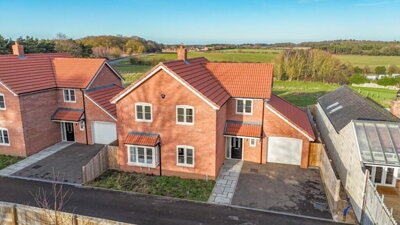
Browse 2 rental homes to rent in Docking, King's Lynn and West Norfolk from local letting agents.
The larger property sector typically features multiple bathrooms, substantial reception space, and private gardens or off-street parking. Four bedroom houses in Docking span detached, semi-detached, and occasionally terraced configurations, with styles ranging from period properties to modern executive homes.
£1,700/m
1
0
179
Source: home.co.uk
Showing 1 results for 4 Bedroom Houses to rent in Docking, King's Lynn and West Norfolk. The median asking price is £1,700/month.
Source: home.co.uk
Detached
1 listings
Avg £1,700
Source: home.co.uk
Source: home.co.uk
Docking's rental market tends to follow the wider North Norfolk picture, where well-kept homes in village settings continue to attract steady demand. Hard rental data for Docking itself is thin, so we look to the sales market for context. Average property prices in the village are around £349,700, with detached homes at £431,250, semi-detached properties near £290,000, terraced homes at about £250,000, and flats averaging approximately £180,000. That spread tells us the same thing renters usually find on the ground, larger family houses carry a clear premium here.
Over the last twelve months, Docking has recorded modest growth of 0.6%, which points to a market that feels stable rather than overheated. There have also been 33 property sales in the past year, a solid level of activity for a village of this size. For renters, that usually translates into fairly predictable costs and a sensible, if not huge, choice of homes, whether the plan is a long-term let or a shorter stay while getting to know the area.

Set in a classic North Norfolk landscape, Docking is known for the flint and brick buildings that shape much of its architectural identity. The village centre sits within a designated Conservation Area, where historic cottages, farmhouses and barns from the Victorian and Edwardian eras still define the street scene. St Mary's Church, a Grade I listed building, remains a central landmark and part of everyday community life. Across the village, numerous Grade II listed properties add to that sense of history and give Docking a character that is hard to mistake.
The local economy is built around agriculture, tourism and day-to-day village services. Docking is well placed for Holkham, Brancaster and Wells-next-the-Sea, which makes it a practical base for people working in tourism or simply wanting rural living with straightforward coastal access. Holiday homes and second residences in the surrounding area also reflect Norfolk's wider appeal to visitors, and that can shape both rental availability and local demand. In the village itself, life is supported by businesses such as a village shop, a traditional pub and a range of home-based enterprises.

For families, education in Docking starts with Docking Primary School, serving the village and the surrounding rural communities. It takes children from Reception through to Year 6, giving parents a local option without long school runs in the early years. After that, most pupils travel to nearby towns for secondary education, where there is a wider choice of secondary schools and grammar schools. Transport arrangements are generally organised through the local authority.
Older school buildings in the village also form part of Docking's educational story, and some contribute directly to the character of the Conservation Area. We always suggest checking current Ofsted ratings and admission arrangements with the schools themselves, because both can change and catchment areas may affect placement. For families who want a broader range of options, King's Lynn and the wider Norfolk school network add further choices within a reasonable travelling distance.

Getting in and out of Docking is mainly a road-based affair, which fits its rural setting. The village lies just off the A148, linking it with King's Lynn to the southwest and Cromer to the southeast. For rail travel, the nearest station is King's Lynn, where East Anglian Railway services run to Cambridge and London's Liverpool Street station. That keeps Docking in play for some commuters to the capital, with journey times to King's Lynn station of about 20-25 minutes by car.
Day to day, most residents rely on a car. Public transport in Docking is limited, with bus services to nearby towns running on restricted timetables and mainly covering school journeys and key shopping trips. There is a plus side for cyclists, though, because Norfolk's fairly flat landscape and quiet country lanes suit rides to surrounding villages and towns. No motorway access means longer trips to major cities take a bit more planning, but many people here are happy to make that trade for the quieter pace.

Before arranging viewings in Docking, we recommend securing a rental budget agreement in principle. Issued by a lender, it sets out your maximum monthly rent and shows landlords that you are a serious applicant who has already been financially vetted. It should cover your target rent amount and your borrowing capacity, while also giving you a clearer sense of what to focus on during the search.
It helps to spend a little time in Docking before making any commitment. We would visit the local pub, look at the nearby shops and amenities, and drive to the nearest towns to get a realistic feel for commuting times. The Conservation Area matters, so do the local school and the community facilities. All of that shapes daily life here.
Current rental listings in Docking can be checked through Homemove and local letting agents. Stock tends to be limited in the village, so when a suitable property comes up, moving quickly often matters. We also advise setting up alerts for new listings, simply to give yourself the best chance of seeing fresh instruction before the market moves on.
Once a property fits what you need, book the viewing without delay. During the visit, we would look closely at condition, ask how the landlord handles maintenance, and confirm exactly what the rent includes. Older village homes can come with different upkeep issues from more modern properties, so those details are worth pinning down early.
If you decide to go ahead, the letting agent or landlord will usually ask for references, proof of income and identification. Build in enough time for tenant referencing checks, as they can take a little while to complete. With older buildings, especially listed properties or homes inside the Conservation Area, there may also be extra points to consider before everything is finalised.
Before move-in day, we would make sure the tenancy agreement clearly sets out the rent, deposit, maintenance responsibilities and notice periods. It is also sensible to ask for an inventory check so the property's condition is recorded from the start. In Docking, with its older housing stock and local geology, it is particularly useful to understand how the landlord approaches repairs and ongoing maintenance.
In a village such as Docking, it is worth looking beyond the house itself. The area's geology, chalk overlain by glacial tills and boulder clay, means some properties can be prone to shrink-swell movement. That may affect foundations, particularly in older homes with shallower footings or properties close to trees. We would ask the landlord directly about any past structural issues and whether any surveys or investigations have already been carried out.
Listed buildings and homes within the Conservation Area need a bit more thought. Changes to listed properties require consent, which may limit what tenants are allowed to alter. Many of these homes have traditional flint construction and original features, which is a large part of their appeal, but it also means landlord and tenant both need to be clear about maintenance responsibilities. Surface water flooding is another point to check, especially after heavy rainfall, so we would look at the property's position against local drainage patterns.

Detailed rental price evidence for Docking alone is limited, but the sales market still offers a useful benchmark, with average prices around £349,700. Across North Norfolk villages, rents usually vary by property type, size and condition, with two and three-bedroom homes commonly falling between £800-£1,200 per month. Homes on the newer Pastures development may sit at different price points from older village cottages. For the latest figures, we would speak to local letting agents.
In council terms, Docking sits within King's Lynn and West Norfolk Borough Council. The band depends on the property, but Victorian and Edwardian cottages often fall into bands A to C, while larger modern houses may sit in bands D or E. If you want to confirm a specific home, you can check the banding through the Valuation Office Agency website using the address or the council tax reference number.
Docking Primary School is the main local provision, taking children from Reception through to Year 6. Secondary pupils generally travel to nearby towns, and King's Lynn broadens the choice with access to secondary schools and grammar schools. We always tell families to check the latest Ofsted ratings and admission criteria for any school they are considering, because those details do change over time.
Public transport in Docking is fairly limited, which is typical for a rural village. Bus services run on reduced timetables and mainly focus on school routes and links to market towns. For rail, the nearest station is King's Lynn, around 20-25 minutes drive away, with services to Cambridge and London. In practice, most residents see a car as essential for everyday travel, shopping and reaching a wider spread of services.
For many people, Docking gets the balance right. It offers rural Norfolk living, a real community feel, and straightforward access to the North Norfolk coastline. The market has also stayed fairly even, with prices rising by just 0.6% over the past year, which suggests a balanced backdrop for renters. Families, retirees, local workers and those commuting to King's Lynn often find the village especially attractive.
On costs, standard deposits for rental properties in England are equivalent to five weeks' rent, capped at five weeks' rent where the annual rent exceeds £50,000. Most letting agents will also ask for referencing fees, typically between £100-£200 per applicant. An inventory check usually costs £100-£200 and records the condition of the property at the start and end of the tenancy. We would always ask for a full breakdown of fees before submitting an application.
From 4.5%
Compare rental budget rates and find the best deal
From £100
Expert referencing services for landlords and tenants
From £450
Professional property survey for your new rental
From £85
Energy Performance Certificate for your property
The monthly rent is only part of the picture in Docking. For properties with annual rents under £50,000, the standard security deposit is capped at five weeks' rent and held in a government-approved deposit scheme for the length of the tenancy. That deposit is there to protect the landlord against unpaid rent, damage beyond fair wear and tear, or other breaches of the tenancy agreement. Once the tenancy ends, it should be returned within ten days of both sides agreeing the final amount.
There can be a few other costs to budget for. Referencing fees typically fall in the £100-£200 range per applicant and cover credit checks, employment verification and landlord references, while inventory check fees are usually £100-£200 so both parties have a clear record of the property's condition at the beginning and end of the tenancy. If the property is older, especially with traditional construction or a location in the Conservation Area, we would also keep some headroom for possible maintenance requests during the tenancy. A rental budget agreement in principle before viewings can help by setting out your maximum affordable rent and showing landlords that you are financially ready.
Properties to Rent In London

Properties to Rent In Plymouth

Properties to Rent In Liverpool

Properties to Rent In Glasgow

Properties to Rent In Sheffield

Properties to Rent In Edinburgh

Properties to Rent In Coventry

Properties to Rent In Bradford

Properties to Rent In Manchester

Properties to Rent In Birmingham

Properties to Rent In Bristol

Properties to Rent In Oxford

Properties to Rent In Leicester

Properties to Rent In Newcastle

Properties to Rent In Leeds

Properties to Rent In Southampton

Properties to Rent In Cardiff

Properties to Rent In Nottingham

Properties to Rent In Norwich

Properties to Rent In Brighton

Properties to Rent In Derby

Properties to Rent In Portsmouth

Properties to Rent In Northampton

Properties to Rent In Milton Keynes

Properties to Rent In Bournemouth

Properties to Rent In Bolton

Properties to Rent In Swansea

Properties to Rent In Swindon

Properties to Rent In Peterborough

Properties to Rent In Wolverhampton

Enter your details to see if this property is within your budget.
Loans, cards, car finance
Estimated property budget
Borrowing + deposit
You could borrow between
Typical borrowing
Monthly repayment
Est. at 4.5%
Loan-to-value
This is an estimate only. Your actual budget may vary depending on interest rates, credit history, and personal circumstances. For an accurate affordability assessment, speak to one of our free mortgage advisors.
This calculator provides estimates for illustrative purposes only and does not constitute financial advice. Your home may be repossessed if you do not keep up repayments on your mortgage. Estimates based on 4.5% interest rate, repayment mortgage. Actual rates depend on your circumstances.
Homemove is a trading name of HM Haus Group Ltd (Company No. 13873779, registered in England & Wales). Homemove Mortgages Ltd (Company No. 15947693) is an Appointed Representative of TMG Direct Limited, trading as TMG Mortgage Network, which is authorised and regulated by the Financial Conduct Authority (FRN 786245). Homemove Mortgages Ltd is entered on the FCA Register as an Appointed Representative (FRN 1022429). You can check registrations at NewRegister or by calling 0800 111 6768.

We use cookies to show you personalised content and improve your experience of our website. Find out more in our Privacy policy and Cookie policy.