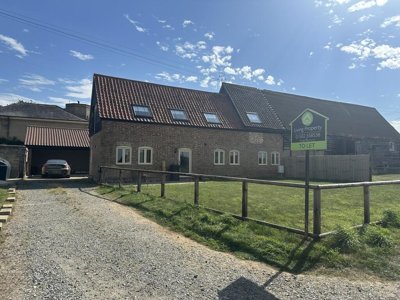
Browse 1 rental home to rent in Ditchingham, South Norfolk from local letting agents.
The 2 bed house market features detached, semi-detached, and terraced properties with two separate bedrooms plus living spaces. Properties in Ditchingham range from Victorian and Edwardian period homes to modern new builds, with pricing varying across different neighbourhoods.
£0/m
0
0
0
Source: home.co.uk
Showing 0 results for 2 Bedroom Houses to rent in Ditchingham, South Norfolk.
Ditchingham’s rental stock is fairly mixed. Our current listings range from terraced cottages to semi-detached family homes, with detached properties also appearing from time to time. Rents shift with size, condition and closeness to the River Waveney. Recent building work has added more choice without cutting across conservation priorities. Ditchingham Dam, the linear settlement along the flood plain, still holds a sizeable share of the stock, with mid-century and newer builds side by side.
Values in Ditchingham have stayed fairly steady over the last year. The overall average is £263,083, down 12% from the 2023 peak of £299,102, so the market has settled after the pandemic spike. For renters, that easing can matter, especially beside commuter spots nearer Norwich. Beauly Homes’ proposed scheme on Loddon Road, with 27 new residences including nine affordable units, may shift supply again. Recent sales on Loddon Road, Waterside Drive and Thwaite Road show the market is still moving.
Terraced homes have made up most sales in Ditchingham in recent years, which helps explain why they remain common with both buyers and renters. Semi-detached properties sit higher, averaging around £345,000, while a two-bedroom flat or maisonette on Waterside Drive sold for £195,000 in February 2025. That spread gives a useful read on how landlords may think about rent levels.

Ditchingham feels distinct because of its riverside setting and its housing history. The village is internationally recognised for the Tayler and Green schemes, especially Windmill Green, Agnes Green Crescent and Scudamore Place. Herbert Tayler and David Green designed these post-war council houses, which later received Grade II listed status for their approach to rural living. Clay pantile roofs, brickwork and careful layouts still do the work they were meant to do.
Population changes tell their own story in Ditchingham. Numbers rose from 1,059 in 1961 to 1,614 by 2001, which points to steady demand over time. Older census returns suggest many residents worked in nearby towns or were retired, and that pattern still shows. Village events, Bungay’s shops and services, and walks beside the River Waveney keep the place active, while Ditchingham Dam stretches south along the river. Renters there should also think about flood risk.
Beyond Tayler and Green, Ditchingham’s conservation picture widens towards Hedenham Hall and Ditchingham Hall on Norwich Road. Ditchingham Hall is a Grade I listed Classical country house of mauve brick with red-brick dressings under hipped slate roofs, built around 1710 and extended in 1910. Its parkland sits at Grade II in English Heritage's Register of Parks and Gardens of Special Historic Interest. Plans to extend the Hedenham and Ditchingham Hall Conservation Area to include more than a dozen extra properties underline how much of this corner of South Norfolk matters architecturally.

Materials matter in Ditchingham, especially for anyone weighing up maintenance. Clay pantiles are the usual roof covering, in blue-black glazed or traditional red, although concrete tiles have replaced some of them. Wall finishes vary too. Windmill Lane has painted brick on earlier homes, while later bungalows use red brick or buff gault brick. Some show dark stained brick or diaper patterns. Scudamore Place is easy to spot for its buff brickwork with subtle yellow and black variations.
Some of the older buildings in the Ditchingham Dam Conservation Area have rendered and painted exteriors, which can hide timber-frame or clay lump construction beneath. Later Victorian homes often have white brickwork that has faded to grey. Many original timber and steel casement windows have gone to uPVC, though the standard of replacement varies. Lower Wells Close, by Parsons and Whittley, won a South Norfolk Design Award in 2012 and was one of the county’s first Passivhaus schemes, using weatherboarding and other modern materials that still refer back to local building forms.
Conservation rules in Ditchingham can be tighter than some tenants expect. The Ditchingham Conservation Area covers the much-praised mid-20th century housing, including the Tayler and Green developments from 1946 through 1964, while the Ditchingham Dam Conservation Area follows the River Waveney and Chainbridge Beck and contains no listed buildings. Article 4 directions may also apply, removing permitted development rights. Even small external changes can need consent, so it is worth checking what is allowed before signing.

Schooling is available without needing to stay in the village itself. Primary pupils usually look to nearby villages or Bungay, where several schools have Ofsted ratings from good to outstanding. School buses matter here, since the rural roads shape daily routines. For older children, Bungay has middle and upper schools, with Diss and Harleston as further options. Norwich grammar schools are accessible for those who qualify, though places are competitive.
For younger children, Bungay and the surrounding villages provide nursery and early years places, which helps working parents keep childcare local. Norfolk is still adding school places across South Norfolk as numbers rise. Higher and further education sit mainly in Norwich, around 20 miles north of Ditchingham, with the University of East Anglia and City College Norwich both offering degree and vocational courses. Families should still run the numbers on catchment areas and transport costs before fixing a budget.

Roads do most of the work here. Ditchingham sits on the B1332, with Bungay to the south and the A143 towards Norwich to the northwest. The A146 runs through nearby Bungay, linking to Great Yarmouth in the east and Norwich to the north, and the city is usually around 40 minutes away by car. Beccles station is roughly eight miles southeast and trains take around 30 minutes to Norwich. From there, London Liverpool Street is about 90 minutes away on direct services.
Bus services link Ditchingham with Bungay and nearby villages, but the timetable is thin enough that many residents still depend on a car. Cycling has improved a bit, and the quieter lanes suit shorter rides. Parking is what you would expect in a village, with most homes having off-street space and only limited public parking. For anyone commuting to Norwich, the compromise is clear, village living on one side, a 45 minutes to an hour drive on the other during off-peak hours.
The Waveney Valley setting gives Ditchingham a practical edge for local work. Many residents head to Bungay for shops and healthcare facilities. Others travel further to Norwich, Great Yarmouth or Ipswich. Remote and hybrid working have also made the village easier to consider, since people can keep professional ties in larger towns without living inside them.

Before arranging viewings, we ask for a rental budget agreement in principle from a lender or financial adviser. It gives landlords a quick read on the rent level the applicant can support. Having paperwork ready before viewings also helps when several people want the same South Norfolk property.
Take time to look beyond the front door in Ditchingham. Check the village layout, nearby schools and any flood risk, especially in Ditchingham Dam. The housing stock splits into clear areas, from the conservation-designated Tayler and Green homes to the long line of houses along Ditchingham Dam, and each brings its own issues for tenants.
Start with local agents and tell them exactly what you need. We would view more than one property, and different parts of Ditchingham, so condition, value and landlord response can be compared properly. Older homes need a closer look. Clay pantile roofs, timber windows and brickwork deserve attention, because repairs can be specialist work.
Older homes, especially those in the conservation area or built with clay pantiles and timber windows, are worth a pre-tenancy survey. Ditchingham has plenty of age in its housing stock, and the River Waveney flood plain adds another layer of risk. A professional report can pick up damp, roof problems or defects that are easy to miss at a standard viewing.
Once a property feels right, get the referencing application in quickly. Send the documents asked for, including ID, income proof and references from previous landlords. In Ditchingham’s rental market, speed and completeness can be the difference between securing a home and losing it to another applicant.
After referencing comes back, read the tenancy agreement line by line. Check the deposit protection details and the inventory procedure, then arrange utility transfers and update your address before moving in. A careful move-in inventory matters, because the record you make at the start can protect the tenant’s deposit later.
Flood risk deserves close attention in Ditchingham, particularly around the Ditchingham Dam conservation area. Homes on the River Waveney flood plain carry a real risk that affects insurance costs and day-to-day living when water levels rise. The Maltings development on Pirnhow Street sits within Flood Zone 3 of the Environment Agency's Flood Risk Maps, the highest probability area. Ask about flood history and any resilience work, such as raised electrics or flood-resistant materials. Buildings insurance in these places can cost more than average, and some landlords pass that on through service charge arrangements.
Conservation area status changes the picture for both tenants and landlords. In the Ditchingham Conservation Area, especially around the Grade II listed Tayler and Green houses, planning controls can be tighter and some alterations may not be allowed. Check any proposed change before agreeing to a tenancy, and ask whether recent works received consent. Original details such as clay pantiles, timber windows and traditional brickwork may also need more looking after than modern finishes.
Look closely at the building fabric when you view. Clay pantile roofs last well, but slippage does happen, and patches or repairs can tell their own story. Check original timber or steel windows, or the quality of any uPVC replacements. Damp can crop up near the flood plain, so look for moisture staining, mould or a musty smell. Older electrics may also need attention, so ask about rewiring or test certificates. That is especially relevant for the mid-century Tayler and Green homes and the pre-Georgian buildings that still form part of the stock.
Rental figures for Ditchingham are not published, but the sales market gives a useful guide. Average property prices sit at about £263,083, with terraced properties typically around £212,750, semi-detached homes around £345,000 and detached properties reaching approximately £322,100. A two-bedroom flat or maisonette on Waterside Drive sold for £195,000 in February 2025, which helps set the lower edge of the market. Rents usually move in line with size, condition and where the property sits in the village, and homes in Ditchingham Dam can price differently from those in the main settlement because of the flood risk and the mix of housing.
South Norfolk Council handles council tax for Ditchingham properties. Bands vary across the village, with older homes and smaller terraces usually in lower bands, while larger detached houses and newer developments tend to sit higher. The Valuation Office Agency website can confirm the band for a specific address, and South Norfolk Council lists the current rates and payment options. Listed buildings and conservation area homes do not automatically sit in a different band from similar properties elsewhere, although their upkeep can be more demanding.
School provision inside Ditchingham is limited, so primary-aged children usually travel to nearby villages or Bungay. Several local primary schools have good Ofsted ratings, although the details change from year to year. Transport matters here because families may need to rely on school buses or a car. Older pupils can choose Bungay, Diss or Harleston, while the Norfolk grammar system gives some families extra options if testing is practical. Norwich is about 20 miles away and has the nearest further education college. Before signing a tenancy, check the latest Ofsted ratings and catchment boundaries.
Public transport in Ditchingham reflects its rural setting. Bus services reach Bungay and surrounding villages, but evening and weekend timetables are limited, so life without a car can be awkward. Beccles station is about eight miles southeast and Norwich is the change point for London, with journeys to Liverpool Street taking around 90 minutes. Most residents use private vehicles for everyday travel, and Norwich is usually a 40-45 minutes drive via the A146. Those who work from home may find that arrangement easier to live with than daily commuting.
Ditchingham suits renters who want a quieter base without losing contact with Norfolk's market towns and the countryside around the River Waveney. The village is known for its architectural heritage, especially the Tayler and Green conservation area and its Grade II listed post-war housing. Local events and Bungay's facilities keep day-to-day life moving, while riverside walks add another layer. The trade-offs are plain enough, rural transport limits, flood risk in places such as Ditchingham Dam, and the car use that comes with this kind of setting. For anyone drawn to architecture and river walks, Ditchingham makes a strong case.
Deposits on English rental homes are capped at five weeks' rent, worked out from the annual rent divided by 52 and then multiplied by five. Many letting agents and landlords also ask for referencing fees, usually £100 to £300 per applicant, covering credit checks, employment verification and previous landlord references. Inventory check fees may add another £100-200, although they are not compulsory and some landlords pay them. Holding fees, which are allowed only during the referencing period, are capped at one week's rent and must be refunded if the tenancy falls through or taken off the first rent payment. Anyone renting for the first time should also plan for removal costs, utility setup and contents insurance.
Keeping an eye on the upfront costs helps avoid a nasty surprise when you settle on a property in Ditchingham. Under the Tenant Fees Act 2019, the security deposit is capped at five weeks' rent and must be protected in a government-approved deposit scheme within 30 days of receipt. That protection puts the tenant’s money beyond reach until the end of the tenancy, provided rent is paid and damage stays within fair wear and tear. Holding fees are still capped at one week's rent and must be returned if the tenancy does not proceed, or set against the first rent payment. Ask for a full fee breakdown before you commit.
Referencing usually covers credit history, right to rent checks and confirmation of income or employment, with total costs generally between £100 and £300 per applicant. Some landlords and agents package referencing, inventory and administration together, so ask for a full breakdown before moving ahead. Inventory fees of £100-200 cover the detailed condition report at move-in and move-out, which can matter if a deposit dispute arises later. In Ditchingham, where many homes are older and some sit near the flood plain, that record is especially useful.
Moving in brings its own costs, so first-time renters should plan for initial removals, utility set-up and contents insurance alongside deposits and fees. Homes in flood-risk areas can also carry higher buildings insurance costs, which may show up in rent or service charges. It is sensible to put aside a little for immediate repairs too, especially in older properties where heating controls or window mechanisms often need attention at the start of a tenancy.
Properties to Rent In London

Properties to Rent In Plymouth

Properties to Rent In Liverpool

Properties to Rent In Glasgow

Properties to Rent In Sheffield

Properties to Rent In Edinburgh

Properties to Rent In Coventry

Properties to Rent In Bradford

Properties to Rent In Manchester

Properties to Rent In Birmingham

Properties to Rent In Bristol

Properties to Rent In Oxford

Properties to Rent In Leicester

Properties to Rent In Newcastle

Properties to Rent In Leeds

Properties to Rent In Southampton

Properties to Rent In Cardiff

Properties to Rent In Nottingham

Properties to Rent In Norwich

Properties to Rent In Brighton

Properties to Rent In Derby

Properties to Rent In Portsmouth

Properties to Rent In Northampton

Properties to Rent In Milton Keynes

Properties to Rent In Bournemouth

Properties to Rent In Bolton

Properties to Rent In Swansea

Properties to Rent In Swindon

Properties to Rent In Peterborough

Properties to Rent In Wolverhampton

Enter your details to see if this property is within your budget.
Loans, cards, car finance
Estimated property budget
Borrowing + deposit
You could borrow between
Typical borrowing
Monthly repayment
Est. at 4.5%
Loan-to-value
This is an estimate only. Your actual budget may vary depending on interest rates, credit history, and personal circumstances. For an accurate affordability assessment, speak to one of our free mortgage advisors.
This calculator provides estimates for illustrative purposes only and does not constitute financial advice. Your home may be repossessed if you do not keep up repayments on your mortgage. Estimates based on 4.5% interest rate, repayment mortgage. Actual rates depend on your circumstances.
Homemove is a trading name of HM Haus Group Ltd (Company No. 13873779, registered in England & Wales). Homemove Mortgages Ltd (Company No. 15947693) is an Appointed Representative of TMG Direct Limited, trading as TMG Mortgage Network, which is authorised and regulated by the Financial Conduct Authority (FRN 786245). Homemove Mortgages Ltd is entered on the FCA Register as an Appointed Representative (FRN 1022429). You can check registrations at NewRegister or by calling 0800 111 6768.

We use cookies to show you personalised content and improve your experience of our website. Find out more in our Privacy policy and Cookie policy.