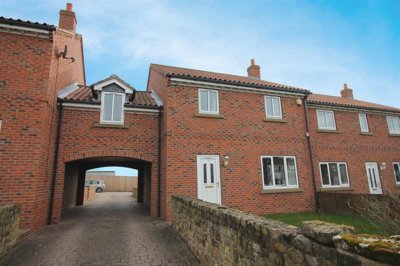
Browse 1 rental home to rent in Dishforth, North Yorkshire from local letting agents.
The larger property sector typically features multiple bathrooms, substantial reception space, and private gardens or off-street parking. Four bedroom houses in Dishforth span detached, semi-detached, and occasionally terraced configurations, with styles ranging from period properties to modern executive homes.
£0/m
0
0
0
Source: home.co.uk
Showing 0 results for 4 Bedroom Houses to rent in Dishforth, North Yorkshire.
Dishforth has a compact housing market, so prices can move around depending on plot size, condition and how much outside space a property offers. homedata.co.uk records show different 12-month average sold-price models at £275,111, £289,000 and £337,500, which is a wide spread for a village and a sign that the sample is small. Detached homes are the highest-value part of the market at £398,333 on average, while semis sit at £276,667. Terraced sales seen over the last year have ranged from roughly £100,000 to £167,000, which gives a sense of the lower end of the village stock.
The trend picture has softened a little rather than showing sharp growth. One 12-month model shows sold prices 1% down on the previous year, while another records a 6.1% fall over the same period. I have not found a verified named new-build development inside Dishforth, so renters are likely to see established homes more often than purpose-built rental blocks. Wider Yorkshire data shows 3.5% of sales over the last year were newly built, about 2,200 homes, which suggests fresh stock exists nearby even if the village itself remains traditional.

Dishforth feels rural rather than suburban, with open countryside, a village-scale layout and a strong link to RAF Dishforth. The settlement has the kind of day-to-day rhythm that suits tenants who want a quieter base, especially if they spend much of the week working in Thirsk, Ripon or on the road. Traditional North Yorkshire homes in villages like this are often built in brick or stone, and the local sales picture suggests a mix of older cottages, detached houses and some terraces. That creates a rental market where character homes can be just as relevant as modern family houses.
Daily life is shaped by the surrounding landscape as much as the village itself. You are close to farmland, open views and the wider Hambleton countryside, which makes walks, cycling and weekend drives easy to build into your routine. The local stock also hints at some older homes, including at least one Grade II listed detached village residence, so you will find period features as well as simpler family layouts. For renters, that means checking the age of the property, the quality of the insulation and how much maintenance the landlord is willing to handle before you commit.
Dishforth is a small village, so schooling decisions usually stretch beyond the parish boundary. Families often look to nearby Thirsk, Ripon and other North Yorkshire villages when comparing primary and secondary options, then check the latest catchments before making a move. North Yorkshire Council is the right place to confirm admissions, transport support and school place rules, because rural catchments can change from year to year. That is especially useful if you need a home that fits a school run rather than just a floorplan.
The best rental choice for a family is often the one that keeps the morning routine simple. A driveway, easy access to main roads and a sensible route to school can matter more than an extra bedroom or a slightly lower monthly rent. Older pupils may also need a plan for sixth form or further education, so think about how they will travel before signing a tenancy. If you are moving from a town, the difference between a village location and a school catchment boundary can be more noticeable than you expect.

Road travel is one of Dishforth's strongest advantages. The village sits close to the A1(M) and the A168, which makes journeys north and south simple for drivers and gives the area a strong commuter appeal. That road access is one reason the village works for people heading to Thirsk, Ripon, Harrogate or further afield while still wanting a rural address. If you rely on the car, off-street parking and a driveway can be worth paying extra for.
Rail users are more likely to look to nearby Thirsk or Northallerton rather than expect a station in the village itself. Those stations give access to York, Leeds and London, which keeps Dishforth realistic for hybrid workers and regular commuters who do not want to live in a town centre. Bus services in small rural places are usually thinner than in larger settlements, so check the timetable before you rule out a car-free move. Cycling and walking are pleasant for local journeys, but long-distance commuting from the village is still best planned around road or rail.
Start by checking whether the home sits in the main village, on a quieter lane or closer to the A1(M), because that changes noise, parking and daily travel. Our property search helps you compare each pocket of Dishforth before you book a viewing.
Before you view anything, work out what you can comfortably spend on rent, deposit, first month's rent, bills and council tax. Having a rental budget agreement in principle means you can move fast when the right house appears.
Good village homes can attract interest quickly, especially detached or semi-detached houses with gardens and driveways. Try to view at different times of day so you can judge traffic, light and local activity.
Older cottages, listed homes and converted houses deserve a close look at damp, roof condition, heating and insulation. If you are taking a longer tenancy in an older property, a RICS Level 2 survey can also help you understand any visible issues before you commit.
Have photo ID, proof of income, landlord references and your right-to-rent documents ready before you apply. Clean paperwork speeds up referencing and reduces the chance of losing the property to another applicant.
Before you hand over money, agree the tenancy start date, meter readings, parking arrangements, broadband options and any rules on decorating or outdoor storage. A clear handover makes the first few weeks in a new village home much easier.
Dishforth's housing stock is likely to include older village homes, so condition matters as much as the postcode. Look closely for signs of damp, especially in ground-floor rooms, and ask how the property performs in winter when rural homes can feel colder than modern town houses. Roof age, window quality and heating efficiency are all worth checking, because those factors affect comfort and running costs just as much as the monthly rent. If the home is listed, make sure you understand which changes are allowed before you sign.
Flood checks should also be part of your search, even though the research supplied does not flag a specific hotspot in the village. Rural homes can have different drainage, garden run-off and access issues from one street to the next, so it pays to ask questions rather than assume the risk level is the same everywhere. Parking matters too, particularly where lanes are narrow or turning space is tight. For flats or converted properties, ask who handles service charges, communal maintenance and any ground rent structure that sits behind the landlord's costs.

The research supplied here does not give a verified live average rent for Dishforth, so the best way to check current asking prices is through live listings on home.co.uk. For market context, homedata.co.uk records show average sold prices between £275,111 and £337,500 over the last 12 months, with detached homes averaging £398,333 and semis £276,667. That does not replace a rental figure, but it does explain why larger village homes tend to command stronger rents than terraces or smaller properties. If you want the most accurate rent, compare current listings by property type and condition.
The supplied research does not include a band split for the village, so each home needs to be checked individually. Dishforth falls under North Yorkshire Council, and council tax is set according to the property's valuation band rather than the postcode alone. Detached homes usually sit higher than smaller terraces because of their original assessed value, but the exact band can only be confirmed for the specific property. Always check the listing or the council tax bill before you sign.
Dishforth is a small village, so the most practical school choices are often in nearby Thirsk, Ripon and surrounding North Yorkshire villages. Families usually compare catchments, travel time and admissions rules before deciding where to rent. North Yorkshire Council is the best place to confirm current boundaries and support arrangements. Because school places can change, it is wise to check the latest information before you settle on a home.
Dishforth is better connected by road than by rail, with the A1(M) and A168 close by for easy driving in either direction. For trains, most residents will look to nearby Thirsk or Northallerton, which open up routes to York, Leeds and London. Bus services are usually thinner in a village setting, so a car can make daily life simpler. If you are planning to commute regularly, it is worth checking both station access and parking before you move.
Dishforth suits renters who want a quieter village base with practical road access and a strong sense of place. The area works well for commuters, RAF-connected households and anyone who prefers houses with gardens, driveways and a rural outlook rather than apartment living. Sale data suggests detached and semi-detached homes are the dominant stock, which supports that feel. If you want village life without being cut off from North Yorkshire's larger towns, Dishforth is a sensible option.
For most rentals in England, the usual upfront costs are the holding deposit, the tenancy deposit and the first month's rent. The tenancy deposit is normally capped at five weeks' rent, although the exact amount depends on the rent level and tenancy structure. You may also face referencing costs, moving costs and setup costs such as broadband and utilities. If you are also thinking about buying later, the 2024-25 purchase thresholds are 0% up to £250,000, 5% from £250,000 to £925,000, 10% from £925,000 to £1.5 million and 12% above that, with first-time buyer relief at 0% up to £425,000 and 5% from £425,000 to £625,000.
The research supplied does not identify a verified named new-build scheme inside the village, so established homes are likely to make up most of the rental search. Wider Yorkshire data shows 3.5% of sales over the last 12 months were newly built properties, equal to about 2,200 homes, which shows fresh stock exists in the wider region. For Dishforth itself, that means you should expect more traditional housing than brand-new apartment blocks or estate phases. If a new home appears, it is worth moving quickly because supply is likely to be limited.
From 4.5%
Compare rental budget rates and find the best deal
From £499
Speed up your application with trusted checks
From £99
Review energy efficiency and likely heating costs
From £350
Get a detailed inspection for older village homes
Renting in Dishforth is usually straightforward, but the upfront cash still needs planning. Most tenants will need a holding deposit, a tenancy deposit capped at five weeks' rent in most cases, and the first month's rent before moving in. After that, the everyday costs are shaped by council tax, heating, broadband and travel, so the monthly figure is often more important than the headline rent alone. In a village setting, a property with better insulation or off-street parking can save money in ways that are easy to overlook at first glance.
If you are renting now while thinking about a future purchase in Dishforth, the 2024-25 stamp duty thresholds are useful to have in mind. The rate is 0% up to £250,000, 5% from £250,000 to £925,000, 10% from £925,000 to £1.5 million and 12% above that. First-time buyer relief gives 0% up to £425,000 and 5% from £425,000 to £625,000, with no relief above £625,000. That gives movers a clear picture of the difference between short-term rental costs and the costs of buying in the same area later on.
Properties to Rent In London

Properties to Rent In Plymouth

Properties to Rent In Liverpool

Properties to Rent In Glasgow

Properties to Rent In Sheffield

Properties to Rent In Edinburgh

Properties to Rent In Coventry

Properties to Rent In Bradford

Properties to Rent In Manchester

Properties to Rent In Birmingham

Properties to Rent In Bristol

Properties to Rent In Oxford

Properties to Rent In Leicester

Properties to Rent In Newcastle

Properties to Rent In Leeds

Properties to Rent In Southampton

Properties to Rent In Cardiff

Properties to Rent In Nottingham

Properties to Rent In Norwich

Properties to Rent In Brighton

Properties to Rent In Derby

Properties to Rent In Portsmouth

Properties to Rent In Northampton

Properties to Rent In Milton Keynes

Properties to Rent In Bournemouth

Properties to Rent In Bolton

Properties to Rent In Swansea

Properties to Rent In Swindon

Properties to Rent In Peterborough

Properties to Rent In Wolverhampton

Enter your details to see if this property is within your budget.
Loans, cards, car finance
Estimated property budget
Borrowing + deposit
You could borrow between
Typical borrowing
Monthly repayment
Est. at 4.5%
Loan-to-value
This is an estimate only. Your actual budget may vary depending on interest rates, credit history, and personal circumstances. For an accurate affordability assessment, speak to one of our free mortgage advisors.
This calculator provides estimates for illustrative purposes only and does not constitute financial advice. Your home may be repossessed if you do not keep up repayments on your mortgage. Estimates based on 4.5% interest rate, repayment mortgage. Actual rates depend on your circumstances.
Homemove is a trading name of HM Haus Group Ltd (Company No. 13873779, registered in England & Wales). Homemove Mortgages Ltd (Company No. 15947693) is an Appointed Representative of TMG Direct Limited, trading as TMG Mortgage Network, which is authorised and regulated by the Financial Conduct Authority (FRN 786245). Homemove Mortgages Ltd is entered on the FCA Register as an Appointed Representative (FRN 1022429). You can check registrations at NewRegister or by calling 0800 111 6768.

We use cookies to show you personalised content and improve your experience of our website. Find out more in our Privacy policy and Cookie policy.