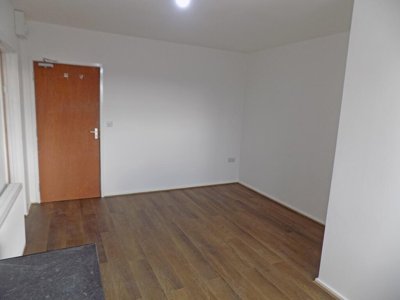
Browse 1 rental home to rent in Dinnington St. John's from local letting agents.
John's from local agents. One bed apartments provide a separate bedroom alongside distinct living space, bathroom, and kitchen areas. Properties in Dinnington St. John's are available in various building types including mansion blocks, contemporary developments, and house conversions.
Dinnington St. John's rental market still carries the shape of the area's mixed housing stock, much of it formed during the rapid expansion that followed the opening of Dinnington Main Colliery in 1905. Sales records from 1995 to 2015 show semi-detached homes making up 39% of transactions, with terraced properties at 30%, detached houses at 29%, and flats at only 2%. That balance is still visible in what comes up to rent now, with two to three-bedroom semis and older terraces making up much of the local choice. Compared with nearby Sheffield, rents are often more manageable, which is one reason renters looking for extra room often focus on Dinnington St. John's.
Newer building work has widened the choice a bit. Thornberry Gardens, for instance, has modern detached family homes from around £299,995 for sale, while similar houses at Meltonfield Chase begin at approximately £310,000. At the top end, Swinston Hill Gardens is offering executive detached homes at around £450,000. There is also a planned social housing scheme by Keystone Yorkshire on East Street, subject to planning approval from Rotherham Borough Council, which should broaden the local mix further in the years ahead. For renters, that means a market with both older homes full of period details and newer properties built to modern standards. In Dinnington St. John's, standard three-bedroom homes usually sit around £1,025 per month, depending on condition and where they are within the parish.
Because of Dinnington St. John's mining background, we always suggest checking condition carefully when viewing older colliery terraces. Most were built in brick during the early 20th century expansion, and while they are often solidly put together, age can show through damp penetration, roof defects, and older electrics. A landlord who has kept a property properly should be able to show paperwork for recent repairs, renovations, or structural works, so we would ask to see that evidence.

Community life is a big part of the appeal here. The parish expanded twentyfold between 1905 and 1911 after Dinnington Main Colliery was sunk, and a lot of that working-class character has stayed put. Many renters are drawn to that sense of familiarity and neighbourliness. Day-to-day essentials are close at hand too, with major supermarkets on Laughton Road and New Road, independent shops on the main high street, and a long-established indoor market. Doddington Park adds useful green space, and the local pubs, cafes, and takeaways give people places to meet without heading off to a larger town.
For families and commuters, Dinnington St. John's often feels like a more affordable answer to Sheffield's pricier suburbs. Jobs across the wider Dinnington ward are still centred on manufacturing, construction, and retail, with distribution centres and manufacturing sites within reach by car or bus. The 2011 Census recorded unemployment at 6%, but later years have brought improvement as the local economy has broadened out. Community events and sports clubs keep local life active, and Rotherham attractions such as Clifton Park Museum and the Minack Theatre are close enough to add more choice. It is a small place, but not a thin one.
Many residents are especially fond of the older centre around New Road and Laughton Road, part of the Dinnington St. John's Conservation Area. Several of the parish's nine listed buildings sit here, which gives this stretch a very different feel from the estates built in the later 20th century. Homes in the conservation area tend to benefit from mature trees and established landscaping, though any renter looking at an older property should remember that planning controls can affect alterations. That mix of historic setting and everyday practicality is a large part of why some households stay for years.

Families renting here have a fair spread of education options across the S25 postcode area and nearby districts. Primary provision is strong, with a number of local schools in the parish and surrounding area, many with good Ofsted ratings from recent inspections. For older pupils, Dinnington Comprehensive School serves the immediate area and includes Sixth Form for post-16 study. Catchment boundaries matter, though, so we would always check how close a rental property sits to the school and whether it falls inside the defined area for admissions.
School quality has a real effect on rental demand in Dinnington St. John's. Three-bedroom semi-detached houses in sought-after catchments often let for more than similar homes outside the most popular areas. Before signing a tenancy, we advise checking the latest school performance information and confirming exactly which catchment a property sits in. For households with younger children, there is also the practical advantage of nurseries and primary schools grouped around New Road and Laughton Road, which can make the school run much simpler.
Most secondary pupils head to Dinnington Comprehensive, although some use school bus services to reach other nearby schools. Sixth Form students can remain at Dinnington Comprehensive or travel into Rotherham or Sheffield for specialist courses and a broader choice of subjects. Families wanting faith-based education or particular specialisms may find extra options in Rotherham, but that can mean longer daily journeys and higher transport costs.

Getting to work from Dinnington St. John's is fairly straightforward by South Yorkshire standards. The A57 Sheffield Road links directly to Sheffield city centre, around 12 miles away, and junction 33 of the M1 at Woodhouse is handy for longer drives. Local bus routes run to Sheffield, Rotherham, and nearby villages throughout the day, operated by a range of providers. For people employed in Sheffield, especially in advanced manufacturing, healthcare, or professional services, the area gives them a lower-cost base without making the commute unworkable.
There is no station in the parish itself, so most rail journeys start from nearby Sheffield or Rotherham Central. From there, travellers can reach Leeds, Manchester, Nottingham, and London on East Midlands Railway and Northern services. Plenty of residents combine driving with rail, using the car for local access and the train for the main leg of the trip. We see that approach a lot among people working in Sheffield city centre, where parking can be expensive. Within Dinnington St. John's, parking depends on the exact spot, with on-street spaces common in residential roads and car parking available near local centres.
Cycling has become more practical than it once was, thanks to improved routes linking housing areas with shops and employment locations. Even so, parts of South Yorkshire are hilly, and that does affect timings for less confident riders. In Dinnington St. John's, the local limestone geology creates sharper gradients in places, especially on approaches towards Laughton Road. Anyone planning to cycle to work regularly would be wise to try the route in different seasons, because winter can stretch a simple trip quite a bit.

Before starting a search, we suggest speaking to local mortgage brokers or using Homemove's rental budget service so we can pin down what is realistic each month. Written confirmation of that budget helps focus the search on properties that are actually affordable. Most landlords will ask for proof of income or employment, and having a budget agreement in principle in place can strengthen an application where there is competition, especially across the S25 postcode.
Not every part of Dinnington St. John's feels the same, so it is worth comparing locations rather than treating the parish as one block. We would weigh up access to schools, workplaces, bus routes, supermarkets, and open space such as Doddington Park before narrowing things down. Visiting at more than one time of day can also be revealing, since weekday and weekend noise levels are not always alike. Around New Road and Laughton Road, there are older homes and conservation area considerations, while the newer estates tend to offer more modern layouts and fittings, if less character.
Once we have a shortlist, we can speak to local letting agents or use Homemove's listings to book viewings that fit the budget and requirements. During the visit, we would make notes on condition, flag any repairs, and ask directly about tenancy terms, the deposit, and what fixtures and fittings are included. Older houses in this area deserve extra attention, especially around walls, windows, and doors, because the mining history can sometimes leave signs of past movement or subsidence that may shape the tenancy experience.
After a suitable place is found, the next stage is the standard tenant application. That usually covers credit checks, employment verification, and references from previous landlords. To keep things moving, we recommend having identification, proof of income, and referee details ready straight away. Homes close to strong transport links or within popular school catchments often draw several applicants, so being organised can make a real difference.
The letting agent will normally finish the referencing, draw up the tenancy agreement, and set the date for signing and key collection. Before move-in, we would make sure the responsibilities for utilities, council tax, and reporting maintenance are all clear. Any points that are vague should be raised there and then. The agreement itself needs to spell out the deposit, the rent payment timetable, and any property-specific conditions.
On move-in day, we advise going through the property with the landlord or agent and recording everything carefully with photographs and written notes. We would always put together a full inventory, listing both the items present and their condition, because that can prevent arguments over pre-existing damage when the tenancy ends. Carpets, kitchen worktops, and bathroom fittings are the places where wear often shows first, so they are worth checking closely before boxes start coming in.
Renting in Dinnington St. John's calls for attention to a few local issues tied to the housing stock and surroundings. One of the main ones is the mining legacy. Dinnington Main Colliery operated from 1905 into the late 20th century, and in some parts of the parish, especially where early 20th century colliery terraces survive, there may have been historic subsidence. During a viewing, we would look for cracking to walls, test whether doors and windows stick, and ask plainly if there has ever been underpinning or any other structural work.
The historic core near New Road and Laughton Road sits within the Dinnington St. John's Conservation Area, where many of the parish's nine listed buildings are found, including the Grade I Church of St John and Grade II* Dinnington Hall. Anyone renting in or close to this area should know that planning restrictions may affect what can be altered without consent. Flood risk also matters locally, because it is a material consideration in planning decisions across the parish. We would always check status with the Environment Agency before committing, especially where a property stands near watercourses or lower ground.
We also suggest asking for paperwork covering recent building works or structural surveys, particularly on homes built before 1950, when non-standard construction was seen more often. Much of the older stock in Dinnington St. John's dates from the post-colliery growth period and can include materials such as limestone and sandstone, both of which need the right sort of upkeep. Leasehold rentals are less common here, but they do exist, and in those cases we would read the lease terms, ground rent duties, and service charge costs with care before anything is signed.

Compared with Sheffield and Rotherham, Dinnington St. John's usually gives renters better value, which is part of its appeal within South Yorkshire. A standard three-bedroom semi-detached house typically rents for between £833 per month, while a two-bedroom terrace may start at around £750 per month depending on condition and position. Larger detached family houses can reach £1,425 per month, especially in newer schemes or where refurbishment has been done recently. Catchment areas, nearby amenities, and presentation all play a part, and sought-after school locations often push rents higher. For exact figures on the type of home we are targeting, local letting agents are still the best first call.
For council tax, properties in Dinnington St. John's come under Rotherham Metropolitan Borough Council. The bands are based on property values as at April 1991 and run from A to H. Most traditional colliery terraces tend to sit in Band A or B, semis are often in Bands B or C, and larger detached homes are more likely to fall in Bands D to F. We can confirm the precise band through the Valuation Office Agency website or directly with Rotherham Council. Payments are usually made monthly during the tenancy, and a sensible working figure is around £100-£180 per month, depending on the band and any discounts that apply.
Families across the S25 postcode area have access to a number of well-regarded schools. Within the parish, primary schools with good Ofsted ratings take children from nursery to Year 6, and several are conveniently grouped near New Road and Laughton Road. Dinnington Comprehensive School is the main secondary option for the immediate area and has Sixth Form provision as well. Even so, we would still check the latest Ofsted position and the catchment map before choosing a rental property. There are also additional secondary choices in Rotherham and Sheffield for families looking for specialist subjects, faith-based education, or particular extracurricular opportunities.
Bus links are an important part of everyday travel here. Dinnington St. John's has regular services running through the day to Sheffield, Rotherham, and nearby villages, with routes across the S25 postcode operated by more than one provider. They connect residents to jobs, shops, and healthcare across South Yorkshire, and the trip into Sheffield city centre usually takes around 40-60 minutes depending on traffic. For rail travel, the nearest major stations are Sheffield and Rotherham, with services onwards to Leeds, Manchester, Nottingham, and London on East Midlands Railway and Northern. A lot of commuters drive to the station and continue by train, which often makes more sense than staying on a direct bus all the way to Sheffield.
Dinnington St. John's suits renters who want a steadier pace without losing everyday convenience. Supermarkets, independent shops, healthcare services, and places such as Doddington Park are within walking distance for much of the parish, which makes daily life easier. The mining past has left a noticeable community spirit, and many people comment on the relatively low crime rates and the way neighbours stay involved locally. Commuters can still reach major employment centres in Sheffield and Rotherham without too much difficulty, while families benefit from the school choice and the lower rents compared with many city centre locations. Heritage, practical amenities, and a grounded local feel all come together here.
Deposits on rentals in Dinnington St. John's are usually set at five weeks' rent and must be protected within 30 days in an approved scheme such as DPS, MyDeposits, or TDS. Since the Tenant Fees Act 2019, landlords and agents are limited in what they can charge, so beyond the rent itself, the main permitted costs are the refundable tenancy deposit, a holding deposit of up to one week's rent, and specific default fees such as charges for late rent or lost keys. We would also budget for removal van hire, setting up utilities, and council tax registration, plus around one month's rent in advance. Depending on credit profile and circumstances, some landlords may still ask for a guarantor or for rent in advance, especially on homes in popular parts of the parish.
Mining subsidence is a fair question in Dinnington St. John's, given its history as a coal mining settlement built around Dinnington Main Colliery. The pit operated from 1905 into the late 20th century, and some of the older districts developed during that rapid growth period may have been touched by historic mining activity. A lot of long-standing problems have since been addressed through modern construction practice and remedial work, and tenants with suitable contents insurance will usually find subsidence covered by their policy. Even so, we would ask when the property was built, whether there have been structural issues before, if the rent includes buildings insurance, and whether any survey or underpinning records can be supplied.
Before we commit to any tenancy, a detailed inspection is well worth the time. In Dinnington St. John's, that means checking walls for cracks linked to older movement, opening and closing doors and windows, and looking at the roof from ground level or any safe accessible point. Older homes can also suffer from damp, especially in basements, on the ground floor, and in bathrooms with weaker ventilation. We would ask about the age of the boiler and the electrical installation too, because dated systems can mean higher bills or practical headaches later. Photographs matter here. So does getting concerns noted in the tenancy agreement.
Knowing the likely costs at the outset makes renting in Dinnington St. John's much easier to budget for. The biggest upfront item is normally the tenancy deposit, capped at five weeks' rent where annual rent is below £50,000, and it has to be placed in a government-approved scheme within 30 days of receipt. We make sure written confirmation is provided showing which scheme is holding the deposit, because that paperwork is important when the tenancy finishes and the deposit needs to be returned.
Under the Tenant Fees Act 2019, a holding deposit of up to one week's rent can be taken while referencing is carried out, and if the tenancy goes ahead that amount is put towards the first month's rent. Other permitted charges include default fees for late payment of rent, often calculated at 3% above the Bank of England base rate, as well as the cost of replacing lost keys or security devices. We would ask for a receipt for every payment and make sure each fee is listed clearly in the tenancy agreement before signing.
For first-time renters in Dinnington St. John's, a starting budget of around £1,500-£2,500 is sensible for the first month's rent and deposit, before adding moving expenses, utility connection charges, and council tax registration with Rotherham Metropolitan Borough Council. We generally advise keeping monthly rent within 30-35% of net income so living costs remain comfortable, and getting a rental budget in principle sorted before viewings helps keep the search realistic. It is also wise to think beyond the opening term, because renewals can bring increases tied to inflation or wider market conditions, so building in some spare capacity at the beginning can save trouble later.
Properties to Rent In London

Properties to Rent In Plymouth

Properties to Rent In Liverpool

Properties to Rent In Glasgow

Properties to Rent In Sheffield

Properties to Rent In Edinburgh

Properties to Rent In Coventry

Properties to Rent In Bradford

Properties to Rent In Manchester

Properties to Rent In Birmingham

Properties to Rent In Bristol

Properties to Rent In Oxford

Properties to Rent In Leicester

Properties to Rent In Newcastle

Properties to Rent In Leeds

Properties to Rent In Southampton

Properties to Rent In Cardiff

Properties to Rent In Nottingham

Properties to Rent In Norwich

Properties to Rent In Brighton

Properties to Rent In Derby

Properties to Rent In Portsmouth

Properties to Rent In Northampton

Properties to Rent In Milton Keynes

Properties to Rent In Bournemouth

Properties to Rent In Bolton

Properties to Rent In Swansea

Properties to Rent In Swindon

Properties to Rent In Peterborough

Properties to Rent In Wolverhampton

Enter your details to see if this property is within your budget.
Loans, cards, car finance
Estimated property budget
Borrowing + deposit
You could borrow between
Typical borrowing
Monthly repayment
Est. at 4.5%
Loan-to-value
This is an estimate only. Your actual budget may vary depending on interest rates, credit history, and personal circumstances. For an accurate affordability assessment, speak to one of our free mortgage advisors.
This calculator provides estimates for illustrative purposes only and does not constitute financial advice. Your home may be repossessed if you do not keep up repayments on your mortgage. Estimates based on 4.5% interest rate, repayment mortgage. Actual rates depend on your circumstances.
Homemove is a trading name of HM Haus Group Ltd (Company No. 13873779, registered in England & Wales). Homemove Mortgages Ltd (Company No. 15947693) is an Appointed Representative of TMG Direct Limited, trading as TMG Mortgage Network, which is authorised and regulated by the Financial Conduct Authority (FRN 786245). Homemove Mortgages Ltd is entered on the FCA Register as an Appointed Representative (FRN 1022429). You can check registrations at NewRegister or by calling 0800 111 6768.

We use cookies to show you personalised content and improve your experience of our website. Find out more in our Privacy policy and Cookie policy.