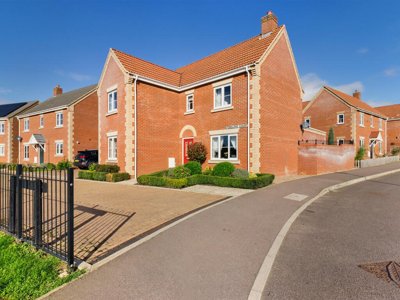
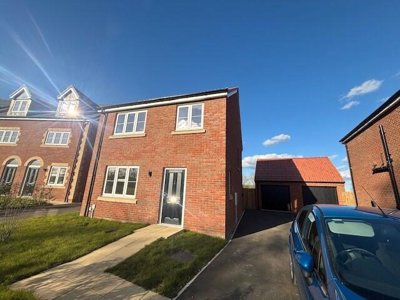
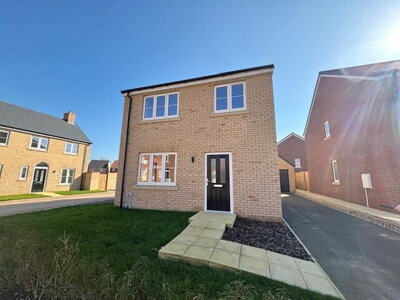
Browse 3 rental homes to rent in Denver, King's Lynn and West Norfolk from local letting agents.
The larger property sector typically features multiple bathrooms, substantial reception space, and private gardens or off-street parking. Four bedroom houses in Denver span detached, semi-detached, and occasionally terraced configurations, with styles ranging from period properties to modern executive homes.
£0/m
0
0
0
Source: home.co.uk
Showing 0 results for 4 Bedroom Houses to rent in Denver, King's Lynn and West Norfolk.
Denver's property market has kept a steady pace, with overall prices up by approximately 2% over the past twelve months according to homedata.co.uk via Plumplot. Detached homes command the highest values, at around £400,000 on average, which reflects the demand for generous family properties in this semi-rural spot. Semi-detached houses sit at approximately £275,000, terraced homes average £220,000, and flats are around £150,000. For renters, that backdrop helps explain both demand and pricing, with the village offering an appealing alternative for people priced out of nearby Cambridge or King's Lynn.
Confidence in the Denver market has continued over the 12-month period, with detached properties ahead on 3% growth and the rest of the stock showing smaller but still positive moves. Around 45 property sales completed in the past year, which is a healthy level of activity for a village of Denver's size. Those sales figures are useful for renters too, because they point to the underlying value of homes locally, and that feeds directly into rental pricing and the sort of properties that come up to let.
Two new build schemes are currently adding to Denver's housing offer. Norfolk Homes' Denver Place on Sluice Road (PE38 0DE) includes 3 and 4-bedroom detached and semi-detached homes priced from £320,000 to £480,000. Abel Homes' The Paddocks on Ryston Road (PE38 0DG) offers 2, 3, and 4-bedroom detached and semi-detached bungalows and houses, with prices ranging from £280,000 to £450,000. These are sale homes, of course, but they show that investment in Denver's housing stock is still very much in play, and that the village remains attractive to homeowners and developers. For renters, they also hint at continuing demand and a steady flow of homes becoming available.

Denver village is centred on its historic core, with St Mary's Church acting as the main focal point for the community. The church, listed at Grade I, is the village's most important heritage asset and sits at the centre of the designated Conservation Area that protects Denver's architectural character. Within that area, a number of Grade II listed cottages and farmhouses line the streets, many built in the distinctive Norfolk red brick that defines much of the region's built heritage. Much of the historic core dates from the pre-1919 period, making up approximately 25% of the current housing stock, and the older farmhouses and cottages often retain traditional construction such as solid brick walls, timber floors, and slate or clay tile roofs.
Growth has been steady since the post-war years, with around 30% of properties built between 1945 and 1980 and a further 30% dating from 1980 onwards, including the recent new build schemes. That mix of old and new gives the village a varied streetscape without losing its essential character. Day-to-day life is supported by a village hall, primary school, and public house. Downham Market is only a short drive away, bringing supermarkets, healthcare facilities, and extra shops within easy reach. On the edge of the Fens, the area also offers scenic walking routes and good wildlife watching, especially along the nearby River Great Ouse.
Even with its modest size, Denver still has a strong community feel. The village hall puts on regular events through the year, from craft fairs to community dinners, so newcomers have plenty of chances to meet neighbours. The local primary school is another meeting point, with school events often drawing in families from across the village and nearby hamlets. The pub gives people a more traditional place to socialise, while Downham Market adds more choice for eating out and evening entertainment.

Families thinking about a rental move to Denver will find that education provision covers the basics well. The village primary school takes children from reception through to Year 6, and secondary education is available in the nearby market town of Downham Market. There is also grammar school provision for academically able pupils, with the nearest grammar schools in King's Lynn and the surrounding area. Catchment areas and admission rules can be complicated in rural locations with several nearby options, so it makes sense to check them carefully before committing to a tenancy.
For households needing childcare, the village and the surrounding area provide several choices, including preschool and nursery provision. Secondary pupils usually travel to Downham Market or King's Lynn for school, with transport arrangements managed by Norfolk County Council using distance criteria. Cambridge is around 30 miles away too, which places a number of well-regarded independent schools within a workable commuting distance for families looking at other routes. The Perse School, St Mary's School, and King's College School are all among the options that draw families from across the wider region.
Sixth form provision is available at secondary schools in Downham Market and King's Lynn, while further education options include the College of West Anglia in King's Lynn, which offers a broad range of vocational and academic courses. From basic skills training through to university-level qualifications, the college supports students of different ages and ambitions. For younger children, there are preschool settings in the village and nearby area, with several rated good or outstanding by Ofsted within a short drive of Denver.

Transport links are a real strength for a village setting like this. Downham Market railway station, about 3 miles from Denver village centre, offers regular trains to Cambridge, with journey times of around 40 minutes to the university city. Trips to King's Lynn take roughly 15 minutes, and London King's Cross can be reached in under 90 minutes via Cambridge, which is why Denver appeals to commuters working in the capital or Cambridgeshire who want more affordable housing. The station also links into Norwich and the wider East Anglia rail network via Cambridge, widening the job market across the region.
Road access is strong too, with the A10 running through nearby Downham Market and giving direct links north to King's Lynn and south to Cambridge. From there, the A47 trunk road connects the area to Norwich and the east side of Norfolk. Bus services from various operators link Denver with Downham Market, King's Lynn, and surrounding villages, although the timetable is limited compared with urban routes. Cycling suits the flat Fenland landscape, though riders on the road still need to watch for rural traffic. National Cycle Route 13 passes through nearby Downham Market, giving traffic-free leisure routes and safer options for commuting.
For rail commuters, parking at Downham Market station is available, though spaces can be gone quickly at peak times. Regular users often find that arriving before 8am is the safest way to secure a space during the working week. There are other parking options in the town centre too, and some local businesses allow informal parking for rail users. Cycling to the station is also practical, thanks to secure bike storage facilities, so Denver residents have more than one way to manage the journey.

Before starting a rental search in Denver, we always suggest setting a clear budget that covers monthly rent, utility bills, council tax, and moving costs. Denver sits within the King's Lynn and West Norfolk council area, so council tax bands and rates follow the local authority's schedule. A rental budget agreement in principle from a lender can strengthen an application and show what rent level is realistic. Most rental homes in the village fall within council tax bands B through E, with monthly charges usually running from £120 to £180 depending on the band.
Letting agents based in Downham Market and King's Lynn handle Denver's rental market. Registering interest with more than one agent helps, because you'll receive alerts when new homes come up. The village is popular with commuters and with people after rural living, so rental properties can move quickly, and being ready in advance gives you an edge. Some agents focus on rural homes and may know about properties that are not widely advertised, so it is worth building links with several agencies.
Once suitable homes appear, arrange viewings without delay. In Denver, the mix can include period properties in the Conservation Area, modern homes in recent schemes, and family houses on residential streets. During a viewing, take time to look at the condition of the home, ask about the landlord's requirements, and check the length of the proposed tenancy. For properties built before 1976, we would pay particular attention to damp, the condition of the roof, and the age of electrical and plumbing installations.
Before signing a tenancy agreement, make sure the responsibilities as a tenant are clear. Where there is a garden, maintenance duties should be set out in writing. Some parts of Denver sit in flood risk areas, so specific insurance arrangements may be needed, although landlords usually deal with that side of things. We would ask the landlord or agent directly about any known problems, any previous flooding, and the flood resilience measures already in place.
Referencing checks are usually part of the process, and landlords or letting agents can ask for credit checks, employment verification, and landlord references if there is a rental history. First-time renters may need a guarantor. These checks normally take 1 to 2 weeks, so it helps to allow for that. Having proof of identity, proof of address, and employment details ready can speed things up and improve the chances of securing the property.
At the start of the tenancy, carry out a full inventory check and record the condition of the property. That protects both tenant and landlord by setting a baseline for the deposit return at the end of the tenancy. Dated photographs and copies of all paperwork should be kept throughout the tenancy. In older Denver properties, we would pay close attention to existing damage such as cracks in walls, wear to floors, and the condition of fixtures and fittings.
Renting in Denver means taking note of a few area-specific issues that differ from an urban search. Homes within the Conservation Area centred on St Mary's Church may have restrictions on modifications, exterior alterations, or planning permissions, which can affect how a property is used or improved. Listed Buildings, including Grade I listed St Mary's Church and Grade II* listed Denver Hall, have additional legal protections that limit alterations without consent. Anyone looking at a period property should understand those constraints before agreeing to a tenancy.
Denver's geology also brings its own considerations for renters. The village sits on alluvial deposits including clay, which creates a moderate to high shrink-swell risk for foundations. Homes with shallow foundations or those close to mature trees may show movement over time, sometimes in the form of cracks in walls or doors that stick. Structural matters are usually the landlord's responsibility, but any existing cracks or signs of settlement should be noted during the inventory check. Be especially alert to possible subsidence near large trees, because the clay soil shrinks during dry spells and can shift the ground.
Homes built before 1976 make up approximately 70% of Denver's housing stock, so some properties may need insulation, electrical, or plumbing upgrades to bring them nearer to modern standards. Older homes often have outdated wiring that may not meet current regulations, single glazing, and solid walls without cavity insulation. It is sensible to ask when the electrics were last rewired, what condition they are in, and what insulation improvements have been made. Properties in flood risk zones should have suitable insurance, but tenants also need to know what to do in an emergency and what procedures are already in place.
Denver's building materials reflect the village's Norfolk heritage. Older properties are often built in Norfolk red brick or gault brick, usually with lime mortar rather than modern cement, and slate or clay tile roofs are common. Some historic cottages also use flint, especially in boundary walls and outbuildings. These traditional materials need a different approach to maintenance from modern brick and tile, and knowing the construction type helps tenants appreciate the character while spotting issues such as mortar erosion or slipped tiles.

Current rental prices in Denver change regularly, so the latest listings need to be checked at the point of search, but the sales market still gives a useful guide to likely rental values. Average property prices are approximately £324,500 overall, with detached homes at £400,000, semi-detached at £275,000, terraced at £220,000, and flats around £150,000. Rental levels usually follow those sale values, although yields and specific asking rents should be checked with local letting agents in Downham Market and King's Lynn, who can advise on live availability and market conditions in the PE38 postcode area. One-bedroom and two-bedroom homes usually let for less than larger family properties, while period cottages in the conservation area often achieve higher rents because of their character and location.
Homes in Denver fall within the King's Lynn and West Norfolk Council area, and council tax charges are set by the local authority each year. Across Norfolk, council tax bands run from Band A for lower-value properties up to Band H for the most expensive homes, with most of Denver's housing stock sitting in Bands B through E. The band is based on the property's assessed value, using its characteristics and market value as at April 1991. Current council tax rates can be checked on the King's Lynn and West Norfolk Council website or in the tenancy agreement, which should state the band and the relevant charges. Properties in Bands A through C typically pay between £1,200 and £1,500 annually, with higher bands paying more.
Denver has a primary school serving the village and the surrounding rural area, and Ofsted inspection reports are available on the Ofsted website. Parents should look at individual school performance data and recent inspection results when weighing up rental options for children. Secondary choices include schools in Downham Market, with grammar school provision for academically able students in King's Lynn and nearby areas. Specific school catchment areas, admission policies, and transport arrangements all need checking, as rural Norfolk can be complicated in that respect. School transport eligibility is managed by Norfolk County Council using distance criteria, with free transport usually available to pupils attending their nearest suitable school beyond two miles from home.
Denver remains well connected despite its village location, mainly through nearby Downham Market railway station, which is roughly 3 miles away. Trains run regularly to Cambridge, taking around 40 minutes, and to King's Lynn, which is about 15 minutes away by rail. London King's Cross can be reached in under 90 minutes via Cambridge. Bus services also link Denver with Downham Market and King's Lynn, though they are less frequent than city routes. The main village bus runs approximately every two hours on weekdays, with reduced services at weekends, so the rail links are what make Denver appealing to people commuting to Cambridge or London while living in more affordable Norfolk.
For renters wanting a semi-rural Norfolk village lifestyle, Denver offers a very good quality of life. The conservation area, historic architecture, and proximity to the Fens give the village plenty of character, and the transport links to Cambridge and King's Lynn are strong. Essential amenities include a primary school, village hall, and public house, while more extensive shopping and healthcare are available in nearby Downham Market. Rental homes range from historic cottages to modern houses, so there is something to suit different household types and budgets. The main trade-off is limited local employment, which means many residents travel to surrounding towns for work. Those able to commute flexibly, or work from home, are likely to find Denver especially workable.
In England, standard rental deposits are capped at five weeks' rent, calculated as the monthly rent multiplied by 252 and divided by 12. For example, a property renting at £1,000 per month would need a deposit of £1,000 multiplied by 252 divided by 12, which equals £1,050. Other upfront charges can include referencing costs, usually £50 to £200, administration charges from letting agents, and check-in fees for the inventory report, usually £100 to £200. Some agents may also charge a check-out fee at the end of the tenancy. As of 2024-25, certain fees have been restricted under the Tenant Fees Act 2019, which means agents cannot charge for viewing, referencing, or administration that used to be commonplace. Ask for a full breakdown of charges before agreeing to a tenancy so the total upfront cost is clear.
Denver has areas of notable flood risk because of its proximity to the River Great Ouse and its tributaries. Parts of the village sit in Flood Zone 2 and Flood Zone 3, which indicates a high probability of flooding and needs careful thought. Surface water flooding is also a concern during heavy rain, because the flat Fens topography and drainage systems can become overwhelmed in extreme weather. Flood defences protect some parts of the village, especially near the river, but no system removes the risk entirely. Renters should ask about the property's specific flood risk designation, any measures such as flood barriers or raised electrics, and check that the landlord has the right insurance in place. The Environment Agency's online flood risk maps can help identify the risk level for a particular home.
From 4.5%
We recommend getting pre-approved for the rental budget before you apply.
From £50
Complete reference checks quickly with our trusted partners
From £380
Spotting defects in Denver properties before you commit to a tenancy matters.
Understanding the full cost of renting in Denver means looking beyond the monthly rent to the upfront and ongoing charges as well. The standard security deposit is capped at five weeks' rent under the Tenant Fees Act 2019, and it is held in a government-approved deposit protection scheme for the length of the tenancy. At the end, it is returned minus any deductions for damage beyond normal wear and tear or unpaid rent. Three government-approved schemes operate in England, Deposit Protection Service, MyDeposits, and Tenancy Deposit Scheme, and landlords must place deposits within 30 days of receiving them.
There can also be extra upfront costs such as referencing fees, which usually cover credit checks, employment verification, and right to rent checks to confirm legal permission to rent in the UK. Some letting agents still charge administration fees, although these have been restricted since the Tenant Fees Act came into force. Check-in and check-out fees for inventory reports are also common, usually at a combined cost of around £150 to £250. Ongoing tenancy costs include council tax, paid to King's Lynn and West Norfolk Council, utility bills for gas, electricity, and water, and contents insurance, which tenants are advised to arrange from the start of the tenancy.
A detailed check-in report at the start of the tenancy protects both sides by recording the property's condition properly. It should include notes and photographs for every room, any existing damage, and the condition of fixtures and fittings. Compare it carefully with the check-out report at the end of the tenancy, because any mismatch may lead to deposit deductions. Before committing to a rental property, ask for a written statement of all fees from the letting agent so the financial commitment is clear from the outset. The first month's rent, deposit, and fees can add up to between two and three months' rent depending on the property, so it is wise to budget for that upfront.
Properties to Rent In London

Properties to Rent In Plymouth

Properties to Rent In Liverpool

Properties to Rent In Glasgow

Properties to Rent In Sheffield

Properties to Rent In Edinburgh

Properties to Rent In Coventry

Properties to Rent In Bradford

Properties to Rent In Manchester

Properties to Rent In Birmingham

Properties to Rent In Bristol

Properties to Rent In Oxford

Properties to Rent In Leicester

Properties to Rent In Newcastle

Properties to Rent In Leeds

Properties to Rent In Southampton

Properties to Rent In Cardiff

Properties to Rent In Nottingham

Properties to Rent In Norwich

Properties to Rent In Brighton

Properties to Rent In Derby

Properties to Rent In Portsmouth

Properties to Rent In Northampton

Properties to Rent In Milton Keynes

Properties to Rent In Bournemouth

Properties to Rent In Bolton

Properties to Rent In Swansea

Properties to Rent In Swindon

Properties to Rent In Peterborough

Properties to Rent In Wolverhampton

Enter your details to see if this property is within your budget.
Loans, cards, car finance
Estimated property budget
Borrowing + deposit
You could borrow between
Typical borrowing
Monthly repayment
Est. at 4.5%
Loan-to-value
This is an estimate only. Your actual budget may vary depending on interest rates, credit history, and personal circumstances. For an accurate affordability assessment, speak to one of our free mortgage advisors.
This calculator provides estimates for illustrative purposes only and does not constitute financial advice. Your home may be repossessed if you do not keep up repayments on your mortgage. Estimates based on 4.5% interest rate, repayment mortgage. Actual rates depend on your circumstances.
Homemove is a trading name of HM Haus Group Ltd (Company No. 13873779, registered in England & Wales). Homemove Mortgages Ltd (Company No. 15947693) is an Appointed Representative of TMG Direct Limited, trading as TMG Mortgage Network, which is authorised and regulated by the Financial Conduct Authority (FRN 786245). Homemove Mortgages Ltd is entered on the FCA Register as an Appointed Representative (FRN 1022429). You can check registrations at NewRegister or by calling 0800 111 6768.

We use cookies to show you personalised content and improve your experience of our website. Find out more in our Privacy policy and Cookie policy.