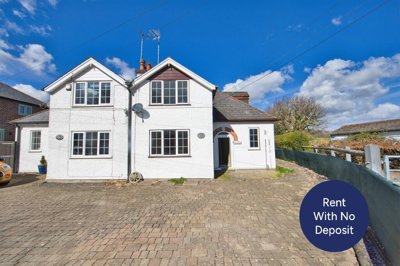
Browse 1 rental home to rent in Denton with Wootton from local letting agents.
The 2 bed house market features detached, semi-detached, and terraced properties with two separate bedrooms plus living spaces. Properties in Denton With Wootton range from Victorian and Edwardian period homes to modern new builds, with pricing varying across different neighbourhoods.
Denton with Wootton’s rental market mirrors the wider picture across this corner of Kent, demand usually runs ahead of supply because the village is well placed and housing is limited. Sale prices help set the scene, detached homes average around £625,000, semi-detached homes sit at approximately £375,000, terraced properties at £300,000, and flats at £200,000. Homes that do come up for rent tend to attract strong interest, so tenants need to move promptly when something suitable appears. Around 50 properties have changed hands in the past twelve months, which points to steady activity for a village of this size.
Price movement has stayed positive, with detached properties leading the way at 8% over the last year, followed by semi-detached homes at 5%, terraced properties at 4%, and flats at 3%. That rise reflects the wider pull of rural living, as well as the appeal of Kent’s North Downs setting. There are no large-scale new build schemes in the postcode area, so the rental stock is mostly existing homes from different eras, including pre-1919 solid wall construction, interwar cavity wall builds, and post-1980 modern properties. For renters, that means character homes in a Conservation Area, but the best ones can be fiercely contested.
Much of Denton with Wootton is made up of older homes, so character features are part of the appeal for many tenants. Traditional construction is common, from solid wall brick and flint buildings to post-1980 cavity wall developments. Denton Court is a good example, built with brick and tile under a slate roof, and it shows the standard of workmanship found in earlier periods. Expect original fireplaces, exposed beams, and thick walls that help regulate temperature naturally, along with the upkeep that older properties usually demand.

It helps to know what sort of housing stock you are walking into in Denton with Wootton. A large share of the village falls within the Conservation Area, and many properties date from the pre-1919 period, when solid wall construction was the norm. Those traditional builds usually have brick or flint and ragstone walls, timber floors and roofs, and slate or clay tile roofing. Lime mortars and renders were standard too, chosen because they let the building breathe and deal with moisture in a natural way. Homes from the 1919-1945 and 1945-1980 periods are also present, bringing in cavity walls, concrete tiles, and cement-based renders.
Post-1980 homes are present, but they are less common and often appear as one-off infill plots rather than big estates. These newer properties usually come with cavity wall construction, better insulation standards, uPVC windows, and engineered timber roof trusses. Because the village contains such a broad mix of ages, renters can come across very different conditions and maintenance needs, depending on the home and how well it has been looked after by the previous owner or landlord. Rendered finishes are common across Denton with Wootton too, partly for appearance and partly for weather protection in this exposed North Downs location.
Older homes need a sharper eye. Solid wall properties, which are common in the Conservation Area, do not have the cavity found in modern builds, so damaged brickwork or render can make them more prone to penetrating damp. Timber parts in pre-1919 homes, including floors, roof structures, and original windows, need regular care to stop rot or woodworm setting in. The North Downs’ chalk geology usually gives good stability, although pockets with clay beneath can move a little in dry spells, which may affect shallow foundations.

Taking on an older tenancy in Denton with Wootton calls for a bit of extra care, especially in a rural Kent setting where much of the housing stock has real age and character. Many homes, particularly those in or near the Conservation Area, date from the pre-1919 period and were built using traditional methods that are a long way from modern standards. Our inspectors often come across damp in older solid-walled properties, whether it is rising damp from a failed or missing damp proof course, penetrating damp from defective rainwater goods or porous brickwork, or condensation in poorly ventilated rooms where normal daily life adds moisture to spaces never designed for it.
Roofing is another area we frequently check in Denton with Wootton’s older homes. Period properties with traditional slate and clay tile roofs usually need more attention than modern coverings, and our surveyors often spot slipped or broken tiles, worn lead flashings, faulty gutters or downpipes, and sometimes sagging roof structures that point to more serious underlying issues. Timber decay and woodworm can affect both roof and floor timbers in older buildings, while cracking from settlement or historic movement may be present in properties built before modern foundation standards came in. For tenants, knowing about these risks helps keep expectations realistic and makes it easier to plan for repairs during the tenancy.
Electrical and plumbing systems in older properties often need attention too. Homes built before the 1980s may still have wiring that falls short of current safety standards, old fuse boards, and too few sockets. Original plumbing can also rely on materials now considered outdated or troublesome. Landlords remain responsible for electrical safety and gas safety, but tenants should still record the condition of these systems at the start of the tenancy. Properties in the Conservation Area, and especially listed buildings, may have planning restrictions that limit alterations without consent, so anyone renting a listed home should know what maintenance and changes are allowed.

Daily life in Denton with Wootton has a distinctly rural Kent feel, with chalk downland, historic buildings, and a level of community spirit that can be harder to find in larger towns. The parish sits within the Kent Downs Area of Outstanding Natural Beauty, so residents have immediate access to walks, bridleways, and cycling routes across open countryside. The village centre is covered by the Conservation Area, where planning controls help preserve the area’s historic and visual character. With just 380 people living here, it is a small, close-knit community where people know each other and local events still matter.
Agriculture and tourism shape the local economy in Denton with Wootton, helped by the village’s position near the Kent Downs and its appeal to visitors drawn to the landscape. The settlement includes several important historic buildings, among them Denton Court, a Grade II* listed manor house, and St Mary the Virgin Church, also Grade II* listed, both of which underline the area’s long history. St Martin’s Church in Wootton also carries Grade II* status, while a number of Grade II listed cottages and farmhouses add to the village’s architectural depth. Many residents commute to Canterbury, Dover, and Folkestone, with the A2 giving straightforward access to those towns and further afield. Shops, schools, and services are in nearby villages and towns, so car ownership is practically essential for most people.
Village amenities are modest, as you would expect in a place this small, with the church often acting as the focus for local activity. Denton with Wootton is made up of a limited number of houses along village lanes, mixing historic farmhouses, rendered cottages, and newer infill schemes. Many of the older buildings use Kentish ragstone and flint, with stone quarried from the chalk downs giving the village its distinctive look and helping it sit naturally in the landscape. Anyone wanting regular pubs, restaurants, or shops will need to head to nearby towns, though the village itself offers the sort of rural atmosphere many people are looking for.

Families renting in Denton with Wootton need to look beyond the parish for schooling, as there is no primary or secondary school in the village itself. The nearest primary schools are usually a few miles away in surrounding villages, including rural primaries that serve local families from Reception through to Year 6. These smaller schools often have close community links and give children more individual attention, although class sizes and facilities can differ from larger urban schools. Parents should check catchment areas and admissions rules carefully, because both can change and distance from the school often plays a major part in allocation decisions.
For secondary education, families usually travel to larger towns in the Canterbury or Dover areas. Kent is still one of the places with selective grammar school provision, so academically able pupils may sit the Kent Test for entry to grammar schools in towns such as Canterbury, Dover, or Folkestone. Several of these schools have strong reputations for results and extracurricular provision, including schools in Canterbury that regularly appear in county rankings. Because the system is selective, entry depends on the Kent Test rather than catchment area alone, giving pupils with academic promise another route in, even if they do not live locally.
Sixth form and further education choices are mainly in Canterbury and Dover, where students can find a wider mix of A-level and vocational courses after GCSE. Canterbury has the broader range thanks to its size and institutions, while Dover gives families a closer alternative if they want to reduce travel. We would advise building school transport and journey times into the decision when renting in rural Denton with Wootton, because day-to-day travel to schools in nearby towns becomes part of the routine. School buses may be available on some routes, although private transport is often needed for flexibility with clubs, activities, and changing schedules.

Transport is one of the big practical points for anyone renting in Denton with Wootton, because the North Downs location brings both benefits and limitations. The A2 runs nearby, giving a direct route to Canterbury, approximately 12 miles to the north, and Dover, approximately 8 miles to the east. That makes the village appealing to commuters who want rural living but work in those towns. By car, Canterbury is usually around 25-30 minutes away, while Dover can be reached in about 20 minutes. For London commuters, the high-speed services from Canterbury West and Dover Priory reach London St Pancras in around 50-60 minutes, so the journey is possible, though demanding.
Bus services are more limited here than they would be in a town, which is what you would expect in a rural parish. The nearest railway stations are in Dover and Canterbury, with Dover Priory running regular services to London Victoria and Canterbury East offering links to the capital via Ashford International. Local bus routes to surrounding towns usually run at hourly intervals or less often, so they work better for occasional trips than for a daily commute. Cyclists have plenty of route options in the Kent Downs, although the rolling chalk terrain can be tough, especially for less experienced riders or in bad weather.
Most residents rely on a car for day-to-day needs, whether that means shopping, school runs, or getting to services that are not available in the village itself. Parking is generally straightforward in the village, which is a real plus compared with larger towns. Roads are also less likely to be caught up in heavy congestion, so journey times can be more predictable. That said, anyone renting without a vehicle should think carefully about how they would manage essentials, because limited public transport would make work, shopping, and routine appointments much harder.
Before we view any property in Denton with Wootton, it is sensible to have a rental budget agreement in principle from a lender or broker. It shows landlords and agents that the finances are there for the monthly rent and the extra costs, including council tax, utilities, and moving expenses. In a competitive market, having that paperwork ready can put you in a stronger position when more than one applicant wants the same home.
Spend some time exploring Denton with Wootton and the surrounding area before you commit to a tenancy. Go at different times of day and on different days of the week so you can get a feel for the atmosphere and any shifts in noise or activity. Check commute times to your workplace, find out where the nearest shops and services are, and get a proper sense of what the village offers in terms of community life. It also pays to look into the condition and maintenance history of any home you are considering, especially older ones where defects may already be present.
We would also recommend speaking to local letting agents and registering your interest in homes that fit your criteria. View more than one property so you can compare condition, facilities, and rental levels, and keep notes and photographs to help you remember the differences. Ask about lease length and renewal options, check what is included or excluded in the bills, find out who looks after the garden, and confirm any rules on pets, smoking, or alterations. For homes in the Conservation Area or listed buildings, ask specifically about restrictions that may affect the tenancy.
Once you find the right rental, submit the application quickly, because desirable homes can attract several interested parties in short order. You will usually need identification, proof of income or employment, references from previous landlords, and to pass right to rent checks that confirm your legal ability to rent in the UK. Be ready to pay holding fees while referencing is completed, and make sure you know what happens to that fee if the application does not go through.
Before you pick up the keys, arrange an independent inventory check so the property condition is fully recorded, including any existing wear or damage that should not come out of your deposit later. For older homes, booking a RICS Level 2 Survey can be a sensible step, especially as these start from £450 and can give useful detail about the building’s condition, which matters in a place like Denton with Wootton where so much of the housing stock is old. You will also need to sort utility accounts, internet services, and updates to your address with banks, employers, and government bodies.
Rental prices vary with property type, size, and condition, but the sales market gives a useful guide in Denton with Wootton. Average prices run from £200,000 for flats to £625,000 for detached homes, while terraced properties average around £300,000 and semi-detached homes sit at approximately £375,000. In rental terms, those values usually feed through into the asking level, so the larger detached homes command the highest rents, while flats and terraced houses are the more affordable end of the market. The village’s position within the Kent Downs AONB and the limited rental stock can support those rents, so it pays to budget carefully and expect competition for the best homes. For the most accurate current figures, local letting agents are the place to ask.
For people who want rural living and access to the Kent countryside, Denton with Wootton offers a very good quality of life. The village sits within the Kent Downs AONB, giving immediate access to walking and cycling routes over chalk downland. Conservation Area status helps preserve the historic character, and there are 37 listed buildings, including Denton Court, St Mary the Virgin Church, and St Martin’s Church in Wootton. Even so, renters need to bear in mind that local amenities are limited, so travel is needed for shops, schools, and services. Car ownership is effectively essential, and commuting times to work should be built into the decision. For peace, character, and a strong sense of community, Denton with Wootton is a fine place to rent in the Dover district.
For council tax, properties in Denton with Wootton sit under Dover District Council. The bands run from Band A through to Band H, depending on the property’s value and characteristics as assessed by the Valuation Office Agency. In practice, the village covers several bands, with smaller cottages and flats usually in bands A through D, while larger detached homes and period properties may fall into higher bands. The band affects the annual council tax bill, which is paid by the tenant rather than the landlord during the tenancy. It is always worth asking the landlord or agent for the exact council tax band before committing, because it sits alongside rent, utilities, and other running costs.
There is no primary or secondary school in Denton with Wootton itself, so families need to look to nearby villages and towns for education. The nearest primary schools serve surrounding rural communities and often have small class sizes and strong community links, which can be reassuring for younger children. Secondary options in the wider area include schools in Canterbury and Dover, and academically able pupils can also apply to grammar schools after passing the Kent Test. Because Kent’s selective system allows entry to grammar schools in Canterbury, Dover, or Folkestone on exam performance rather than catchment area alone, parents should check admissions policies and catchment boundaries carefully. School travel also needs proper thought when renting here, because daily journeys to schools in nearby towns will be part of family life.
Public transport reflects the village’s rural setting, so bus services are less frequent than they would be in an urban area. The nearest railway stations are in Dover and Canterbury, with Dover Priory providing links to London Victoria and Canterbury East offering services to London Victoria via Ashford International. The A2 runs close by, giving good road access to Canterbury and Dover, with Canterbury about 12 miles north and Dover around 8 miles east of the village. Even so, most residents depend on a car for everyday life. Anyone thinking about renting here without one should study bus routes and timetables closely, because infrequent services can make work, shopping, and services in nearby towns difficult to reach.
Typical renting costs in Denton with Wootton include a security deposit worth five weeks' rent, held in a government-approved deposit protection scheme within 30 days of the tenancy start date. That deposit gives landlords cover for unpaid rent or damage beyond normal wear and tear, and any deductions have to be justified with evidence from the check-in inventory. Landlords and agents also used to charge administration fees for referencing and credit checks, although those have been reduced by recent tenant-friendly legislation. Tenants normally pay council tax, utility bills, and internet costs unless the tenancy agreement says otherwise. Because many homes here are older, it is wise to budget for possible extras such as moving furniture into properties with narrow access or arranging specialist surveys for listed buildings.
Flood risk is generally low in Denton with Wootton because the village sits high on the North Downs, well above the river and coastal flooding risks that affect lower ground. The chalk geology helps with drainage, which lowers the chance of groundwater flooding that can be a problem in clay areas. Even so, heavy rain can bring surface water flooding in local dips or where drainage is poor, so we would ask about any past issues with a specific property. Homes in lower parts of the village, or those with basements or cellars, may be more exposed to surface water ingress in exceptional weather. Any flood history could affect insurance costs and availability, so it is sensible to raise that with landlords or agents.
From 4.5%
Get pre-approved for your rental budget before you start viewing.
From £99
Comprehensive referencing to back up your rental application.
From £450
Detailed condition report for older rental properties
From £80
Energy performance certificate for your rental property
Properties to Rent In London

Properties to Rent In Plymouth

Properties to Rent In Liverpool

Properties to Rent In Glasgow

Properties to Rent In Sheffield

Properties to Rent In Edinburgh

Properties to Rent In Coventry

Properties to Rent In Bradford

Properties to Rent In Manchester

Properties to Rent In Birmingham

Properties to Rent In Bristol

Properties to Rent In Oxford

Properties to Rent In Leicester

Properties to Rent In Newcastle

Properties to Rent In Leeds

Properties to Rent In Southampton

Properties to Rent In Cardiff

Properties to Rent In Nottingham

Properties to Rent In Norwich

Properties to Rent In Brighton

Properties to Rent In Derby

Properties to Rent In Portsmouth

Properties to Rent In Northampton

Properties to Rent In Milton Keynes

Properties to Rent In Bournemouth

Properties to Rent In Bolton

Properties to Rent In Swansea

Properties to Rent In Swindon

Properties to Rent In Peterborough

Properties to Rent In Wolverhampton

Enter your details to see if this property is within your budget.
Loans, cards, car finance
Estimated property budget
Borrowing + deposit
You could borrow between
Typical borrowing
Monthly repayment
Est. at 4.5%
Loan-to-value
This is an estimate only. Your actual budget may vary depending on interest rates, credit history, and personal circumstances. For an accurate affordability assessment, speak to one of our free mortgage advisors.
This calculator provides estimates for illustrative purposes only and does not constitute financial advice. Your home may be repossessed if you do not keep up repayments on your mortgage. Estimates based on 4.5% interest rate, repayment mortgage. Actual rates depend on your circumstances.
Homemove is a trading name of HM Haus Group Ltd (Company No. 13873779, registered in England & Wales). Homemove Mortgages Ltd (Company No. 15947693) is an Appointed Representative of TMG Direct Limited, trading as TMG Mortgage Network, which is authorised and regulated by the Financial Conduct Authority (FRN 786245). Homemove Mortgages Ltd is entered on the FCA Register as an Appointed Representative (FRN 1022429). You can check registrations at NewRegister or by calling 0800 111 6768.

We use cookies to show you personalised content and improve your experience of our website. Find out more in our Privacy policy and Cookie policy.