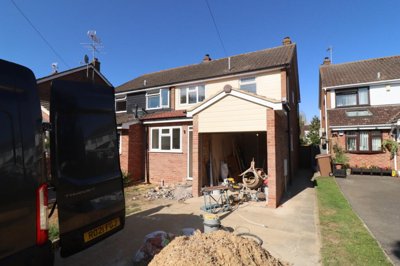
Browse 1 rental home to rent in Danbury, Chelmsford from local letting agents.
Three bedroom properties represent a significant portion of the Danbury housing market, offering space for families with multiple reception rooms and gardens in many cases. Browse detached, semi-detached, and terraced options ranging from period character homes to contemporary developments.
£0/m
0
0
0
Source: home.co.uk
Showing 0 results for 3 Bedroom Houses to rent in Danbury, Chelmsford.
Danbury’s property market has the hallmarks of a sought-after Essex village with strong appeal for commuters. We focus on rental homes on our platform, but the wider sales picture still helps frame what tenants can expect locally. Average property values in Danbury sit at approximately £612,471, showing the premium attached to village life here. Detached homes reach the highest levels, at around £809,240 on average, while semi-detached properties typically sell for £485,000 and terraced homes for about £360,000. Flats are still relatively uncommon in Danbury, averaging £250,000, and that scarcity feeds into a tighter rental supply in this part of the market. The current average rental price in Danbury is £795 per calendar month.
Over the past twelve months, Danbury prices have been notably steady, slipping by only 1% according to home.co.uk and homedata.co.uk. That kind of resilience can matter to renters who may later want to buy, especially in a market that has held up better than many wider national shifts. There were 66 property sales recorded across the last year, which points to a market that is still moving and still drawing buyers who value the village setting and its well-placed location. New development is part of that picture too, with schemes such as St. Clare Meadows by Bellway on Main Road and The Mulberries by Crest Nicholson nearby showing continued investment in Danbury.

Set on a gravel plateau in rural Essex, Danbury gives residents broad views over the surrounding countryside without losing easy links to larger urban centres. The village streets show that mixed history clearly, from substantial Georgian and Victorian buildings on the main roads to the quieter inter-war and post-war homes that make up much of the residential stock. Across the village, many houses are built in the red and yellow stock brick long associated with Essex, with rendered elevations and timber-frame detailing adding another layer to the look of the place. Beneath it all, London Clay supports the mature trees and heavy greenery that give Danbury its wooded character.
The age profile of Danbury housing tells a clear story, old core, later expansion, then steady modern additions. A notable share of homes date from pre-1919, especially within the Conservation Area around St. John the Baptist Church, where Grade I listed Danbury Palace and many Grade II listed buildings shape the village’s identity. Between 1945 and 1980, post-war development added a substantial amount of family housing, and post-1980 building has continued through both one-off homes and larger estates. For renters, that means real variety, from period cottages with original features to more recent properties with updated insulation and modern services.
The centre of Danbury covers everyday basics well, with a convenience store, pharmacy and a handful of independent shops. For meals or a drink, residents often head to pubs including The Bakers Arms and The Fat Bear, both part of the village’s sociable feel and local food scene. Danbury Park adds useful open space nearby, with room for family outings, dog walks and informal sport. History is close at hand too, with the Grade I listed Danbury Palace and a concentration of Grade II listed buildings inside the designated Conservation Area around the church. That older fabric gives the village a settled character newer schemes cannot easily reproduce.

For families, education is one of Danbury’s practical strengths. Danbury Park School is both the main primary school in the village and an important local employer, taking children from Reception to Year 6 and sitting at the centre of community life. Secondary pupils usually travel into nearby Chelmsford, where the choice includes academy schools and grammar schools serving a wider catchment. Taken together, the options in the village and around it make Danbury a strong fit for families with children of different ages.
Anyone renting in Danbury with children should check catchment areas early, because school places are tied closely to proximity. Essex’s grammar school system adds academically selective secondary options, and schools in Chelmsford regularly rank among the county’s stronger performers. At primary level, Danbury Park School remains the obvious local option, though villages such as Woodham Walter and Sandon also offer nearby alternatives. Older students can reach higher education in Chelmsford and Southend fairly easily, and London universities are still within realistic commuting range. Danbury’s mix of families, professionals and retirees helps keep education high on the local agenda.

Rural it may be, isolated it is not. Danbury has strong transport connections for a village, which is a large part of why it appeals to people commuting to London or Chelmsford. The A414 is easy to reach and gives direct access to Chelmsford city centre as well as the A12 trunk road towards Colchester and the wider motorway network. That makes car journeys straightforward for work, shopping, or getting across Essex more generally. One practical drawback, though, is that parking in the village can be tight, especially at busier times when on-street spaces fill up.
Bus services link Danbury with Chelmsford, giving residents a workable public transport alternative to driving. From Chelmsford railway station, trains to London Liverpool Street are frequent and fast, with typical journey times of around 35 to 40 minutes. That combination keeps the village attractive to London commuters who want some distance from denser urban living. Cycling has become easier too in recent years, thanks to quiet country lanes suited to leisure rides and occasional trips to work. For flights, Stansted Airport is reachable in approximately 45 minutes by car, and Southend Airport is another regional option.

Before we start a property search in Danbury, we usually suggest getting a rental budget agreement in principle from a financial provider. It sets out how much rent can be afforded comfortably, helps speed up applications, and shows landlords and letting agents that finances have already been thought through. Budget calculators can also help, especially those that factor in monthly income, existing commitments and likely outgoings, so there is still enough room for council tax, utility bills and other running costs.
It is worth spending time in the village itself before narrowing down a rental search. Different parts of Danbury suit different routines, so we would weigh up access to schools, transport, shops and green space rather than focusing only on the property. Around St. John the Baptist Church, the conservation area has the strongest period feel, while newer homes near Main Road place modern layouts closer to village amenities. Older houses in Danbury can also come with different upkeep issues and tenancy terms than newer-build homes at St. Clare Meadows or The Mulberries.
Once suitable rentals in Danbury have been identified, we can arrange viewings through Homemove or tenants can book directly with local letting agents. Seeing more than one property makes comparisons easier, not just on rent, but on condition, fittings and overall value. We would pay close attention to parking, storage and the state of any appliances or fixtures included in the tenancy. It also helps to visit at different times of day, because noise, light and parking availability can feel very different morning to evening.
Before any tenancy agreement is signed for a Danbury property, the terms need a careful read. Standard Assured Shorthold Tenancies usually run for six or twelve months, but the detail around maintenance, utility bills, pets and alterations matters just as much. In Danbury, that can be especially important where a home sits inside the conservation area or has listed status, as extra restrictions may apply. We would always get those points confirmed before committing.
Referencing is part of the normal process, and landlords will usually ask for credit checks, employment verification and references from previous rentals. Having payslips, bank statements and ID ready can make the process move faster. Some landlords also ask for a guarantor, particularly on higher-value rentals or homes with features that attract stronger demand, such as large gardens, period character or proximity to Danbury Park.
Before keys are handed over on a Danbury rental, it is sensible to complete a full inventory check and record the condition of the property, including any damage already there. That creates a clear baseline and can help avoid disputes at the end of the tenancy. If an EPC has not already been provided, arranging one is worth considering because it gives a useful snapshot of energy efficiency. In older Danbury homes, an EPC can also flag where insulation or heating performance may need attention during the tenancy.
Danbury comes with a few property considerations that are closely tied to its setting, geology and planning background. Much of the village sits on London Clay, which carries a moderate to high shrink-swell risk and can affect houses with mature trees nearby or inadequate drainage. Anyone viewing a rental should look carefully for signs of subsidence or movement, especially in older homes or larger plots with established planting. Properties built before 1980 may already have seen some movement over time, so cracks in walls, sticking doors, uneven frames and ceiling issues deserve a closer look before a tenancy is agreed.
Because Danbury has a sizeable stock of older homes, certain defects come up more often than they do in newer areas. Damp is one of them. Period properties with solid walls and no damp-proof course can suffer rising damp, while penetrating damp may appear where roof tiles have slipped or lead flashing has worn out. Homes built before the 1990s may also have electrical systems that fall short of modern expectations, so checking the age of the consumer unit, the condition of sockets and the presence of modern earthing is sensible. Where timber-frame construction is present, either traditional or more recent, we would also watch for woodworm, rot and other timber-related defects.
Danbury’s historic core is covered by conservation area controls, and that affects what tenants may be able to change at a rental property. Listed buildings in the village face tighter rules on external alterations, so landlords often place added restrictions on modifications. Even interior decoration and minor changes are best discussed with the landlord first and may, in some cases, involve planning permission. Surface water flooding is another point to check, especially in lower parts of the village around the village centre, and we would ask about past flood issues during viewings in those spots. Buildings insurance will often cover surface water flooding, but tenants should confirm that with the landlord and think about contents insurance that matches the property’s flood risk profile.

The monthly rent is only part of the cost of moving into Danbury. Upfront, the main expense is usually the security deposit, most often set at five weeks' rent and held by the landlord against damage or rent arrears during the tenancy. That deposit must go into a government-approved scheme within 30 days of receipt, and tenants should be given written confirmation of where it is protected. On top of that, the first month's rent is normally payable in advance, so budgeting for approximately six weeks' rent before keys are released is a sensible starting point.
Another upfront cost can be reference checking, with charges varying according to whether the landlord or letting agent handles the process directly or uses a third-party provider. The current average rental price in Danbury is £795 per calendar month, and the referencing process can cover credit checks, employment verification and previous landlord references. Some homes may also come with an upfront administrative charge for tenancy processing, although recent legislation has made fee transparency stronger. Under the Tenant Fees Act 2019, holding deposits are capped at one week's rent and the range of charges landlords and agents can make is restricted, so we would always check which fees are permitted before anything is paid.
Moving day costs can mount up quickly. Van hire or a removals firm may add several hundred pounds, and after that there are the regular outgoings, council tax, utilities, contents insurance and internet, all on top of the rent itself. In Danbury, properties commonly fall into council tax bands C through F, depending on the individual home. Energy bills can vary a great deal as well, particularly between older period houses and well-insulated new builds, so the age and fabric of the property are worth comparing just as closely as the headline rent.
Exact rental pricing in Danbury is best checked against current listings, but the wider market still gives a useful guide. The current average rental price in Danbury is £795 per calendar month, with terraced properties also averaging £795 and flats around £795. In practice, the village premium is usually reflected in asking rents, and two-bedroom homes generally sit below three or four-bedroom family houses. Schemes such as St. Clare Meadows and The Mulberries also point to continuing investment in the area, which feeds into both sale prices and rental expectations. For the latest live figures, we would look at Homemove’s listings database for what is actually available in the village now.
For council tax, Danbury falls within the area covered by Chelmsford City Council. Banding across Essex is still based on market values from April 1991, so a current asking price or market value will not directly match the tax band. Most homes in Danbury sit in bands C through F, reflecting the mix of period property, inter-war housing and post-war family homes across the village. Homes in the conservation area or with historic character can sometimes sit differently from more modern equivalents. During a rental search, we would always verify the band for the specific property, because it remains a fixed ongoing cost in the wider monthly budget.
Within the village itself, Danbury Park School is the main school for younger children, covering Reception to Year 6. It is not just a school either, it is a recognised community hub serving Danbury and nearby villages. For secondary education, most pupils travel to Chelmsford, where both comprehensive schools and grammar schools are available for academically selective applicants. The nearest grammar schools are in Chelmsford and can be reached using the bus services between Danbury and the city. Families choosing a rental home here should check admissions rules and catchment areas carefully, because school places in this popular village location are shaped by both proximity and demand.
Danbury does not have its own railway station, but it is still workable for many people relying on public transport. Buses connect the village to Chelmsford, and from there rail services reach London Liverpool Street in approximately 35 to 40 minutes. That makes commuting without a car possible for some residents, especially those travelling into Chelmsford or using the wider rail network. Road links are strong as well, with the A414 giving direct access to Chelmsford and onward connections to the A12 across Essex. Anyone planning to manage without a car should still check bus timetables and frequency in detail, particularly for evening and weekend travel when some routes can be more limited.
For renters looking for village life within reach of both London and Chelmsford, Danbury has a lot going for it. Historic character sits comfortably alongside practical amenities such as local shops, pubs and recreation space, and the village community remains active through events and activities held across the year. Danbury Park adds valuable green space, and the conservation area helps protect the character that draws many people here in the first place. The main challenge is supply, because the rental market is smaller than in surrounding towns. Homes do come up, though, and registering with local letting agents can improve the chances of finding suitable accommodation market.
In Danbury, rental costs broadly follow national practice. Security deposits are usually set at five weeks' rent and held in a government-approved protection scheme, while the first month's rent is paid in advance, so most new tenants should plan for approximately six weeks' rent upfront before any referencing or administrative fees are added. The current average rental price in Danbury is £795 per calendar month. Holding deposits are capped at one week's rent and are refundable against the first month's rent or returned if the tenancy does not proceed. It is also sensible to allow for removal costs, furniture and utility connection charges. The Tenant Fees Act 2019 sets the rules on what landlords and agents can charge, with holding deposits capped at one week's rent and refundable against the first month's rent or returned if the tenancy does not proceed.
With a significant share of Danbury homes dating from before 1980, older-property issues are a real part of the picture for tenants here. The London Clay subsoil brings a risk of subsidence or heave, especially where mature trees or poor drainage are involved, so diagonal cracks, sticking doors and stiff windows should not be ignored. Damp is another common concern, including both rising damp and condensation in period buildings with solid walls and limited ventilation. Roofs on older properties also need a close look, as slipped tiles, worn felt and failing leadwork can all let water in. And where a home was built before the 1990s, we would want to know whether the consumer unit has been updated and whether modern earthing is present.
Danbury is inland, so coastal flood risk is not the issue here, but surface water flooding can still affect some parts of the village. Lower-lying sections around the village centre, along with spots near smaller watercourses and tributaries, carry a medium to high risk of surface water flooding during heavy rainfall. Anyone viewing in those areas should ask about previous flooding and look at whether drainage appears adequate. Buildings insurance will often include cover for surface water flooding, though tenants should confirm that with the landlord and arrange contents insurance that suits the flood risk of the specific property.
Financial guidance to help you understand what rent you can afford
From 4.5%
Employment and credit checks to support your rental application
From £99
Professional property assessment before you commit to a rental or purchase
From £450
Energy performance certificate for your rental property
From £85
Properties to Rent In London

Properties to Rent In Plymouth

Properties to Rent In Liverpool

Properties to Rent In Glasgow

Properties to Rent In Sheffield

Properties to Rent In Edinburgh

Properties to Rent In Coventry

Properties to Rent In Bradford

Properties to Rent In Manchester

Properties to Rent In Birmingham

Properties to Rent In Bristol

Properties to Rent In Oxford

Properties to Rent In Leicester

Properties to Rent In Newcastle

Properties to Rent In Leeds

Properties to Rent In Southampton

Properties to Rent In Cardiff

Properties to Rent In Nottingham

Properties to Rent In Norwich

Properties to Rent In Brighton

Properties to Rent In Derby

Properties to Rent In Portsmouth

Properties to Rent In Northampton

Properties to Rent In Milton Keynes

Properties to Rent In Bournemouth

Properties to Rent In Bolton

Properties to Rent In Swansea

Properties to Rent In Swindon

Properties to Rent In Peterborough

Properties to Rent In Wolverhampton

Enter your details to see if this property is within your budget.
Loans, cards, car finance
Estimated property budget
Borrowing + deposit
You could borrow between
Typical borrowing
Monthly repayment
Est. at 4.5%
Loan-to-value
This is an estimate only. Your actual budget may vary depending on interest rates, credit history, and personal circumstances. For an accurate affordability assessment, speak to one of our free mortgage advisors.
This calculator provides estimates for illustrative purposes only and does not constitute financial advice. Your home may be repossessed if you do not keep up repayments on your mortgage. Estimates based on 4.5% interest rate, repayment mortgage. Actual rates depend on your circumstances.
Homemove is a trading name of HM Haus Group Ltd (Company No. 13873779, registered in England & Wales). Homemove Mortgages Ltd (Company No. 15947693) is an Appointed Representative of TMG Direct Limited, trading as TMG Mortgage Network, which is authorised and regulated by the Financial Conduct Authority (FRN 786245). Homemove Mortgages Ltd is entered on the FCA Register as an Appointed Representative (FRN 1022429). You can check registrations at NewRegister or by calling 0800 111 6768.

We use cookies to show you personalised content and improve your experience of our website. Find out more in our Privacy policy and Cookie policy.