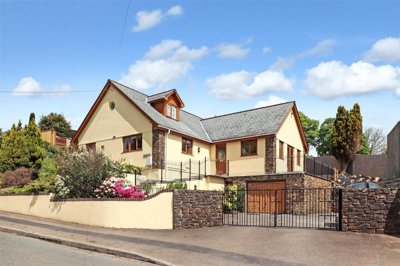
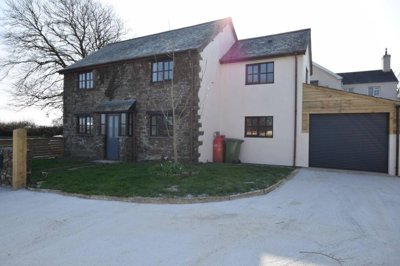
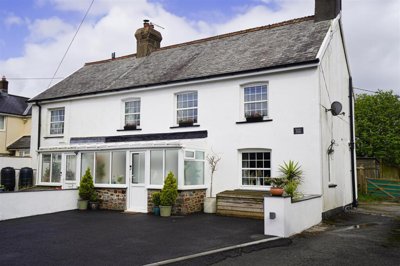
Browse 3 rental homes to rent in Clovelly, Torridge from local letting agents.
£0/m
0
0
0
Source: home.co.uk
Clovelly's rental market sits in a setting shaped by conservation rules and a housing stock that is old by any measure. In Higher Clovelly, average sale prices have reached around £296,667, a sign of how sought-after homes are on this stretch of the North Devon coast. Along Clovelly Road towards Bideford, average sold prices sit at approximately £171,333, although those homes are generally more modern and lie outside the historic village core. Inside the village itself there are 107 buildings dating from the 17th century, so rentals are usually period cottages and older homes rather than new-build accommodation.
There are no active new-build developments in the village, which means renters are choosing from traditional homes with plenty of character and a few quirks. Around the area, the main building materials include Delabole slate from Cornwall, deep red Devon bricks, stone, timber framing and cob construction made from earth and straw. They give Clovelly its unmistakable look, but they also call for the right kind of upkeep. Delabole slate has a strong influence on the roofscape, and many properties still have original or reclaimed slate that needs regular attention to keep water out in this exposed coastal spot.
Older homes often need upgrades to insulation, electrics and heating, even though exposed beams, stone walls and original fireplaces give Clovelly's historic houses much of their charm. Many cottages are built with solid walls rather than cavity walls, so thermal performance can fall below modern expectations. The estate has tackled some of this with lined flues in chimneys to cut heat loss and fire risk, while also encouraging proper ventilation and continuous low-level background heating in managed properties. When we view a property, we always ask about the heating system, insulation levels and any recent work to the roof or external walls.
For a longer tenancy in Clovelly, a RICS Level 2 survey before you commit becomes especially useful because of the age of the housing stock. It can flag common issues in 17th-century coastal properties, including early damp penetration, slate roof condition and the state of traditional construction elements. Survey costs usually sit between £400-600, depending on the property size, and that spend gives a clear picture of the home's condition before any tenancy agreement is signed.

Daily life in Clovelly moves at a pace that feels far removed from urban pressure. The village drops steeply from the main road to the harbour, and the well-known cobbled high street is lined with whitewashed cottages, artisan shops and traditional pubs serving fresh local seafood. Around 300 residents take real pride in the place, keeping up the flower displays and the traditional character that draw visitors from across the globe. Living here means being part of a working village, where fishing boats, coastal walks and seasonal tourism all shape the way the community feels.
Clovelly's economy is closely bound up with heritage and tourism, with visitors coming to experience a genuine Devon fishing village that seems frozen in time. Much of the village is managed by the Clovelly Estate, which takes practical steps to deal with the demands of historic buildings, including damp control in cottages through continuous low-level heating and encouragement of proper ventilation. Local amenities include traditional pubs where crab may have been caught that morning, craft shops selling work by Devon artisans, and the village church, which marks the top of the hill. Outside the village, the coastline is striking, and the South West Coast Path gives miles of cliff-top walking linking Clovelly with neighbouring villages and hidden beaches.
For everyday essentials, most residents head to Bideford, about five miles away, where larger supermarkets and services are available. By car, the trip usually takes 15-20 minutes through the rolling farmland of North Devon that defines this part of Torridge. People working from home will find broadband has improved in recent years, although speeds can still vary, so checking current connectivity with local providers is sensible. The village does have a post office and general store for basic supplies, and the pubs and cafes act as important social meeting points. For healthcare, the nearest NHS services are in Bideford, while more specialist appointments mean travelling to Barnstaple or Exeter.
Clovelly's seasonal rhythm has a strong effect on day-to-day living. Summer brings large numbers of visitors, with day-trippers making their way down the cobbled high street throughout the day. Winter is different, showing the quiet heart of a small coastal community, where residents enjoy the landscape without the seasonal crowds and village life becomes more intimate. Knowing this pattern helps prospective renters judge whether the summer bustle suits them, or whether it would feel like too much in the middle of the week.

Families thinking about renting in Clovelly will find most educational options in Bideford, around five miles away. For primary school age children, travel to village schools in surrounding communities is typical, with a network of small rural primaries serving the scattered settlements of North Torridge. Those schools bring close community ties and individual attention, although parents will need to arrange transport because public bus services are limited. Small class sizes can be a real advantage for younger children, giving them space to build confidence and develop personally, with teachers who know each pupil well.
Nearby primary schools for Clovelly include those in Bucks Cross, Parkham and other villages, each serving its own catchment area within Torridge District. Bucks Cross Primary School, in the village of Bucks Cross on the road between Clovelly and Hartland, is one option for families in this part of North Devon. The school run is usually a short drive, or for older children a walk along country lanes that parents may want to check for safety. Before committing to a rental, families should speak to Torridge District Council's education department to confirm the school for their address, since catchment lines can affect placement.
Secondary education is based in Bideford, where the town's schools are the destination for teenagers from Clovelly and the surrounding countryside. Bideford College and other local secondary schools serve the wider North Torridge area, and school transport is usually arranged through the local authority for pupils of secondary age. The daily journey to school is roughly 20-30 minutes by bus, which is something families should bear in mind when deciding on a rental in this coastal village. If a specific school place matters, we would suggest early contact with Torridge District Council's education department about catchment areas and admissions, since places in popular schools can be tight.
Clovelly also offers plenty of informal learning, through both the landscape and the community. Its position on the South West Coast Path creates natural lessons in coastal erosion, geology and marine biology. The historic buildings themselves open the door to learning about traditional building methods, conservation and local history. Families who make use of those everyday lessons often find that bringing up children here offers a different kind of enrichment, built around direct contact with the natural and built environment rather than the facilities found in larger towns.

Transport links reflect Clovelly's rural coastal setting, with the village sitting off the main A39 Atlantic Highway that runs along North Devon's coastline. Barnstaple is the nearest railway station, about 18 miles away, with services towards Exeter and then on to major UK destinations through the national rail network. For anyone working in Exeter, Bristol or further afield, that means a significant drive to reach the station before getting on a train, so car ownership is close to essential for most residents who need to commute beyond the local area. The drive to Barnstaple usually takes 35-40 minutes, and it passes through some of North Devon's most attractive countryside.
Bus links do exist between Clovelly, Bideford and surrounding villages, but frequencies are sparse compared with urban routes, usually two to three services on weekdays with less at the weekend. The 319 bus service links Clovelly and Bideford, although we would always recommend checking the latest timetable because rural routes can change. Once you have parked at the top of the village, the famous traffic-free high street is explored on foot or by bicycle, and the steep cobbled descent becomes part of everyday life. Many residents take that in their stride, and the hill soon feels like nothing more than the daily routine.
The A39 Atlantic Highway is the main road for getting beyond Clovelly, running north towards Hartland and west towards Bideford and then Barnstaple. As a single carriageway, it cuts through dramatic North Devon scenery, with views towards Exmoor and the Bristol Channel. Local work can be found in tourism within Clovelly itself, in Bideford's shops and services, and in the agricultural businesses that shape the North Torridge economy. A number of residents mix remote working with occasional travel, finding the quiet setting helps productivity while the limited transport makes a car necessary for everything outside day-to-day village life.
Cycling is common for short local journeys, although the hills make it demanding for anyone not used to the terrain. The South West Coast Path offers some excellent walking, and Clovelly sits on a stretch of coast that links west to Hartland Point and east to Bucks Cross and Abbotsham. For remote workers or those running tourism businesses from home, broadband has improved in recent years, but prospective renters should still check current speeds with providers because coverage can vary in parts of rural North Devon.

Before you commit to a rental in Clovelly, it is sensible to visit at different times of year. Summer brings the tourist traffic, while winter shows the quieter pace of a small coastal community. That seasonal split has a real effect on daily life, so it is worth thinking about how you feel about visitors and busy periods. Walk the high street at different times, speak to residents if you meet them, and watch how the village works once the summer season has passed.
We would advise arranging a rental budget agreement in principle before you start viewing properties. It tells landlords that you are serious and have verified financial capacity. For homes in this price range, expect to show proof of regular income and, in some cases, a UK guarantor depending on the landlord's requirements. Clovelly rentals tend to sit at the premium end, so landlords may look closely at applicants, and having the paperwork ready can speed things up quite a bit.
View any available rental property in person so you can judge its condition and character properly. Pay close attention to repair quality, especially given the age of Clovelly's housing stock. Ask the landlord about recent work to the roof, plumbing, heating system and any history of damp treatment or building maintenance. Homes on the cobbled high street may have specific issues linked to the steep setting and exposure to coastal weather.
Because many Clovelly properties date from the 17th century, a RICS Level 2 survey before you commit to a longer tenancy can highlight damp, roof condition and the need for electrical rewiring. Survey costs usually sit at £400-600 depending on property size, money well spent before any tenancy agreement is signed. For listed buildings or homes with complex historic features, a more detailed RICS Level 3 survey may be worth considering to get a fuller picture of the property's condition and maintenance implications.
Clovelly is a designated Conservation Area, so any significant changes to rental property need planning permission from Torridge District Council. Tenants should ask the landlord what alterations are allowed during the tenancy and what procedure applies for seeking consent. That matters especially if you are thinking about external decoration or any change to the appearance of the property, because conservation controls are stricter in villages like Clovelly.
Once an application is accepted, tenant referencing through a specialist provider usually follows. That normally means credit checks, employment verification and landlord references. We would also suggest getting clear on the deposit protection scheme that will hold your deposit, and on the tenancy agreement, before signing. Ask for a plain breakdown of all costs at the outset, including the deposit amount, any holding fee and what sits inside the monthly rent.
Renting in Clovelly calls for attention to details that do not always show up in standard searches. Because the housing stock is old, damp awareness matters, especially in ground floor rooms and basements that are common in historic cottages. The estate management has added low-level background heating and ventilation in many homes to fight condensation and damp penetration, and prospective tenants should ask about those measures and how they affect utility costs. Knowing whether a property has modern double glazing, decent insulation and a reliable heating system will have a big effect on comfort and running costs through the year.
Salt-laden winds and maritime weather are part of Clovelly's coastal setting, and they can speed up wear on external surfaces and building materials. Delabole slate roofs are durable, but they still need care so individual slates stay secure and mortar pointing at ridges and verges remains in good order. Ask when the roof was last inspected or repaired, because roof work on historic homes can be costly and disruptive. Whitewashed cottage walls also need regular attention to stay weatherproof, so we would inspect the condition of the walls carefully during viewings.
There are extra considerations for anyone planning changes to a rented property in a Conservation Area. External decorations, boundary treatments and even satellite dishes may need consent from Torridge District Council. Interior alterations can also be restricted, depending on listed building status, with Grade II listing applying to significant structures like the Stables to Clovelly Court. Before you commit, ask the landlord exactly what is allowed during the tenancy and what steps apply if you want to request changes. That conversation can prevent confusion and helps confirm that the home really fits your plans for the tenancy.
Energy efficiency deserves close attention in period homes with solid walls. Without the cavity wall insulation found in modern houses, older cottages can cost more to heat and can have cold corners or north-facing walls that encourage condensation. Ask about insulation levels, the age and type of heating system, and whether any improvements have been made to keep energy costs down. Original windows add to the charm of a Clovelly cottage, but they can also mean higher heating bills during the colder months when North Devon weather feels particularly bracing.

Clovelly village does not have rental price data published in a way that is as neatly aggregated as sale prices. With average sale prices in Higher Clovelly around £296,667, rents in this conservation village reflect the premium attached to period homes in desirable coastal settings. Across wider Torridge, there is a broad range, and one and two-bedroom period cottages usually command rents that match their character and location. We recommend speaking to local letting agents for current market rates and setting alerts on property portals to keep track of the limited rental stock in the village.
Properties in Clovelly fall under Torridge District Council for council tax. Because the village contains such a mix of historic housing, council tax bands vary quite a bit from one property to another, with period cottages often in bands A through D and larger renovated homes potentially higher. You can check the band for any property on the Torridge District Council website or in the listing once it appears. Council tax here in Devon is normally collected monthly by direct debit, and knowing the band helps with the overall rental budget.
There is no primary school inside Clovelly itself, so children usually attend schools in nearby communities such as Bucks Cross, Parkham or other villages close by. Bucks Cross Primary School serves part of the surrounding area and educates children from the scattered communities that define North Torridge. For secondary education, students travel to Bideford, where schools serve the wider North Torridge area, and the school bus journey usually takes about 20-30 minutes. Families should contact Torridge District Council's education department for current admissions information and to confirm which schools cover their address, because catchment boundaries can affect placements.
Public transport from Clovelly is limited, which is exactly what you would expect from a small rural village rather than a transport hub. Bus services to Bideford are led by the 319 route, but it normally runs only two to three times on weekdays and less often at weekends. Barnstaple railway station is the nearest rail link, about 18 miles away, and getting there means either a car journey or a bus connection before you can travel on to Exeter and beyond. For most residents, car ownership is essential for work, shopping and day-to-day services outside the village, because the public transport simply does not make commuting practical.
Clovelly gives renters something genuinely distinctive, a coastal way of life tied to history and community. The setting is striking, the heritage is rich and the atmosphere is calm, which makes it a memorable place to call home for people who value walking, sea views and the pace of a small village. There are trade-offs, though. Basic amenities are limited, many services need a car journey and tourism still shapes the seasons. For people whose work and lifestyle fit a rural coastal village, renting here offers a chance to live in one of Devon's most treasured communities without buying a property.
Renting in England normally means a security deposit equal to five weeks' rent, and that must be protected in a government-approved tenancy deposit scheme within 30 days of receipt. Tenant referencing fees usually sit at £100-200 depending on the provider, and there may be extra charges for guarantor services if the landlord asks for one. Because Clovelly homes are often historic period cottages rather than modern new-builds, some landlords may want a higher deposit to account for the added risk linked to older buildings. Always ask for a full cost breakdown before applying, including admin fees, inventory check-out costs and renewal charges.
Most homes in Clovelly date from the 17th century and were built using traditional methods and materials that differ sharply from modern standards. Common issues include damp penetration in ground floor rooms and basements, the condition of Delabole slate roofs and the thermal performance of solid walls without cavity insulation. In managed properties, the Clovelly Estate has introduced measures such as continuous background heating and ventilation to address damp, but not every property will have those improvements. Before you sign a tenancy, we recommend a careful inspection and, where appropriate, a RICS Level 2 survey to identify issues that could affect the tenancy.
Because Clovelly is a designated Conservation Area, planning controls affect what tenants can do with a rental home. External changes, including painting in different colours, fitting satellite dishes or altering boundaries, usually need consent from Torridge District Council. Interior restrictions may also apply if a property has listed building status, which would need consent from North Devon Council for more significant alterations. The tenancy agreement should spell out what is allowed, but we would still talk through any planned changes with the landlord before committing, particularly if you have specific ideas about how you want to use the property.
From 4.5%
Budget planning for your rental search, with a clear view of every cost involved.
From £99
Referencing services that help support a rental application.
From £350
A practical survey for older Clovelly homes, spotting defects before you commit.
From £85
An energy performance check that helps you understand heating costs in period property.
Budgeting for a rental in Clovelly means looking beyond the monthly rent. The upfront deposit, usually five weeks' rent for homes in this price range, has to be paid before move-in and held in a protected scheme for the full tenancy. First-time renters in England benefit from relief on stamp duty land tax for properties up to £425,000, although that threshold applies to purchases rather than rental agreements. For renting, the main upfront costs are the deposit, the first month's rent in advance and, in some cases, a holding fee to reserve the property while references are checked.
Monthly rent is only one part of the ongoing cost of living in Clovelly. Council tax, managed through Torridge District Council, and utility bills may run higher than average because so many properties are old. Historic cottages with solid walls and traditional construction often have poorer insulation than modern homes, so heating costs need careful thought, especially during North Devon's cooler months. Contents insurance is important for tenants and usually costs between £10-25 per month depending on the cover you need. The rural setting can also affect broadband and mobile phone costs, as some providers have reduced coverage in this part of North Devon.
We would also factor in the travel costs that come with living in a rural location. Car ownership brings fuel, insurance, road tax and maintenance costs that urban renters with good public transport may not face. Even if you already have a car, the mileage involved in reaching services in Bideford and beyond adds to running costs. For people planning to work from home, electricity for heating and powering equipment should sit alongside the usual household bills in the monthly budget. Keep those figures in mind, and you can enjoy life in this remarkable coastal village without unpleasant financial surprises.
Properties to Rent In London

Properties to Rent In Plymouth

Properties to Rent In Liverpool

Properties to Rent In Glasgow

Properties to Rent In Sheffield

Properties to Rent In Edinburgh

Properties to Rent In Coventry

Properties to Rent In Bradford

Properties to Rent In Manchester

Properties to Rent In Birmingham

Properties to Rent In Bristol

Properties to Rent In Oxford

Properties to Rent In Leicester

Properties to Rent In Newcastle

Properties to Rent In Leeds

Properties to Rent In Southampton

Properties to Rent In Cardiff

Properties to Rent In Nottingham

Properties to Rent In Norwich

Properties to Rent In Brighton

Properties to Rent In Derby

Properties to Rent In Portsmouth

Properties to Rent In Northampton

Properties to Rent In Milton Keynes

Properties to Rent In Bournemouth

Properties to Rent In Bolton

Properties to Rent In Swansea

Properties to Rent In Swindon

Properties to Rent In Peterborough

Properties to Rent In Wolverhampton

Enter your details to see if this property is within your budget.
Loans, cards, car finance
Estimated property budget
Borrowing + deposit
You could borrow between
Typical borrowing
Monthly repayment
Est. at 4.5%
Loan-to-value
This is an estimate only. Your actual budget may vary depending on interest rates, credit history, and personal circumstances. For an accurate affordability assessment, speak to one of our free mortgage advisors.
This calculator provides estimates for illustrative purposes only and does not constitute financial advice. Your home may be repossessed if you do not keep up repayments on your mortgage. Estimates based on 4.5% interest rate, repayment mortgage. Actual rates depend on your circumstances.
Homemove is a trading name of HM Haus Group Ltd (Company No. 13873779, registered in England & Wales). Homemove Mortgages Ltd (Company No. 15947693) is an Appointed Representative of TMG Direct Limited, trading as TMG Mortgage Network, which is authorised and regulated by the Financial Conduct Authority (FRN 786245). Homemove Mortgages Ltd is entered on the FCA Register as an Appointed Representative (FRN 1022429). You can check registrations at NewRegister or by calling 0800 111 6768.

We use cookies to show you personalised content and improve your experience of our website. Find out more in our Privacy policy and Cookie policy.