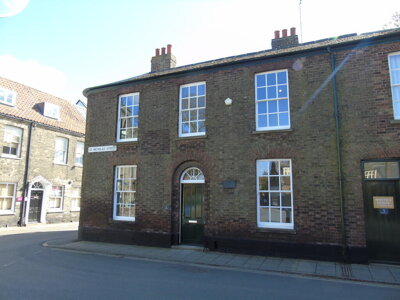
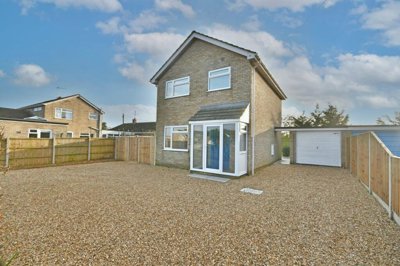
Browse 2 rental homes to rent in Clenchwarton, King's Lynn and West Norfolk from local letting agents.
Three bedroom properties represent a significant portion of the Clenchwarton housing market, offering space for families with multiple reception rooms and gardens in many cases. Browse detached, semi-detached, and terraced options ranging from period character homes to contemporary developments.
£1,250/m
1
0
39
Source: home.co.uk
Showing 1 results for 3 Bedroom Houses to rent in Clenchwarton, King's Lynn and West Norfolk. The median asking price is £1,250/month.
Source: home.co.uk
Detached
1 listings
Avg £1,250
Source: home.co.uk
Source: home.co.uk
Clenchwarton's rental market mirrors wider trends across King's Lynn and West Norfolk. Semi-detached and terraced homes do most of the work here, and on current market data semi-detached properties usually sit around the £1,250 per month mark. Terraced homes begin from approximately £1,250 per month, while detached family houses, scarcer and larger, often reach £1,250 per month depending on condition and specification. For renters who want more space for their money than they might find in urban centres, that mix is hard to ignore.
February 2026 sales data puts the freehold market at an overall average of £265,000, with detached properties averaging £324,995, semi-detached at £220,000, terraced homes at £185,000 and flats at £115,000. Prices have climbed by approximately 2% over the past twelve months, so the market looks steady rather than jumpy. That matters for renters too, because a stable sales market usually keeps rental values on an even keel. The Willows development by Lovell Homes, with new 2, 3 and 4 bedroom homes from £215,000 to £345,000, also feeds into local expectations, since new-build schemes often set the tone for standards in the area.
Estimated figures for similar rural villages suggest a stock mix of approximately 40% detached properties, 35% semi-detached, 20% terraced and 5% flats. In practice, that gives renters a decent spread of options, though family-sized detached homes are more common. Roughly 70% of homes in Clenchwarton are thought to be over 50 years old, with everything from pre-1919 cottages and farmhouses to post-war estates and newer developments. The result is a rental stock that ranges from period houses with original features to more modern homes that tend to need less day-to-day upkeep.
There is still a sense of momentum in Clenchwarton. Over the past twelve months, 30 property sales were recorded in the village, which points to continued demand. Add in the 2% price appreciation trend and the picture is of a place that remains attractive to buyers, which in turn supports the rental market through stronger values and landlord confidence.
Clenchwarton feels like a proper Norfolk village, rural and calm but still practical. People tend to know their neighbours, and village events bring residents together through the year. For renters wanting to step back from urban pace without cutting themselves off from town amenities, it offers a balance that is increasingly appealing.
King's Lynn gives the local economy a real boost, with work across manufacturing, retail and service sectors. Around the village, fertile Fenland soils keep agriculture front and centre, and that landscape shapes the feel of the area as much as the housing does. It suits commuters who work in King's Lynn but want the slower rhythm of village life, and families often like the mix of good schools, safe streets and open countryside.
The Fenland setting gives Clenchwarton its own look and feel. Terrain is flat or only gently undulating, so views stretch across agricultural land, while the geology sits on marine and glaciofluvial sands and gravels over chalk bedrock, with substantial alluvium deposits creating the low-lying ground. Older buildings often use traditional red brick, sometimes with local carrstone or flint, and clay or concrete tiles are common on the roofs. It all gives the village a coherent appearance, and plenty of character for renters who like solid, older construction.
Clenchwarton is not short on useful day-to-day amenities. There is a village shop, a community hall and regular bus services into King's Lynn and the surrounding villages. St Margaret's Church, a Grade II listed building, adds a good dose of history to the centre. For bigger shops, healthcare and leisure, King's Lynn is close by, usually within approximately 15 minutes travel time by car.

Primary education is anchored by the local school, which serves village families and helps support the area’s reputation for strong educational outcomes. Being part of King's Lynn and West Norfolk means families can move through a range of schooling options as children grow older. Locally, the focus is on literacy, numeracy and those everyday skills that matter, with parent communities often playing an active part in school life and pupil wellbeing.
Secondary schools for Clenchwarton residents are found across the wider King's Lynn area, with specialist facilities and a broad curriculum on offer. Catchments and admission arrangements matter here, because where a child can go may depend on the residential address. Transport is usually handled through the local education authority, with bus links to nearby schools. For families planning a move, the school timeline deserves proper attention.
Further afield, King's Lynn College and the nearby University of East Anglia in Norwich give older students accessible options for further and higher education. That spread of provision helps Clenchwarton work well as a family village, since children can continue their studies without the whole household having to relocate. Renters with school-age children should still check the latest admission arrangements and catchment areas with Norfolk County Council, because policy changes do happen.

Road links are one of the village’s practical strengths. The A47 trunk road runs through the King's Lynn area, giving access east to Norwich and westwards towards the Midlands through the A1 and M1 motorway networks. King's Lynn town centre is usually reachable within approximately 15 minutes by car, so people working in town can live here without a difficult commute. That combination keeps Clenchwarton appealing to village-minded residents who still need to travel.
Bus services connect Clenchwarton to King's Lynn and nearby villages, which matters for anyone without a car. Timetables are worth checking, but the service pattern is generally suitable for day-to-day commuting and trips into town. For longer journeys, King's Lynn railway station provides connections to Cambridge and London Liverpool Street, with journey times to the capital typically around 2.5 hours. Put that together with the road links and the village works surprisingly well for commuters.
For cyclists and walkers, the flat Fenland landscape around Clenchwarton is a real advantage. Local roads and public rights of way make it easy to get out into the surrounding countryside, and cycling into King's Lynn is a realistic option for many daily journeys. Parking varies from property to property, too, with newer homes more likely to have allocated spaces and older places often relying on on-street parking.

A rental in Clenchwarton does come with a few area-specific issues that are worth thinking through. Flood risk is the main one, because the village sits low in the Fenland and can be vulnerable to flooding from rivers such as the Great Ouse and its tributaries, surface water build-up and coastal flooding from The Wash. We would always ask landlords and agents about the flood history of a property and any prevention measures already in place. Buildings insurance usually covers flood damage, but knowing the risk profile helps tenants make a better call.
The local geology can also affect older homes. Alluvium deposits with moderate to high shrink-swell potential may cause movement, especially in properties built on older foundations or near trees. During viewings, we look for cracks, sticking doors or uneven floors, all of which can point to subsidence or structural movement. For older houses, a recent structural survey or building survey is often worth asking about.
Damp needs careful checking in Clenchwarton, especially in homes that are already more than 50 years old. The low-lying Fenland setting and the chance of a high water table can bring rising damp, penetrating damp and condensation into older buildings. We check walls, floors and corners for signs of moisture, and viewers should pay close attention to window frames, skirting boards and any badly ventilated spaces. Solid brick homes from the pre-1919 period often have fewer damp controls than modern cavity wall construction, so character cottages and farmhouses need a thorough look.
Electrical and plumbing systems deserve attention too, because older rental stock does not always meet current standards. Homes built before the 1960s may still have rubber or fabric-covered wiring that would benefit from updating, while properties built before approximately 1970 can have lead pipes or outdated consumer units. Asking about the last electrical inspection, the boiler service date and any renovation work on these essentials gives a clearer picture of the true condition and likely running costs.
Before we start viewing properties in Clenchwarton, we recommend arranging a rental budget agreement in principle from a lender or broker. It shows landlords and estate agents how much rent can realistically be supported by income and existing commitments. Most landlords want proof of annual income at least 30 times the monthly rent. Having that paperwork ready before the search begins makes the whole application process much smoother.
It pays to spend time in and around Clenchwarton before settling on a home. Look at how close each area is to the primary school, the village amenities, bus routes and the workplace. The housing mix runs from Victorian cottages to modern family homes, so it helps to know what each style actually offers. Different times of day can tell you a lot about the atmosphere.
Current listings in Clenchwarton deserve a careful read, especially the descriptions, photographs and floor plans. We book viewings for the homes that fit the brief, then go armed with questions about tenancy terms, fixtures and fittings, and any specific conditions the landlord wants to keep in place. First impressions matter, because they quickly show which places suit a lifestyle and which do not. We also like to take photographs at viewings, which makes later comparisons much easier.
Once the right property appears, the application should go in quickly, with everything asked for, from proof of identity and residence to income evidence and references from previous landlords or employers. Landlords in Clenchwarton usually ask for references, a credit check and proof of employment or income. Having the documents lined up in advance speeds things up and can strengthen the position if there are competing applicants.
Successful applicants still need to pass the referencing checks, and a UK guarantor may be needed if the income requirements are not met in full. The estate agent or landlord will arrange an inventory check to record the condition of the property before move-in. We always advise attending the check-in appointment and agreeing the inventory before the tenancy agreement is signed. It protects both sides for the duration of the tenancy.
After the tenancy agreement is signed and the deposit, typically five weeks' rent, has been paid, the keys are handed over. From there, it is time to register with local services such as doctors, dentists and utilities, and to tell the relevant organisations about the change of address. Meter readings should be taken on move-in day, and the check-in inventory ought to be completed properly. Direct debits are a sensible way to keep routine payments under control.
Renting in Clenchwarton means looking beyond the monthly figure. Deposits are standard, and they are usually set at five weeks' rent for homes with annual rental values below £50,000. That deposit must be protected in a government-approved scheme, such as the Deposit Protection Service, MyDeposits, or Tenancy Deposit Scheme, within 30 days of receipt, which gives tenants protection from unfair deductions at the end of the tenancy. Before any deposit is paid, a full inventory check and a set of photographs are a smart baseline.
There are also upfront costs that can catch people out if they are not ready for them. Referencing fees, which cover credit checks, employment verification and references from previous landlords, typically range from £75 to £200 depending on the letting agent and how detailed the checks are. Some landlords also ask for a guarantor, particularly where tenants are students, have limited credit history or do not meet the landlord’s affordability criteria. A UK-based guarantor agrees to cover rent payments if the tenant defaults, which gives the landlord extra security.
Beyond rent, the monthly outgoings usually include council tax, payable to King's Lynn and West Norfolk Borough Council, along with gas, electricity, water and telecommunications. Homes with electric heating or older construction can have higher energy costs, so the EPC rating matters when you are estimating bills. Contents insurance is wise for protecting personal belongings, while buildings insurance remains the landlord’s job. Getting those figures straight makes it easier to budget properly through the tenancy.
Older homes in Clenchwarton can also bring maintenance costs that sit with the tenant under the tenancy agreement. We would ask for recent utility bills and find out about any known issues with heating efficiency, insulation standards or damp prevention. Solid walls often cost more to heat than modern cavity-wall homes, and single-glazed windows in older properties can push energy use up further. It is the kind of detail that affects the real cost of living there, not just the rent.

For a rough guide, comparable homes across King's Lynn and West Norfolk point to terraced properties renting for approximately £1,250 per month, semi-detached homes for £1,250 per month and detached family homes for £1,250 per month. Final figures will move around according to condition, number of bedrooms, included fixtures and current demand. Local letting agents will give the clearest picture of what is being asked in the village right now.
In Clenchwarton, council tax sits with King's Lynn and West Norfolk Borough Council, and the banding runs from A to H depending on the value and type of the property. Most homes in the village usually fall within bands A through D, which means the annual charge is lower than for the upper bands. Renters should always check the exact band for any home they are considering, because it forms part of the total monthly housing cost alongside the rent.
Clenchwarton has a local primary school for children from the village and the surrounding area. Secondary schools across the King's Lynn area are known for academic achievement and student welfare, though parents still need to look at Ofsted ratings and admission arrangements carefully. Catchments and oversubscription rules can change school placements, so they are worth checking in detail. The nearest secondary schools are generally within a reasonable daily commute from Clenchwarton.
Local bus routes link Clenchwarton to King's Lynn and nearby villages, giving residents without cars a practical public transport option. King's Lynn railway station offers East Anglian main line services to Cambridge and London Liverpool Street, with Norwich reachable in approximately 90 minutes. The flat terrain also makes cycling sensible for local trips, with routes into King's Lynn and across the surrounding Fenland countryside.
Renters often find Clenchwarton appealing because it mixes village life with decent links to town amenities. The community atmosphere is strong, there is a local primary school, and the countryside setting is exactly what many people are after. With King's Lynn close for work, shopping and services, and Norwich within reasonable driving distance, the village sits neatly between rural calm and urban access, which suits everyone from young professionals to families.
A standard deposit on a rental property in Clenchwarton is usually five weeks' rent, held in a government-approved deposit protection scheme for the length of the tenancy. There may also be an administration or referencing fee charged by the letting agent or landlord, although regulations limit the charges agents can impose. Renters also need to think about moving costs, the first utility payments and any charges for setting up services at the property. Unfurnished lets can also mean a spend on furniture and household items.
Because Clenchwarton sits low in the Fenland, flood risk deserves proper attention before any tenancy is signed. The village can be affected by the Great Ouse river system, surface water during heavy rain and coastal flooding from The Wash. Homes close to watercourses or in lower-lying parts of the village may carry a higher risk profile. We would ask about any previous flooding, check the Environment Agency flood risk maps and find out what prevention measures the property already has in place. Buildings insurance usually covers flood damage, but contents insurance and a good record of the move-in condition still matter.
Most of Clenchwarton's homes are more than 50 years old, so a few construction issues can crop up in the rental stock. Clay soils with moderate to high shrink-swell potential may move older properties with weaker foundations, especially where trees are nearby. Damp is also fairly common, given the high water table and the low-lying position, particularly in solid-brick homes without cavity wall insulation. Wiring and plumbing in older buildings may fall short of current standards too. We would ask about recent surveys, building surveys or renovation works, and look closely at any viewings for movement, damp or outdated installations.
From 4.5%
We always start with the budget before a rental search in Clenchwarton gets underway.
From £75
Our team then works through the referencing checks that landlords in Clenchwarton require.
From £450
Our surveyors can carry out a professional assessment of the rental property you are considering.
From £85
Energy performance certificate for rental properties
Properties to Rent In London

Properties to Rent In Plymouth

Properties to Rent In Liverpool

Properties to Rent In Glasgow

Properties to Rent In Sheffield

Properties to Rent In Edinburgh

Properties to Rent In Coventry

Properties to Rent In Bradford

Properties to Rent In Manchester

Properties to Rent In Birmingham

Properties to Rent In Bristol

Properties to Rent In Oxford

Properties to Rent In Leicester

Properties to Rent In Newcastle

Properties to Rent In Leeds

Properties to Rent In Southampton

Properties to Rent In Cardiff

Properties to Rent In Nottingham

Properties to Rent In Norwich

Properties to Rent In Brighton

Properties to Rent In Derby

Properties to Rent In Portsmouth

Properties to Rent In Northampton

Properties to Rent In Milton Keynes

Properties to Rent In Bournemouth

Properties to Rent In Bolton

Properties to Rent In Swansea

Properties to Rent In Swindon

Properties to Rent In Peterborough

Properties to Rent In Wolverhampton

Enter your details to see if this property is within your budget.
Loans, cards, car finance
Estimated property budget
Borrowing + deposit
You could borrow between
Typical borrowing
Monthly repayment
Est. at 4.5%
Loan-to-value
This is an estimate only. Your actual budget may vary depending on interest rates, credit history, and personal circumstances. For an accurate affordability assessment, speak to one of our free mortgage advisors.
This calculator provides estimates for illustrative purposes only and does not constitute financial advice. Your home may be repossessed if you do not keep up repayments on your mortgage. Estimates based on 4.5% interest rate, repayment mortgage. Actual rates depend on your circumstances.
Homemove is a trading name of HM Haus Group Ltd (Company No. 13873779, registered in England & Wales). Homemove Mortgages Ltd (Company No. 15947693) is an Appointed Representative of TMG Direct Limited, trading as TMG Mortgage Network, which is authorised and regulated by the Financial Conduct Authority (FRN 786245). Homemove Mortgages Ltd is entered on the FCA Register as an Appointed Representative (FRN 1022429). You can check registrations at NewRegister or by calling 0800 111 6768.

We use cookies to show you personalised content and improve your experience of our website. Find out more in our Privacy policy and Cookie policy.