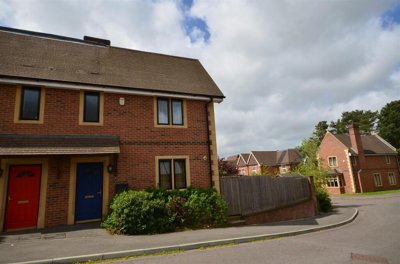
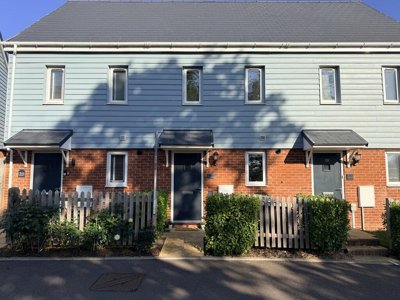
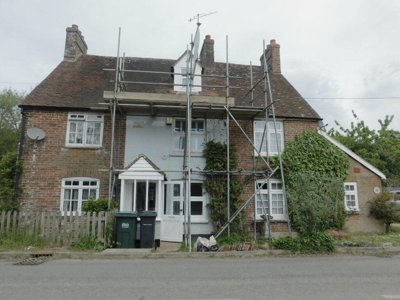
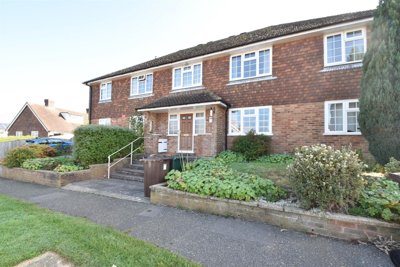
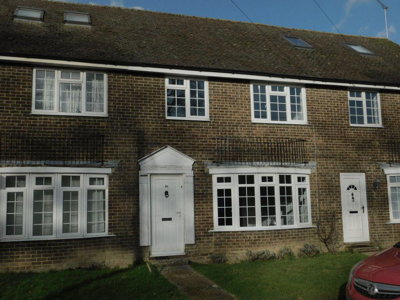
Browse 7 rental homes to rent in Catsfield, Rother from local letting agents.
£0/m
0
0
0
Source: home.co.uk
Catsfield’s rental market tends to mirror the appeal of this well-regarded village. Homes here usually attract premium rents because of the rural setting, good schools nearby and reliable links into larger towns. Exact rental figures for Catsfield itself are limited, so the wider Battle and TN33 postcode area gives useful context for tenants trying to gauge local values. An average sale price of £500,000 in Catsfield also points to the level of property values behind the rental market, with period homes and detached houses generally drawing the strongest rents.
Renters in Catsfield will usually come across traditional terraced cottages, semi-detached family houses and larger detached homes. The local stock spans period properties from the late 19th century, some 1930s houses and newer builds dating from around 2019. That gives a fair spread, from smaller starter homes to sizeable family places, depending on budget and space requirements. In the Catsfield Stream area, recent market activity shows semi-detached properties averaging around £405,000, a sign of firm demand for family-sized accommodation.
Even against wider national shifts, Catsfield has held up well. Families are drawn by the schooling choices, while people working remotely like the peace of the village without giving up decent connections. Gardens matter here, unsurprisingly, and homes close to the village centre often carry a premium because day-to-day life is easier and the community feel is stronger. Across the wider Battle area, 192 properties sold over the past year, showing an active market, with prices settling after the adjustment from the 2020 peak of £736,000.

Small and welcoming, Catsfield has the sort of rural English character many people hope to find and rarely do. Community life feels active, with events and gatherings bringing neighbours together through the year. Day-to-day essentials are covered, including a well-used public house, and for broader shopping, eating out and leisure most people head to Battle, the nearby market town, approximately two miles away. From what our team hears on the ground, new arrivals are often struck by how quickly established residents make them feel part of village life.
All around the village, the landscape opens into rolling East Sussex farmland and woodland, which gives residents plenty of scope for walking, cycling and other outdoor pastimes. This is Wealden country, shaped by the distinctive geology of the district, with soft hills and valleys cut by old watercourses such as Catsfield Stream. It is a setting that makes village living feel properly rural, without cutting people off from places of interest. Battle and its historic abbey grounds are close by too, adding another layer to what is available on the doorstep.
People living in and around Catsfield are a mix of families, working professionals and retirees, all drawn in by the quieter pace and the standard of life here. Property listings regularly describe homes as character or period properties, which fits the number of historic buildings in the village and nearby lanes. Traditional architecture, strong scenery and an easy-going community all add up to a place that appeals to renters after a genuine Sussex village setting. Many locals like the sense of distance from urban pressure, while knowing Hastings beaches and the Channel ports are still within sensible reach for days out or holidays.

For many families, schooling is one of the main reasons to consider renting near Catsfield. In Battle, there are several respected primary options, including Battle Primary Academy for younger children in the local community. Secondary provision is also solid, with Battle High School serving students from Catsfield and nearby villages. Both schools are known for academic achievement and pastoral care, which is a big part of the area’s appeal for households planning a move.
Some parents will want a wider choice, and the broader Rother district does provide that. Across the district there are primary and secondary schools, faith schools and establishments with specialist status. East Sussex also has a grammar school system, so academically selective secondary places are available in nearby towns whose catchment areas include Catsfield. Before committing to a rental, we always suggest checking the exact catchment area and admissions rules, because competition can be strong in an area this popular.
Early years provision is available in Battle and the surrounding villages, where several nurseries and preschools offer flexible childcare for working families. For older pupils, sixth form options include Battle High School as well as providers in nearby Hastings, with A-level and vocational courses both available. Good education at different stages helps keep demand for rentals steady in Catsfield and the wider area. We often advise families to build school catchment zones into their search from the start, because being close to a preferred school can influence both rental values and everyday family life in Catsfield.

Living in Catsfield means a rural setting, but not an isolated one. Local bus routes link the village with Battle, Hastings and nearby villages, giving residents practical public transport if they do not drive. Services run through the day, though not with the same frequency you would expect in a town, so for many households a car remains the easier option. Our team regularly hears that the buses to Battle and Hastings cover most daily trips well enough, but a private vehicle does make life more flexible.
For rail travel, most residents use Battle station, approximately three miles from Catsfield. From there, services reach key destinations including London Bridge, either via a change at Battle or on direct routes via Hastings. London Victoria can be reached in around two hours, which keeps Catsfield in play for some commuters who want rural living but still need access to the capital. The same rail network also opens up Brighton, Eastbourne and the Channel Tunnel at Ashford for work and leisure across the south of England.
By road, Catsfield is well placed. The A2100 gives a direct route into Battle and connects onward to the A259 coastal road and the A21 for the M25 and London. Driving to Hastings usually takes approximately 20 minutes, while Tunbridge Wells is around 40 minutes away. That puts the village in a fairly central spot within East Sussex, with workable access to coast and countryside alike while preserving its calm character. For people working in Battle, cycling can also be realistic, thanks to the flat terrain and country lanes.

Before you start viewing in Catsfield, we suggest getting a rental budget agreement in principle from a lender. It sets out what you can afford in monthly rent, which can strengthen an application and show landlords and letting agents that you are a credible prospect. In a competitive market like this, having that finance in principle sorted early can make a real difference, because many landlords favour applicants who can show immediate affordability.
Take time to get to know the village and the surrounding area before making a commitment. Think about distances to schools, transport and everyday amenities. It also helps to visit at different times of day and over a weekend, so you can get a feel for the pace of the place and decide if Catsfield suits how you want to live. Our platform brings together local detail on facilities, schools and transport, which can help you make a properly informed call.
Once you are ready, speak to local letting agents covering Battle and Catsfield and line up viewings for the rental properties available. Our platform shows current homes on the market, and we usually advise seeing more than one so you have a proper basis for comparison. Go in with questions on condition, lease terms and what the landlord expects. In Catsfield, where period homes are common, it is especially sensible to ask about the age of the boiler, any recent renovations and whether there have been historical maintenance issues.
After finding a place you want, the next step is to put in a formal application through the letting agent or directly with the landlord. In most cases that means references, proof of income, identification and a credit check. First-time renters should have paperwork ready in advance, including employment references and bank statements. Our tenant referencing service can help move this along, carrying out the checks landlords in the Catsfield area usually expect to see.
If your application is accepted, you will move on to referencing checks covering identity, employment and rental history. Once those are completed satisfactorily, you sign the tenancy agreement and pay the deposit and first month's rent. Read the terms carefully before signing, especially anything covering maintenance, notice periods and garden upkeep where there is outdoor space. We also recommend asking for a clear inventory at this point, as it gives you a better chance of protecting your deposit later on.
Renting in rural Catsfield calls for a bit more thought than renting a newer flat in town. Many properties here are character homes, and that often means older construction methods, original details and maintenance needs that do not match modern buildings. Knowing what comes with that style of property helps tenants avoid surprises once the tenancy has started. Our inspectors regularly find that period homes in the TN33 area often use solid brick construction typical of late Victorian and Edwardian era houses.
Flood risk is something tenants should take seriously when looking at property in East Sussex. We did not find specific flood risk maps for Catsfield in the research, but the Wealden geology and the presence of local watercourses mean some homes could be vulnerable to surface water or river flooding. It is sensible to ask about any past incidents and to look closely at how a property sits in relation to streams, ditches and low-lying ground. Homes near Catsfield Stream in particular deserve careful checking, and we advise asking the landlord or agent directly about any historical flooding before agreeing a tenancy.
Some Catsfield homes may sit within conservation areas or be listed buildings, so there can be rules around alterations and maintenance that tenants need to understand before moving in. It is also common for rural properties to come with bigger gardens or grounds, and the upkeep of those spaces should be considered as part of the overall commitment. Getting clear on those responsibilities early helps tenancies run more smoothly. In parts of East Sussex, Wealden clay geology can affect older buildings as well, sometimes leading to movement or subsidence that a proper survey would pick up before you commit to renting.

Reliable rental data for Catsfield itself is limited, but sale values still give a useful guide to the local market. The average property sale price in Catsfield is around £500,000, with detached homes averaging £600,000 and terraced properties around £400,000. In rental terms, price usually tracks property type, size and condition, and period homes with gardens tend to command a premium. For the strongest comparison, most people look to the wider Battle and TN33 area, where two-bedroom cottages typically sit between £900 and £1,200 per month, while family homes usually range from £1,400 to £1,800 per month depending on size and condition.
For council tax, Catsfield properties fall within Rother District Council. The band will depend on value and property type, but many period homes in the village are likely to sit in bands C to E based on their assessments. A home valued at around £400,000 would typically be in band D, while more expensive detached houses may fall into band E or F. Anyone taking on a tenancy should check the exact band before agreeing terms, because council tax sits alongside rent and utilities as a regular outgoing. In Rother district, charges for 2024/25 run from approximately £1,400 to £2,200 per year depending on the band.
Families looking at Catsfield usually focus first on Battle Primary Academy and Battle High School, which cover primary and secondary education for the local catchment area and both have established standing in the community. Beyond that, the wider East Sussex area adds more primary schools in nearby villages, including Ninfield and Crowhurst, plus grammar school options for academically selective secondary pupils in Bexhill and Hastings. Catchment areas and admissions criteria matter here, so we encourage families to check them closely before choosing a rental property, as school placement can be affected quite significantly in such a popular area.
Public transport and road access are both workable from Catsfield. Local bus services run to Battle, Hastings and nearby villages such as Ninfield and Westfield. For rail, Battle station is approximately three miles away and has services to London Bridge and London Victoria, with journey times of around two hours into the capital. By car, the A2100 and A259 connect onwards to the A21 and M25, so Sussex and Kent are reasonably accessible. Many residents see the 20-minute drive to Hastings as an easy trip for bigger shops, hospital appointments and leisure facilities that are not available in the village.
For renters wanting a rural Sussex setting without losing touch with larger towns, Catsfield has a lot going for it. The village offers a peaceful atmosphere, attractive countryside and access to well-regarded schools, which makes it especially appealing to families and to people who enjoy traditional English village life. The rental stock runs from period cottages to larger family homes, giving some choice while keeping the character of the area intact. Add in the strong community feel, the walking routes and the closeness of historic Battle, and it is easy to see why people settle here.
In England, the standard deposit for a rental property is equivalent to five weeks' rent, and it should be held in a government-approved deposit scheme under the Tenancy Deposit Protection rules. First-time renters need to budget for that alongside the first month's rent and any upfront referencing fees, which typically range from £100 to £300 depending on the letting agent. Other possible costs include inventory check fees of around £100 to £200, contract preparation charges and renewal fees if the tenancy is extended. Since the tenant fees ban came into effect, landlords cannot charge administration fees, although applicants with a limited rental record may still be asked for a guarantor.
From 4.5% APR
Get a rental budget agreement in principle to strengthen your tenancy application.
From £25
Comprehensive referencing checks to satisfy landlords
From £75
Protect your deposit with a professional inventory
From £85
Energy performance certificate for your rental property
Knowing the upfront costs makes it much easier to budget for a move to Catsfield. In most cases, tenants will need the first month's rent in advance, plus a security deposit equal to five weeks' rent. Those sums are normally payable before occupation begins, so having the savings ready is important if you want to secure the property. As an example, a home rented at £1,200 per month would need a deposit of £1,385, plus £1,200 for the first month's rent, giving a total of £2,585 before move-in.
First-time renters should be aware that the tenant fees rules in England remove certain charges, although referencing and guarantor fees may still apply. Any deposit taken must be placed in a government-approved scheme within 30 days of receipt, and tenants should be given full details of where and how it is protected. Inventory checks at move-in and move-out are useful for both sides because they create a fair record of condition if there is a dispute at the end of the tenancy. We strongly advise asking for your own copy of the inventory and flagging any discrepancies before signing.
Rent is only part of the monthly picture. Ongoing costs also include council tax, utility bills and internet services. In Catsfield, period homes and rural locations can push heating costs higher, especially where insulation is not up to modern standards. Buildings insurance is usually the landlord’s responsibility, but contents insurance for a tenant’s belongings is still a sensible extra and generally not expensive. To keep the budget realistic, most tenants allow an additional £150 to £250 per month for utilities and council tax, depending on the size of the property and how much is used.
Properties to Rent In London

Properties to Rent In Plymouth

Properties to Rent In Liverpool

Properties to Rent In Glasgow

Properties to Rent In Sheffield

Properties to Rent In Edinburgh

Properties to Rent In Coventry

Properties to Rent In Bradford

Properties to Rent In Manchester

Properties to Rent In Birmingham

Properties to Rent In Bristol

Properties to Rent In Oxford

Properties to Rent In Leicester

Properties to Rent In Newcastle

Properties to Rent In Leeds

Properties to Rent In Southampton

Properties to Rent In Cardiff

Properties to Rent In Nottingham

Properties to Rent In Norwich

Properties to Rent In Brighton

Properties to Rent In Derby

Properties to Rent In Portsmouth

Properties to Rent In Northampton

Properties to Rent In Milton Keynes

Properties to Rent In Bournemouth

Properties to Rent In Bolton

Properties to Rent In Swansea

Properties to Rent In Swindon

Properties to Rent In Peterborough

Properties to Rent In Wolverhampton

Enter your details to see if this property is within your budget.
Loans, cards, car finance
Estimated property budget
Borrowing + deposit
You could borrow between
Typical borrowing
Monthly repayment
Est. at 4.5%
Loan-to-value
This is an estimate only. Your actual budget may vary depending on interest rates, credit history, and personal circumstances. For an accurate affordability assessment, speak to one of our free mortgage advisors.
This calculator provides estimates for illustrative purposes only and does not constitute financial advice. Your home may be repossessed if you do not keep up repayments on your mortgage. Estimates based on 4.5% interest rate, repayment mortgage. Actual rates depend on your circumstances.
Homemove is a trading name of HM Haus Group Ltd (Company No. 13873779, registered in England & Wales). Homemove Mortgages Ltd (Company No. 15947693) is an Appointed Representative of TMG Direct Limited, trading as TMG Mortgage Network, which is authorised and regulated by the Financial Conduct Authority (FRN 786245). Homemove Mortgages Ltd is entered on the FCA Register as an Appointed Representative (FRN 1022429). You can check registrations at NewRegister or by calling 0800 111 6768.

We use cookies to show you personalised content and improve your experience of our website. Find out more in our Privacy policy and Cookie policy.