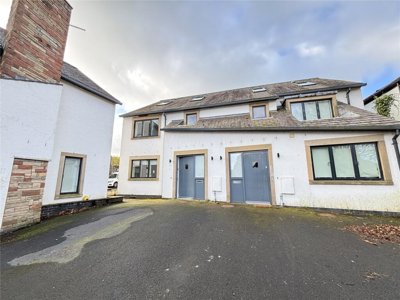
Browse 1 rental home to rent in Castle Carrock from local letting agents.
The Castle Carrock property market offers detached, semi-detached, and terraced houses spanning various price ranges and neighbourhoods. Each listing includes detailed property information, photographs, and direct contact with the marketing agent.
Castle Carrock’s rental market mirrors the village’s appeal. Housing is scarce, demand is high, and the stock leans heavily towards traditional stone buildings. Sandstone, limestone and slate are the materials most closely tied to the local architectural story, and historic records show that limestone and freestone were plentiful in the surrounding ground. That geology shaped the older houses here, many of them built from locally sourced sandstone, which is part of why the parish still feels so visually consistent today.
There has also been some new development. At The Glebe on Castle Carrock, Brampton, CA8 9LZ, Wannop Developments built eight new-build detached houses, finished with stone exteriors, slate roofs, triple glazing and air source heat pumps. Prices began at £427,000, which gives a clear sense of the premium attached to homes in the village. One of the properties sold for £428,000 in November 2025, a sign that well-finished homes here still attract strong interest.
Availability for rent tends to be tight, simply because Castle Carrock is small and the village draws people who want a rural setting. In 2001, 118 households were recorded, and by the 2021 Census the population had reached 318 residents, so the scale has remained modest. What does come up usually takes the form of cottages, farmhouses and period conversions. There are 14 Grade II listed buildings too, which means some homes carry genuine historic weight, with agricultural details and 19th-century building methods still visible. Anyone hoping to rent here should move quickly, because properties do not appear often.
Listed and historic buildings are part of daily life in Castle Carrock, not a side feature. Houses, farm buildings, a folly, the village hall and even the war memorial sit alongside homes, giving the place a strong sense of character. That same character brings upkeep, though, and tenants may find that older properties need regular attention to keep their features in good order. Alterations can also be restricted in listed buildings, so personalising a home is not always straightforward during a tenancy.

Living in Castle Carrock gives a very real taste of Cumbrian village life, a long way from city routines. The village has moved on from its 19th-century agricultural and lime-burning roots, and today it is a quiet residential community. Back in Victorian times, lime-burning was part of the local economy and helped support the village’s prosperity. You can still see traces of that past in the landscape, where farm buildings and lime-related structures turn up from time to time.
The reservoir built between 1903 and 1909 left a lasting mark on Castle Carrock. Around 700 workers came to the area for the project, and the experience helped shape the sense of community that still exists now. Geltsdale was chosen because its geology offered rock that was far more impermeable, unlike the more permeable carboniferous rock found elsewhere nearby. It was a big undertaking, and the friendships formed during that period of growth still seem to echo through village life. Today, the primary school and The Duke of Cumberland pub give the village practical anchors within easy reach of most homes.
Life here is shaped just as much by the landscape as by the houses. Castle Carrock sits amid varied geology, with limestone and freestone common in the local ground and blue stones also noted in the arable land. The River Gelt runs through the parish, which adds to the walking routes and links the village to the wider Cumbrian fells. It is also well placed for the Solway Coast Area of Outstanding Natural Beauty, while still being within reach of larger towns for work and services. Across the village, 14 Grade II listed buildings, sandstone cottages and old farm buildings give it a distinctly English rural feel.
For renters, Castle Carrock is really about community and the outdoors. The Duke of Cumberland pub acts as a meeting point, and the primary school keeps families closely connected. Weekly food shops and specialist services mean a trip to Brampton, Hexham or Carlisle, but many residents see that as a fair exchange for the peace and scenery. At weekends, people head out along footpaths, down to the River Gelt valley or over towards the reservoir for longer countryside walks.

Education in the village centres on the primary school, which supports local families and gives Castle Carrock a self-contained feel. For parents renting here, that is a real advantage, because younger children do not need to travel to another settlement for their first years of schooling. The school is small, as you would expect in a rural Cumbrian village, and that close scale helps build strong ties between families, teachers and the wider community. For households with children of primary age, it is one of the village’s most attractive features.
Older children generally need to travel further for school. Nearby market towns across the wider Cumberland area provide the main secondary options, so parents should check catchment boundaries and transport before taking a tenancy. Post-16 study is also available in larger Cumbrian towns, which gives families some flexibility once pupils move beyond compulsory schooling. Brampton, Hexham and other towns in the area all play a part, although transport arrangements vary from school to school and depend on where in the village the family lives.
For families with children beyond primary age, transport is not a side issue, it is part of the decision. Journey times to secondary schools and colleges need to be checked early, along with the latest catchment maps. In practice, private car travel is usually the main option, because bus links to schools can be limited and require careful planning. Looking at school performance data and Ofsted ratings for nearby options can also help narrow the field before renting in Castle Carrock.

Castle Carrock’s transport links reflect its rural setting. Road travel is the mainstay, with the village close to the A69 trunk road, giving access to Carlisle, around 12 miles to the north, and Newcastle upon Tyne further east. For commuters, that road link matters. Car ownership is effectively a necessity for most residents, since everyday needs usually mean going to Brampton or Hexham for supermarkets, healthcare and other services. The A69 also connects to the A1(M), which opens up longer journeys for work or leisure.
Public transport is limited, which is no surprise in this part of Cumbria. The nearest railway station is in Carlisle, roughly 12 miles away, with direct trains to London, Edinburgh, Birmingham, Manchester and other major destinations. Because of that distance, rail travel usually still depends on having access to a car. Bus services in rural Cumbria tend to run to restricted timetables, with school runs and essential shopping trips taking priority over daily commuting.
For anyone thinking of renting in Castle Carrock, the big question is balance. Rural calm and scenic surroundings come with practical trade-offs, especially if commuting or regular town visits are part of everyday life. Walking and cycling are excellent here, though most people use them for leisure rather than transport. Those who work from home may find the village perfectly workable, particularly as broadband across rural Cumberland has improved in recent years.

Start by getting to know the Castle Carrock market properly. We look at what types of homes are available, what rents usually look like locally and how limited supply can be in a village this size. Properties are rare, so registering with letting agents covering the Cumberland area is a sensible first step. If nothing is available straight away, widening the search to nearby villages and setting up alerts can help you move fast when something does come up.
Once a suitable home appears, arrange a viewing without delay. In a place with such a small stock of rental properties, a decent home can draw interest from several applicants at once. Seeing more than one property helps with comparisons on condition, facilities and rent terms. Take photographs, make notes and keep track of anything that needs asking about later, whether that is wear and tear or something you want the landlord or agent to clarify.
Before you commit to anything, get a rental budget agreement in principle from a lender so you know where you stand financially. It gives your application more weight and helps you compare properties at realistic rent levels. Our partners can provide rental budget quotes, which can be useful when you are trying to show that you are ready to move in this sought-after village.
When the right property comes along, send in the tenancy application straight away and include everything asked for, from proof of identity to income evidence and references. Castle Carrock is not the kind of market where people can afford to be unprepared. A complete application can move ahead faster than one that is missing documents, and that can make all the difference. References from previous landlords and employers carry real weight when several people are chasing the same home.
After approval, read the tenancy agreement carefully before signing. Pay close attention to the deposit, notice periods and who is responsible for maintenance. Older homes need a closer look, because repairs may come up more often than in newer stock. In Castle Carrock, where traditional construction is common, it is especially important to be clear about who organises and pays for work on historic features.
Before moving in, complete a full inventory check and record the condition of everything in the property, from walls and floors to fixtures and any furniture included with the tenancy. That creates a clear starting point for both tenant and landlord, and it is crucial when it comes to getting the deposit back at the end. For homes with period details or traditional construction, note the condition of stone walls, slate roofs and old windows carefully, because those are the features most likely to matter later.
Renting in Castle Carrock means paying attention to issues that are specific to this historic Cumbrian village. Flood risk is one of them, because the River Gelt runs through the parish and lower-lying homes may be affected during heavy rain or snowmelt. Castle Carrock Parish Council has already taken part in consultations on flood risk and local planning, so the issue is not new to the area. Tenants should ask about any flood history and think carefully about where a property sits within the parish.
The rural setting also brings planning sensitivities, especially with 14 Grade II listed buildings spread through the parish. We did not identify a formal conservation area in the research, but the number of listed buildings suggests that planning rules could still affect certain locations. That matters if you hope to make changes, since permissions for alterations or improvements may be limited. It is better to discuss any plans with the landlord and local planning authority before committing to a tenancy.
Much of the housing stock is old enough to need a careful inspection. Traditional methods, including sandstone walls and slate roofs, can mean different maintenance needs from newer homes. Local limestone and freestone helped shape how the village was built, so many properties still show the marks of historic construction techniques and may need specialist attention. A proper inspection should look for damp, roof condition and any worn historic features. Given how common traditional methods are here, a thorough survey is a sensible move before taking on a tenancy.
Ground conditions can matter too, especially where older buildings sit on shrinkable clay soils, although we did not find specific shrink-swell risk data for Castle Carrock. The local geology is varied, so conditions may change from one part of the parish to another, which makes a professional survey worthwhile for longer tenancies. Homes close to the River Gelt or in lower-lying spots may also need closer checking for drainage, particularly given the village’s history of dealing with flood risk.

Rental price information for Castle Carrock is thin on the ground, largely because the village is small and homes do not turn over often. Sales data shows everything from old cottages to new-build detached houses at The Glebe development, where prices start from £427,000, which points to the strength of the local market. In the wider Brampton area of Cumberland, rents for two and three-bedroom cottages vary according to type, size and condition, and they sit in line with the local market. For a more direct comparison, similar rural Cumbrian villages can differ quite a bit, so speaking to local letting agents is the best way to check current availability and pricing around Castle Carrock.
Council tax for properties in Castle Carrock falls under Cumberland Council, following the 2023 reorganisation of local government in Cumberland. Banding varies according to property value and type, so traditional cottages and farmhouses often sit in bands B through D, while larger detached homes and period conversions may sit higher. Homes in The Glebe development and other modern builds are assessed on their own merits after construction. Anyone renting should ask for the exact band, because it adds to the monthly cost alongside the rent.
The village school serves Castle Carrock and the immediate area, taking children from early years through to Key Stage 2. Its smaller scale is typical of rural Cumbrian education and gives younger pupils a focused environment with close community links. Secondary schooling is found in nearby market towns, and placements depend on catchment areas that can stretch across several villages. Families should look at school performance data, Ofsted ratings and travel arrangements from Castle Carrock before deciding where to rent.
Transport links are limited, which is part of living here. Castle Carrock does not have its own railway station, and the nearest mainline services are in Carlisle, around 12 miles away, with links to London, Edinburgh and Birmingham. Bus services in rural Cumbria are sparse and often run to timetables that do not suit everyday commuting. For most residents, private vehicle ownership is the practical answer, and without a car, day-to-day life becomes more complicated.
For people who want rural Cumbrian living with a real sense of community, Castle Carrock offers a lot. It is peaceful, the countryside is attractive, and the 14 Grade II listed buildings give the village plenty of historic interest. The primary school and The Duke of Cumberland pub help keep the social life rooted locally, while the River Gelt and the surrounding fells open the door to walking, cycling and general exploring. The main drawbacks are practical ones, namely the transport links, the need to travel to larger towns for fuller services and jobs, and the distance from major urban centres for anyone employed in a city.
Deposits for rented homes in England are capped at five weeks' rent, calculated as the monthly rent multiplied by 12 and divided by 52. In Castle Carrock, where homes range from traditional cottages to larger period properties, the amount can vary quite a bit depending on the rent and the value of the home. Renting also brings costs such as referencing, which is usually £50 to £150 depending on the letting agent, plus admin charges and possibly inventory check fees of £100 to £200. First-time renters should also set aside the first month’s rent in advance, the deposit, moving costs and the charges for setting up utilities and internet. A rental budget agreement in principle can help you see what you can afford before you start viewing.
Flood risk deserves attention here because the River Gelt runs through the parish and local planning consultations have already dealt with flood matters. The village is inland, but watercourses can still rise after heavy rain or when snow melts from the surrounding Cumbrian hills. Homes in lower-lying parts of the parish, especially near the river valley, may carry a higher flood risk and should be checked carefully before any tenancy is agreed. Insurance can also be more expensive where flood exposure is significant, so it is worth raising this with landlords and letting agents early on.
Most of the essentials are within walking distance of the village’s homes, with The Duke of Cumberland pub and the primary school at the centre of things. The village hall adds another layer of local life, hosting events and activities that support the social fabric. For bigger shops, healthcare and specialist services, residents usually head to Brampton or Hexham, both reached via the A69 trunk road. That means renters need to be comfortable with regular trips out, although the setting and slower pace often make up for it.
It is worth understanding the full cost of renting in Castle Carrock before you sign anything. The security deposit is the largest upfront payment and, under current Tenant Fees Act rules, it is capped at five weeks' rent. It has to be protected in a government-approved deposit scheme within 30 days of receipt. Because rents vary from cottage to larger period homes, the deposit will vary too. At the end of the tenancy, it should come back to you, minus any deductions for damage or unpaid rent, provided the inventory check gives a fair record of the property’s condition.
There can be a few extra costs as well. Referencing fees, used to check identity, credit history and rental history, usually sit between £50 and £150 depending on the letting agent. Inventory check fees are often £100 to £200 and cover the detailed condition report that protects both sides, which matters particularly in Castle Carrock where traditional construction and historic features need careful recording. Some agents still charge administration fees, but these must be clearly listed and comply with the Tenant Fees Act 2019. First-time renters should also allow for removals, furniture if the property is unfurnished, and setup charges for utilities and internet.
A rental budget agreement in principle is a practical first step before you start viewing. It tells you what you can afford and means you can move quickly when the right home appears in this competitive rural market. In Castle Carrock, where supply is limited and interest from people seeking Cumbrian countryside living is strong, being financially ready makes a real difference. Applicants with complete paperwork and checked finances tend to stand out, which is why pre-approval matters so much here.
From 4.5%
We can get a rental budget agreement in place so we know how much we can afford to spend on rent each month
From £50
We carry out comprehensive referencing checks to verify our identity, income and rental history
From £85
We provide an Energy Performance Certificate to rate the rental property’s energy efficiency
From £100
We prepare a detailed condition report to protect the deposit at the end of the tenancy
Properties to Rent In London

Properties to Rent In Plymouth

Properties to Rent In Liverpool

Properties to Rent In Glasgow

Properties to Rent In Sheffield

Properties to Rent In Edinburgh

Properties to Rent In Coventry

Properties to Rent In Bradford

Properties to Rent In Manchester

Properties to Rent In Birmingham

Properties to Rent In Bristol

Properties to Rent In Oxford

Properties to Rent In Leicester

Properties to Rent In Newcastle

Properties to Rent In Leeds

Properties to Rent In Southampton

Properties to Rent In Cardiff

Properties to Rent In Nottingham

Properties to Rent In Norwich

Properties to Rent In Brighton

Properties to Rent In Derby

Properties to Rent In Portsmouth

Properties to Rent In Northampton

Properties to Rent In Milton Keynes

Properties to Rent In Bournemouth

Properties to Rent In Bolton

Properties to Rent In Swansea

Properties to Rent In Swindon

Properties to Rent In Peterborough

Properties to Rent In Wolverhampton

Enter your details to see if this property is within your budget.
Loans, cards, car finance
Estimated property budget
Borrowing + deposit
You could borrow between
Typical borrowing
Monthly repayment
Est. at 4.5%
Loan-to-value
This is an estimate only. Your actual budget may vary depending on interest rates, credit history, and personal circumstances. For an accurate affordability assessment, speak to one of our free mortgage advisors.
This calculator provides estimates for illustrative purposes only and does not constitute financial advice. Your home may be repossessed if you do not keep up repayments on your mortgage. Estimates based on 4.5% interest rate, repayment mortgage. Actual rates depend on your circumstances.
Homemove is a trading name of HM Haus Group Ltd (Company No. 13873779, registered in England & Wales). Homemove Mortgages Ltd (Company No. 15947693) is an Appointed Representative of TMG Direct Limited, trading as TMG Mortgage Network, which is authorised and regulated by the Financial Conduct Authority (FRN 786245). Homemove Mortgages Ltd is entered on the FCA Register as an Appointed Representative (FRN 1022429). You can check registrations at NewRegister or by calling 0800 111 6768.

We use cookies to show you personalised content and improve your experience of our website. Find out more in our Privacy policy and Cookie policy.