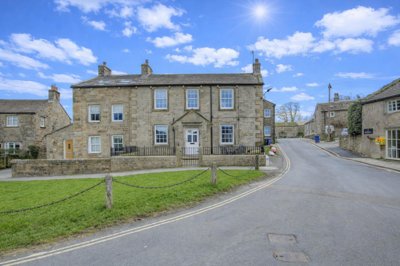
Browse 1 rental home to rent in Burnsall, North Yorkshire from local letting agents.
The larger property sector typically features multiple bathrooms, substantial reception space, and private gardens or off-street parking. Four bedroom houses in Burnsall span detached, semi-detached, and occasionally terraced configurations, with styles ranging from period properties to modern executive homes.
£0/m
0
0
0
Source: home.co.uk
Showing 0 results for 4 Bedroom Houses to rent in Burnsall, North Yorkshire.
The Burnsall rental market operates quite differently from larger towns and cities, reflecting the village's small scale and its position within the Yorkshire Dales National Park. Property prices in Burnsall average around £400,000 for sales, and while comparable rental figures for the village itself are not publicly recorded, rental prices across the wider Skipton and Wharfedale area typically range from £600-£1,200 per month depending on property type and size. Flats and cottages in the village command premiums for their character and location, with stone-built properties particularly sought after by renters drawn to traditional Dales architecture.
New build activity in Burnsall is effectively non-existent, as the village lies within a National Park where development is strictly controlled to protect the landscape and character of the area. Any new residential accommodation tends to come through the conversion of existing buildings rather than new construction, such as the recent proposal for Dowgill Barn on the B6160 Linton to Burnsall road, which sought permission to convert the field barn into a two-bedroom dwelling with local occupancy restrictions. Planning applications within the park require careful consideration of visual impact, materials, and whether the development preserves or enhances the special qualities of the area. This constraint on supply means that rental properties in Burnsall become available only infrequently, making early registration with local letting agents essential for prospective tenants.
The limited property stock in Burnsall includes a mix of traditional stone cottages, farmhouses, and a small number of more modern developments that respect the vernacular architecture. Many properties in the village are listed buildings, adding to their character but also imposing restrictions on alterations and maintenance. Recent sales data shows terraced properties selling for around £400,000 and detached homes ranging from £396,000 to over £1,250,000 for premium properties, demonstrating the values that underpin the rental market in this exceptional location.

Life in Burnsall revolves around the rhythms of the natural world and the gentle pace of Yorkshire Dales village society. The village sits in Upper Wharfedale, a landscape shaped over millennia by glacial activity and subsequent erosion that has produced the characteristic U-shaped valleys, limestone outcrops, and rich meadows that make this area so distinctive. The Carboniferous limestone geology of the region creates the dramatic white crags visible throughout the valley, while the Yoredale series of alternating limestone, sandstone, and shale layers forms the underlying foundation of the landscape. Burnsall itself is positioned on the valley floor beside the River Wharfe, with the village green providing an open space that floods occasionally when the river swells with heavy rainfall.
The community spirit in Burnsall is tangible and genuine, sustained by residents who have chosen to make their lives in this exceptional environment. The village pub serves as a focal point for social life, while St Wilfrid's Church, a Grade I listed building dating partly from the 11th century with substantial Perpendicular additions, provides both spiritual focus and architectural heritage. The Old Grammar School, now home to Burnsall Primary School, was built in 1601 and represents the village's long commitment to education. Local events, fetes, and gatherings bring the community together throughout the year, creating connections that newcomers to the village quickly come to appreciate.
The economic character of Burnsall reflects its dual identity as a working landscape and a visitor destination. Agriculture remains important to the local economy, with traditional sheep farming continuing on the surrounding fells. Tourism supplements rural livelihoods, with the village's position on popular walking routes including the Dales Way and its proximity to classic peaks drawing visitors throughout the year. The Yorkshire Dales National Park Authority has highlighted concerns about housing affordability and availability for working-age residents, noting that second homes and holiday lets have increasingly removed properties from the permanent housing stock. Approximately 21% of National Park housing stock were second homes or holiday lets as of 2011, rising to around 3,500 properties by 2017, a trend that affects communities like Burnsall where every available home matters.
The village contains 19 listed buildings recorded in the National Heritage List for England, including the Grade I listed St Wilfrid's Church, Bridge House, Burnsall Bridge, The Old Grammar School, and The Red Lion Hotel beside the River Wharfe. Living in Burnsall means becoming part of this heritage, respecting the architectural legacy that makes the village so special while enjoying the practical constraints that preserve its character for future generations.

Education provision in Burnsall centres on Burnsall Primary School, a small village school housed in the historic Old Grammar School building that dates from 1601. This primary school serves the immediate Burnsall community and surrounding hamlets in Upper Wharfedale, offering education for children from Reception through to Year 6. The school's historic home means children receive their early education in a building of genuine architectural and historical significance, surrounded by the stones that have witnessed centuries of learning. Class sizes at village primaries tend to be smaller than in urban schools, allowing for more individual attention and a close relationship between teachers and pupils.
Secondary education options for Burnsall families include the sought-after Ermysted's Grammar School and Skipton Girls' High School in nearby Skipton, both of which serve wide catchment areas and require passing the 11-plus entrance examination. For families choosing comprehensive secondary education, Grassington Secondary School serves the Wharfedale area and can be reached via school transport. Skipton, approximately eight miles distant, offers further educational options including sixth form colleges and further education facilities at Craven College, which provides a wide range of vocational and academic courses for students of all ages.
Parents considering renting in Burnsall should note that school transport arrangements and catchment area boundaries will affect their daily routines. The village's relative remoteness means that secondary school pupils typically travel by bus to schools in Skipton or Grassington, with journey times of 20-40 minutes depending on traffic and weather conditions. The Yorkshire Dales National Park Authority has expressed concern about the long-term sustainability of village schools as populations age and housing costs push young families out of the area, making Burnsall Primary School's future an important consideration for families planning to establish roots in the community.

Transport connectivity from Burnsall reflects its status as a small rural village rather than a major population centre, with residents relying primarily on private vehicles and limited bus services for daily travel. The nearest railway station is in Skipton, approximately eight miles away on the A59 road, which provides regular services to Leeds, Bradford Forster Square, and Lancaster, with connections to the national rail network. The drive from Burnsall to Skipton takes approximately 20-25 minutes in normal conditions, rising to 30-40 minutes during peak tourist season when traffic increases substantially on the narrow Dales roads.
Bus services serving Burnsall and the Upper Wharfedale area are limited but functional, with the 24 service connecting the village to Grassington, Skipton, and Leeds via key villages in the valley. These services typically operate at hourly or two-hourly intervals on weekdays, with reduced frequency at weekends and during school holidays. Residents without private vehicles need to plan journeys carefully around public transport timetables, and many everyday necessities require a trip to Skipton or beyond. Cycling is popular in the area for recreational purposes and short local trips, though the hilly terrain demands a reasonable level of fitness and the narrow country roads require careful cycling practice.
For commuters working in Leeds or the major cities of West Yorkshire, living in Burnsall presents practical challenges that require careful consideration. The commute from Burnsall to Leeds city centre involves a drive of approximately one hour to the railway station, followed by a train journey of around 50 minutes, making a total door-to-door commute of approximately two hours each way. This length of commute is sustainable for some but prohibitive for others, and prospective renters should honestly assess whether the rural lifestyle benefits of Burnsall outweigh the practical constraints on commuting. The village's position within the Yorkshire Dales National Park also means that major infrastructure improvements are unlikely, as development in the park is strictly controlled.

Renting a property in Burnsall requires careful attention to several factors specific to this National Park village that differ from more conventional rental situations. Properties in Burnsall are predominantly constructed from local stone, a defining characteristic of Yorkshire Dales architecture that brings both beauty and practical considerations. Stone-built properties, particularly older ones built before modern damp-proof courses and cavity walls, can be susceptible to dampness including rising damp, penetrating damp from driving rain, and condensation where ventilation is inadequate. Prospective tenants should inspect properties thoroughly for signs of damp, mould, and musty odours that might indicate underlying moisture problems.
The village's position beside the River Wharfe creates a flood risk that all renters should understand before committing to a tenancy. The Environment Agency maintains flood warning areas covering Burnsall Green and properties near Burnsall Bridge, including The Red Lion public house and riverside holiday homes. Properties in these locations may experience flooding during periods of heavy rainfall when river levels rise rapidly. Before signing a tenancy agreement, prospective tenants should check the government's flood risk checker to understand the specific flood risk for any property they are considering, and they should review whether the property has appropriate flood resilience measures in place.
The presence of 19 listed buildings within Burnsall means that many properties carry listed status, imposing restrictions on alterations, maintenance, and even the choice of fixtures and fittings. Grade I and Grade II listed buildings cannot be altered without Listed Building Consent from the Yorkshire Dales National Park Authority, and unauthorised works constitute a criminal offence. Renters of listed properties should understand that their ability to decorate, install fixtures, or make improvements will be significantly constrained compared to standard rental properties. This restriction is part of living in a designated conservation area, where the preservation of architectural heritage takes precedence over individual convenience.
The geology of Upper Wharfedale presents additional considerations for renters. The Yoredale series of alternating limestone, sandstone, and shale layers includes shale and mudstone which can contain clay, potentially leading to shrink-swell ground movement when moisture levels change. While not a widespread issue in Burnsall, this geological characteristic means that older properties may require careful monitoring for signs of structural movement such as cracking or subsidence. A thorough condition survey before committing to a tenancy can identify any existing issues and protect tenants from unexpected problems during their occupation.

Begin your property search by exploring available rentals in Burnsall and the surrounding Upper Wharfedale area. Register your interest with local letting agents who handle properties in the Yorkshire Dales, as rentals in Burnsall appear infrequently and agent relationships often prove essential for finding suitable homes quickly. The limited stock in this National Park village means that properties can be let within days of listing, making early registration with agents essential.
Before viewing properties in Burnsall, obtain a rental budget agreement in principle to understand how much you can realistically afford to spend on rent each month. This document demonstrates your financial credibility to landlords and letting agents, showing them that you have properly considered your budget and are a serious prospective tenant. For rentals in Burnsall, landlords often receive multiple applications quickly, so having your finances arranged gives you a competitive advantage.
View properties in person to assess their condition, location, and suitability. Pay particular attention to signs of damp in stone-built properties, the property's position relative to flood risk areas, and any listed building restrictions that might affect your tenancy. Ask the landlord or agent about the property's history of maintenance and any recent works undertaken. Given the age of most properties in Burnsall, understanding the condition of stone walls, roofs, and historic features is particularly important.
For older stone-built or listed properties in Burnsall, consider commissioning a thorough condition survey before committing to a long-term tenancy. Older properties may have defects that a standard inspection report would not reveal, and identifying these issues early can prevent disputes at the end of your tenancy. A RICS Level 2 Survey typically costs between £400-£800 depending on property size and complexity, while listed buildings may incur additional charges of £150-£400 due to their specialist nature. For complex historic properties, a more detailed RICS Level 3 Building Survey may be more appropriate.
Once you have found a suitable property, negotiate the terms of your tenancy including rent, deposit amount, and length of agreement. Your deposit will be protected in a government-approved scheme within 30 days of receipt as required by law. Ensure you receive an inventory check at the start of your tenancy to document the property's condition and protect your deposit at the end of your tenancy. Given the character of Burnsall properties, the inventory should note the condition of stone features, historic fittings, and any listed building elements.
Arrange for utility connections, contents insurance, and any necessary broadband installation before your move. Burnsall's rural location may affect connectivity speeds and the availability of some services, so confirm these details with providers before committing. Take time to introduce yourself to neighbours, visit the local pub, and explore the wonderful walking routes that make Burnsall such a special place to live. The village community welcomes newcomers, and involvement in local events and activities helps establish connections quickly in this tight-knit community.
Renting a property in Burnsall involves several costs beyond the monthly rent that prospective tenants should budget for carefully. The standard deposit amount is equivalent to five weeks' rent, which for a typical Burnsall rental property might range from £900 to £2,500 depending on the property size and location. This deposit must be protected in a government-approved deposit protection scheme within 30 days of the start of your tenancy, and you should receive information about which scheme holds your deposit. At the end of your tenancy, the deposit should be returned within ten days of you and the landlord agreeing on any deductions for damage or unpaid rent.
Tenant referencing fees, credit checks, and right to rent verification are standard costs when renting in the UK, though the specific charges vary between letting agents and landlords. Many agents now offer bundled packages that include referencing, contracts, and inventory services for a single fee typically ranging from £150-£300. For properties in Burnsall, you may also need to budget for additional surveys if renting an older property, particularly if it is listed or stone-built. A thorough inventory check at the start of your tenancy is essential for protecting your deposit, as it creates an agreed record of the property's condition against which any deductions at the end of your tenancy can be assessed.
Ongoing costs of renting in Burnsall include council tax, utility bills, contents insurance, and internet connectivity. Council tax rates in the Yorkshire Dales are set by North Yorkshire Council, with Band A properties paying less than Band H properties. Most traditional stone cottages and smaller properties in Burnsall fall into Bands A through D, while larger detached houses may be in higher bands. The rural location of Burnsall may affect some utility costs and service availability, so confirming coverage with providers before committing to a tenancy is advisable. Broadband speeds in rural villages can be slower than urban areas, and while most households in Burnsall have access to basic internet services, those requiring high-speed connections for home working should verify availability with local providers.
Specific rental price data for Burnsall itself is not publicly recorded due to the village's small size and low transaction volumes. However, rental prices across the wider Skipton and Wharfedale area typically range from £600-£1,200 per month depending on property type and size. Stone-built cottages and character properties in Burnsall command premiums for their traditional architecture and exceptional location within the Yorkshire Dales National Park. Flats and smaller cottages generally fall at the lower end of this range, while larger detached family homes can reach the higher figures. Given that average sale prices in Burnsall hover around £400,000, rental values reflect the premium nature of this sought-after National Park village.
Council tax bands in Burnsall are set by North Yorkshire Council and vary according to the property's assessed value. Most traditional stone cottages and smaller properties in Burnsall fall into Bands A through D, while larger detached houses and properties with high Rateable Values may be in Bands E through H. You can check the specific council tax band for any Burnsall property on the Valuation Office Agency website using the property address. The village's historic properties, including many listed buildings dating from the 17th and 18th centuries, typically fall into lower bands due to their age and traditional construction methods.
Burnsall Primary School, housed in the historic Old Grammar School building dating from 1601, serves the village and surrounding community. For secondary education, families often seek places at Ermysted's Grammar School or Skipton Girls' High School in Skipton, both requiring 11-plus entry. Grassington Secondary School provides comprehensive secondary education for the Wharfedale area. Skipton also offers sixth form and further education options through Craven College. Parents should note that school transport from Burnsall to secondary schools in Skipton involves journey times of 20-40 minutes, and catchment area boundaries may affect which schools children can access.
Public transport connections from Burnsall are limited, reflecting its status as a small rural village. The nearest railway station is in Skipton, approximately eight miles away, with regular services to Leeds, Bradford, and Lancaster. Bus services operate on the 24 route connecting Burnsall to Grassington, Skipton, and Leeds, though services run at reduced frequencies compared to urban areas, typically hourly or two-hourly on weekdays. Most residents rely on private vehicles for daily travel, with the nearest major road being the A59 connecting Skipton to Yorkshire's main road network.
Burnsall offers an exceptional quality of life for those seeking a peaceful rural existence within one of Britain's most beautiful National Parks. The village combines genuine community spirit with outstanding natural surroundings, excellent walking including access to the Dales Way, and a strong sense of heritage dating back centuries. However, prospective renters should consider the limited amenities compared to larger settlements, the challenges of commuting to work, and the potential for flooding in riverside properties. The village is ideally suited to those who value rural tranquility and outdoor pursuits over urban convenience, and who understand that living in a National Park village means accepting certain constraints on development and lifestyle. With only 157 residents, Burnsall offers an intimate community experience that is increasingly rare in England.
The standard deposit when renting in Burnsall is equivalent to five weeks' rent, which must be protected in a government-approved scheme within 30 days of your tenancy start date. Tenant referencing fees typically range from £100-£200, and some agents charge administration fees for drawing up tenancy agreements. A thorough inventory check, essential for protecting your deposit, may cost £100-£200 depending on the property size. First-time renters should budget for removals costs, utility connection fees, and contents insurance in addition to these standard rental costs. For older or listed properties, additional survey costs of £400-£1,200 may be advisable to identify any defects before committing.
Burnsall is situated on the River Wharfe and has a designated flood warning area covering Burnsall Green, Burnsall Bridge, and riverside properties including The Red Lion public house and nearby holiday homes. Properties near the river can experience flooding during periods of heavy rainfall when water levels rise rapidly, and the village green has historically flooded during sustained wet weather. Prospective tenants should check the specific flood risk for any property they are considering using the government's flood risk checker, and they should factor this information into their decision about which properties to rent. Some properties may have flood resilience measures in place, while others may be unsuitable for those with concerns about flood risk.
Burnsall lies within the Yorkshire Dales National Park, which imposes strict planning controls on all development and alterations to preserve the landscape and character of the area. This means that any significant alterations to rental properties, including changes to windows, roofing materials, or external features, require planning permission from the National Park Authority. For tenants, this restricts your ability to personalise properties, but it also ensures that the village retains its exceptional character and that your rental home is protected from inappropriate alterations by future owners. The National Park Authority also monitors second home and holiday let numbers, with approximately 21% of Park housing stock now used for these purposes, a trend that affects the availability of rental properties in villages like Burnsall.
From 4.5%
Get pre-approved for your rental budget before searching in Burnsall
From £499
Comprehensive referencing for Burnsall landlords
From £350
Essential survey for Burnsall's older stone properties
From £85
Energy performance certificate for your rental property
Properties to Rent In London

Properties to Rent In Plymouth

Properties to Rent In Liverpool

Properties to Rent In Glasgow

Properties to Rent In Sheffield

Properties to Rent In Edinburgh

Properties to Rent In Coventry

Properties to Rent In Bradford

Properties to Rent In Manchester

Properties to Rent In Birmingham

Properties to Rent In Bristol

Properties to Rent In Oxford

Properties to Rent In Leicester

Properties to Rent In Newcastle

Properties to Rent In Leeds

Properties to Rent In Southampton

Properties to Rent In Cardiff

Properties to Rent In Nottingham

Properties to Rent In Norwich

Properties to Rent In Brighton

Properties to Rent In Derby

Properties to Rent In Portsmouth

Properties to Rent In Northampton

Properties to Rent In Milton Keynes

Properties to Rent In Bournemouth

Properties to Rent In Bolton

Properties to Rent In Swansea

Properties to Rent In Swindon

Properties to Rent In Peterborough

Properties to Rent In Wolverhampton

Enter your details to see if this property is within your budget.
Loans, cards, car finance
Estimated property budget
Borrowing + deposit
You could borrow between
Typical borrowing
Monthly repayment
Est. at 4.5%
Loan-to-value
This is an estimate only. Your actual budget may vary depending on interest rates, credit history, and personal circumstances. For an accurate affordability assessment, speak to one of our free mortgage advisors.
This calculator provides estimates for illustrative purposes only and does not constitute financial advice. Your home may be repossessed if you do not keep up repayments on your mortgage. Estimates based on 4.5% interest rate, repayment mortgage. Actual rates depend on your circumstances.
Homemove is a trading name of HM Haus Group Ltd (Company No. 13873779, registered in England & Wales). Homemove Mortgages Ltd (Company No. 15947693) is an Appointed Representative of TMG Direct Limited, trading as TMG Mortgage Network, which is authorised and regulated by the Financial Conduct Authority (FRN 786245). Homemove Mortgages Ltd is entered on the FCA Register as an Appointed Representative (FRN 1022429). You can check registrations at NewRegister or by calling 0800 111 6768.

We use cookies to show you personalised content and improve your experience of our website. Find out more in our Privacy policy and Cookie policy.