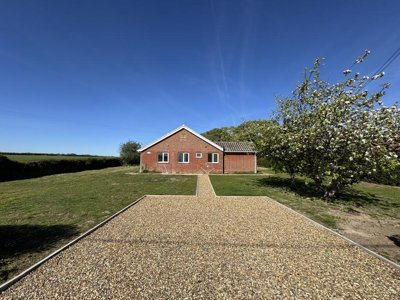
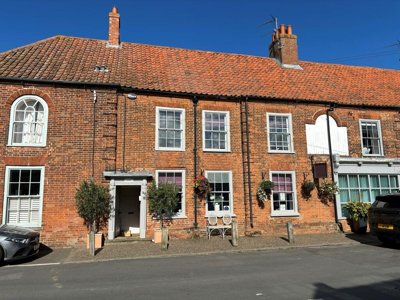
Browse 2 rental homes to rent in Burnham Thorpe from local letting agents.
Three bedroom properties represent a significant portion of the Burnham Thorpe housing market, offering space for families with multiple reception rooms and gardens in many cases. Browse detached, semi-detached, and terraced options ranging from period character homes to contemporary developments.
Burnham Thorpe is a very small rental market, so only a handful of homes tend to come up at any one time. In the wider PE31 postcode area, homedata.co.uk shows average sold prices of around £150,000 over the past year for the broader Burnham Thorpe area, although that headline figure covers a wide spread between property types and spots within the village. Recent completed sales have ranged from terraced bungalows at approximately £430,000 to more modest homes in places such as Goodricks averaging around £150,000, while Back Lane has averaged £295,000 in the last 12 months. That sales picture helps frame the rental market too, where limited supply often struggles to keep up with demand from people drawn to a rural Norfolk lifestyle.
Renters here will usually be looking at older, traditional homes that sit within the village's Conservation Area character. Much of the stock dates from the 17th, 18th, and 19th centuries, with two small groups of 1950s Council housing at Goodricks in Creake Road and The Pightle in Back Lane. Living in Burnham Thorpe means living among traditional Norfolk materials, chalk walling, flint, and orange clay pantiles, in a setting that has changed little over generations. There has been very little new-build activity, so almost any rental you find is likely to be traditional construction, with all the charm and practical quirks that come with it.
Homes to let do not appear often in Burnham Thorpe, so speed matters. We suggest registering with Homemove and setting up instant property alerts, so you can move quickly when a new rental reaches the market. Across the wider PE31 postcode area around Burnham Market and neighbouring villages, rents typically sit between £800 and £1,500 per month depending on size, condition, and property type. Within Burnham Thorpe itself, scarcity and popularity can push rents to a premium.

Life in Burnham Thorpe moves at its own pace, shaped more by the seasons and village ties than by urban convenience. Set in the River Burn valley, it is framed by bare chalky hills on both sides, a Norfolk landscape that has drawn artists, writers, and visitors for centuries. The Conservation Area, first designated in 1977 and revised in 1992, covers a village with 8 listed buildings, including the Grade I Church of All Saints, a 13th-century building with striking chequered flintwork and a strong claim to being one of the finest ecclesiastical buildings in North Norfolk. Then there is The Lord Nelson public house, still a direct link to the village's most famous son, and the sort of local amenity people value deeply here.
A lot of Burnham Thorpe's appeal comes from its unlisted vernacular buildings. Local materials dominate, especially chalk walling, flint detailing, and orange clay pantile roofs, giving the village a consistency that is now hard to find in much of England. From what we see locally, the chalk in many of these buildings was quarried from the bare chalky hills flanking the valley, while the flint came from the chalk strata beneath much of North Norfolk. Those methods matter in practical terms, because solid walls without modern cavity insulation can change how a house feels to live in and what it costs to heat.
For day-to-day shops, cafes, and services, most residents look to nearby Burnham Market. The wider area feels busier in peak seasons, helped along by weekend markets and the visitor trade, then settles into a quieter rhythm in winter. Anyone renting in Burnham Thorpe gets both sides of that pattern, lively months when the area is full of movement, and slower months when the village's historic feel and natural setting come into their own. That contrast is part of the draw.

Nearly every rental property in Burnham Thorpe is built in the old Norfolk way, shaped by centuries of local practice and by the geology of the North Norfolk chalklands. Chalk is the main walling material across the village, seen as coursed and squared blockwork as well as random rubble, often picked out with flint detailing. Knapped and squared flint commonly turns up on gable ends and rear elevations, while front elevations are more often defined by the softer colour of chalk walling. You will also see red brick, gault brick, and colourwash finishes in places, which adds variety to the village's architectural character.
Roofs are just as distinctive here. Orange clay pantiles are the main covering across Burnham Thorpe and the surrounding area, giving houses that warm reddish-brown look that shows up so well in photographs and plays a big part in the Conservation Area character. Some homes also have smut pantiles or Welsh slate, usually as a sign of later repairs or replacement of earlier materials. For renters, these details are not just cosmetic, because older roofs and wall finishes can bring issues such as slipped tiles, worn pointing, and frost damage that are less common in newer homes.
Traditional construction in Burnham Thorpe can be a real plus, but it does come with trade-offs. Solid chalk and flint walls offer strong thermal mass, which can help moderate indoor temperatures through the year, yet the lack of modern cavity insulation may mean higher heating bills in winter. A few properties may also retain original timber frames with wattle and daub infill, and where that exists there can be different maintenance needs, including the potential for timber decay. Before you commit to a tenancy, we always advise a thorough survey, because houses built this way need specialist understanding if you want a clear view of condition and likely issues.

Families looking at Burnham Thorpe can reach a range of schools across North Norfolk within a reasonable drive, although the rural setting makes transport planning important. The village sits within the King's Lynn and West Norfolk local authority area, which oversees the primary and secondary school network serving nearby settlements. In practice, primary schooling is usually found in neighbouring villages and towns, with several outstanding and good-rated options within a short commute, including schools in Burnham Market, Fakenham, and the surrounding villages.
Catchment research should be done early. Some schools use defined catchment areas, others work by distance or faith-based criteria, and that can make a big difference to what is available from Burnham Thorpe. Secondary options include well-regarded schools in larger nearby towns, with transport in some cases for students who meet county council criteria and live beyond the statutory walking distance. King's Lynn, about 30 minutes away by car, also adds sixth form colleges and further education institutions for older students working beyond GCSE level, whether on vocational or academic courses.
Where school quality is a priority, it makes sense to check Ofsted ratings and catchment boundaries before agreeing a rental in this rural spot. School transport arrangements and place availability can shift during the year. We can help with local insight on admissions and travel options, but we still advise speaking directly to the schools to confirm current policies and transport provision. The school year runs from September to July, and many families prefer to line up a move with that timetable, especially around key stage transfers or the step into secondary education.

Getting around from Burnham Thorpe usually means using a car. The village lies off the B1355, which feeds into the wider North Norfolk road network and links on to routes such as the A148 between King's Lynn and Cromer. For people commuting to Norwich or Cambridge, driving time is often around 45 minutes to an hour, depending on traffic. In winter, or at busier periods, that can stretch noticeably.
Public transport exists, but it is limited. On many routes you are looking at typically two or three services per day, which reflects both the rural network and the small communities it serves. There is also the North Norfolk Community Transport scheme, which can help residents without a car reach essentials such as healthcare appointments in nearby towns through pre-booked trips. In warmer months a lot of people cycle, using the quiet country lanes through the chalk landscape, though some of those routes are hilly and can be awkward in wet weather when lanes turn muddy.
Rail connections mean heading to stations in surrounding towns. King's Lynn is the nearest key option for many residents, with direct services to Cambridge and London on the Fen Line, while Norwich opens up the East Anglian network, including London Liverpool Street and access to employment in Norwich itself. Anyone thinking of renting in Burnham Thorpe should be realistic about transport needs, especially if work, healthcare, or further education depends on regular trips into larger centres. We recommend trying the journey for yourself at different times before making a commitment.

Historic village settings bring a few extra points to think through, and flood risk sits high on the list in Burnham Thorpe. The village is recognised as being at risk from both river and groundwater flooding along the River Burn corridor, and the B1355 can itself be affected during periods of high water. High groundwater, especially after heavy rainfall in autumn and winter, has caused problems in the wider area, including basement flooding in nearby Burnham Market within the same catchment. Because of that, we advise asking directly about any flood history at a property before going ahead.
Anyone renting within the Burnham Thorpe Conservation Area should expect tighter rules around changes to the property, even where a landlord is happy in principle. Older homes built with chalk walling and flint need a different approach to maintenance too, and issues such as damp control, roof condition, and dated electrics can come up more often than in modern housing. Solid walls without modern cavity insulation are common in traditional Norfolk buildings, which can affect both comfort and heating efficiency through Norfolk's colder months. It is part of the reality of living in a place like this.
Because so much of the housing stock is old, we advise arranging a property condition report or survey before committing to a rental agreement in Burnham Thorpe. A proper inspection can pick up damp, roofing defects, outdated electrics, and structural concerns that may not be obvious during a quick viewing. Basements, which are relatively common in older Norfolk properties, need particular attention because high water tables can raise the risk of groundwater flooding. We also recommend checking the Environment Agency flood maps for the exact address as part of your due diligence.
Before you start searching in Burnham Thorpe, get a rental budget agreement in principle in place. This is usually provided by a mortgage broker or financial advisor, and it can help confirm your borrowing capacity while showing landlords that you are a serious, qualified applicant. As a renter, you should also have proof of income and employment ready, typically recent payslips and bank statements, plus landlord references or character references from earlier tenancies where available.
Spend time in Burnham Thorpe before deciding. Visit at different times of day and on different days of the week, so you can see how the village feels across changing seasons and routines. Check transport links and service frequencies, look into schools if they matter for your plans, and pay attention to the community atmosphere to see whether it suits your way of living. It is also worth going into Burnham Market, simply to understand what local services you are likely to rely on.
Register with Homemove, then set up alerts for rentals in Burnham Thorpe. In a village this small, supply is thin and good properties can move fast, so having your paperwork ready can make a real difference when a listing appears. We also suggest widening the search to nearby villages if timing is tight. Even so, plenty of renters decide it is worth holding out for Burnham Thorpe because the village has a character that is hard to match.
Once viewings are available, use them properly. Check condition carefully, note anything that looks like deferred maintenance, and ask direct questions about utility bills and council tax. Given the known local risks, ask about the property's flood history in specific terms, and pay close attention to traditional materials such as chalk walls, flint details, and clay pantile roofs. We suggest taking photographs and keeping detailed notes, which makes later comparisons much easier.
For older houses, a condition report before signing can be money well spent. In this area, a RICS Level 2 survey typically costs between £400-600 depending on property value and construction type, and it can flag damp, roof defects, electrical concerns, and other issues common to traditional Norfolk buildings that need specialist assessment. Not everything shows up at a viewing.
After your offer is accepted, the tenancy paperwork is usually put together by the landlord's solicitor or letting agent. That agreement will set out the terms, the deposit arrangements, and your obligations as tenant. Check that your deposit will be protected in a government-approved scheme within 30 days of it being received, and go through the inventory carefully so the condition of the property is properly recorded from the start. Your landlord should also give you the Energy Performance Certificate rating, details of utility arrangements, and any maintenance points linked to traditional building materials.
Monthly rent is only part of the cost of moving into Burnham Thorpe. Tenants should also plan for the upfront expenses that come with taking a property, starting with the standard deposit of five weeks' rent. That amount is legally capped and has to be protected in a government-approved deposit scheme within 30 days of receipt, which gives you important legal safeguards. Some first-time renters may qualify for help with moving costs, but schemes vary, so it is worth checking well before you start applying.
There can be other charges on top. These may include referencing fees to check your identity and finances, administration costs for processing the tenancy application, and inventory check fees for recording condition at the start of the tenancy. In total, those extras often come to between £200-400 depending on the landlord or letting agent. They are smaller than the deposit, but they still add to the upfront commitment, so we recommend asking for a full breakdown before you proceed.
The full cost of renting goes beyond the initial fees. Ongoing outgoings usually include council tax, utility bills, and contents insurance, all of which are commonly the tenant's responsibility. In Burnham Thorpe's Conservation Area, older homes with solid walls and less modern insulation can push running costs up compared with newer properties. Ask for the Energy Performance Certificate rating before you sign, because a lower rating can have a direct effect on comfort and heating bills, especially during winter in Norfolk.
Burnham Thorpe is too small to produce separate published rental averages with much reliability, and turnover is minimal. For that reason, the best guide comes from comparable homes in the wider PE31 postcode area around Burnham Market and neighbouring villages, where rents for suitable properties typically range from £800 to £1,500 per month depending on size, condition, and property type. In this part of rural North Norfolk, strong demand supports competitive rents, while the tiny supply, older stock, and near absence of modern rental homes keep availability extremely tight.
For council tax purposes, Burnham Thorpe sits within the King's Lynn and West Norfolk Borough Council area. The council sets rates each year and administers valuation bands across its district. In the village, properties fall across the full range of bands depending on size, type, and value, with many traditional cottages and older homes sitting in Bands A through D, while larger period houses may fall into higher bands. Anyone considering a tenancy should ask for the exact band in advance, as council tax is an ongoing cost normally paid by the tenant direct to the council.
There is no school in Burnham Thorpe itself, so families generally travel to nearby villages or towns each day. That often means school transport or private vehicles. Primary provision in the surrounding area includes several good and outstanding-rated schools within a few miles, with Burnham Market, Fakenham, and neighbouring villages serving much of the local community. Secondary schools are found in nearby towns, and admissions policies and catchment areas are worth checking carefully because they can materially affect placement from a rural address like this.
Anyone relying on public transport should look closely at the detail before renting here. Bus services from Burnham Thorpe are limited and generally better suited to occasional journeys than to daily commuting. Railway access means travelling out to surrounding towns, including King's Lynn, and onward connections to Norwich and Cambridge begin from there rather than from the village itself. Most residents depend on private vehicles, although community transport schemes do help some people reach appointments and shopping. If you are considering Burnham Thorpe without a car, we would strongly suggest testing the routine over a longer visit.
For the right renter, Burnham Thorpe offers a rare kind of rural Norfolk life. The historic setting, the Conservation Area, and the strength of the village's traditional architecture give it a character that feels genuinely special, while the North Norfolk coast and links to Lord Nelson add another layer of identity. That said, renting here is not always easy. Supply is very limited, services are mostly picked up in nearby settlements, and the practical reality of flood risk along the River Burn needs proper thought before any tenancy is agreed.
The usual deposit for a tenancy in Burnham Thorpe is five weeks' rent. Across England that figure is legally capped, and the money must be placed in a government-approved scheme within 30 days of being received, which gives tenants important protections. On top of that, there are often initial charges such as referencing fees, tenancy agreement administration charges, and an inventory check to record the condition of the property at the outset. Those extra costs generally come to between £200-400 depending on the landlord or letting agent, so first-time renters should budget for them alongside the deposit and the first month's rent.
Flooding is a real local issue in Burnham Thorpe because of the village's position on the River Burn and its exposure to groundwater flooding after significant rainfall. Flood warnings have covered the River Burn from South Creake to Burnham Thorpe, especially when high groundwater levels follow autumn and winter rain and water tables rise sharply. Homes with basements, or houses in lower-lying parts of the village, may carry a greater degree of risk. We advise asking for the property's flood history, checking the Environment Agency flood maps for the exact location, and weighing those answers carefully before signing a tenancy agreement.
Almost every rental in Burnham Thorpe comes from older housing stock rather than modern development. The village includes historic vernacular buildings made with chalk, flint, and orange clay pantiles, along with two small groups of 1950s Council housing at Goodricks in Creake Road and The Pightle in Back Lane. Aside from occasional infill, there has been virtually no new development within the village boundaries. So if you rent here, expect traditional Norfolk construction throughout the available stock, and all the appeal and practical considerations that come with it.
From 4.5%
Helping you get clear on your budget before you start looking for properties to rent in Burnham Thorpe
From £99
Referencing support for Burnham Thorpe renters
From £85
Energy Performance Certificates for Burnham Thorpe properties
From £416
Detailed surveys for older properties in Burnham Thorpe
Properties to Rent In London

Properties to Rent In Plymouth

Properties to Rent In Liverpool

Properties to Rent In Glasgow

Properties to Rent In Sheffield

Properties to Rent In Edinburgh

Properties to Rent In Coventry

Properties to Rent In Bradford

Properties to Rent In Manchester

Properties to Rent In Birmingham

Properties to Rent In Bristol

Properties to Rent In Oxford

Properties to Rent In Leicester

Properties to Rent In Newcastle

Properties to Rent In Leeds

Properties to Rent In Southampton

Properties to Rent In Cardiff

Properties to Rent In Nottingham

Properties to Rent In Norwich

Properties to Rent In Brighton

Properties to Rent In Derby

Properties to Rent In Portsmouth

Properties to Rent In Northampton

Properties to Rent In Milton Keynes

Properties to Rent In Bournemouth

Properties to Rent In Bolton

Properties to Rent In Swansea

Properties to Rent In Swindon

Properties to Rent In Peterborough

Properties to Rent In Wolverhampton

Enter your details to see if this property is within your budget.
Loans, cards, car finance
Estimated property budget
Borrowing + deposit
You could borrow between
Typical borrowing
Monthly repayment
Est. at 4.5%
Loan-to-value
This is an estimate only. Your actual budget may vary depending on interest rates, credit history, and personal circumstances. For an accurate affordability assessment, speak to one of our free mortgage advisors.
This calculator provides estimates for illustrative purposes only and does not constitute financial advice. Your home may be repossessed if you do not keep up repayments on your mortgage. Estimates based on 4.5% interest rate, repayment mortgage. Actual rates depend on your circumstances.
Homemove is a trading name of HM Haus Group Ltd (Company No. 13873779, registered in England & Wales). Homemove Mortgages Ltd (Company No. 15947693) is an Appointed Representative of TMG Direct Limited, trading as TMG Mortgage Network, which is authorised and regulated by the Financial Conduct Authority (FRN 786245). Homemove Mortgages Ltd is entered on the FCA Register as an Appointed Representative (FRN 1022429). You can check registrations at NewRegister or by calling 0800 111 6768.

We use cookies to show you personalised content and improve your experience of our website. Find out more in our Privacy policy and Cookie policy.