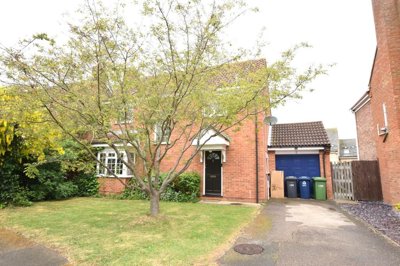
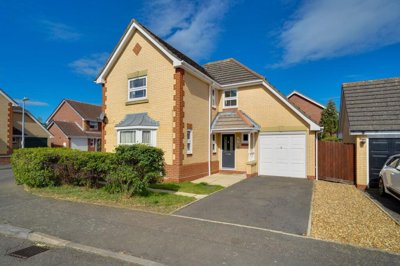
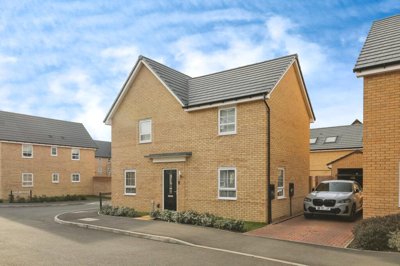
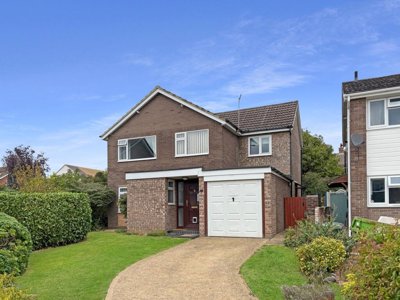
Browse 4 rental homes to rent in Brampton from local letting agents.
The larger property sector typically features multiple bathrooms, substantial reception space, and private gardens or off-street parking. Four bedroom houses in Brampton span detached, semi-detached, and occasionally terraced configurations, with styles ranging from period properties to modern executive homes.
Brampton’s rental market mirrors the wider strength of Huntingdonshire property, while still coming in at better value than nearby Cambridge. As of February 2026, the average house price in Brampton is £380,594, and prices have risen by 1.6% over the past twelve months. That sort of movement points to a settled market, one that suits buyers and long-term renters who want to put down roots. There were 54 property sales in the past year, which says plenty about the level of activity and the health of the local rental scene.
Detached homes sit at the top of the price range, with averages of £508,499 for those after more space. Semi-detached properties come in at £316,929, a practical middle option for growing families. Terraced houses average around £271,250 and flats sit at about £178,000, giving renters a lower-cost way into Brampton. Our listings cover all of these, so there is something to suit different budgets and ways of living.
New-build schemes are still shaping the local rental picture. Brampton Park by David Wilson Homes includes 3, 4, and 5-bedroom homes priced from £399,995 to £629,995, while The Brambles by Barratt Homes offers 3 and 4-bedroom properties from £349,995 to £499,995. These homes are mainly sold rather than let, though they feed into local rental expectations and, over time, some do come back to market. As estates like these mature, the rental stock tends to pick up the same contemporary layouts, energy efficiency, and modern finish that many tenants want.

There is more to Brampton than bricks and mortar, though. The village centre has a designated Conservation Area covering The Green, Church Road, and the High Street, where older houses sit alongside period cottages and farmhouses. St Mary Magdalene Church, a Grade I listed building, remains the focal point of the village and a reminder of how deep the local history runs. That protection helps keep Brampton’s character intact, so traditional architecture and everyday village life sit comfortably side by side.
According to the 2021 Census, Brampton has around 5,390 residents living in 2,240 households. The housing mix is led by detached properties at 40.2%, followed by semi-detached homes at 30.5%, terraced houses at 18.1%, and flats at 10.2%. That range gives renters room to choose, whether they want a garden for children and pets or something smaller and easier to maintain. The village has grown in layers too, from 17th-century beginnings through post-war expansion and then on to today’s new-build estates.
Location gives Brampton a real economic edge. Its closeness to Huntingdon and the main transport routes means it works well for people employed across the wider region. RAF Brampton closed in 2013, and the site has since been redeveloped, while the A1 and A14 continue to pull in residents who commute to Cambridge, Peterborough, and London. Jobs in retail, services, education, and light industry are available in Huntingdon and nearby, so it is easy enough to enjoy village life without giving up access to bigger employment centres.

Families often look at Brampton for schooling as much as for housing. The village has primary provision that gives younger children a solid start, and the wider catchment includes schools rated good and outstanding by Ofsted. That means local children can stay close to home for school rather than face long daily journeys. Smaller classes often mean more individual attention too, which fits neatly with the village’s friendly feel.
For older pupils, Huntingdon is usually the next stop, with a number of secondary schools and academies serving the area. These schools offer broad curricula, specialist facilities, and plenty of extracurricular activity for different interests and ambitions. Sixth form options are available in Huntingdon and in nearby towns, so there are clear routes beyond GCSE. Parents should check current catchment areas and admission rules with Cambridgeshire County Council, as those details can change and affect where a child is placed.
Cambridge University and Anglia Ruskin University are both within commuting distance, which adds another layer for families with older children or those thinking ahead to higher education. That academic presence, along with the strength of Cambridgeshire schools and universities, makes Brampton a strong pull for households that place education near the top of the list. Getting there is straightforward as well, with bus services and rail links from Huntingdon giving reliable access for students and staff.

Commuters tend to rate Brampton highly because the connections are so strong. Huntingdon railway station is close by, with direct trains to London King’s Cross taking about 90 minutes, so regular work trips into the capital are realistic. Services also run to Cambridge, Peterborough, and other major East Anglia destinations, which opens up a wide spread of jobs. For people heading to Cambridge specifically, the rail or road journey usually takes around 35-45 minutes, traffic depending.
Driving is just as straightforward. The nearby A14 links into the A1 and the wider motorway network, while the A1 runs north-south through Huntingdon and gives direct routes to Stevenage, London, Leeds, and Newcastle. Head east on the A14 for Felixstowe port, or west towards the M1 and the Midlands. For anyone who drives to work, that network is a real advantage, because major employment areas stay reachable without the heavier congestion you get in larger cities. Peak-time traffic is there, of course, but it is usually lighter than on urban commuter roads.
Public transport does the job too. Local bus routes link Brampton with Huntingdon and nearby villages, which is handy for anyone without a car or simply preferring not to drive. Cycling is becoming easier as infrastructure improves, with dedicated routes making shorter trips more practical. For flights, London Stansted and London Luton are both within reasonable driving distance, and Cambridge Airport offers domestic and some international services. Taken together, that transport mix gives residents a decent reach for work, study, and leisure.

Before starting a search, we would suggest speaking to mortgage brokers or financial advisers and getting a rental budget agreement in principle. Knowing the ceiling on what you can afford means the search stays focused on realistic options, and it also helps when you are applying to letting agents or landlords because it shows financial credibility.
It pays to look at different parts of Brampton, along with nearby areas, and see which fit the way you live. Think about schools, transport, local shops, and green space. The village itself has clear contrasts, from the historic Conservation Zone through to newer developments, and each area has its own pace and feel.
After spotting suitable homes in our listings, speak to the letting agents and arrange viewings. Seeing several properties side by side makes comparison much easier and usually gives a clearer sense of value. It also helps to arrive with questions ready, covering condition, fixtures and fittings, garden maintenance, and the terms set out in the tenancy agreement.
Once a property feels right, the next step is to submit an application through the letting agent with references, proof of income, and identification. Most landlords will ask for tenant referencing through specialist providers, who check identity, credit history, employment status, and past landlord references. Having the paperwork ready from the outset can speed the whole process up significantly.
After the references come back approved, the tenancy agreement follows for review and signature. This is a legally binding contract, and it sets out the rent amount, deposit, length of the tenancy, and the responsibilities of both landlord and tenant. Read it carefully, and ask about anything that is not clear before signing.
Then comes the deposit and the first month’s rent, along with the inventory check arranged with the landlord or letting agent. After that, collect the keys and carry out a proper move-in inspection, noting any existing issues so you are protected from incorrect charges when you leave. Those final steps mark the real start of your rental journey in Brampton.
Renting in Brampton calls for a few local checks that do not always matter in an urban market. Oxford Clay underpins the area’s geology, and that shrink-swell behaviour can affect foundations, especially in older homes. During viewings, it is worth looking out for subsidence or movement, like cracks in walls, doors that stick, or uneven floors. Homes with large trees nearby can be more vulnerable, because roots draw moisture from the clay soil and make it shrink. Asking what type of foundation the property has, and whether there has ever been structural repair, is well worth doing.
Flood risk also deserves attention, particularly because Brampton sits close to the River Great Ouse. Homes beside the river, or in low-lying spots, face a higher chance of flooding when heavy rain arrives. Serious flooding is still relatively uncommon, but climate change has brought more extreme weather, so the issue matters more than it once did. Check the Environment Agency flood maps and ask the letting agent about any past flooding or flood resilience work. Basements and ground-floor accommodation in flood-risk areas need extra care, especially around drainage and emergency planning.
Older homes in Brampton’s Conservation Area bring their own set of considerations. Listed buildings and period cottages inside the Conservation Zone can have limits on changes and renovations that do not apply to ordinary rental properties. It helps to understand those restrictions before committing to a tenancy, so you know what can and cannot be altered during your stay. Many older homes also have solid walls rather than cavity insulation, which can affect warmth and running costs compared with newer schemes. Energy performance certificates are useful here, and asking about recent improvements can give a better picture of day-to-day expenses.

Rental prices move around depending on property type, size, and condition, but the wider Brampton market gives a useful guide. Average house prices sit at £380,594 as of February 2026, with detached homes averaging £508,499, semi-detached houses at £316,929, terraced properties around £271,250, and flats at approximately £178,000. Rents often track those values, so terraced homes and flats usually offer lower monthly costs, while larger family houses command higher rents. Homes on newer developments such as Brampton Park and The Brambles often let for more because they are modern and energy efficient. For current figures, local letting agents are the best place to check, as the market moves regularly.
Council tax in Brampton is set by Huntingdonshire District Council, and the band depends on the property’s valuation. Bands run from A through H, although most residential homes in Cambridgeshire fall within bands A through E. Larger houses and newer builds usually sit higher up the scale, while smaller period cottages are often in the lower bands. The Valuation Office Agency website lets you check the band for any address. Council tax helps fund rubbish collection, road maintenance, and community facilities, so knowing the band is part of budgeting properly for housing costs.
Primary education is well served here, with local schools that cover the village catchment and several holding good or outstanding Ofsted ratings. For secondary school, families usually look to Huntingdon, where the choice includes grammar school provision for academically selected pupils. Cambridgeshire County Council keeps the latest performance data and catchment information, and it is sensible to check that before making a housing decision around schooling. Cambridge is also close enough to open up respected secondary schools and sixth form colleges by transport. Anglia Ruskin University and Cambridge University add the higher education side of that picture.
Public transport from Brampton is practical rather than flashy, with bus services doing most of the work into Huntingdon. Huntingdon railway station has direct trains to London King’s Cross in about 90 minutes, which keeps regular commuting into the capital viable. Rail links also run to Cambridge, Peterborough, and other regional centres. Buses into Huntingdon town centre open up further rail and bus connections. For flights, London Stansted and London Luton are roughly 60-90 minutes away by road. A car gives the most freedom, but it is perfectly possible to live in Brampton and rely on public transport for the essentials.
Brampton works well for renters who want a quieter village base without losing access to the wider region. Historic character, a strong community feel, and quick links to major roads make it appealing to families, professionals, and retirees alike. There are local shops, pubs, and recreational facilities, while Huntingdon brings the larger day-to-day services close at hand. The rental stock is varied too, from period cottages to modern homes, and the market has shown steady growth of 1.6% over the past year, which gives long-term tenants a sense of stability.
Deposits for rental homes in Brampton usually come to five weeks' rent, based on the monthly figure. That money must be protected in a government-approved scheme within 30 days of payment, and you should be told which scheme is being used. Referencing fees can also apply for credit checks and employment verification, and these usually sit somewhere between £100 and £300 depending on the letting agent. An inventory check at the start and end of the tenancy helps both sides and reduces the chance of disputes over deductions. First-time renters should plan for the first month’s rent plus deposit straight away, together with referencing fees and any moving costs. We always recommend asking for a full breakdown of charges before agreeing to anything.
Because Brampton sits near the River Great Ouse, fluvial flood risk is a real issue for homes right by the river and its tributaries. Surface water flooding can also affect low-lying spots after heavy rainfall. It is sensible to check Environment Agency flood maps for each property and ask the letting agent whether there has been any flooding in the past. Properties in higher-risk areas may need extra contents insurance, and knowing the evacuation arrangements adds another layer of readiness. Plenty of homes in Brampton are outside flood-risk zones altogether, so there are usually alternatives. If a particular property worries you, ask for previous flood risk assessments or surveys.
New-build options in Brampton include Brampton Park by David Wilson Homes, with 3, 4, and 5-bedroom properties, and The Brambles by Barratt Homes, which offers 3 and 4-bedroom homes. These places were mostly sold originally, though a few do come back onto the rental market as the developments mature and initial owners move on. Some completed phases also have homes let through private rental schemes or investor landlords. New-build rentals usually bring current building standards, energy-efficient design that helps with utility bills, and modern open-plan layouts. For what is available right now, local letting agents are the people to contact.
From 4.5%
Understand what rent you can afford before you search
From £99
Credit checks and employment verification for landlords
From £95
Protect your deposit with detailed check-in reports
From £85
Energy performance certificate for rental properties
Keeping a rental budget realistic in Brampton means looking beyond the monthly rent. The security deposit, usually equal to five weeks' rent, has to be protected in a government-approved deposit scheme within 30 days of receipt. That rule protects both tenant and landlord, and it gives a route to deal with disputes when the tenancy ends. The scheme must also give prescribed information about where the money is held, and that paperwork should arrive promptly after payment. Once you understand the deposit protection rules, you know where you stand and can challenge any wrong deductions when you move out.
Renting fees have become much clearer since the recent legislation changed the market. Tenant referencing fees generally cover credit checks, employment verification, and previous landlord references, and they tend to fall between £100 and £300 per applicant. Some letting agents also charge for drawing up the tenancy agreement or carrying out viewings, but those costs should be made clear before you use their services. An inventory check at the start of the tenancy gives a detailed record of the property condition and any existing damage, which helps protect you from incorrect charges later on. Inventory fees are usually between £95 and £150, depending on property size and how detailed the inspection needs to be.
The practical cost of moving into a rented home goes beyond the formal fees. You need to budget for the first month’s rent plus deposit upfront, so the total before you get the keys is typically six weeks' rent. Ongoing outgoings include council tax, utility bills, contents insurance, and any service charges attached to the property. Tenants in flats may also pay service charges for building maintenance, communal areas, and sometimes heating or water. Getting the full financial picture early helps avoid surprises and makes it easier to settle into a new home in Brampton from day one.
Properties to Rent In London

Properties to Rent In Plymouth

Properties to Rent In Liverpool

Properties to Rent In Glasgow

Properties to Rent In Sheffield

Properties to Rent In Edinburgh

Properties to Rent In Coventry

Properties to Rent In Bradford

Properties to Rent In Manchester

Properties to Rent In Birmingham

Properties to Rent In Bristol

Properties to Rent In Oxford

Properties to Rent In Leicester

Properties to Rent In Newcastle

Properties to Rent In Leeds

Properties to Rent In Southampton

Properties to Rent In Cardiff

Properties to Rent In Nottingham

Properties to Rent In Norwich

Properties to Rent In Brighton

Properties to Rent In Derby

Properties to Rent In Portsmouth

Properties to Rent In Northampton

Properties to Rent In Milton Keynes

Properties to Rent In Bournemouth

Properties to Rent In Bolton

Properties to Rent In Swansea

Properties to Rent In Swindon

Properties to Rent In Peterborough

Properties to Rent In Wolverhampton

Enter your details to see if this property is within your budget.
Loans, cards, car finance
Estimated property budget
Borrowing + deposit
You could borrow between
Typical borrowing
Monthly repayment
Est. at 4.5%
Loan-to-value
This is an estimate only. Your actual budget may vary depending on interest rates, credit history, and personal circumstances. For an accurate affordability assessment, speak to one of our free mortgage advisors.
This calculator provides estimates for illustrative purposes only and does not constitute financial advice. Your home may be repossessed if you do not keep up repayments on your mortgage. Estimates based on 4.5% interest rate, repayment mortgage. Actual rates depend on your circumstances.
Homemove is a trading name of HM Haus Group Ltd (Company No. 13873779, registered in England & Wales). Homemove Mortgages Ltd (Company No. 15947693) is an Appointed Representative of TMG Direct Limited, trading as TMG Mortgage Network, which is authorised and regulated by the Financial Conduct Authority (FRN 786245). Homemove Mortgages Ltd is entered on the FCA Register as an Appointed Representative (FRN 1022429). You can check registrations at NewRegister or by calling 0800 111 6768.

We use cookies to show you personalised content and improve your experience of our website. Find out more in our Privacy policy and Cookie policy.