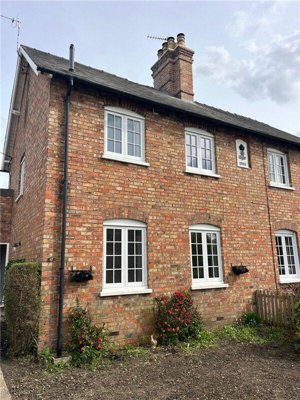
Browse 1 rental home to rent in Billingborough, South Kesteven from local letting agents.
£910/m
1
0
37
Source: home.co.uk
Source: home.co.uk
Semi-Detached
1 listings
Avg £910
Source: home.co.uk
Source: home.co.uk
Billingborough’s rental scene mirrors the appeal of the village itself, a sought-after rural spot in South Kesteven. Village-specific rental data is patchy, so the sales market gives useful context. According to home.co.uk listings data, the average property price in Billingborough is about £252,227, with detached homes at around £351,000 and semi-detached properties at £195,136. That points to rentals offering strong value against bigger urban areas, especially for tenants who want more space without city-level costs. Recent price movement has been softer, with values down 7.3% over the last 12 months, although they still sit 9% above the 2020 peak of £230,398.
Much of Billingborough’s housing is made up of traditional homes built from local materials, including random rubble stone, ironstone bands and pantile roofs. A good number date from the late 19th and early 20th centuries, especially on Vine Street, Station Road and the northern end of High Street. These older places bring plenty of character and usually solid construction, though tenants should expect that period homes can need more upkeep. Around the primary school, terraced houses built circa 1876 tend to offer lower-cost rental options, while the larger detached properties suit families needing more internal space and garden ground. There has also been newer development activity at the former Aveland School Site on the south-western edge, where Billingborough Homes Ltd secured outline planning permission for 40 affordable homes, including one-bed and two-bed semi-detached houses, two detached bungalows and maisonettes.

There is a particular feel to living in Billingborough, shaped by its long history and its position on the edge of the Lincolnshire Fens. Along High Street, the centre still keeps much of its historic form, and the Conservation Area, designated in 1997 and reviewed in 2013, helps protect the traditional village layout, including the mix of homes, small businesses and agricultural buildings around Low Street. Period properties often show chequered brickwork elevations and stone-mullioned windows, details that give the street scene a settled, cared-for quality. You also see late 19th-century cottages on the main roads, some still with their original rendered and painted fronts, plus early 19th-century outbuildings in English bond brick under pantile roofs.
For a village of this size, Billingborough has a sociable core. The Fortescue Arms and George and Dragon Inn keep the pub side of village life going, while the post office and general store are the everyday meeting points. J. Houghton and Sons, the village bakers, is also one of the listed buildings tied to Billingborough’s commercial past. For bigger shopping trips, most residents head to Bourne or Sleaford, both about 10 miles away. Work locally spans retail, light industry and agriculture, and vacancies in the wider area can include General Operative jobs at timber mills, Warehouse Operative roles in Sleaford, Machine Operative posts in nearby towns, plus other manufacturing and warehousing work nearby. A lot of residents commute, and the B1177 is central to that, linking the village into the wider Lincolnshire road network.
Education in the village starts with Billingborough’s primary school, which remains a key draw for families renting locally. The building dates back to 1876 and still serves the community today. Both the School and the School-Master’s House are listed buildings, a reminder of the village’s Victorian investment in local education. The terraced homes opposite were probably built around the same time, and they can be especially practical for families with younger children. Being that close to school can make the morning routine far simpler, and later on it can allow children to walk there on their own.
For secondary schooling, most pupils travel out of the village. Bourne Academy is one of the nearby options for ages 11-16, alongside other schools in surrounding towns, and transport arrangements depend on catchment and admissions rules. In rural Lincolnshire, those catchment lines can stretch across several miles, so families renting in Billingborough may find they have more than one possible route depending on their circumstances. Sixth form provision is available in nearby market towns, with both A-level and vocational courses on offer after GCSE. We always suggest checking current admissions details and transport carefully, because those practicalities can shape daily life in a rural tenancy. School transport should be confirmed directly with Lincolnshire County Council’s education transport team.

Billingborough’s transport links are typical of a rural South Kesteven village, but they are workable. The B1177 is the main route through the village and gives direct access west to Bourne and east to Sleaford, which is useful for jobs, shopping and leisure. The A15 and A52 are also within reach for anyone travelling further, with routes towards Grantham, Peterborough and the wider East Midlands. So while this is plainly village living, connections are reasonable for its scale. For rail, Grantham station is the key long-distance option, with East Coast Main Line services running direct to London and Edinburgh.
Bus links connect Billingborough with neighbouring towns, although services are naturally less frequent than in urban areas. Its Fen Edge position means bigger centres are still some distance away, even where public transport is available, so tenants without a car should weigh that up before committing. Sleaford station provides rail links to Peterborough and Lincoln, while Grantham gives access to the East Coast Main Line and direct trains to London and Edinburgh. Cycling is more realistic here than in many rural areas because the surrounding Fen Edge landscape is comparatively flat. Even so, commuting to larger towns by bike can still be a stretch. Locally, the South Forty Foot Drain towpaths offer attractive riding routes, though not every stretch will suit day-to-day travel.

Construction style matters in Billingborough, because it affects both character and maintenance. Many homes and traditional farm buildings are built in random rubble stone with ironstone bands, reflecting local geology and the practical use of materials found in the Fen Margins. Pantile roofs are common across the village, their S-shaped profile helping with weather protection while also defining the local look. Some properties also retain stone-mullioned windows, where shaped stone sections form the frame of the opening. It is a detail strongly associated with better-quality Victorian and Edwardian work, and it gives older homes real presence.
There is plenty of variety in the brickwork too. Billingborough includes houses with chequered brickwork elevations, created by alternating headers and stretchers in a geometric pattern. Early 19th-century outbuildings are usually in English bond brick with pantile roofs, while some late 19th-century cottages were rendered and painted, either to shield weaker brickwork or simply to achieve a certain finish. Older buildings here were generally meant to breathe, using lime mortar and clay bricks so moisture can evaporate rather than becoming trapped. Timber-framed structures with wattle and daub infill also appear in the region, known locally in Lincolnshire as “mud and stud”. Properly looked after, these methods can produce comfortable and durable homes, though repairs often need the right materials and occasionally specialist input.
Before starting a property search, we suggest speaking to local mortgage brokers or financial advisors and getting a rental budget agreement in principle in place. Knowing what monthly rent is realistic helps narrow the shortlist and shows landlords and letting agents that finances are already organised when enquiries go in. In Lincolnshire’s rural rental market, that bit of preparation can make a real difference when several people are chasing the same property.
It is worth spending proper time in Billingborough before deciding on a rental. We recommend visiting at different times of day and on different days of the week, so the local amenities, transport links and general feel of the village become clearer. A quick conversation with current residents can also tell you more than a brochure ever will. In particular, keep an eye on the flood risk areas around the Billingborough Ousemere Lode and think about how that could affect any property under consideration.
Once suitable homes come onto the market, contact the estate agents and letting agents handling Billingborough listings and get viewings booked in. We find it helps to take notes as you go and to photograph each property so comparisons are easier later. Ask about lease terms, what fixtures and fittings are included, and any rules covering pets or alterations. If a home sits within the Conservation Area, it is sensible to raise possible changes with the landlord at the viewing stage.
Flooding needs direct questions here. Billingborough has a known history of flooding linked to the South Forty Foot Drain and Ousemere Lode, so tenants should ask about past incidents and where the property sits in relation to the surrounding land. At the Ousemere monitoring station, the highest recorded level was 2.03 metres on January 2, 2024, and homes near the drainage channels were affected again in January 2025 after heavy rain fell on saturated ground. We would also ask what flood resilience measures are in place, if any, and whether contents insurance that covers flood damage is available.
Read the tenancy agreement closely before signing. The key points are usually the deposit amount, notice periods, any rent review clause, and who deals with maintenance and repairs. For properties with annual rents below £50,000, the deposit cap is five weeks rent, and the deposit has to be placed in a government-approved scheme within 30 days of receipt. We also advise making sure full check-in paperwork and photographs are provided, as that gives clearer protection if there is a dispute over deductions at the end of the tenancy.
After the tenancy agreement is signed and the deposit is protected, the practical move to Billingborough can begin. Utility accounts for gas, electricity, water and broadband should be arranged straight away, and anyone relocating from another area should also register with local doctors and dentists. It helps to get familiar with local services and emergency contacts early on. Because Bourne and Sleaford are the nearest larger centres, we also recommend noting the closest hospitals and healthcare facilities if there are ongoing medical needs to plan around.
Renting in Billingborough means weighing village appeal against some very specific risks. Flooding is the main one. The village saw serious flooding in January 2025, when heavy rain on saturated and frozen ground created overland flows that affected properties near the Billingborough Ousemere Lode and South Forty Foot Drain. At Billingborough Ousemere, the South Forty Foot Drain normally ranges from 0.08m to 1.10m, and low-lying land can start to flood above 1.10m. We recommend asking about previous flood events, checking the home’s flood risk rating and thinking carefully about ground floor accommodation if periods of intense rainfall are a concern. Homes on higher ground, or those already fitted with flood resilience measures, may be the better fit.
The ground conditions around Billingborough also deserve attention. The village sits on the Fen Margins, where clay-rich soils can lead to shrink-swell subsidence as moisture levels change and the ground expands or contracts. Across the wider Grantham district, there are gently tilted Jurassic strata running from the Lias to the Oxford Clay, and those clay-heavy deposits can contribute to movement in foundations. Older properties, especially those built with traditional materials, may show the effects over time. During viewings, we would look for cracking, doors that stick or fail to close properly, and floors that feel uneven. Lime mortar and clay brick construction is usually breathable and long-lasting, but it does need the right maintenance. Homes that have been consistently cared for by previous landlords or tenants often present fewer issues than neglected ones.
Conservation Area rules can shape what is possible in a rented home here. Billingborough has 16 listed buildings, including Grade I and Grade II* entries, so the village carries substantial heritage protection beyond the listed buildings alone. Listed Building Consent is needed for works to listed properties, and even outside that, external changes to non-listed buildings within the Conservation Area may still need planning permission. For tenants, that can limit what changes are realistic, and landlords may also face restrictions on the upgrades they can carry out. It is best to go in with clear expectations about decoration, extensions and structural alterations.

Detailed rental figures for Billingborough itself are hard to pin down, but sale prices still help frame the market. home.co.uk listings data puts the average property price at roughly £252,227, with semi-detached homes averaging around £195,136 and detached properties at £351,000. Rents for similar homes would normally reflect a yield on those sale values, which tends to keep Billingborough more affordable than many East Midlands urban locations. As a guide, a three-bedroom semi-detached sold at £195,000 might achieve about £900-£1,100 per month in rent, while a larger detached house could be nearer £1,200-£1,500 per month depending on condition and position. On our platform, we let renters compare live listings against budget more easily.
Billingborough falls within South Kesteven District Council and Lincolnshire County Council for council tax purposes. Rates are set by valuation band, and with the village’s mixture of older homes and newer stock, Band A to Band D properties are common, while bigger detached houses may sit higher. Some period homes in conservation settings may have been valued at different points from more modern properties, which can affect the assigned band. The quickest way to confirm a specific band is to use the government’s council tax band lookup service and search by address. In South Kesteven, the final bill will usually include charges for the district council, Lincolnshire County Council and the parish council.
For primary education, Billingborough Primary School serves both the village and the surrounding area, and its building dates from 1876. It has been part of village life for nearly 150 years, which says a lot about the local emphasis on education. Secondary pupils usually travel to nearby towns, with Bourne Academy and other schools covering the broader catchment. Families choosing where to rent should check current admissions rules and catchment lines carefully, because they can affect which schools are actually available. Transport to secondary school also matters, especially for households without a private vehicle, as school transport provision may not extend to every preferred option.
Getting around by public transport is possible, but it does take planning. Billingborough has bus services to Bourne and Sleaford, though frequencies are lower than most urban renters would be used to. The Fen Edge setting also means that even with a bus route, larger centres can still feel a long way off. Rail users generally rely on Sleaford or Grantham, with services from those stations towards Peterborough, Lincoln, and the East Coast Main Line for direct trains to London and Edinburgh. For many commutes, private vehicle use remains the practical choice. The B1177 is the village’s direct link to nearby towns, and from there the road network connects on to the A15 and A52.
As a place to rent, Billingborough suits people who want a quieter village setting without being cut off from surrounding towns. The Conservation Area helps hold on to the historic feel, local pubs and shops give the village day-to-day function, and there is a settled community that has built up over centuries of continuous habitation. That said, this is not a location without trade-offs. Flood risk from nearby watercourses, limited public transport, and the need to travel out for larger shopping and specialist services all need factoring in. Some homes will also come with Conservation Area restrictions, and the age of the housing stock means maintenance issues can crop up more often than in newer places. Bourne and Sleaford being close by does ease some of that.
There are a few legal cost rules tenants should know from the outset. Under the Tenant Fees Act 2019, the deposit for a rental property is capped at five weeks rent where the annual rent is below £50,000. That deposit must be protected in a government-approved Tenancy Deposit Scheme within 30 days of receipt, and written confirmation of the scheme should be provided. A holding deposit may also be taken while references are checked, usually capped at one week’s rent. Fees for viewings, referencing and inventory checks are prohibited, so landlords cannot legally charge tenants for those items. Before move-in, detailed check-in paperwork and photographs should be supplied to help avoid unfair deductions later. On a property renting at £1,000 per month, the maximum deposit is £2,308, and once deductions are agreed at the end of the tenancy, the balance must be returned within 10 days.
Flood risk is not a side issue in Billingborough, it is one of the main things to assess before renting. The village can receive flood warnings linked to the Billingborough Ousemere Lode and the South Forty Foot Drain, and the lower-lying areas are the most exposed during heavy rainfall. At the Ousemere monitoring station, the highest recorded level reached 2.03 metres on January 2, 2024, which is well above the 1.10m point where flooding of low-lying land becomes possible. There were further impacts in January 2025 after rain fell on already saturated ground. We would want landlords to be clear about any flood history, the home’s elevation relative to nearby land, and whether contents cover for flood damage is sensible. Slightly higher plots or homes with resilience measures can be a safer bet.
New build rentals inside Billingborough itself are still relatively scarce, although the planning pipeline points to more development ahead. On the south-western edge, the former Aveland School Site has outline planning permission for 40 affordable homes across a mix of house types and maisonettes. There is also a proposal at Grimers North for about 23 new homes on a previously developed site. Right now, tenants searching locally are more likely to come across older period homes, or to widen the search to nearby towns such as Sleaford or Bourne where newer stock is more common. Surrounding schemes include Bourne Springs in Bourne, Daedalus Park and Quarrington Edge in Sleaford, and other sites in Helpringham, although those are sales developments rather than rental ones.
From 4.5%
Getting a rental budget agreement in place early gives a clearer picture of what is affordable before any property search starts in earnest.
From £30
Comprehensive referencing checks for prospective tenants
From £80
Professional inventory checks to protect your deposit
From £60
Energy Performance Certificate assessments are an important part of reviewing rental properties.
Having a firm grip on the costs of renting in Billingborough makes budgeting far easier and reduces the chance of last-minute surprises. The biggest upfront outgoing is usually the deposit, which under the Tenant Fees Act 2019 is capped at five weeks rent for homes with annual rents below £50,000. On that basis, a property at £900 per month would need a deposit of about £2,077, while one at £1,200 per month would be capped at £2,769. That money must be protected in 1 of 3 government-approved Tenancy Deposit Schemes within 30 days of receipt, and tenants should be told which scheme is being used. The point of that protection is simple, it helps safeguard the deposit and supports its return at the end of the tenancy, less any valid deductions for damage or rent arrears.
There are other moving costs to allow for as well. The first month’s rent is normally payable in advance before keys are handed over, and removal van hire or a full moving company can add a fair amount, especially when furniture is coming from further away. Utility setup can sometimes bring connection charges for gas, electricity and water, although standard reconnections are often free with many providers. Broadband and internet may also involve installation fees, setup charges and line rental depending on the chosen package. In a rural village such as Billingborough, speeds can vary quite a bit according to distance from the local cabinet and whether fibre-to-the-premises is available.
Some professional checks are worth paying attention to from the start. An inventory at check-in is not a legal requirement, but a careful one protects both tenant and landlord by recording the condition of the property along with its fixtures and fittings. Dated photographs add another layer of evidence if there is any dispute later. The landlord should also provide an Energy Performance Certificate rating before move-in, and reviewing it before signing helps with estimating future heating and hot water costs. In Billingborough’s period properties, EPC ratings can be lower than in modern homes because walls and roofs are often less insulated, although the thermal mass of traditional construction materials can offset part of that.

Properties to Rent In London

Properties to Rent In Plymouth

Properties to Rent In Liverpool

Properties to Rent In Glasgow

Properties to Rent In Sheffield

Properties to Rent In Edinburgh

Properties to Rent In Coventry

Properties to Rent In Bradford

Properties to Rent In Manchester

Properties to Rent In Birmingham

Properties to Rent In Bristol

Properties to Rent In Oxford

Properties to Rent In Leicester

Properties to Rent In Newcastle

Properties to Rent In Leeds

Properties to Rent In Southampton

Properties to Rent In Cardiff

Properties to Rent In Nottingham

Properties to Rent In Norwich

Properties to Rent In Brighton

Properties to Rent In Derby

Properties to Rent In Portsmouth

Properties to Rent In Northampton

Properties to Rent In Milton Keynes

Properties to Rent In Bournemouth

Properties to Rent In Bolton

Properties to Rent In Swansea

Properties to Rent In Swindon

Properties to Rent In Peterborough

Properties to Rent In Wolverhampton

Enter your details to see if this property is within your budget.
Loans, cards, car finance
Estimated property budget
Borrowing + deposit
You could borrow between
Typical borrowing
Monthly repayment
Est. at 4.5%
Loan-to-value
This is an estimate only. Your actual budget may vary depending on interest rates, credit history, and personal circumstances. For an accurate affordability assessment, speak to one of our free mortgage advisors.
This calculator provides estimates for illustrative purposes only and does not constitute financial advice. Your home may be repossessed if you do not keep up repayments on your mortgage. Estimates based on 4.5% interest rate, repayment mortgage. Actual rates depend on your circumstances.
Homemove is a trading name of HM Haus Group Ltd (Company No. 13873779, registered in England & Wales). Homemove Mortgages Ltd (Company No. 15947693) is an Appointed Representative of TMG Direct Limited, trading as TMG Mortgage Network, which is authorised and regulated by the Financial Conduct Authority (FRN 786245). Homemove Mortgages Ltd is entered on the FCA Register as an Appointed Representative (FRN 1022429). You can check registrations at NewRegister or by calling 0800 111 6768.

We use cookies to show you personalised content and improve your experience of our website. Find out more in our Privacy policy and Cookie policy.