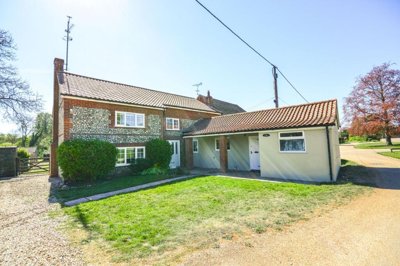
Browse 1 rental home to rent in Beeston with Bittering from local letting agents.
The larger property sector typically features multiple bathrooms, substantial reception space, and private gardens or off-street parking. Four bedroom houses in Beeston With Bittering span detached, semi-detached, and occasionally terraced configurations, with styles ranging from period properties to modern executive homes.
Beeston with Bittering’s rental market follows the wider pattern seen across rural Norfolk, where demand for well-kept homes still runs ahead of supply in many villages. Specific rental data for this parish is thin on the ground, but the average house price in the wider Beeston, Norfolk area stands at £5,417 as of early 2026, which gives a sense of the value attached to property in this part of Breckland. Homes to let here usually include Norfolk farmhouses, converted agricultural buildings and period cottages, all of which speak to the area’s building history. Older properties often show the flint and limestone construction methods found in buildings dating from the fourteenth and fifteenth centuries, including the Grade I listed Church of St Mary.
New build activity across the civil parish is still very limited, with no large-scale residential developments currently under construction in Beeston with Bittering. Planning applications in the parish have centred on small schemes, including recent approvals for infill structures and a refused outline application for a self-build dwelling at Woodfield House. That tight supply means homes that do reach the rental market are often taken quickly by people drawn to the rural lifestyle here. Anyone looking should be ready to move fast when a suitable property appears, and it helps to sort a rental budget agreement before starting the search.
Rental prices in Beeston with Bittering usually sit below urban levels in the region, which reflects both the rural setting and the smaller homes on offer. The properties that do come up tend to be traditional, with converted agricultural buildings and period cottages often offering more character than newer alternatives. Local letting agents covering the Breckland area can talk through what is currently available, and many operate from offices in nearby Dereham or Swaffham. Supply remains tight, so traditional village homes are often gone as soon as they come to market.

Beeston with Bittering is a place shaped by community ties and the slow pace of rural Norfolk life. The name joins Beeston and Bittering, two settlements that have formed a civil parish together since at least the 2001 Census, when the population was 505 residents. By 2011 that had reached 566, and the 2021 Census recorded 590 inhabitants, a measured rise that has kept the village feeling small and closely knit. The community-owned The Beeston Ploughshare pub acts as a local meeting point, with food and drink sourced from nearby where possible. That kind of ownership shows the effort villagers put into holding onto local amenities.
The local economy has changed over time and now supports a wider mix of work than it once did. After the American Airforce left the nearby Wendling Airbase in the latter part of the twentieth century, the buildings there were repurposed for larger employers, bringing jobs into the area. Agriculture still matters too, with farms working the fertile Breckland soils. The geology includes sand and gravel deposits, which also shapes the landscape. For renters, that mix of old and new work sources gives reasonable options for local employment or commuting.
Set within Breckland, the village sits within easy reach of the A47 trunk road, which links Norwich and King’s Lynn and passes through the nearby market towns of Dereham and Swaffham. The wider area is supported by employers on the former Wendling Airbase site, agricultural businesses across Breckland farmland and service industries in the nearby towns. For renters who work locally or travel farther afield, it offers a quiet base with usable road links.

Families looking at Beeston with Bittering will find schooling focused around the village primary school, which serves the local community and the surrounding countryside. Having a village school on hand is a real advantage, since it cuts down on long school runs and helps children build friendships close to home. For secondary education, pupils usually travel to Dereham or Swaffham, both of which have a range of secondary schools and sixth form colleges. Breckland is generally well served, although specific Ofsted ratings for schools linked to Beeston with Bittering should be checked through official channels before any move.
The area’s education history is tied to its heritage, which is reflected in the earliest listed buildings, including ecclesiastical structures from the fourteenth and fifteenth centuries. Manor Farmhouse in Bittering, dating from around 1700, shows how long-established households have been part of the parish. For families who value schooling options, renting in Beeston with Bittering gives access to rural primary education while still keeping secondary schools in the nearby market towns within reach. Journey times to those schools matter, though, so transport plans should be part of any decision.
The village primary school takes children from Reception through to Year 6, giving local families an option that avoids long daily trips. For secondary school, pupils usually go to one of the schools in Dereham, around 10 miles northwest of the village, or in Swaffham, roughly 8 miles to the southeast. Parents should check current catchment areas and school transport arrangements before choosing a rental property in Beeston with Bittering, since these can change and may affect the school run.

Road travel does most of the heavy lifting here, as transport in Beeston with Bittering reflects its rural Norfolk setting. The village sits in Breckland, with Dereham about 10 miles to the northwest and Swaffham about 8 miles to the southeast, both providing shopping, healthcare and other everyday services. The A47 trunk road runs through the wider area, linking Norwich to King’s Lynn and opening up access to larger centres of work. Norwich can also be reached via the A47 and A1075 routes, although travel times will naturally reflect the village’s rural starting point.
Bus services are limited in Beeston with Bittering, which is normal for a small Norfolk village, so public transport mainly comes down to infrequent local routes and private cars. The nearest railway stations are in larger towns, with Norwich offering the broadest rail network, including trains to London Liverpool Street, Cambridge and Birmingham. Cycling is fine for shorter local trips, though the rural lanes call for care because of their single-carriageway layout and the occasional heavy farm vehicle. Anyone commuting from here will usually need a car, and parking space at a rental property should be checked as part of the search.
The lanes around Beeston with Bittering are mostly single-carriageway roads linking the village to neighbouring settlements and to the A47 trunk road. During harvest season they also carry agricultural traffic, so extra caution is sensible. The nearest National Rail station is in Norwich, which offers services to London Liverpool Street with journey times of around two hours, along with trains to Cambridge, Birmingham and the wider network. For renters working in Norwich or elsewhere, having a vehicle is practically part of the deal.

Historic buildings give Beeston with Bittering much of its character, and that comes with a few planning realities for renters. The village includes a strong run of listed buildings, among them the Grade I Church of St Mary in Beeston, the Grade II* Church of St Peter in Bittering, and several Grade II buildings such as Beeston-next-Mileham War Memorial, Church Farmhouse, Manor Farmhouse and the Old Rectory with its associated moat house. Homes close to these heritage assets may face extra planning controls, so it is worth checking whether anything affects how the property can be used. Older flint and limestone buildings bring plenty of charm, though they may call for specific maintenance.
There are a few practical points worth checking before anyone commits to a tenancy in the village. Rural Norfolk properties can be affected by agricultural work, including seasonal noise and traffic from farms on the surrounding land. The sand and gravel extraction sites noted in the area’s geology may also have local effects. Drainage and septic systems need close inspection, because not every rural property is connected to mains sewage. Energy performance certificates matter too, especially where older homes have solid walls and insulation levels that differ from modern builds.
When viewing rental homes in Beeston with Bittering, we would pay close attention to the construction type and the general condition of the building. Traditional Norfolk construction usually means solid walls rather than cavity insulation, and that can affect both heating costs and how warm the home feels through the winter. Flint and limestone buildings are distinctive, but they can need maintenance that differs from newer housing. The village’s older stock, including converted agricultural buildings and period farmhouses, often comes with character features that need regular care. A careful viewing, or ideally a professional survey, can pick up issues before the tenancy starts.

A budget check should come first if you are planning to search for rental property in Beeston with Bittering. A rental budget agreement in principle will give a clearer idea of what is affordable. We would also factor in council tax, utility bills and the cost of travel to nearby towns for work and services. Homes in rural villages can bring higher heating bills, especially where traditional construction is involved.
It helps to spend time in the village before deciding. Visit Beeston with Bittering at different times of day, call into places such as The Beeston Ploughshare pub and take in the feel of the community. Speaking to residents can be useful too, especially when it comes to day-to-day rural life and what living in the parish really means.
Once a suitable rental property appears, we would arrange a viewing quickly, because good homes in rural Norfolk villages can be competitive. Make notes on condition, ask about the landlord’s preferred tenancy length and check what is included in the rental agreement. Be ready to provide references at short notice if the property fits what you need.
Older homes deserve a closer look, so we would consider a professional survey before committing to a tenancy. That matters even more in Beeston with Bittering, where historic building methods are common and traditional flint and limestone construction may bring its own considerations.
After settling on a property, the next step is tenant referencing and then signing the tenancy agreement. We would also take time to understand tenant rights and responsibilities, including deposit protection and notice period requirements. Your deposit must be protected in a government-approved scheme within 30 days.
Moving to Beeston with Bittering takes a bit of planning because of the rural location. We would arrange suitable transport for belongings, set up utility accounts and register with local services. The nearest major towns for shopping and services are Dereham and Swaffham, both within 10 miles of the village.
Specific rental price data for Beeston with Bittering is not publicly available, because this small Norfolk village does not produce the same volume of statistics as larger towns. The average house price in the wider Beeston, Norfolk area is £5,417 as of early 2026, and prices have risen 8.4% over the previous year. Rents in the village will normally sit below urban equivalents, which reflects the rural setting and the smaller homes available. For up-to-date rental figures, we suggest speaking to local letting agents covering the Breckland area, as they can share details of homes currently available in Beeston with Bittering and the surrounding villages.
For council tax, properties in Beeston with Bittering fall under Breckland Council. The band for each home will depend on the valuation band assigned by the Valuation Office Agency. The village has homes of many ages and sizes, from period cottages to farmhouses dating from around 1700, so council tax bands can vary quite a lot. Historic buildings here, many made from local flint and limestone, sit across different valuation bands. Anyone renting should ask for the council tax band on a specific property during their enquiries, because it makes up a meaningful part of monthly outgoings.
Beeston with Bittering has a local primary school for children in the village and the surrounding countryside, which gives younger families a practical option close to home. For secondary education, pupils generally travel to schools in the nearby market towns, with Dereham and Swaffham both offering secondary schools and sixth form choices within a reasonable driving distance. Dereham is about 10 miles northwest of the village, while Swaffham is roughly 8 miles to the southeast. Breckland generally has decent educational provision, although school performance data and current Ofsted ratings should be checked directly through official sources before any family move.
Public transport in Beeston with Bittering is limited, which reflects the village’s small scale and rural position in Breckland. Bus services are the main public transport option, although they run less often than they would in a town or city. The nearest railway stations are in larger places, with Norwich offering the broadest rail links, including trains to London Liverpool Street, Cambridge and Birmingham. For day-to-day commuting and access to services, most residents rely on private cars. The A47 trunk road provides routes to Norwich and King’s Lynn, although travel times to major employment centres will be longer than from more urban areas.
Beeston with Bittering offers something genuinely distinctive for renters who want proper rural Norfolk living. With a population of approximately 590 residents, the village has an intimate atmosphere where people know one another. The community-owned The Beeston Ploughshare pub gives the parish a social focus, and the local primary school makes family life more workable. Its historic character, with notable listed buildings including the fourteenth-century Church of St Mary and the fifteenth-century Church of St Peter, adds a sense of continuity and place. Even so, limited public transport, the distance from major services and the smaller rental supply compared with urban areas are practical points that need weighing up carefully.
Standard deposits for rental properties in England are equivalent to five weeks' rent, subject to the annual rent cap. When renting in Beeston with Bittering, we would expect a security deposit that is protected in a government-approved Tenancy Deposit Scheme within 30 days of the start of the tenancy. Additional costs may include referencing charges, administration costs and, in some cases, a holding deposit to reserve a home while references are checked. As a first-time renter, you may qualify for relief from certain charges. We recommend sorting a rental budget agreement in principle before starting the search, and asking any landlord or letting agent we speak to for a full breakdown of all costs.
Beeston with Bittering itself does not have high-street letting agent offices, but the surrounding market towns of Dereham and Swaffham have several agents who actively manage homes across Breckland. Dereham is about 10 miles northwest of the village and has agents familiar with village properties, while Swaffham is roughly 8 miles to the southeast. These firms often handle rentals in Beeston with Bittering alongside town properties, and some cover several villages throughout the Breckland district. Speaking to agents in both towns usually gives the widest view of what is available.
From £5/month
Protect your belongings in your new rental property
From £99
Essential tenant checks for renting
Compare Providers
Know your rental budget before you search
From £99
Document property condition to protect your deposit
Anyone planning to rent here should get to grips with the costs first. The usual security deposit for a rental home in England is equivalent to five weeks' rent, subject to the annual rent threshold. The landlord must protect that deposit in a government-approved Tenancy Deposit Scheme within 30 days of receiving it. Upfront costs can also include a holding deposit to reserve the property while references are being checked, and that is usually set against the first month’s rent or the security deposit. Depending on the landlord or letting agent, referencing fees, administration charges and check-in costs may also apply.
First-time renters in England can benefit from certain reliefs, including exemption from stamp duty land tax on residential property purchases if they buy a home in the future. For the rental itself, though, the ongoing costs will be monthly rent, council tax managed through Breckland Council, utility bills and contents insurance to protect belongings. Some homes in Beeston with Bittering may have higher heating costs because part of the building stock is older and uses traditional flint and limestone construction. We strongly recommend getting a rental budget agreement in principle before viewing properties, so the numbers are clear and landlords can see that you are a serious and financially prepared applicant.
Properties to Rent In London

Properties to Rent In Plymouth

Properties to Rent In Liverpool

Properties to Rent In Glasgow

Properties to Rent In Sheffield

Properties to Rent In Edinburgh

Properties to Rent In Coventry

Properties to Rent In Bradford

Properties to Rent In Manchester

Properties to Rent In Birmingham

Properties to Rent In Bristol

Properties to Rent In Oxford

Properties to Rent In Leicester

Properties to Rent In Newcastle

Properties to Rent In Leeds

Properties to Rent In Southampton

Properties to Rent In Cardiff

Properties to Rent In Nottingham

Properties to Rent In Norwich

Properties to Rent In Brighton

Properties to Rent In Derby

Properties to Rent In Portsmouth

Properties to Rent In Northampton

Properties to Rent In Milton Keynes

Properties to Rent In Bournemouth

Properties to Rent In Bolton

Properties to Rent In Swansea

Properties to Rent In Swindon

Properties to Rent In Peterborough

Properties to Rent In Wolverhampton

Enter your details to see if this property is within your budget.
Loans, cards, car finance
Estimated property budget
Borrowing + deposit
You could borrow between
Typical borrowing
Monthly repayment
Est. at 4.5%
Loan-to-value
This is an estimate only. Your actual budget may vary depending on interest rates, credit history, and personal circumstances. For an accurate affordability assessment, speak to one of our free mortgage advisors.
This calculator provides estimates for illustrative purposes only and does not constitute financial advice. Your home may be repossessed if you do not keep up repayments on your mortgage. Estimates based on 4.5% interest rate, repayment mortgage. Actual rates depend on your circumstances.
Homemove is a trading name of HM Haus Group Ltd (Company No. 13873779, registered in England & Wales). Homemove Mortgages Ltd (Company No. 15947693) is an Appointed Representative of TMG Direct Limited, trading as TMG Mortgage Network, which is authorised and regulated by the Financial Conduct Authority (FRN 786245). Homemove Mortgages Ltd is entered on the FCA Register as an Appointed Representative (FRN 1022429). You can check registrations at NewRegister or by calling 0800 111 6768.

We use cookies to show you personalised content and improve your experience of our website. Find out more in our Privacy policy and Cookie policy.