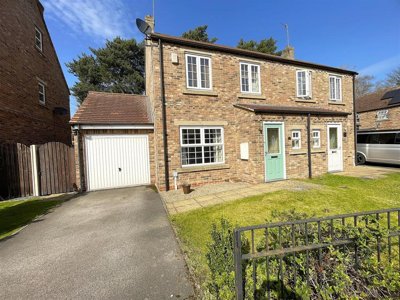
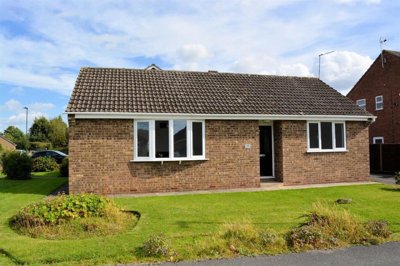
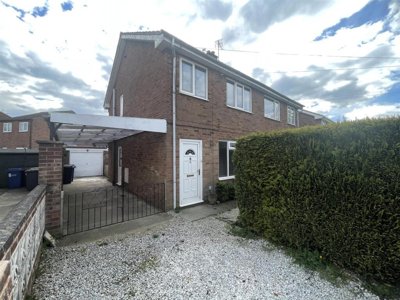
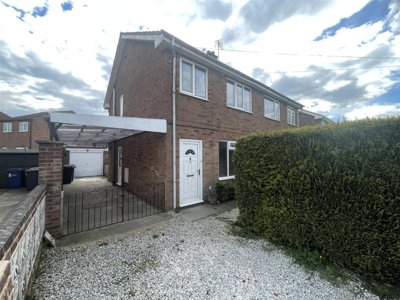
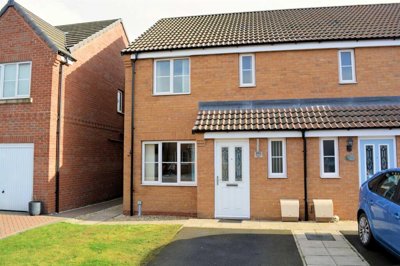
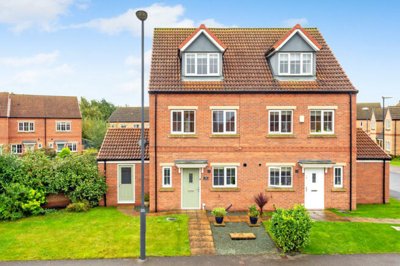
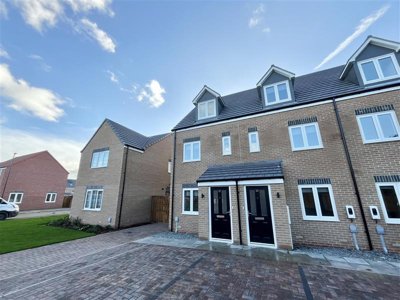
Browse 7 rental homes to rent in Barlow from local letting agents.
Three bedroom properties represent a significant portion of the Barlow housing market, offering space for families with multiple reception rooms and gardens in many cases. Browse detached, semi-detached, and terraced options ranging from period character homes to contemporary developments.
Barlow is still mostly owner-occupied, yet the local rental market does give people a way into this appealing North Yorkshire village without buying. Its housing mix has a very traditional Yorkshire feel, with detached homes making up approximately 45.4% of stock, semi-detached houses 32.7%, terraced properties 16.4%, and flats a small 5.5%. That spread gives renters a decent choice of property types for different household sizes and priorities. On the sales side, detached homes average £350,000, semi-detached properties £250,000, and terraced houses around £200,000, so the rental market tends to sit across a similar range of price points.
Traditional brick buildings with tiled or slate roofs are the norm in Barlow, and many properties also bring in stone details that suit the historic character of North Yorkshire villages. The housing stock covers several eras, with around 40% built between 1945 and 1980, 15% pre-1919, 20% between 1919-1945, and 25% post-1980. In other words, this is a settled village, and many homes are now over 50 years old. There is no designated conservation area in Barlow itself, although individual old farmhouses and other structures still add plenty of local character. For renters, that often means period features and proper Yorkshire charm rather than modern estate housing.
Across the wider Selby district, rental values usually sit between £700-£1,200 per month, depending on size and type. Three-bedroom semi-detached homes are likely to come in around £800-£950 monthly, while larger detached houses with gardens can reach £1,200-£1,500. Recent 12-month price movement of -1.7% points to a steady market, and the area still looks competitive compared with Leeds or York. For the most up-to-date rental prices in Barlow, we suggest checking home.co.uk listings.

Set against the Vale of York, Barlow offers a very English village way of life. Around 750 residents give the place a genuine community feel that is harder to find in busier towns and suburbs. Rolling farmland, old farmsteads and winding lanes shape the landscape, which suits long walks and cycling routes rather well. People here get rural calm, yet Selby’s fuller range of amenities is still close by. For families, remote workers and anyone looking to step away from busy urban routines, it works well.
Agriculture still shapes much of the local economy around Barlow, and farming remains part of the area’s identity. Even so, the village is well placed for commuting, with many residents travelling to Selby, York and Leeds for work. The A19 gives straightforward access to those towns, while the M62 opens up the wider region. That makes Barlow a strong fit for people who work from home some of the time, or who want a rural base with reliable links into larger employment centres. Selby’s commercial area, together with the Leeds-York corridor, helps support local job prospects too.
A short drive brings residents into Selby district’s wider choice of supermarkets, independent shops, restaurants and leisure facilities. Selby itself is only a few miles away and still keeps its market-town character, complete with regular markets and the well-known abbey. For bigger shopping trips or a bit of culture, York is comfortably within commuting distance, with museums, theatres and plenty of retail on offer. Then it is back to the quiet of village life. That mix is a big part of Barlow’s appeal.

Families renting in Barlow will find schooling options for children from early years through to secondary age within reach. Primary provision comes through surrounding villages and nearby towns, and many schools across the wider Selby district have positive reputations for their teaching. Catchment areas and admission policies do matter, though, so we would always urge parents to check the detail before making assumptions about places. Because Barlow is rural, transport to and from school is another point worth sorting early, including bus routes and any school transport arrangements.
Secondary pupils from Barlow usually go to schools in Selby or the nearby area. The district includes several secondary schools, some with sixth form provision, so children can continue locally rather than travelling into larger towns every day. York also gives access to sixth form and further education, and it is reachable through the transport links from Barlow. Admission rules can be competitive at popular schools, so early research and timely applications make sense if you are moving with children.
For anyone weighing up education as part of a move, we suggest checking the Ofsted website for current ratings and reports covering the Barlow and Selby area. York adds another layer of choice too, including grammar schools and independent schools, although those tend to involve entrance exams and longer journeys. A bit of planning around admissions goes a long way. Many families decide the quality of life in rural Barlow more than makes up for the extra travel to particular schools.

Barlow’s strongest cards is transport, thanks to its position near major roads that link much of Yorkshire and beyond. The A19 runs close by, taking residents straight to Selby and then on towards York in one direction and Leeds in the other. From there, the M62 is easy to reach, so Hull and Manchester are both within the wider commuter map. For professionals who work across the region but prefer a rural base, the village sits in a very useful spot.
Bus services in the area give people without cars a practical way to get to Selby and nearby villages. Selby railway station is the main rail option, with trains to York, Leeds, Sheffield and London via the East Coast Main Line. From Selby to London King’s Cross takes approximately two hours, which keeps the capital within range for work or a weekend away. Regional services also cover Bradford, Newcastle and Edinburgh, so longer trips are not awkward either.
Cycling is easier here than in many rural places, helped by quiet country lanes and the flat terrain of the Vale of York. That makes the area a sensible choice for anyone who prefers a greener commute and lives close enough to use a bike for day-to-day travel. Leeds Bradford Airport and Robin Hood Doncaster Sheffield Airport are both within reasonable driving distance for flights further afield. In transport terms, Barlow does offer a fair amount for a village of its size.

A rental budget agreement in principle is a sensible first move before we start looking at homes in Barlow, because it shows exactly what monthly rent and related costs are realistic. It also helps to show landlords that the application is serious. In this area, budgets usually sit between £700 per month for terraced properties and £1,500 per month for larger detached family homes.
It pays to get to know Barlow and the nearby towns before choosing a property, especially if you will need schools, shops or work connections on a regular basis. Mobile signal, broadband speed and access to local amenities all matter. Because the village sits close to the A19, most day-to-day services mean a short drive into Selby, while York and Leeds are there for bigger shopping trips or evenings out.
We would start by browsing available rental homes in Barlow and the surrounding area on home.co.uk, then arranging viewings for the properties that actually fit the brief. During those visits, look closely at the condition of the house, garden space, parking and the feel of the street. Rental stock in the village is limited, so it is worth moving quickly if something suitable comes up.
As soon as a suitable property appears, put the rental application in without delay, because desirable homes in Barlow can attract several interested applicants. References, proof of income, employment details and previous landlord references, where available, should be ready to hand. Keeping those papers organised from the start makes the whole process much smoother.
Our letting partners usually ask for tenant referencing checks, which can cover credit checks, employment verification and a look at rental history. A guarantor may also be requested, particularly for first-time renters or anyone with limited rental history. Referencing fees generally fall between £150 and £300.
Once referencing has been completed successfully, the tenancy agreement needs a careful read before it is signed. It sets out the rent, the deposit, the length of the tenancy and what is expected from the tenant. We always advise reading every condition before committing. Security deposits are capped at five weeks' rent and must be held in a government-approved scheme.
Renting in a rural village such as Barlow brings a few different considerations from urban lets. Houses dominate the local stock, especially detached and semi-detached family homes, rather than apartments. Traditional construction deserves a close look, since many homes were built using older methods and may need more upkeep than newer properties. Brick walls with tiled or slate roofs can be very solid, but damp, roof condition and timber defects are still worth checking. With over 75% of homes built before 1980, age-related issues are part of the picture.
The Vale of York’s glacial till and clay-rich soils bring a moderate to high shrink-swell risk that can affect foundations. That is mainly a concern for homeowners, but tenants should still watch for cracking, uneven floors, or doors and windows that stick, as these can point to ground movement below. Homes close to large trees may be more vulnerable to subsidence during extreme weather. A careful viewing, or a survey for a longer tenancy, can pick up problems before anyone commits.
Flood risk is another point we would not ignore in Barlow. Some areas have surface water flooding risk, especially along the A19 corridor and near local watercourses. It makes sense to ask landlords about any previous flooding and to check how the property sits relative to drainage and nearby water bodies. Higher parts of the village generally carry lower risk. Because Barlow sits in the former Selby Coalfield area, there is also a very low residual risk linked to past mining activity, particularly for homes with cellars or basements.

Barlow is small, so detailed rental pricing data is limited, but the local market broadly follows the wider Selby district, where comparable homes usually range from £700-£1,200 per month depending on size and type. Detached houses with gardens tend to command more than terraced properties or flats. The average property sale price of £277,333 points to a mid-range market, with three-bedroom semi-detached homes likely renting between £800-£950 monthly and larger detached homes possibly reaching £1,200-£1,500. For the clearest picture, we would suggest checking current home.co.uk listings.
For council tax, properties in Barlow fall under Selby District Council. Most homes are in bands A through D, which reflects the range of property sizes and values in the village. Band A homes usually pay around £1,200-£1,400 a year, while Band D properties may be around £1,800-£2,000 annually. Before signing anything, tenants should confirm the exact band with the landlord or letting agent, because it is part of the real cost of renting. Payments are generally taken monthly and can be set up by direct debit.
Primary schooling for Barlow is provided by schools in surrounding villages and nearby towns, and most children attend within the wider Selby district. Performance does vary, so the current Ofsted ratings on the official website are the best place to look for the latest picture. Secondary options in Selby include schools with sixth form provision. For families wanting grammar school places, York is accessible, though admissions may depend on catchment and exam results. Because the village sits near major transport routes, the school search can stretch further than you might first expect.
Despite its rural setting, Barlow still has reasonable public transport links. Local buses run between Barlow and Selby, giving residents without cars an important link into town. Selby railway station connects to York, Leeds, Sheffield and London, with journeys to London King’s Cross taking about two hours. The A19 gives solid road access, although a car is still useful given the village’s rural location and limited local services. The flat Vale of York also makes cycling practical for shorter trips into nearby towns.
Barlow gives renters a strong quality of life if they want a quiet village setting with good links to larger towns and cities. Its community feel, countryside surroundings and easy access to main transport routes suit people working in York, Leeds or Selby who still prefer rural living. The village is small, so local services are limited, and that needs bearing in mind if regular trips to shops, restaurants and entertainment matter. For those who value open space, community spirit and straightforward commuting, Barlow is a persuasive rental choice in North Yorkshire. The market also looks steady, with only a modest 12-month price change of -1.7%, which points to balance for both tenants and landlords.
In England, the usual renting costs start with a security deposit equal to five weeks' rent, protected in a government-approved deposit scheme. There can also be an administration fee for referencing checks, typically £150-£300, plus a refundable holding deposit of one week's rent to take the property off the market while checks are completed. First-time renters should set money aside for moving costs, furniture if needed, and utility and internet connection fees. We recommend getting quotes for tenant referencing services through Homemove before the search begins, so the full cost picture is clear.
Because most homes in Barlow were built before 1980, tenants should expect older construction details that may ask for a bit more care than newer homes. Damp in solid-wall properties, roof condition on older buildings and signs of subsidence linked to the local clay soils are all worth checking. Many houses still have original timber floors and period fireplaces, which add character but can need attention. An inventory check at the start of the tenancy protects both sides by recording the condition of the property. For longer lets, a professional survey can highlight concerns before anyone signs up.
From £150
Complete reference checks for rental applications
From £99
Professional property inventory reports
From 4.5%
Understand your renting budget before you search
From £85
Energy performance certificate for rental properties
Budgeting properly for a rental in Barlow means getting the full financial picture clear from the outset. The biggest upfront cost is the security deposit, which is capped by law at five weeks' rent for annual rents below £50,000. For a typical family home in Barlow at £1,500 per month, that works out at approximately £1,732. The deposit must be protected in a government-approved Tenancy Deposit Protection scheme within 30 days of receipt, giving tenants reassurance that it will be returned at the end of the tenancy, minus any legitimate deductions for damage or unpaid rent.
Beyond the security deposit, tenants should plan for several administrative costs linked to the rental process. Tenant referencing fees usually sit between £150 to £300 and cover credit checks, employment verification and reference gathering. Some landlords may also ask for a holding deposit equal to one week's rent while referencing is completed, and that is normally taken off the final security deposit. First-time renters, or applicants without employer references, may need a guarantor, and international renters should expect some extra paperwork.
Council tax, utility bills and internet services make up the other regular costs on top of rent. Most homes in Barlow sit in council tax bands A through D, with annual charges of around £1,200 to £2,000 depending on the band. Because this is a semi-rural area, heating bills can also be higher, especially in traditional houses that are larger than a city flat. We strongly recommend getting a rental budget agreement in principle before we begin the property search, as it clarifies the finances and shows landlords in the Barlow area that we are serious viewers.
Properties to Rent In London

Properties to Rent In Plymouth

Properties to Rent In Liverpool

Properties to Rent In Glasgow

Properties to Rent In Sheffield

Properties to Rent In Edinburgh

Properties to Rent In Coventry

Properties to Rent In Bradford

Properties to Rent In Manchester

Properties to Rent In Birmingham

Properties to Rent In Bristol

Properties to Rent In Oxford

Properties to Rent In Leicester

Properties to Rent In Newcastle

Properties to Rent In Leeds

Properties to Rent In Southampton

Properties to Rent In Cardiff

Properties to Rent In Nottingham

Properties to Rent In Norwich

Properties to Rent In Brighton

Properties to Rent In Derby

Properties to Rent In Portsmouth

Properties to Rent In Northampton

Properties to Rent In Milton Keynes

Properties to Rent In Bournemouth

Properties to Rent In Bolton

Properties to Rent In Swansea

Properties to Rent In Swindon

Properties to Rent In Peterborough

Properties to Rent In Wolverhampton

Enter your details to see if this property is within your budget.
Loans, cards, car finance
Estimated property budget
Borrowing + deposit
You could borrow between
Typical borrowing
Monthly repayment
Est. at 4.5%
Loan-to-value
This is an estimate only. Your actual budget may vary depending on interest rates, credit history, and personal circumstances. For an accurate affordability assessment, speak to one of our free mortgage advisors.
This calculator provides estimates for illustrative purposes only and does not constitute financial advice. Your home may be repossessed if you do not keep up repayments on your mortgage. Estimates based on 4.5% interest rate, repayment mortgage. Actual rates depend on your circumstances.
Homemove is a trading name of HM Haus Group Ltd (Company No. 13873779, registered in England & Wales). Homemove Mortgages Ltd (Company No. 15947693) is an Appointed Representative of TMG Direct Limited, trading as TMG Mortgage Network, which is authorised and regulated by the Financial Conduct Authority (FRN 786245). Homemove Mortgages Ltd is entered on the FCA Register as an Appointed Representative (FRN 1022429). You can check registrations at NewRegister or by calling 0800 111 6768.

We use cookies to show you personalised content and improve your experience of our website. Find out more in our Privacy policy and Cookie policy.